
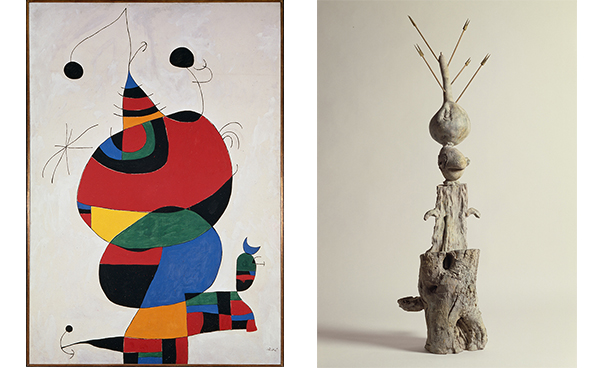
 Miró: the Experience of Seeing, having opened at the Museo Reina Sofia, Madrid in late 2013-January 2014, now in Seattle Art Museum 13 February– 25 May 2014; then to the Nasher Art Museum, Duke University, North Carolina 14 September 2014 – 22 February 2015.
Drawn entirely from the Reina Sofia’s collections it focuses on 50+ paintings, drawings and sculptures selected from the last 20 years of his career between 1963 and 1983.
Frida Kahlo, Long Beach, California
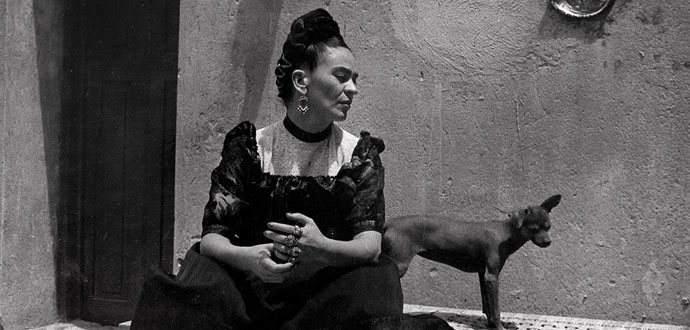 Frida Kahlo: Her Photos, Museum of Latin American Art, Long Beach, California, 15 March – 8 June 2014. Selection made by leading Mexican photographer and historian Pablo Ortiz Monasterio, of some 257 photographs from the extensive archive (6,500 items) held in the Blue House in Mexico City. Both Kahlo’s father and maternal grandmother were professional photographers and she was herself a collector of nineteenth-century photographs, which she used and manipulated as working tools to inspire her own art. The exhibition is divided into six thematic sections: Kahlo’s parents; the Blue House; her crippled body; Frida’ loves; political struggle; and Diego’s gaze, and includes works by other photographers such as Man Ray, Tina Modotti, and Lola and Manuel Álvarez Bravo.
Robert Henri, San Diego
 Spanish Sojourns: Robert Henri (1865-1929) and the Spirit of Spain, San Diego Museum of Art, California, 29 March – 9 September 2014; and touring to Mississippi Museum of Art, Jackson, 2014-2015.
The first exhibition devoted to the Spanish paintings by Henri, one of America’s ‘Ashcan School’ of artists, who travelled around Spain seven times between 1900 and 1926. Exhibition of 40 paintings, mainly portraits ranging from celebrated bullfighters and dancers to gipsy women and peasants.
The exhibition is accompanied by a catalogue in hardback, which presents new scholarship on Henri and places his Spanish work in the context of other American artists, architects and writers inspired by Spain at the beginning of the early twentieth century.
Goya, Nashville
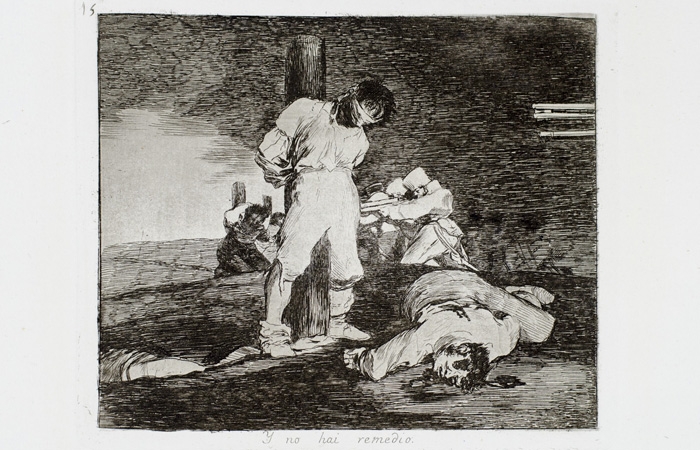 Goya: the Disasters of War, Frist Center for Visual Arts, Nashville, Tennessee, 28 February – 8 June 2014. Exhibition of the full series of 81 prints from the first published edition. Curated by Janis Tomlinson, Director of University Museums at the University of Delaware, it puts forward new research and reorders the series reviving Goya’s intentions for it seemingly interspersing war’s impact on the city and the countryside.
Visions and Nightmares: Four Centuries of Spanish Drawings, New York
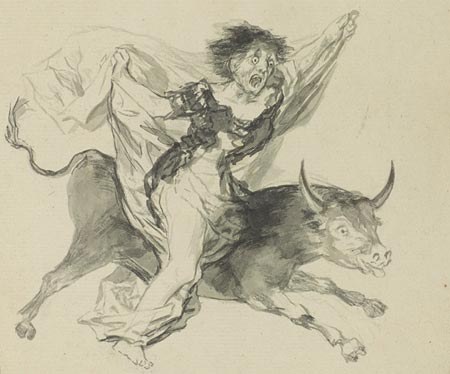
Visions and Nightmares: Four Centuries of Spanish Drawings, Morgan Library, New York, 17 January – 11 May 2014. The first exhibition of Spanish drawings from the Morgan’s collection showing more than 20 sheets featuring works by Ribera, Murillo, Goya as well as Vicente Carducho, Alonso Cano and Eugenio Lucas and recently acquired drawings by Juan Carreño de Miranda and Mariano Salvador Maella. Complementing the drawings will be a selection of letters and books including an illustrated Don Quijote published in 1780.
Goya, New York
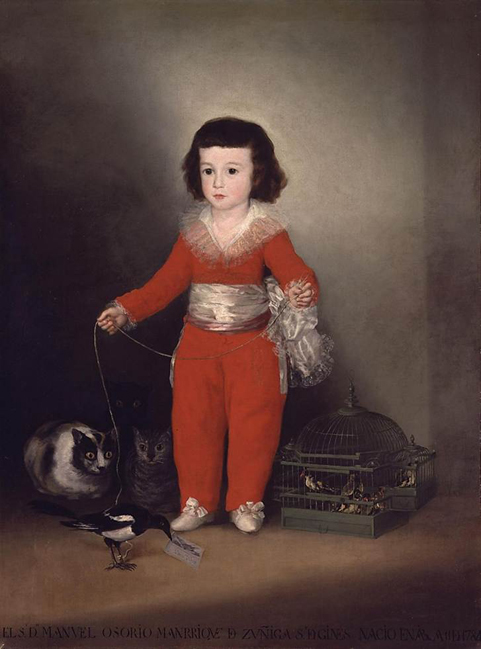 Goya and the Altamira Family, Metropolitan Museum, New York, 22 April – 3 August 2014. A picture-in-focus display of Goya’s four portraits of the Altamira family, including the Metropolitan’s portrait of Manuel Osorio Manrique de Zuñiga (1787-88) known as the ‘Boy in Red’, and a fifth family portrait by Agustin Esteve. This will be the first time that all five portraits have been brought together from American and Spanish private and public collections. The exhibition will be accompanied by a publication in the form of a Bulletin.
Sorolla, Madrid
 Fiesta y Color: The ethnographic gaze of Sorolla, Museo Sorolla, Madrid, 10 December 2013 – 20 May 2014.
Focuses on Sorolla’s images of the rural costume and customs that he saw on his travels over eight years through Andalucía, Aragón, Castilla, Cataluña, Extremadura, Galicia, Guipúzcoa and Valencia between 1911 and 1919.
Exhibition includes costume, jewellery, photographs and letters as well as some 25 paintings and drawings, several of which have never been shown in public before and some of which were acquired by Sorolla on his travels. His collection of regional costume is important as it was acquired before the big exhibition of Regional Dress held in Madrid in 1925, which stimulated collectors’ interest in such material.
Sebastiâo Salgado, Madrid and Brasilia
 Sebastiâo Salgado: Genesis, CaixaForum, Madrid, 17 January – 4 May; and later to Centro Cultural Banco do Brasil (Distrito Federal), Brasilia, Brazil, 5 August – 29 September 2014. Another in the Brazilian-born photographer’s series of exhibitions of his black and white images of remote landscapes and their animal and human inhabitants.
This exhibition of 216 works was previously shown at the Natural History Museum, London.
Picasso, Madrid
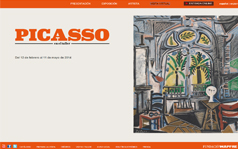 Picasso in the Studio, Fundacion Mapfre, Madrid, 12 February – 11 May 2014. Exhibition of about 80 paintings, 70 prints and drawings, 26 photos and other ephemera including 10 palettes displayed in five sections to provide an insight into Picasso’s use of his studio as the centre for his activity from 1905 when he produced his Self-portrait with a palette and his Man Sitting on a Stool of 1969, which has only been shown once before. Many of the works have been selected from private collections rarely seen before as well as loans from major collections worldwide. Accompanied by catalogue in Spanish, first published in Madrid in 2004 – with essays by Christopher Green amongst others.
The Generation of ´14: Science and Modernity, Madrid
 The Generation of ´14: Science and Modernity – a century on, Biblioteca Nacional, Madrid, 14 March – 1 June 2014. An exhibition of almost 300 books, documents, letters, photographs, posters and art related to the generation of Spanish authors, journalists, scientists and artists, born in the 1880s and 90s, who in 1914 launched a campaign and a journal (España) aiming to modernize Spanish intellectual and cultural life by turning to Europe – Germany, France and Britain – as inspiration. The men and some feminist-inspired women were led by Ortega y Gasset and the doctor and historian Gregorio Marañon and portrayed by artists such as José Gutiérrez Solana and Ignacio Zuloaga.
 ARTES
ARTES 