CFP: V Durham–Northumbria Colloquium on Medieval and Golden Age Hispanic Studies (24-26 June 2026).
The deadline for the submission of proposals is 6 January 2026. The event, organised by the universities of Durham and Northumbria, will take place in Newcastle between 24 and 26 June 2026. Proposals for 20-min. papers (in English, Spanish, Portuguese, Catalan or Galician) and panels (one per submission) must be sent in the body of an email to the address below. Please include name and institutional affiliation, and a title and abstract of no more than 150 words. Speakers will receive confirmation of acceptance and details of registration via email by the second week of February. All proposals and inquiries must be sent to Lesley Twomey, Emeritus Professor of Humanities at Northumbria University: lesley.twomey@northumbria.ac.uk.
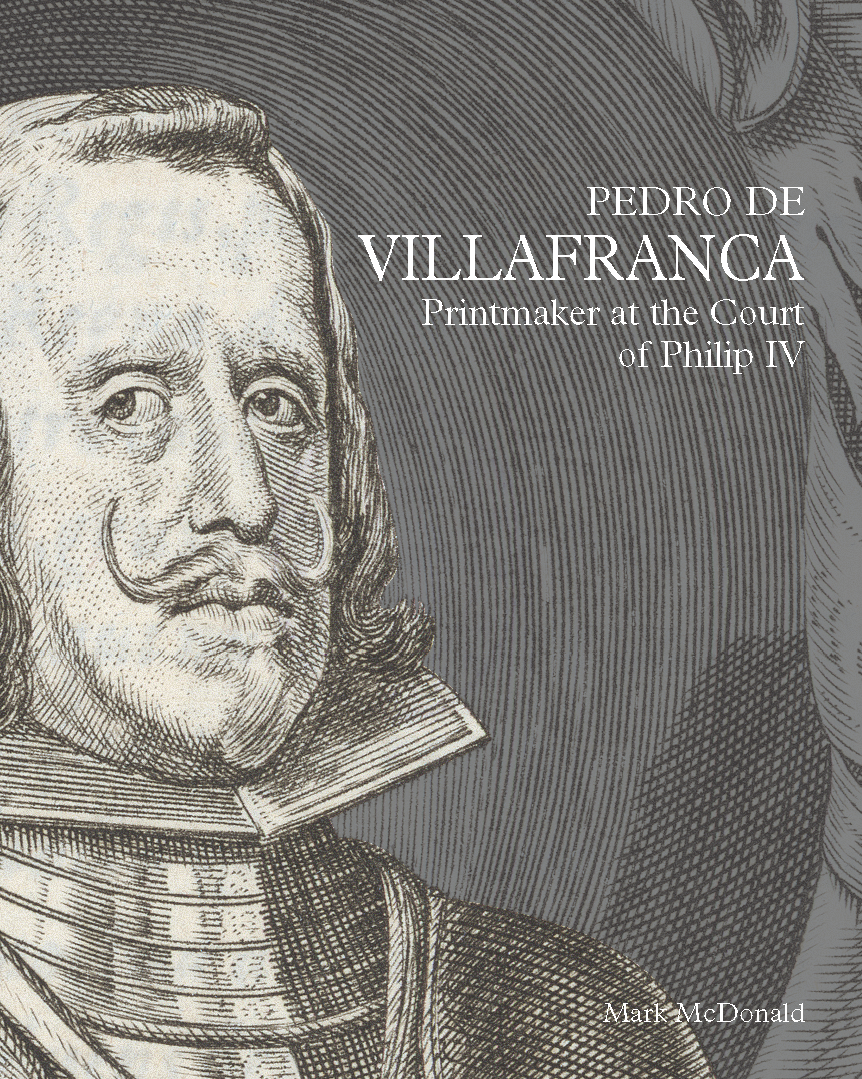
ARTES is delighted to announce the publication of Mark McDonald’s book Pedro de Villafranca: Printmaker at the Court of Philip IV (440 pp., with 275 colour illustrations) published by the Centro de Estudios Europa Hispánica. The book offers the first comprehensive study of the life and work of Pedro de Villafranca (c. 1615–1684), the artist uniquely appointed as “king’s printmaker” during the reign of Philip IV.
Mark McDonald is in the Department of Drawings and Prints at the Metropolitan Museum of Art, New York, and was formerly Curator of Old Master Prints and Spanish Paintings at the British Museum.
Works on Paper as Agents of Intermedial Translation and Cultural Exchange
Once again, the Athena Art Foundation is parterning with the Colnaghi Foundation to present the in-person and online symposium, Impressions of Empire: Works on Paper as Agents of Intermedial Translation and Cultural Exchange.The symposium will be held on 25th and 26th September 2025 and explores how works on paper were used to construct meaning and identity in various imperial contexts, from the 8th to the early 20th centuries. The symposium will be hosted at Colnaghi gallery in London and online on Thursday 25th September, and online only on Friday 26th September. Read the full programme here.
If you wish to join, book your place with eventbrite here
Please see the poster above for details of this Instituto Cervantes event, with the leading Spanish contemporary artist Rafael Canogar in conversation with Susan Wilson (Senior Member of Faculty at the Royal Drawing School and ARTES Committee Member). Places at the event can be booked here. Attendance is in-person only, as it will not be possible to livestream or record this event.
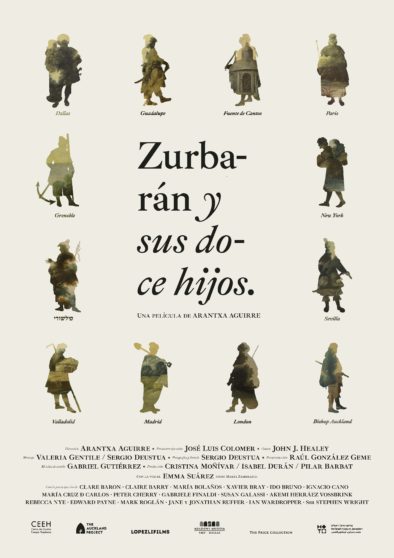
Since 1756 Francisco de Zurbarán’s paintings of Jacob and His Twelve Sons have held a special place in the life of Bishop Auckland. Arantxa Aguirre’s beautiful film tells the story of these exceptional artworks and their intriguing history, following the path of their 2017/18 journey to museums in Dallas, New York, and Jerusalem, where they cast their spell over new audiences. Introducing the film screening, Zurbarán scholar Richard Jacques will place these paintings in the context of Zurbarán’s life and artistic output, sharing his insights on why Jacob and His Twelve Sons exert such power on all those that see them.
About the film:
Director: Arantxa Aguirre
Script: John Healey with the collaboration of Jonathan Brown
Producers: CEEH, The Auckland Project and Intervenciones Novo Film
Total running time: 72 minutes
This documentary recounts the history and significance of Jacob and his Twelve sons, a series of thirteen paintings completed by Francisco de Zurbarán in Seville around the year 1640. They may have been intended for the New World, although nothing is known of them until they were acquired in an auction by London merchant James Mendez seventy years later. In a compelling gesture, they were acquired by Bishop of Durham Richard Trevor in 1756, when debate around a bill on the emancipation of British Jewry was raging. He hung them in his dining room in Auckland Castle, where they remain to this day. Now, thanks to the initiative of a financier from that area, Jacob and his twelve sons have become a driver of regeneration in a community in the north of England. While renovation works were being completed in their home at Auckland Palace, the paintings were exhibited in the Meadows Museum in Dallas, The Frick Collection in New York and the Israel Museum in Jerusalem. This film tracks their international travels, with contributions by known experts on Spanish painting as well as those behind an ambitious project using art as a tool for social transformation.
About the speaker: Richard Jacques is a PhD candidate in Art History at Durham University. His doctoral research, which is funded by the Centro de Estudios Europa Hispánica, explores the language of suffering in the works of Francisco de Zurbarán (1598-1664), examining how the artist’s preoccupation with verisimilitude and tactile painterly effects engaged the spiritual needs and psychological drives of his viewers. Richard also holds degrees in art history from the Courtauld Institute of Art and Christian theology from Kings College London.
ARTES is delighted to announce the recipients of the 2025 ARTES/CEEH PhD Scholarships:
Lauren Mahany, PhD Candidate in the School of History of Art, University of Edinburgh.
Lauren’s research examines the work of the Catalonian Orientalist and costumbrismo painter Antonio Fabrés (1854-1938) within the context of Spain’s fin-de-siècle identity crisis and its renewed colonial ambitions in North Africa. With her ARTES/CEEH award Lauren intends to analyse and contextualise the works of Fabrés by exploring primary and secondary archival sources housed in Barcelona (Museu Nacional d’Art de Catalunya), Rome (Real Academia de España en Roma) and Mexico City (Universidad Nacional Autónoma de México and the San Carlos Museum). The art of Fabrés will be approached from both a new, theoretical perspective and within broader cultural contexts, engaging with postcolonial, and identity theories, including gender, race, sexuality, transcultural exchanges and dualities, while recognizing Spain’s paradoxical position in the Western discourse of ‘Orientalism’.
Juan A. González Delgado, PhD Student in Art History, University of Seville.
Juan’s research examines the Spanish Crown’s military engineers and the construction process of fortifications in the Viceroyalty of Peru in the Bourbon Period. With his ARTES/CEEH award Juan intends to expand the scope of his research through an analysis of how these fortifications were viewed by English professionals between 1700 and 1821, using documentation and plans present in the archives and libraries of institutions in the United Kingdom. In this project, a major objective will be to understand the implications for the British Crown of these Bourbon fortifications, seeing these works as part of a global process with impacts that stretched from the big empires of day to the inhabitants of a small villages in the interior of South America, and thereby establishing these fortifications as architecture of power and symbols of empire.
Background to the awards
Thanks to the generous support of CEEH (Centro de Estudios Europa Hispánica), ARTES awards two scholarships each year to PhD students and post-doctoral scholars working on Spanish visual culture before 1900. One scholarship is awarded to a student registered for a full- or part-time doctoral degree at a UK university and is intended to contribute towards the costs of tuition, living costs and/or research. A second is awarded to doctoral students and post-doctoral scholars who are registered for study at a university in Spain and wish to undertake research in the UK.
Further information on the ARTES /CEEH awards, including past winners, can be found at:
ARTES member Maria Vittoria Spissu has organised a symposium with the title ‘Empire of Role Models? Championing and Challenging Global Ideals in the Early Modern Iberian Worlds’. The symposium will take place on the 19th and 20th June at the University of Bologna. Full details of the symposium and the programme are contained in the flyer attached below:
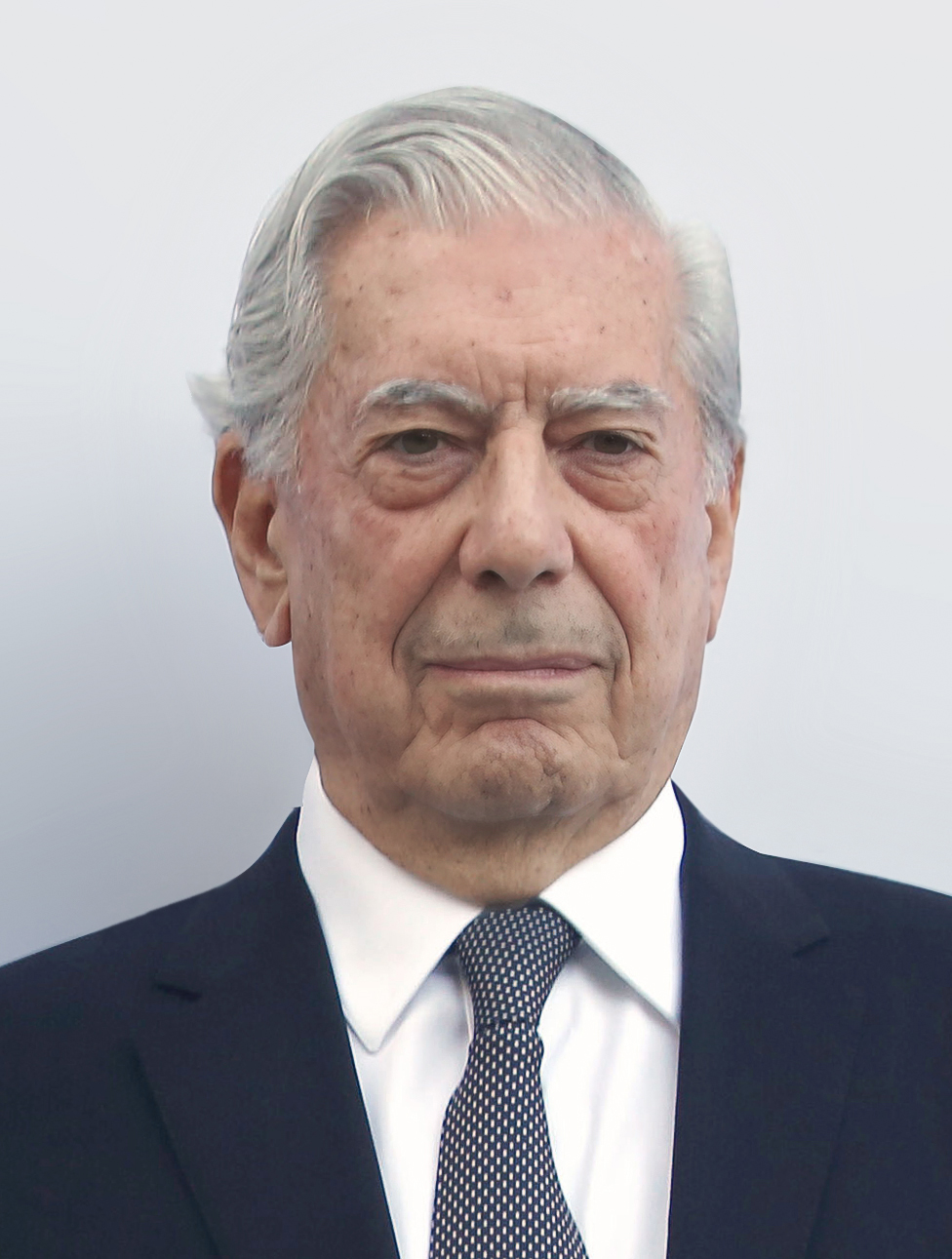
Photo credit: By power axle – XIII Prix Diálogo – Ceremonia de entrega, CC BY 2.0,
The following is a tribute to Mario Vargas Llosa by Susan Wilson, an ARTES Trustee, Painter, and Senior Member of The Royal Drawing School. Vargas Llosa, a Peruvian novelist, journalist, and politician, was born on 28th March 1936 and died in Lima on 13th April 2025. As Susan explains Vargas Llosa had a significant influence on Susan’s life and her work as an artist:
‘I was 24 when I landed in Lima from Tahiti, having left NZ for the first time. Lima dazzled me, amazed me, and I could not get enough of the streets, architecture, museums and jirons, where I stayed in the Residential Roma, and ate Brazo gitano daily from a cake shop near the hotel.
Arriving in London, it wasn’t long before I discovered Vargas Llosa. “Aunt Julia and The Scriptwriter” enchanted me. Lituma, the sergeant on his rounds in the foggy night air of Callao, the radio shack that broadcasts the soap operas, with this, the smell and sight of Lima returned. Vargas Llosa campaigned to save the jirons with their narrow streets and characteristic wrought iron.
I went on to read “The Real Life of Alejandro Mayta” , an account of a revolutionary cell in Jauja, vivid and precise. You are Peru when you read it. You are high up, in the Andes in the mist and rain, overshadowed by looming peaks, or in cheap rooms in Lima conspiring. Rooms that Llosa knew. Rooms he had lived in.
Later I devoured “A Fish in The Water” , a long account of Vargas Llosa running his campaign for Peru’s presidency spliced with his life story. One chapter goes forward, one goes back. A long, gripping and complex read following the intricacies of Peruvian politics. In this book, he tells of his job in the San Marcos Library reading and filing the earliest accounts from Spanish explorers, conquistadors, and priests of the culture. They encountered. Llosa, like Hugh Thomas saw how these early Europeans had a medieval mindset which interpreted all they saw and encountered. Mine was medical, provincial, left wing but essentially, Calvinist. The Presbyterians were the ruling class in my NZ childhood.
After crossing Peru to Bolivia in trains ( I was lucky to take one of the last trains out of Desamparados Station in Lima where we queued all morning to get on the train, up to Huancayo zigzagging all day up the Andean mountainside. One engine was in front, one to the rear. Desamparados Station is now a library. Trains no longer run. ) I took trucks and buses into Bolivia from Lake Titicaca standing up all day in a fantastical bleak golden landscape ringed by mountains through ploughed fields where huge pigs slumbered. Once, my companions and I were summoned from our perch on the truck by two men in uniform by a hut. One polished a bayonet knife throughout our conversation. They asked for our passports and one man I didn’t like kept turning it over and over, looking at its blue cover again and again and looking again and again at me. We were travelling on NZ passports, the same colour as American. Finally we were allowed to climb back up to the top of the truck. Vargas Llosa does describe how gringo tourists were taken and held hostage.
My impression has always been that “Magic Realism” is a European, Anglo-Saxon term for a world that is real. It’s inaccurate to call the writers magic realists. The culture is so complex, different, rich with roots in pre conquest customs and beliefs that we need to grasp its different reality and engage with it. On trains I saw, after many hours travelling, that mothers were very young. Mostly teenagers, they saw I was even ten years older than them, with no children in tow. They asked me about myself, I was as much a complete mystery to them as they were to me. Even the railway station, the forsaken? How could anyone name a railway station? To a traveller from a very Protestant culture where stations bore the names of the town of origin, to call a station after the Virgin of Desamparados was strange. I understand it now.
Then in Cuzco, up at 0400 to get the cheapest train to Machu picchu, we weaved our way through sleeping market traders, their children, of all ages dozing beside them well wrapped up against the cold. Misty air, pickpockets so adept they would slice your pocket without harming you to get money. Americans, sleeping later asserted that all the traders and market stall holders lived in luxury flats just out of town..
Each time I longed to go back and resume my travels I could reach for Casa Verde.
In “Aunt Julia and The scriptwriter” a curious theme emerges of dreams and of fantastical life stories told. Last year I visited Sigmund Freud’s house in Hampstead. I had never been but my psychiatrist niece was keen to go, so we went. There was a small section devoted to Freud’s connection with South American Psychiatrists who carried a long correspondence with Freud, eager to explore and follow his writings. In turn a genre of radio shows grew out of this friendship. People could phone in with their dreams which a guest Psychiatrist would interpret. It was wildly popular, and the connection can be seen in Vargas Llosa’s themes and characters and his Peruvian sense of reality and culture.
In A Fish in the Water, he describes how he worked in the San Marcos Library in Lima translating very early accounts of first European explorers and describes how these men arrived with an entirely medieval, fantastical mindset interpreting all they saw through these eyes. That thought delighted me.
Later, much later, I read Michael Jacob’s “Andes”, and here Jacobs comes to understand the culture he has immersed himself in. It isn’t going too far to say that my arduous, uncomfortable rides, standing up all day in a truck crossing the Altiplano changed my life. I was never to be the same after seeing the world Vargas LLosa so magnificently describes. The noisy, rackety,chaotic cities like La Paz, where nobody drove a car with anything more than small side lights and horns blew night and day.
The poorest shanties up in the heights of the town, the wealthy living far below, the reverse of European ideas of preferred place. In this world LLosas characters move, act and live. His is an astounding achievement. I’m going back to reread more.
Susan Wilson, Guadeloupe, 2003. 28” x 24”, oil on linen.
In this work, entitled ‘Guadeloupe’, Susan reflects that ‘often in Spain I’ve been searching for traces of Peru‘. Susan’s latest show ‘In Ladbroke Grove’, will be held at Browse & Darby, 34 Bury Street, London SW1Y 6AY, from 2nd to 23rd May 2025.
The annual ARTES Nigel Glendinning Lecture of 2025: Problems in Velázquez’s Portraiture will be given in person by Dr. Peter Cherry on 29 May from 6.30pm (BST) at the Instituto Cervantes, 15-19 Devereux Ct, London, WC2R 3JJ. The event will also be live streamed.
Diego Rodriguez de Silva y Velázquez (1599-1660), Portrait of a Gentleman, attributed to Velázquez by Dr. Cherry and subsequently sold at Bonhams on 7th December 2011. Photo credit: Bonhams Catalogue
Dr. Cherry’s lecture will consider a range of problems associated with the portraiture of Diego Velázquez, which have emerged in the preparation of a book-length study of the subject. Specific portraits will be used to exemplify problems of typology and chronology; naming and interpretation; and controversies around attributions and the pressure to expand the Velázquez canon. The discussion will also take into account methodological questions which have helped and hindered in framing these problems.
Dr. Peter Cherry was until 2024 a lecturer in the History of Art at Trinity College Dublin. He has had a long-standing and internationally recognised career teaching and publishing on Hispanic art and archives. His research interests have focussed on painting in Spain during the seventeenth century and particularly in the areas of still-life and genre painting, and artists working in Seville, including Velázquez and Murillo. He has recently turned his attention to the portraiture of Velázquez for a book in the Renaissance Lives series for Reaktion. He now lives in Madrid.
First, our annual Glendinning Lecture will take place at 6.30pm on Thursday 29th May at the Instituto Cervantes in London. This year’s speaker will be Emeritus Professor Peter Cherry of Trinity College, Dublin, who will deliver a lecture on ‘Problems in Velázquez’. Peter’s work will be known to many of us and this is bound to be a stimulating and fascinating talk.
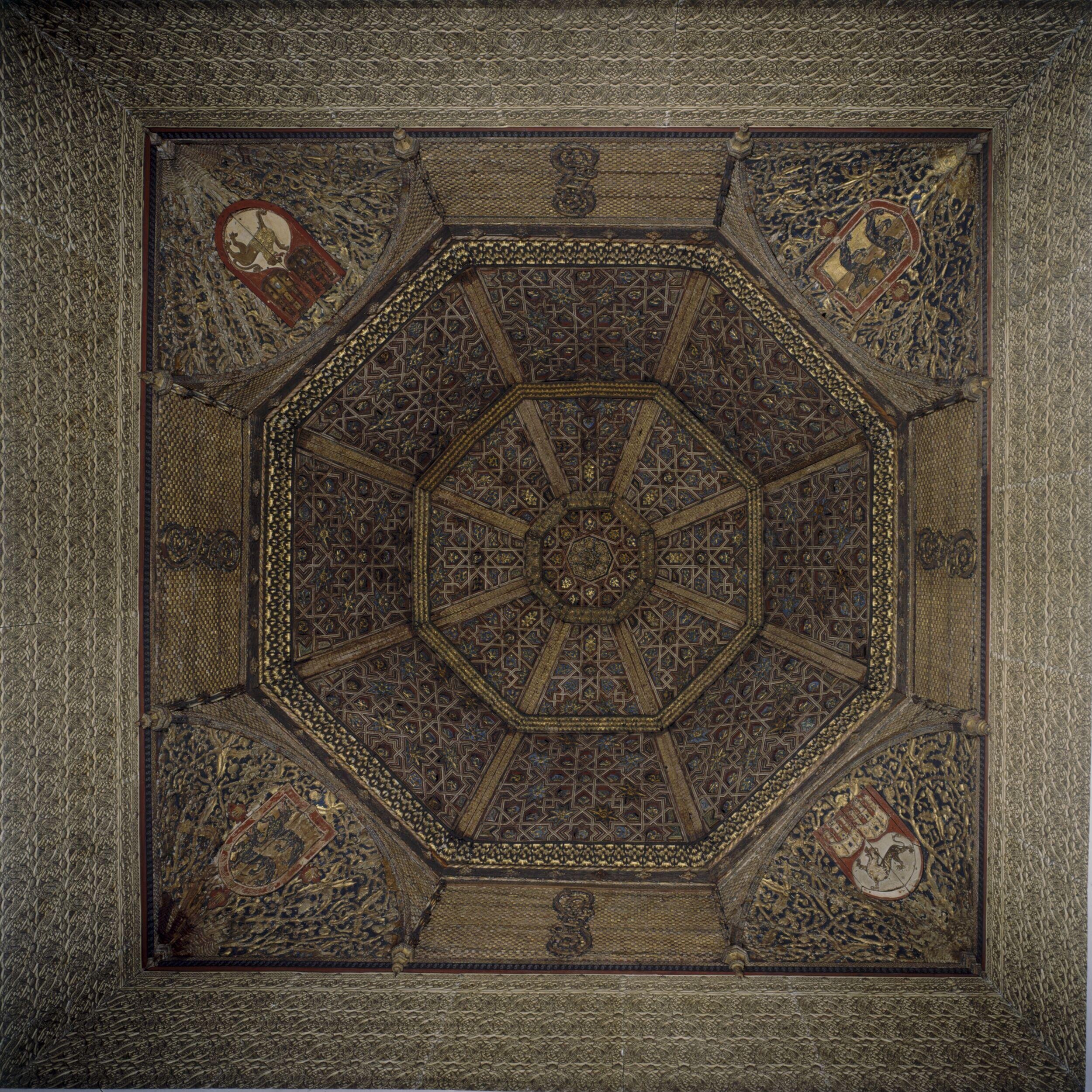
Second, our AGM will be held this year in London on Monday 9th June. It will begin at midday at the National Gallery, and a buffet sandwich lunch will be offered to members. We will then travel together by public transport to the new V&A East Storehouse, where we will view objects from the museum’s collection and the mudéjar Torrijos ceiling from Toledo. Paperwork for the AGM will be sent out to Membership a month in advance.
Further details for both events are to follow. We hope to see as many members attend as possible. For now, save the dates in your diary!
Carved, gilded and painted woodwork ceiling from the Palacio de Altamira in Torrijos (near Toledo), c.1490. Victoria and Albert Museum, London.





 ARTES
ARTES 