ARTES is delighted to announce the winners of their 2022 scholarships, with tremendous gratitude to CEEH for their support. Reports of many previous scholars can be found here
TRAVEL SCHOLARSHIPS
Irini Picolou, Durham University: £877.52
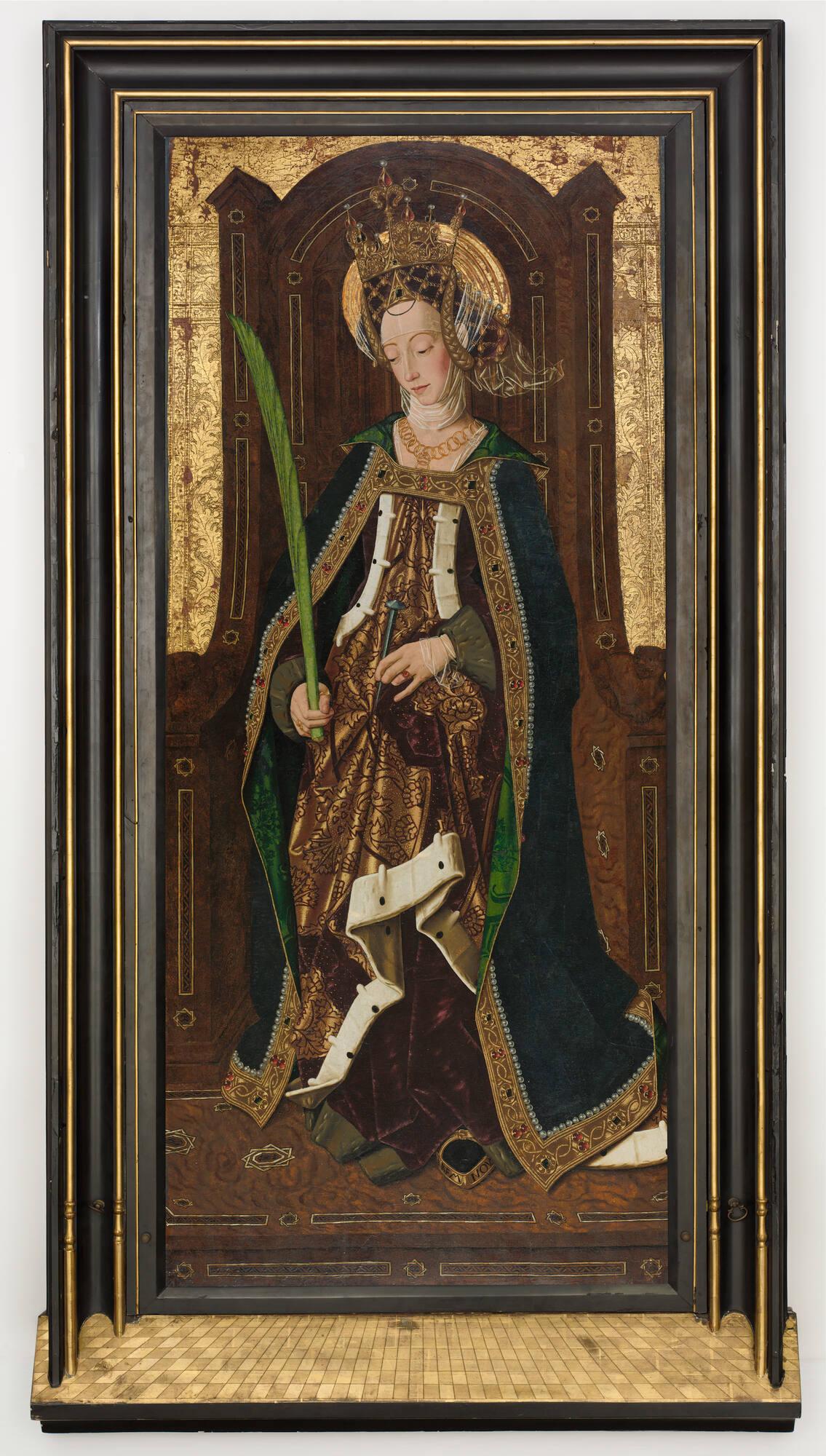
Female Martyrdom in The Altarpiece of Saint Engracia by Bartolomé Bermejo
The Altarpiece of Saint Engracia by Bartolomé Bermejo, c. 1474. Isabella Stewart Gardner Museum, CC BY-NC-ND 4.0
Bartolomé Bermejo (active 1474–98), a painter in the Crown of Aragon, produced the Altarpiece of Saint Engracia (1472–74) in Daroca. The altarpiece has since been dispersed, with the central panel and Arrest of Saint Engracia displayed in the Isabella Stewart Gardner Museum and San Diego Museum of Fine Art, and the Flagellation in the Museum of Fine Arts in Bilbao. Only the predella, the Crucifixion, and the Imprisonment remain in the Museum of Daroca. The objective of my study is to trace the altarpiece’s production for a thesis chapter which examines female sanctity in relation to Engracia’s martyrdom.
Kirk Patrick Hilario Testa, Courtauld Institute of Art: £1000
Tracing the Spanish Roots of the Santo Niño de Cebu
The Santo Niño de Cebu. Photo: Kirk Patrick Hilario Testa
My Courtauld MA dissertation focuses on the contemporary articulations of a sacred object called the Santo Niño de Cebu. This Flemish-style statue was brought to the Philippines in 1521 by Ferdinand Magellan. Current scholarship on the Santo Niño de Cebu focuses on what happened after Spanish-Filipino contact. My goal for this research project is to trace the history of the object in the Spanish context before it was brought to the Philippines.
PHD SCHOLARSHIPS FOR UK PHD STUDENTS
Nausheen Hoosein, University of York: £3000
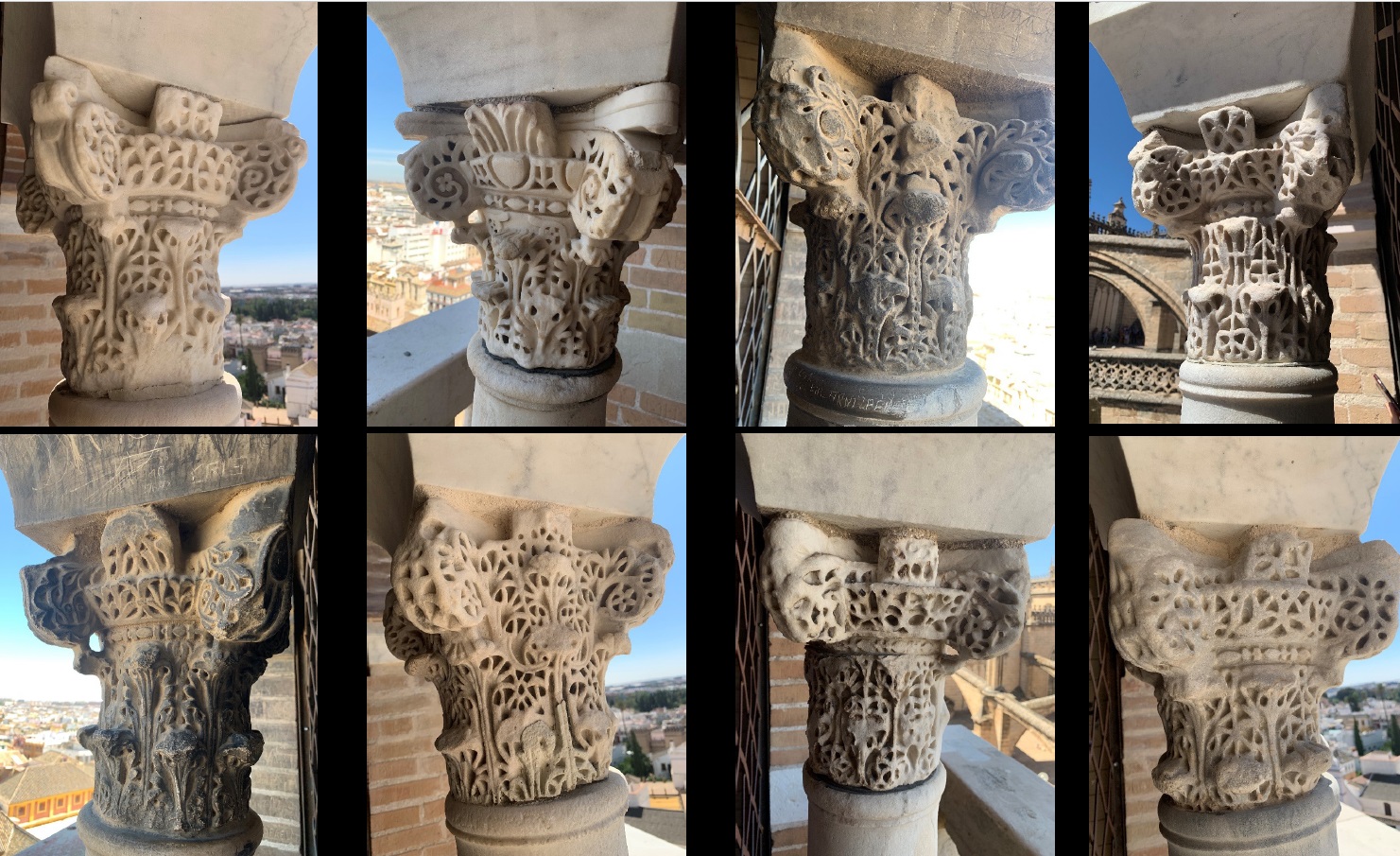
From Umayyad Madinat al-Zahra to Almohad Seville: The Reuse of Architectural Spoliain al-Andalus during the 12th century
Capitals, 10th Century, Marble. La Giralda, Cathedral of Seville (formerly the minaret of the Almohad Mosque of Seville, completed 1198), Seville, Spain (Photo: Nausheen Hoosein)
The plunder and re-use of Umayyad spolia, particularly capitals, in Almohad architecture remains understudied- although much has been written about the re-use of antiquities in the West, the same cannot be said of Islamic Spain. This project deploys an integrated text- and material-based analysis to examine two significant Almohad sites, La Giralda and Alcázar, in Seville. The project situates the sites within the renewed field of medieval Islamic spolia studies and proposes that the Almohad reuse of Umayyad marble was not a practical or triumphant one, but instead a deliberate programme of religious and political assertion of Almohad rule.
ARTES CEEH SCHOLARSHIP FOR PHD STUDENTS OR POST-DOCTORAL STUDENTS IN SPAIN WHO WISH TO CONDUCT RESEARCH IN THE UK
Paula Martín Rodríguez, Universidad de Sevilla: £3000
Isidro Gálvez: a botanical artist from 18th-century Spain
Drawing of an Embothrium emarginatum by Isidro Gálvez (Photo: Archivo del Real Jardin Botanico, FONDO REAL EXPEDICION BOTANICA AL VIRREINATO DEL PERU)
My thesis examines the figure of Isidro Gálvez, a Spanish botanical artist who dedicated his life to illustrating the Flora peruviana et chilensis, one of several Spanish botanists and draughtsmen in the project. They produced a great number of botanical illustrations that are mainly kept in the Real Jardín Botánico de Madrid. To complete my research and achieve a holistic vision of the work of Gálvez and his colleagues in an expedition to Peru and Chile I need to conduct my research in several English archives.
British regional galleries are extraordinarily rich in holdings of Hispanic art. County Durham alone has the largest concentration of Spanish artworks anywhere in the world outside Spain. In addition to Francisco de Zurbarán’s cycle of Jacob and his Twelve Sons at Auckland Castle, significant holdings can be found at The Bowes Museum, Ushaw College, Durham Cathedral, Durham University, Raby Castle, and the recently established Spanish Gallery. The County’s collections, which cover nearly 500 years, are wide-ranging, from the Galilee Chapel Altarpiece in Durham Cathedral through to Dalí’s lithographs of the Bible at St John’s College. Further afield, Hispanic artworks can be found throughout the country in galleries, museums, and country houses.
Yet, the problem remains that majority of these works are largely unknown outside academia and so have been comparatively under-researched. This two-day conference seeks to raise them to greater public prominence by shifting attention away from collections in well-established locations in or around major cities such as London and Edinburgh and encouraging new research into Hispanic art in a regional context.
On the one hand, the aim is to explore the history and politics of collecting and displaying Hispanic art. It asks how collectors, patrons, and curators have, both historically and in recent years, shaped narratives of Hispanic art. How do we account for the motivations and strategies that underpin the acquisition and display of Hispanic art? What has been the impact of these collections on the regional, national, and international contexts?
On the other hand, the conference seeks to examine individual artworks and artefacts from regional collections, evaluating their significance and trajectory from the original context of artistic production up to their relevance for audiences today. Beyond a possible focus on familiar artworks, such as Zurbarán’s Jacob and his Twelve Sons, how might the study of less explored artists and iconographies advance a more complex understanding of artistic production and cultures of display? How might we work collectively to develop and share knowledge of Hispanic art?
Presentations may relate to (but are not limited to) the following themes:
The politics of collecting and displaying Hispanic art
Curatorial practices
Faith and devotion
Pain and suffering
Rituals, ceremonies, pilgrimage
Empire, colonialism, race
Gender and sexuality
Cultural relations and transfer
Centre and periphery
Decolonization agendas
Attribution
Materiality
The conference will offer delegates a unique insight into two of County Durham’s most important collections, with the first day held in the Spanish Gallery in Bishop Auckland, and the second, at Ushaw College, Durham. The conference is organised by Andy Beresford and Claudia Hopkins (Zurbarán Centre for Spanish and Latin American Art, Durham University). Please send titles and 250-word abstracts to the conference administrator, Barbara Jackson (zurbaran.centre@durham.ac.uk) by 27 May 2022.
Thanks to the generosity of the ARTES-CEEH PhD Scholarship, I have made significant progress in the first year of my PhD at the University of York’s History of Art department. My thesis is titled “From Umayyad Madinat al-Zahra to Almohad Seville: The Reuse of Architectural Spolia in al-Andalus during the 12th century” and is supervised by Dr Richard McClary. My work explores the plunder and re-use of Umayyad spolia, particularly marble capitals, in later Almohad architecture through an integrated text- and material-based analysis to examine two significant Almohad sites, the Giralda and Alcázar, in Seville.
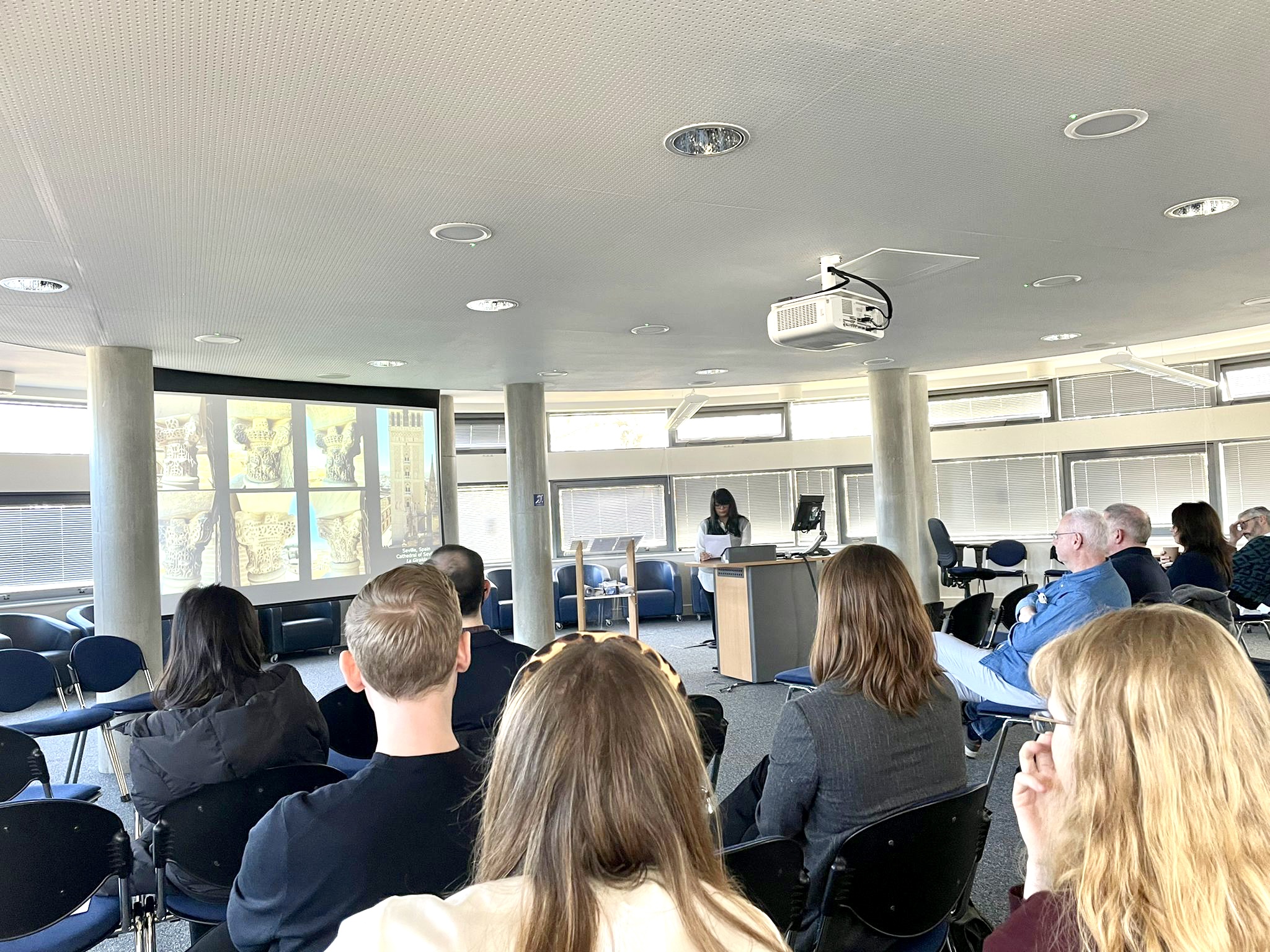
Nausheen Hoosein presenting at the “Works in Progress” Postgraduate Research Conference hosted by the Department of History of Art at the University of York (March 2022)
Since beginning the PhD, I have completed numerous tutorials required of research students, including Research Integrity, Research Data Management, and Information Security Awareness, as well as created a Professional Development Plan. These trainings have ensured that I am equipped with the necessary skills to conduct effective and ethical research in my field. I have also successfully completed the Arabic for Medievalists language course, offered through the Centre for Medieval Studies. This course, along with an advanced Spanish course I will take in the summer term, will help me in better accessing relevant primary texts that are significant for my research. I have also completed several formal supervisions with my supervisor, as well as with my Thesis Advisory Panel Member, Professor Tim Ayers. These discussions have been instrumental in shaping my research questions and strengthening my bibliography.
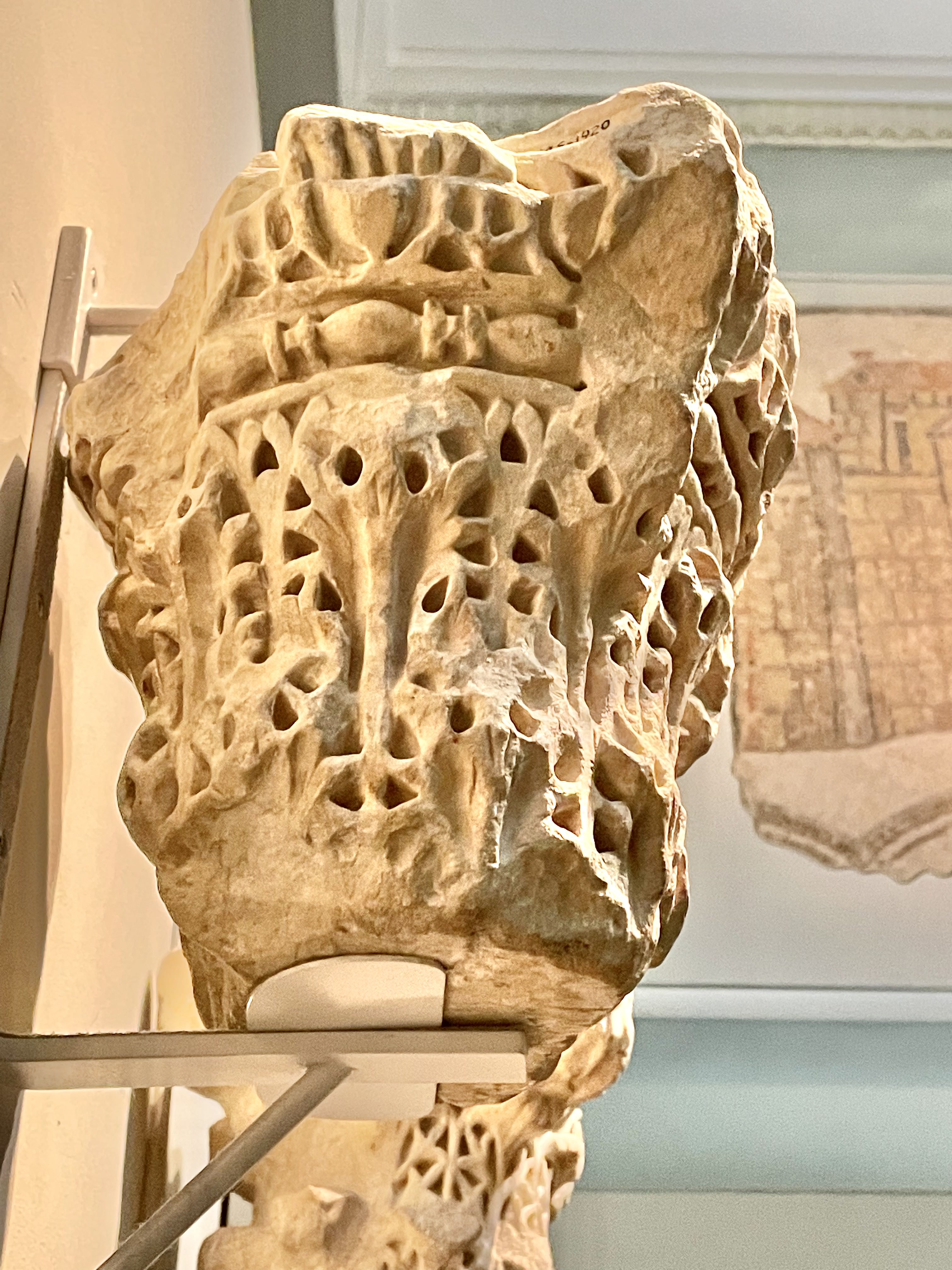
Column capital, 936-976 CE, Madinat al-Zahra. On display at the British Museum. On loan from the Victoria and Albert Museum, London, A. 145-1920.
Throughout the past year, I worked towards compiling a literature review, as well as a digital database of the corpus of caliphal capitals that are dispersed in various international collections as well as in situ at various sites in Spain. Thus far, I have been able to study the examples in London, at the Victoria & Albert Museum and the British Museum. This short research trip was instrumental in studying the capitals closely and the material observation and visual analysis will serve as an integral component of the thesis. I am already looking forward to the second year of my PhD which will hopefully include field research in various archaeological sites, museums and archives in Cordoba, Seville and Madrid. Findings from these field visits will be recorded in a digital database. This database will serve as an integral component of the research process, allowing me to compile relevant information on each object and site.
Top: Capital, late 14th century, Granada, On display at the Victoria & Albert Museum, London, 341-1866. Bottom: Capital, 960-980 CE, Madinat al-Zahra, On display at the Victoria & Albert Museum, London, A.10-1922.
In addition, I have had the opportunity to present my research at the recent “Works in Progress” Postgraduate Research Conference hosted by the Department of History of Art at York. I am also looking forward to presenting my work and collaborating with colleagues at upcoming conferences in the spring and summer including the Association for Art History (virtual), International Medieval Congress in Leeds, and Society for the Medieval Mediterranean in Crete.
In conclusion, I would like to express my sincere gratitude to ARTES and CEEH for their generous support, without which this progress would not have been possible.
Thanks to the generous support of the ARTES-CEEH Travel Scholarship, I was able to carry out archival research at the Archivo General de Indias (AGI) in Seville, Spain, during the month of August, 2021. I was searching for lists of illustrated books and images that were sent to America before 1615, when Guaman Poma’s illustrated Nueva Corónica would have been completed. Before arriving at AGI, I got in touch with Prof. Pedro J. Rueda Ramírez, who knows the documents I wanted to read backwards and forwards, so my task in relation to my doctoral research was pretty straightforward. Now come the fascinating hours of systematizing the information I gathered. I also took advantage of being in Seville to visit the Biblioteca Americanista and read Spanish-language publications regarding the book trade in America that are difficult to find in the UK. One day, I visited nearby Cordoba and walked the streets that Inca Garcilaso de la Vega would have walked on that side of the Atlantic. I’m including a photo from that day, as I escaped the heat in a forest of columns!
In addition to successfully completing the research I set out to do, the ARTES-CEEH Travel Scholarship made possible two other deeply enriching moments during my month at AGI. First, due to covid restrictions, only a reduced number of researchers were allotted desks in the archive. In order to secure a spot for the day, we had to place our names on a list as early as possible and then wait an hour or so for the archive doors to open. This meant that, during this hour each morning, researchers could get a coffee and chat about their topics. This is incredibly beneficial to, not only each of us personally, but to the field as a whole, as we can get input and feedback in a more relaxed way. Usually, getting the chance to share with researchers in a silent archive requires some effort and planning. This time, however, the space was made for us, and I’d like to thank Stephanie, Marlis, Viviana, Kate, Scott, Grant, Cody, Jesús and José for the powerful and passionate conversations we had each day. Much success to all of you and I hope we meet again.
Yeidy in Cordoba
The second special moment took place on my third day at the archive. On that day, I read a document that, from the very first line, I knew was very special. It was filled with art-historical information regarding a sixteenth century Indigenous gold and silversmith, active in both Mexico and Peru, that I had never read before. I was so sure that what I had read was special that I reached out to Prof. Tom Cummins, who agreed that it was indeed very exciting! The document provides points of entry into discussions around artistic transfer (between Mexico and Peru, as well as transatlantic), circulation and mobility, pre-guild hierarchies and structures, surveillance, authorship, Indigenous and European artistic practices and iconography, mining and materiality, imperial power and artistic tastes, and the visual cultures of colonial contact zones. I have written a note regarding the document that will hopefully be published soon in order to make it accessible to researchers. Thanks to the ARTES-CEEH Travel Scholarship, this once-known silversmith is brought back into view, generating questions around artistic practice as a result of, and in spite of, colonial invasion. Thank you so very much. Support like yours has an even more valuable role now that we are again able to travel and meet our peers face-to-face. Thank you.
Date: Thursday 21 April 2022 Time: 13.00-14.00 BST Location: Zoom and YouTube (Online)
Speakers: Dr Akemi Luisa Herráez Vossbrink, Enriqueta Harris Frankfort Curatorial Fellow, The Wallace Collection, and Professor Claudia Hopkins, Director of Durham University’s Zurbarán Centre for Spanish and Latin American Art
Description: Victorian artist-adventurer David Roberts (1796-1864) travelled extensively in Europe, North Africa and the Middle East, creating countless images of sites and people in drawings, paintings, and prints. Join Dr Akemi Luisa Herráez Vossbrink and Professor Claudia Hopkins, who will discuss Roberts’s works in the Wallace Collection and those recently featured in the exhibition Romantic Spain: David Roberts and Genaro Pérez Villaamil (7 October 2021-16 January 2022) at Madrid’s Real Academia de Bellas Artes de San Fernando.
Between 1906, when he settled in Paris, and 1912, Gris made his living as a cartoonist and illustrator for Spanish and French magazines. His drawings were narrative and, mostly, comical and satirical in tone. In his Cubist collages and papiers collés of 1912-14 figures are absent but narrative situations and social and political references are suggested by the settings and objects of his still-life compositions.
To demonstrate this, we will discuss his choice of wallpapers, newspapers, cuttings from books, labels, cigarette packaging, etc., and the connections with advertisements and decorating magazines and manuals.
Elizabeth Cowling and Emily Braun are curating for the New York’s Met Cubism and the Trompe l’Oeil Tradition. Picasso, Braque and Gris are the only Cubists represented and most of their works date from the “synthetic” period, 1912-14.
This is a hybrid event held at the Luis Cernuda Hall located at Instituto Cervantes London (15-19 Devereux Ct, Temple, London WC2R 3JJ) and online via Zoom.
Elizabeth Cowling is Professor Emeritus of History of Art and Honorary Fellow at the University of Edinburgh University. She has published widely on twentieth-century European art and specialised in the work of Picasso.
Her publications include Picasso: Style and Meaning (Phaidon, 2002), Visiting Picasso: The Notebooks and Letters of Roland Penrose (Thames & Hudson, 2006), and Picasso Portraits (National Portrait Gallery, 2016).
She has co-curated various exhibitions, including Dada and Surrealism Reviewed (Arts Council of Great Britain, 1978), On Classic Ground: Picasso, Léger, De Chirico and the New Classicism, 1910-1930 (Tate Gallery, 1990), Picasso: Sculptor/Painter (Tate Gallery, 1994), Matisse Picasso (Tate; Grand Palais, Paris; MOMA, New York, 2002-3), and Picasso Looks at Degas (Clark Art Institute, Williamstown; Museu Picasso, Barcelona, 2010-11). Cubism and the Trompe l’Oeil Tradition, which she is co-curating with Emily Braun, opens at the Metropolitan Museum, New York, in October 2022.
About the Annual Glendinning Lecture
Ever since ARTES (Iberian & Latin American Visual Culture Group) was founded back in 2000 we have aimed to work closely with the Instituto Cervantes, and have been warmly supported by the Instituto in every way.
ARTES organises and promotes numerous educational and cultural events related to Iberian and Latin American visual arts, and on many occasions, we have held the most pleasurable and well-attended events at the Instituto Cervantes.
The Instituto Cervantes also generously sponsors the newsletter produced annually by ARTES. Since its inception, ARTES has held an annual lecture given by an eminent speaker on Iberian or Latin American art.
Following the decease of our much revered late President, Nigel Glendinning, in 2013 we decided to re-name this event the Glendinning Lecture in his honour. We are most grateful to the Instituto Cervantes for their continuing support.
We are pleased to announce the sixth seminar of our Research Seminar Series:
9 March, 6.00 PM (GMT), Dr Juan Ricardo Rey-Márquez (Buenos Aires), ‘Simulated Nature: Colour and texture in the eighteenth-century botanical drawings of José Celestino Mutis and his circle‘
Abstract: During the last quarter of the 18th century, the Spanish crown sponsored several expeditions throughout its territories. Among several scientific subjects that encouraged such endeavors, botany had a special place given its paramount importance for the economy and the arts. But it also proved to be a challenge to the Spanish botanist. Since the Hispanic American flora defied the sexual system of Carl von Linnaeus, mainly based on the written description of the flower, Linnaeus ideas were not easily applicable. Besides, collecting dried specimens on the field to be sent to Europe was especially difficult in terms of conservation because of the heat and humidity of the tropics. How could they possibly prove the exceptional features of Hispanic American flora using only textual description? Could it be possible to solve the issue of decay and send well-preserved specimens to Spain?
In this talk, I will discuss the case of the Botanical Expedition to New Granada whose production of images was developed by an exceptional team of artists directed by José Celestino Mutis. By studying some of the drawings made by the Mutis team, we will see how the development of a particular painting technique served to render the ultimate visual description of a plant: an icon whose visual features were as realistic as the ones of the living thing.
We are delighted to announce two further online talks later this month, which will also focus on colonial Latin America and materiality :
16 March, 6.00 PM (GMT), Professor Charlene Villaseñor Black (UCLA), ‘On Shells and Sustainability in the Early Modern Iberian World’
30 March, 6.00 PM (GMT), Professor Gabriela Siracusano (CONICET, National Research Council, Argentina), ‘Changing Colours. The case of the Lady of the Miracles of Salta’
These three seminars have been jointly organised by the Zurbarán Centre and Dr Emily Floyd (History of Art, UCL) from the ARTES Iberian and Latin American Visual Culture Group, in association with the Embassy of Spain and the Instituto Cervantes.
Jointly organised by Durham University’s Zurbarán Centre, the ARTES Iberian & Latin American Visual Culture Group and the Instituto Cervantes, this live online seminar series provides an open forum for engaging with innovative research relating to the visual arts in the Hispanic world.
The forthcoming three seminars focus on colonial Latin America and materiality.
9 March, 6.00 PM (GMT) – Dr Juan Ricardo Rey-Márquez (Buenos Aires), ‘Simulated Nature: Colour and texture in the eighteenth-century botanical drawings of José Celestino Mutis and his circle’
16 March, 6.00 PM (GMT) – Professor Charlene Villaseñor Black (UCLA), ‘On Shells and Sustainability in the Early Modern Iberian World’
30 March, 6.00 PM (GMT) – Professor Gabriela Siracusano (CONICET, National Research Council, Argentina), ‘Changing Colours. The case of the Lady of the Miracles of Salta’
David Davies was an active member of ARTES since its inception.
A Welshman from the Valleys, David was a middle weight champion boxer in his youth. He joined UCL in 1967 and is said to have put the History of Art Department on its feet. He was ‘a teacher enraptured by his subject matter’ (Charles Ford Senior Lecturer in History of Art, UCL)
He followed rugby. I understand this, it’s a passion. A Welshman from the Valleys would be there in heart and soul. Once in Cardiff to open a Touring Arts Council Show I rushed to touch the gates of Cardiff Arms Park. My childhood home had echoed with the sound of Welsh rugby supporters singing in the Cardiff Arms stadium.
Holly Trusted aka Majorie Trusted says of David:
‘David was immensely knowledgeable about Spanish art, and immensely generous with that expertise. He visited the V&A stores when I was first working on the collection of Spanish sculpture in the late 1980s to look at and discuss with me sculpture from Seville. He was especially struck by a lead statuette of the Virgin of the Immaculate Conception after Juan Martínez Montañés, rightly pointing out that there was an active industry in the eighteenth century of producing such devotional figures for domestic use. On another occasion soon afterwards David showed me a beautiful turned wooden bowl made in Spain that he owned, noting that the wood exemplified the use of wood in Spain for articles both artistic and utilitarian. With both these instances he was emphasising the intertwined nature of art and everyday life.’
As a postgrad student at the Royal Academy Schools, he found me sitting in front of John on Patmos by Velasquez, making a large pencil drawing over several days. He talked to me about Spanish painters and took a deep interest in the drawing and its process. I knew him from the terrific lunchtime lectures he gave in the old basement lecture theatre in the 1980’s which my friends and I would rush to attend – covering the distance in record speed from the RA to the NG. Probably he recognised us, we were always a little late. Erudite, complex, challenging and informative, we were gripped by the content and loved El Greco, discussing paint surface and technique in our studio on return. His dedication to El Greco scholarship was infectious. Later I sent him a colour pencil copy of The View of Toledo one of several I made when the painting was on loan to the NG from the Met, NY. Later he wrote an essay for the El Greco catalogue, on his landscapes which wasn’t used, but said he propped up the drawing to write the article and that ‘it had something.’
Here is a quote from his catalogue essay for the exhibition at The National Gallery of Scotland, ‘El Greco: Mystery and Illumination’ which he curated in 1989:
‘The dramatic device of painting the city in a thunderstorm might have stemmed from a literary tradition. Pliny in his Natural History acclaims Apelles because “he even painted things that cannot be represented in pictures- thunder, lightning and thunderbolts, the pictures known respectively under the Greek titles of Bronte, Astrape and Ceraunobilia” (XXV.97). Artistically, El Greco is clearly responding to the tradition established by Giorgone in his “tempest” which might have been inspired by the same literary source. Yet El Greco has extended Giorgione’s image by fusing the two traditions of the topographical city view and the emotive landscapes of the Venetian school. The city is identifiable but interpreted subjectively to reveal its individual character. In this manner El Greco has painted an astonishing portrait of the city of Toledo.
Toledo seems to be gripped in the rhythms of the landscape, while the buildings, shown almost as splinters of light, seem electrified. This startling effect is enhanced by El Greco’s treatment of colour whereby the yellowish – white highlights of the grey stone buildings are juxtaposed with blue grey shadows, and the virulent greens make a strident contrast with the red brown earth colours. The townscape is not topographically accurate. El Greco has deliberately removed the Cathedral from the west side of the city and placed it to the left of the Alcazar, the Royal Palace. It would seem he is making some concentrated statement about the pinnacles of Church and State. Both appear to endure in the midst of an apocalyptic storm that has burst upon the city.’
Devoted to teaching in front of the paintings he loved, latterly he was unhappy about a UCL decision not to take students to the National Gallery and discuss works, teaching them how to take time looking and enjoying the experience of thinking ones way through the image. ‘I start with the object’ he said.
One year in front of Titian’s Philip ll he spoke to me about of Philips hose, wrinkle free pale cream, and was amused at how Antonis Mor had shown the court jester’s wrinkled hose, a cheaper version in an adjacent picture. He wrote well on court dress and its symbolism and status.
He was a complex and original thinker, not given to the fashion of the moment, a man who followed his own path. He was raised in a communist party family and in his scholarship took a deep interest in Catholic doctrine and practice. He knew the function of paintings in a liturgical sense. He knew their purpose before they became art objects in galleries. This depth of knowledge is increasingly rare, yet to know it changes how we see the works.
Years later at the Instituto Cervantes he suggested I join ARTES as I was about to go to Madrid to see the Prado Exhibition, ‘The Spanish Portrait’. Always encouraging, he liked the company of painters and when I asked him who to read on Velasquez he suggested Peter Greenham, painter and keeper of the RA Schools. I was surprised but Greenham’s tender description of faces in his Madrid pension as being those of Velasquez sitters seemed modest and true.
He was always at our events, a great supporter of ARTES and at our last meeting met me at South Kensington Station where I drove him to the Sala Luis Vives at The Spanish Embassy. Soon afterwards he posted me ‘The Body politic of Spanish Hapsburg Queens’, a long essay analysing the dress, role and position of the Spanish Princesses Queens at Court in Madrid. He was frail. I did not see him again.
I am grateful to him for his interest and encouragement and my one regret is that I did not study with him as my supervisor. Xanthe Brooke, Xavier Bray and doubtless other ARTES members did. It was a great privilege to have known him.
I will leave the last word to David:
‘Likewise Titian’s mountainous landscape (The Presentation of the Virgin/Accademia Venice) may have been influenced by Petrarch’s “Ascent of Mount Ventoux “ Initially Petrarch climbs the mountain to admire the view but on reaching the summit he read the passage in St Augustine’s “Confessions” in which the saint chides men for admiring earthly things, such as high mountains, and thereby deserting themselves. Stunned by this truth, Petrarch recognised that the physical climb of the mountain should be forsaken for the ascent of the mind to God.’
From The Body Politic of Spanish Hapsburg Queens, David Davies (Madrid: Editiones Polifemo, 2008)
ARTES invite submissions for the Juan Facundo Riaño Essay Prize for the best art-historical essay on a Hispanic theme. The deadline is 30th April 2025
To encourage emerging scholars that are based in the UK, ARTES, in collaboration with the Embassy of Spain, awards an annual essay medal to the author of the best art-historical essay or study on a Hispanic theme, which must be submitted in competition and judged by a reading Sub-Committee. The medal is named after Juan Facundo Riaño (1829-1901), the distinguished art historian who was partly responsible for a growing interest in Spanish culture in late nineteenth-century Britain. The winner is also awarded a cash prize of £400, and the runner-up is awarded a certificate and prize of £100 – both prizes are generously sponsored by the Office for Cultural and Scientific Affairs of the Embassy of Spain. Prize-winners also receive a year’s free membership to ARTES, and the winning essays are considered for publication in the annual visual arts issue of Hispanic Research Journal. See the information about eligibility and rules of competition. The deadline is 30th April 2025
Entering the Essay Competition
The judges will be looking for evidence of originality of thought and high academic quality. Submissions must focus on the production, reception or impact Spanish art, architecture or visual culture, defined in the broadest possible terms, whether locally or globally. Alternative contributions in the form of photo or video essays will also be considered, provided that they demonstrate originality, high academic quality and high production standards.
As a permanent reminder of the winner’s achievement, an essay medal is awarded, together with a cash prize of £400. The winning essay will be considered for publication in the annual visual arts issue of Hispanic Research Journal. The runner-up receives a prize of £100, and an essay so commended may also be considered for publication in Hispanic Research Journal. Both prize-winners also receive a year’s free membership to ARTES.
Essays are submitted by 30th April each year, and are read by the Essay Medal Committee, appointed by ARTES. The decision of the Committee shall be final and Winners will be announced May 31st, 2025. Presentation of the medal is made at a special Award ceremony on June 27th, 2025 to which winners are invited to give a 30 minute presentation based on their essay. The result is announced on the ARTES website and the website of the Spanish Embassy.
Pleasenote that Winners of scholarships and prizes funded by the Spanish embassy must be able to attend the Award Ceremony held in London in order to be eligible. Travel within the UK will be funded.
Previous Winners
2024: No Award
2023: Isabelle Kent, a PhD candidate at Cambridge University, for ‘Becoming Actaeon: Titian and the Conceptual Gaze in Velázquez’s Las Hilanderas‘.
2022: Patricia Manzano Rodríguez, a PhD candidate at the University of Durham, for ‘The Upper half of Las Meninas’.
2021: Diana Bularca, formerly a MA student at the Courtauld, for ‘Wilfredo Lam’s Strategic Language’
2020: Dr Simon Park, an early career scholar at the University of Oxford, for ‘Chasing Wild Men (in Silver)’.
2019: No award
2018: Javier Vicente Arenas, a Masters student at the Warburg Institute, for ‘Constructing a “Transmediterranean” Identity: Rodrigo de Borgia’s Italian Angels in Valencia Cathedral (1472-81)’.
2017: David Cambronero, a MA student at The Courtauld, for ‘Lighting the Great Mosque of Cordoba in the Caliphal Period’.
2016: Leah McBride, a PhD student at Glasgow University, for ‘‘The grave is only half full; who will help us fill it?’: The Politics of Trauma in Alfredo Jaar’s Rwanda Project‘.
2015: Rebekah Lee, a PhD student at the University of York, for ‘Catherine of Austria, Queen of Portugal and the Courtly Portrayal of Middle Age’.
2014: Lesley Thornton-Cronin, a first year PhD student at Glasgow University, for ‘Image-Making by Means of Metaphoric Transposition in the Work of Joan Miró’.
2013: Maite Usoz, a third year PhD student at King’s College, London, for ‘Sex and the City: Urban Eroticism in Rodrigo Muñoz Ballester’s Manuel Series’.
Regulations for the Essay Medal
1. Entrants should ideally be resident or studying in the UK, but exceptions may be made if entrants can demonstrate sustained engagement with students, scholars, objects or materials in the UK.
2. There is no age limit for entrants, but the Essay Medal Committee reserves the right to give preference to entrants who have not previously published in the field of Hispanic visual arts. We welcome submissions from researchers in a variety of circumstances, but envisage that most essays will be submitted from early career scholars, post-graduate students or undergraduates with exceptionally good end-of-degree dissertations. Details of degrees or qualifications, as well as previous publications, must be submitted together with the submission (ie in the cover email, but not in the main text.
3. Visual arts are defined in their broadest sense to include all material and visual culture, including film and photography, but our collaboration with the Spanish Embassy means that essays must focus on the production, reception or impact of Spanish art, architecture or visual culture, defined in the broadest possible terms, whether locally or globally.
4. The essay must not have been previously published and must not have been awarded any national or international prize. A note of any departmental prizes awarded to it should accompany the email by which the submission is sent.
5. Essays may be up to 10,000 words in length, including bibliography (though this is not not necessary if full footnotes are given), all notes and appendices. Shorter submissions will not be penalised on grounds of length, but overlength essays will be refused. A word count and a summary of up to 250 words (additional to the work total) must be included. Submissions in the form of photo essays or videos (up to 25 minutes in length) will also be considered.
6. The submission should demonstrate original thinking. It may be based on a dissertation, and may involve original research, although submissions based on a survey of secondary material will also be considered if they are of suitable quality. However, the submission should be self-contained and especially prepared for this competition. The submission should demonstrate original thinking. It may be based on a dissertation, and may involve original research, although submissions based on a survey of secondary material will also be considered if they are of suitable quality. Essays that engage with Spanish-language scholarship are especially encouraged.
7. Entries must be written in English and double-spaced. Diagrams or illustrations should be included and captioned. Sources of information and images must be acknowledged, together with information about image rights.
8. The winning essay may be considered for publication in the visual arts issue of Hispanic Research Journal, subject to the usual process of refereeing, and to acceptance by the Editors, whose decision on this is final. In the event of the essay being accepted for publication, some reworking may be required. Essays may not be offered for publication elsewhere while they are sub judice.
9. In the case of any dispute about the award, the decision of the ARTES Essay Medal Committee shall be final.
10. ARTES reserves the right to make no award if none of the entries is considered worthy.
11. The closing date for entries is 30th April each year. Essays received after this date will not be considered.
12. A PDF of the essay, including images, should be sent to David.cambronerosanchez@yale.edu To ensure anonymity please do not put your name on the essay, and omit any acknowledgements.
13. Any queries should be directed to David.cambronerosanchez@yale.edu







 ARTES
ARTES 