ICDAD Talk (In Spanish, Online) – Miquel Barceló: una conversación sobre su viaje con la arcilla / Miquel Barcelón: A Conversation about his Journey with Clay

Miquel Barceló exhibition at Fundació Catalunya La Pedrera in Barcelona
Miquel Barceló speaking at the exhibition at Fundació Catalunya La Pedrera in Barcelona

ICDAD Talk en Español
Monday, July 29, 2024 
(16:00 London ||17:00 Paris || 9:00 Mexico City || 11:00 New York || 00:00 Tokyo)
Online Zoom Meeting (approx. 1 hour program)

Miquel Barceló: una conversación sobre su viaje con la arcilla

Esta charla del ICDAD reúne al escritor y comisario Enrique Juncosa y a la comisaria Margaret Connors McQuade para hablar de la obra menos conocida de Miquel Barceló en cerámica, objeto de una exposición retrospectiva en la Fundació Catalunya La Pedrera de Barcelona (sede de la popular casa de Antonio Gaudí) desde el 8 de marzo hasta el 30 de junio de 2024.

La conversación comenzará con una breve introducción de la rica historia de la cerámica en España, que abarca desde el tercer milenio a.C. hasta principios del siglo XX, a partir de los fondos del Hispanic Society Museum & Library de Nueva York. El estudio se centrará en la materialidad de la cerámica a lo largo de los siglos y servirá para estimular el debate sobre la importancia de la alfarería como primer gran avance tecnológico de la humanidad. Seguidamente, se abordará la trayectoria artística de Miquel Barceló (Felanitx, Mallorca, 1957), pintor, dibujante y uno de los artistas más internacionales de su tiempo (su obra se ha expuesto en los principales Museos de Boston, Montreal, París, London, Dublín, Roma, Madrid, Barcelona, México, Río de Janeiro o Tokio).  Comenzó a trabajar con cerámica a finales de 1994, casi por casualidad. Sin embargo, desde entonces, la cerámica se ha convertido en una práctica esencial. Destacan sus enormes murales de cerámica para una de las capillas de la Catedral gótica de Mallorca, terminados en 2004.

Pottery Bowl / Cuenco, Manises, ca. 1370. Tin-glazed earthenware with cobalt and luster decoration / loza vitriada al estaño con cobalto y lustre. Diam. 45.7 cm. Hispanic Society Museum & Library, New York.  Fotografía Schecter Lee

Miquel Barceló: a conversation about his journey with clay

This ICDAD talk joins writer and curator, Enrique Juncosa, and curator, Margaret Connors McQuade, to discuss the lesser known work of Miquel Barceló in ceramic, the subject of an exhibition at Fundació Catalunya La Pedrera in Barcelona (the famous apartment building designed by Antoni Gaudí in Barcelona) from March 8 until June 30, 2024.

The conversation will begin with a brief introduction of the rich ceramic history of Spain spanning from the 3rd millennium BC through the early twentieth century drawn from the holdings of the Hispanic Society Museum & Library in New York. The survey will be centered on the materiality of ceramic ware over centuries and serve to stimulate discussion on the importance of pottery as the first major technological breakthrough of humankind.  Next, it will analyze the career of a Spanish artist Miquel Barceló (born 1957). He became internationally known in the early 1980s as a painter and draughtsman, having had by now museum shows in Boston, Montreal, Paris, London, Dublin, Rome, Madrid, Barcelona, Mexico City, Rio de Janeiro and Tokyo, among other cities. He started making ceramics at the end of 1994, almost by chance. Since then, however, ceramics have become a major part of his work. He built huge ceramic murals for one of the chapels of Mallorca gothic Cathedral finished in 2004.

This talk will be moderated by Mariàngels Fondevila, Conservadora, Art Modern i Contemporani / Curator, Modern & Contemporary Art, Museu Nacional d’Art de Catalunya. 

Enrique Juncosa (Palma de Mallorca, España, 1961) es escritor y curador. Fue director del Museo Irlandés de Arte Moderno en Dublín entre 2003 y 2012, tarea por la cual recibió la Orden del Mérito Civil del Gobierno de España. Anteriormente, había sido Subdirector del Museo Reina Sofía de Madrid y del IVAM de Valencia. Juncosa ha publicado dos libros de relatos, nueve colecciones de poemas y numerosos ensayos sobre arte contemporáneo. Ha comisariado cerca de 80 exposiciones en museos de todo el mundo.

Enrique Juncosa (Palma de Mallorca, Spain, 1961) is a writer and a curator. He was director of the Irish Museum of Modern Art in Dublin between 2003 and 2012, task for which he was granted the Order of the Civil Merit by the Spanish Government. Before, he had been Deputy Director of Museo Reina Sofía Madrid and IVAM, Valencia. Juncosa has published two books of short stories, nine collections of poems, and many essays on contemporary art. He has curated near 80 exhibitions in museums all over the world.

Margaret E. Connors McQuade es una conservadora independiente de Nueva York.  Hasta hace poco era Directora Adjunta y Jefa de Colecciones del Hispanic Society Museum & Library, donde desempeñó diversas funciones durante casi 31 años.  Se doctoró en Historia del Arte por el Graduate Center de la City University de Nueva York en 2005. Además de una serie de exposiciones a pequeña escala en la Hispanic Society, Margaret fue comisaria de las exposiciones Talavera Poblana: Four Centuries of a Mexican Ceramic Tradition (Americas Society 1999), y Alcora en Nueva York: La colección de cerámica de Alcora en el Museo de Bellas Artes de Castellón de la Plana y en el Museo de Bellas Artes de Valencia, 2005. Actualmente es comisaria, junto con Alexandra Frantischek Rodriguez-Jack, de la exposición, A Room of her Own: The Estrados of Viceregal Spain, que se inaugurará en la Hispanic Society el 7 de noviembre de 2024.

Margaret E. Connors McQuade is an independent curator from New York.  Until recently, she was Deputy Director and Head of Collections at the Hispanic Society Museum & Library, where she worked in a number of roles for nearly 31 years.  She received her Ph.D. in art history from the Graduate Center at the City University of New York in 2005. In addition to a series of small-scale exhibitions at the Hispanic Society, Margaret curated the exhibitions, Talavera Poblana: Four Centuries of a Mexican Ceramic Tradition (Americas Society 1999), and Alcora en New York: La colección de cerámica de Alcora at the Museo de Bellas Artes de Castellón de la Plana and Museo de Bellas Artes, Valencia, 2005. She is currently co-curating with Alexandra Frantischek Rodriguez-Jack the exhibition, A Room of her Own: The Estrados of Viceregal Spain, which opens at the Hispanic Society on November 7, 2024.

Register Here! 
You will be sent a link shortly before the program. 

This ICDAD organized talk is the fifth in a series of online conversations with decorative arts and design professionals. 

CALL FOR PAPER: Medieval Iberia in a Connected World – The Raw-Materials Record (2025 International Congress on Medieval Studies)

Session Title: Medieval Iberia in a Connected World – the Raw-Materials Record

Importance:
This session aims to contribute to the production of knowledge about the Global Middle Ages by analyzing the role that the Iberian Peninsula played in the trade of raw materials. On the one hand, the aim is to advance the knowledge of the Iberian Peninsula as a point of arrival/departure of raw materials from not only extra-peninsular but also extra-European territories. In addition, it is also intended to address the representations and symbolism of those raw materials from outside the peninsula that they acquired when they arrived there.

Method:
This session will create a space for methodological reflection. It thus aims to bring together researchers from very different disciplinary perspectives, here including not only the Humanities but also scholars from the Experimental and Natural Sciences. This session will highlight the need for cross-cultural approaches to a more comprehensive approach to Medieval Iberia.

Description for Call for Papers:
We invite papers for one session that might contribute to understand Medieval Iberia in a connected world by addressing the raw-materials record. Papers may delve into issues of short, medium and long distance trade; the subsequent use of these raw materials in the production of objects, artifacts or buildings; as well as the meaning and symbolism that can be identified from them in visual and literary culture. Proposals for papers will be accepted through September 15 and need to be submit at: https://icms.confex.com/icms/2025/paper/papers/index.cgi?sessionid=6341

Delivery Mode: Hybrid session

Organizers:
Erika Loic (eloic@fsu.edu)
Alicia Miguélez (amiguelez@fcsh.unl.pt)

Sponsoring Organization:
Instituto de Estudos Medievais, Univ. NOVA de Lisboa

Keywords:
Medieval Iberia, Global Middle Ages, Raw-Materials, Trade, Reception and Symbolism

Upcoming ARTES Trip: Visit to Valladolid and Madrid

ARTES is excited to plan an enthralling short trip to Spain in early December to visit two major exhibitions: One monographic shjow at the Museo Nacional de Escultura in Valladolid, dedicated to the Baroque Sculptor Luisa Roldán (1652-1706), and the other to a major show on sculpture at the Museo Nacional del Prado: Hand in Hand. Sculpture and Colour in the Golden Age.

Proposed Itinerary:

Tuesday 3 December: Museo Nacional de Escultura (Valladolid) – Luisa Roldán exhibition with curators, and the renowned Roldán Expert Catherine Hall-van den Elsen and ARTES President, Holly Trusted.

Wednesday 4 December: Museo del Prado (Madrid) – Visit the exhibition Hand in Hand with the curator Manuel Arias, followed by a visit at 5pm to Factum Arte Madrid, an interesting company specialising in reproductions. (Glass of wine included).

Thursday 5 December: Royal Collections Madrid; details to be confirmed.

As usual, ARTES members are advised to book their own transport and accommodation. Valladolid is approximately two hours from Madrid by train. If you wish to attend the visit, please notify Piers Baker-Bates via email (piers.baker-bates@open.ac.uk) by 30th June.

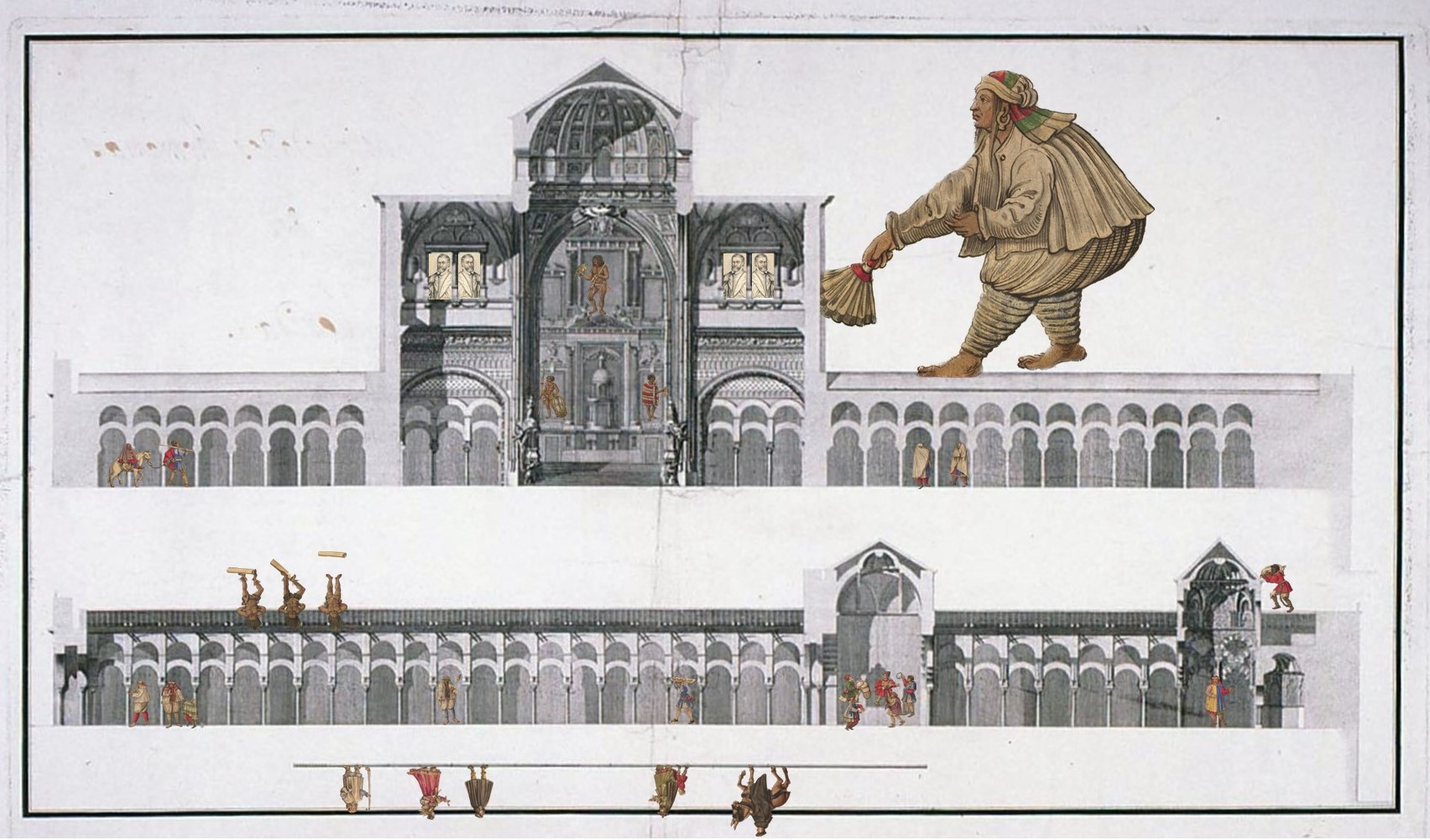
Glendinng Lecture 2024 – The Islamic monuments in Spain as historical devices (16th to 18th centuries)

When: May 13th, 2024, 6pm UK Time
Where: Instituto Cervantes of London

What history of Spain could be written using the Islamic monuments of Al-Andalus as sources?
Were the Mosque of Córdoba, the Giralda of Seville, and the Alhambra of Granada part of the
nation’s history? What interest could an Arabic inscription or a decorative fragment of
ataurique have at a time when admiration for classical ruins and relics of the martyrs was
prevalent? These questions directly engaged some of the most prominent Iberian historians of
the 16th, 17th, and 18th centuries. The controversy took shape during the Alpujarras
Rebellion, reached its zenith during the expulsion of the Moriscos, and remained active
throughout the Early Modern Period. On one hand, there was a need to explain these
remnants of the past within a general framework that acknowledged the importance of
historical monuments while seeking to establish cultural and religious homogeneity in conflict
with the recent history of the Iberian Islam. On the other hand, it was understood that the
monumental power of these buildings could be of some use in the historical debates about the
origin of Spain and its ecclesiastical history, even competing with the ruins of ancient Rome. In
this overall context, the lecture will address issues such as tensions between transformation,
preservation, interpretation, and appropriation of monuments in a cross-cultural context,
historical forgeries, techniques of describing and analyzing buildings as historical sources, the
relationship of monuments to the religious conflicts of the time and to the Morisco population,
the impact of buildings on city life, and the doubts of historians when confronted with writing
about controversial matters.

Antonio Urquízar-Herrera (Córdoba, Spain, 1973) is Full Professor at the History of Art
Department of the UNED, Madrid. He has published several works on Early Modern Art in
Spain, among them Admiration and Awe. Morisco Buildings and Identity Negotiations in Early
Modern Spanish Historiography (Oxford University Press, 2017), and Coleccionismo y nobleza.
Signos de distinción social en la Andalucía del Renacimiento (Marcial Pons, 2007). He is PI of
the research group Arte y Pensamiento (https://artepensamiento.hypotheses.org/) and has
been Chair to the COST Action CA18129 IS-LE Islamic Legacy: Narratives East, West, South,
North of the Mediterranean (1350-1750), that has brought together more than 250
researchers coming for 35 European and Mediterranean countries (https://is-le.uned.es/). For
further information, see here

For ONLINE ATTENDANCE, Please register your attendance for this event here.

For IN-PERSON ATTENDANCE, Please send an email to artesiberia@gmail.com to confirm your place, before May 5th.

Seminar Session – Copied Singularities: Tracking Animal Illustrations around the Early Modern World 

Detail of animals, Ferdinand Verbiest, A Complete Map of the World, 1674

When: 17th April at 6pm (UK Time) via Zoom
Zoom Link: https://durhamuniversity.zoom.us/s/95933854468

Artes would like to invite all to the next seminar session as part of the Zurbarán Center for Spanish and Latin American Art-Artes seminar series. In this next session, Dr. Lisa Voigt (Yale University) will be presenting Copied Singularities: Tracking Animal Illustrations around the Early Modern World

Lecture Description:
Knowledge of distant animals was spread, shaped, and transformed through the global circulation of not just travelers and the animals themselves, but also of printed illustrations, all of which moved in multiple directions in the early modern period. In this talk, I will track some of the surprising routes of exotic animals and their images in print (in particular crocodiles and armadillos), and draw connections between the purpose and practice of copying in the early modern period and the ways that Artificial Intelligence generates and sometimes “hallucinates” images based on an existing textual and visual corpus.

Lisa Voigt is Professor of Spanish and Portuguese at Yale University. She is the author of Spectacular Wealth: The Festivals of Colonial South American Mining Towns (University of Texas Press, 2016) and Writing Captivity in the Early Modern Atlantic: Circulations of Knowledge and Authority in the Iberian and English Imperial Worlds (University of North Carolina Press, 2009), which won the Modern Language Association’s Katherine Singer Kovacs Prize for an outstanding book in Latin American and Spanish literature and cultures. She is Special Issues Editor of Colonial Latin American Review, and her co-edited special issue on Mapping the Rituals of the Portuguese Empire is forthcoming from Portuguese Literary & Cultural Studies this spring. This talk derives from a collaborative book project on copied travel account illustrations with Prof. Stephanie Leitch (Florida State University).

Scholarship Opportunity – The Klesch Collection Scholarship for Graduate Studies in Renaissance and Baroque Painting

The Klesch Collection is proud to support academic excellence and is committed to promoting
the training of the next generation of Art Historians through a scholarship for graduate studies in
Baroque and Renaissance painting. These scholarships have supported the global studies of
graduate students (MA, MPhil, or PhD level), with the aim of contributing to their academic and
professional development. Scholarship recipients are chosen based on merit and quality of their
application.

Who can apply?
Any graduate student who has been accepted into a full-time Art History MA, MPhil or PhD
course of study worldwide, beginning the next academic year. PhD students are welcome to
apply for any year in their programme. Applications will be considered from students who will
focus/are focusing their studies on European and British painting of the Renaissance and
Baroque periods (c. 1400–1700).

What does The Klesch Collection Scholarship offer?
 A grant towards the yearly cost of the university fees.
 A paid internship opportunity at the collection for a minimum of 1 month.

Internship
The Klesch Collection Scholarship offers young academics the opportunity to immerse
themselves into the daily running of the collection during a paid internship of a minimum of 1
month. Scholarship recipients will be invited to work with each of our departments, learning the
inner workings of a collection through curation, research, logistics and content. The exact dates
and details of the internship are to be agreed upon.

How to apply

We are now accepting applications for the 2024–2025 scholarship.

Students wishing to apply to The Klesch Collection Scholarship will need to contact The Klesch
Collection directly. The following documentation needs to be submitted via email to
contact@thekleschcollection.com by 20th of June of the same year in which their course starts or
programme continues:

Application form, available on the website, here.
Copy of the acceptance letter from the University that you will be attending.
Two letters of recommendation. These must be sent to us directly by the
recommenders. 


For more information, visit here

Job Posting – Assistant Professor in Global History of Art, Trinity College Dublin

Trinity College Dublin, The University of Dublin – Department of History of Art and Architecture

Location:Dublin – Ireland
Salary:€39,469 to €95,441 or £34,329.98 to £83,014.20 (converted salary*)
Hours:Full Time
Contract Type:Fixed-Term/Contract
Closes: 4th April 2024
APPLY: https://www.jobs.ac.uk/job/DGJ803/assistant-professor-in-global-history-of-art

The School of Histories and Humanities at Trinity College Dublin seeks to appoint an Assistant Professor in Global History of Art, based in the Department of History of Art and Architecture. Candidates can have expertise in any period from early modern to contemporary but, preferably, their research will encompass global histories of art. Candidates must demonstrate an ability to incorporate collections in Ireland in their teaching and research. It is also desirable that candidates should have experience of working with museum collections.

The primary purpose of this post is to contribute to teaching and research in history of art and to undertake administrative activities in the Department and School. The successful applicant will have a proven ability or evidence of potential to establish a strong record of research and publication in the history of art and will be expected to contribute to both undergraduate and postgraduate teaching in this field and to interdisciplinary curricular teaching, supervision, and mentoring.

Post Title: Assistant Professor in Global History of Art

Post status: Five Year Fixed Term, Tenure Track

Hours of Post: Hours of work for academic staff are those as prescribed under Public Service Agreements. For further information please follow: http://www.tcd.ie/hr/assets/pdf/academic-hours-public-service-agreement.pdf

Salary: Appointment will be made on the Lecturer Salary Scale (109BN) commensurate with qualifications / experience and in line with Public Sector Pay Policy (€39,469 –€95,441 per annum) https://www.tcd.ie/hr/assets/pdf/monthly-academic.pdf

Closing date: 12 Noon, 4th April 2024

Applications will only be accepted via http://jobs.tcd.ie Candidates should submit by e-Recruitment:

  1. Cover Letter (1 x A4 page)
  2. Full Curriculum Vitae to include your list of publications and the names and contact details of 3 referees (including email addresses).
  3. Research plan (summarising research to be carried out in the next two years – maximum of 2 x A4 pages).
  4. Teaching statement (summarising teaching experience and approach – maximum of 2 x A4 pages).
  5. Outline of a semester-long research-based module suitable for students at senior undergraduate (4th year) or Masters level (maximum of 2 x A4 pages).

Please Note:

  • Candidates who do not address the application requirements above will not be considered at the short list stage.
  • Candidates should note that the interview process for this appointment will include the delivery of a presentation.

Informal enquiries about this post should be made to Professor Timothy Stott at stott@tcd.ie

Application queries about this post, please email the Recruitment Team at E: recruit@tcd.ie and include the Competition ID number in the subject heading.

Trinity is an equal opportunities employer, and we encourage applications from talented people of all backgrounds to join our staff community.

ZOOM LECTURE – Daniel Ralston and Gabriele Finaldi, ‘The Spanish Collections of the National Gallery’

Francisco de Zurbarán, A Cup of Water and a Rose, about 1630

ARTES would like to invite everyone to the next session of our seminar series with the Zurbarán Centre for Spanish and Latin American Art. It will be delivered by Daniel Ralston and Gabriele Finaldi who will speak about ‘The Spanish Collections of the National Gallery’ on Wednesday 6th March at 6pm UK time via Zoom.

Join Zoom Meeting
https://durhamuniversity.zoom.us/j/98646981419?pwd=SVRmR3QySTdjek1tdEwzaksvWUhWdz09

Meeting ID: 986 4698 1419
Passcode: 678363

Talk details:
When the National Gallery opened its doors nearly 200 years ago, it contained only one painting considered to have been painted by a Spanish artist. Since then, the Gallery’s collection of Spanish paintings has grown into one of the most important in the world, and includes great masterpieces by Velázquez, Murillo, and Zurbarán. In this conversation, Gabriele Finaldi, Director, and Daniel Sobrino Ralston, CEEH Associate Curator of Spanish Paintings, reflect on the collection’s history and development as the National Gallery approaches its bicentenary on 10 May 2024

Speaker biographies:

Gabriele Finaldi

Gabriele Finaldi has been Director of the National Gallery since August 2015. He was previously Deputy Director for Collections and Research at the Museo Nacional del Prado, Madrid, a position he took up in 2002. Prior to his role at the Prado, he was a curator at the National Gallery between 1992 and 2002, where he was responsible for the later Italian paintings in the collection (Caravaggio to Canaletto) and the Spanish collection (Bermejo to Goya). Finaldi studied art history at the Courtauld Institute of Art, where he completed his doctorate in 1995 on the 17th-century Spanish painter who worked in Italy Jusepe de Ribera. He has curated exhibitions in Britain, Spain, Italy, Belgium and the US. He has written catalogues and scholarly articles on Velázquez and Zurbarán, Italian Baroque painting, and religious iconography.

Daniel Sobrino

Daniel Sobrino Ralston is the CEEH Associate Curator of Spanish Paintings. Before arriving at the National Gallery in 2021, he was a fellow at the Meadows Museum, where he curated Sorolla in the Studio, a focused exhibition that explored the artist’s working methods. Ralston, whose research interests range from the 17th to 19th centuries, has contributed to several catalogues at the National Gallery, including Saint Francis of Assisi and After Impressionism: Inventing Modern Art. His reattribution of a painting in the collection to Murillo appeared in the catalogue of the Kimbell Art Museum’s exhibition Murillo: From Heaven to Earth. He received his PhD from Columbia University.

The event is part of the Research Seminar Series organised by Durham University’s Zurbarán Centre with the ARTES Iberian and Latin American Visual Culture Group in collaboration with the Instituto Cervantes and the Embassy of Spain in London.

The series provides an open forum for engaging with innovative research and exhibition projects relating to the visual arts in the Hispanic world.

The sessions usually take place on Wednesdays, 6.00-7.00 pm (UK time). 

CALL FOR PAPERS – Cuadernos de la Alhambra

Call for Papers: Issue 53, 2024

Cuadernos de la Alhambra is a scientific journal in the field of heritage research and diffusion; it was founded in 1965 and is free to access and free of charge. It publishes original studies on heritage and its management that focus on circulating research and actions related to both the context of the Alhambra and other Spanish and international enclaves with a similar interest in heritage. Its fields of interest are: anthropology, archival studies, archaeology, architecture, the fine arts, librarianship and documentation, biodiversity, botany, artistic creation, conservation and restoration, Arab and Islamic studies, geography and geological land management, history, art history, engineering, gardens, mathematics, museum studies, landscaping, new technology for heritage knowledge and dissemination, education, sustainable tourism and the analysis of its ecnomic and social impact.

The journal publishes research articles in Spanish, English, Italian, French, Portuguese and German. The journal is aimed at the scientific and academic community, as well as all Spanish and international professionals, researchers and specialist interested in the complex of monuments at the Alhambra and the Generalife and its historical heritage in general.


For issue 53, which will be published in December 2024, interested researchers are invited to send their proposals through the journal’s page, here.
Deadline: May 30, 2024

Convocatoria de artículos: Número 53, 2024

Cuadernos de la Alhambra es una revista científica en el campo de la investigación y difusión patrimonial de acceso libre y gratuito, fundada en 1965, que publica estudios originales sobre el patrimonio y su gestión centrados tanto en la divulgación de las investigaciones y actuaciones referidas al entorno de la Alhambra, como en relación con otros enclaves nacionales e internacionales con intereses patrimoniales afines. Las áreas de interés temático son: antropología, archivística, arqueología, arquitectura, bellas artes, biblioteconomía y documentación, biodiversidad, botánica, creación artística, conservación y restauración, estudios árabes e islámicos, geografía y gestión del territorio, geología, historia, historia del arte, ingeniería, jardines, matemáticas, museística, paisajismo, nuevas tecnologías de conocimiento y difusión del patrimonio, educación, turismo sostenible y el análisis del impacto económico y social.

La revista publica artículos de investigación en español, inglés, italiano, francés, porgugués y alemán. Se dirige a la comunidad científica y académica, así como a todos los profesionales, investigadores y especialistas, de ámbito tanto nacional como internacional, interesados en el Conjunto Monumental de la Alhambra y el Generalife y en general, en el patrimonio histórico.

Para el número 53, que será publicado en diciembre de 2024, se invita a los investigadores interesados a enviar sus propuestas a través de la página de la revista, aquí.
Fecha límite: 30 de mayo de 2024

ARTES-CEEH Scholarships for Spanish PhDs, 2023: Scholarship Report

ARTES-CEEH Scholarship for Spanish PhDs, Report: Emma Luisa Cahill Marrón, University of Murcia (FULL REPORT)

Portraiture, Gender, and the Construction of the Image of Power in the Formation of the Royal Collection and the Prado Museum

This project studies the formation of the Spanish and British royal collections with a special emphasis on portraiture and gender. Starting with Isabella of Castile and Ferdinand or Aragon and Henry VII and Elizabeth of York, the portrait exchanges between the Tudor dynasty and the Spanish Monarchy were the foundation of the extensive collections amassed by the royal houses of Great Britain and Spain. Women played an important role in this development but have been often overlooked. This study will vindicate their trailblazing role as patrons of the arts in the construction of the image of royal power.