2023 ARTES-CEEH Scholarship Reports

ARTES is delighted to share the ARTES-CEEH Scholarship Reports of the 2023 recipients. As always, these scholarships are generously supported with the aid of CEEH (Centro de Estudios Europa Hispánica).

Further information on our annual scholarships can be found here.

2023 ARTES-CEEH UK PhD Scholarship Report

ARTES-CEEH UK PhD Scholarship Report | Daniela Castro Ruiz, Durham University (FULL REPORT)
The Bestiario de Don Juan de Austria in the Context of Fifteenth- and Sixteenth-Century Spanish Illuminated Manuscripts

My PhD examines the Bestiario de Don Juan de Austria (c.1570), the only extant bestiary composed in Castilian and the only one that is extensively illustrated, offering depictions of a range of creatures, from the mythical (the unicorn, the phoenix, etc) through to the exotic (the parrot, the hippopotamus, etc) and the everyday (the dog, the dolphin, etc) in a range of natural landscape settings completed by signifiers of society. The aim is to understand the relationship between image and the text, looking principally at questions of visual reception.

2023 ARTES-CEEH Spanish PhD Scholarship Report

ARTES-CEEH Spanish PhD Scholarship Report | Emma Luisa Cahill Marrón, University of Murcia (FULL REPORT)
Portraiture, Gender, and the Construction of the Image of Power in the Formation of the Royal Collection and the Prado Museum

This project studies the formation of the Spanish and British royal collections with a special emphasis on portraiture and gender. Starting with Isabella of Castile and Ferdinand or Aragon and Henry VII and Elizabeth of York, the portrait exchanges between the Tudor dynasty and the Spanish Monarchy were the foundation of the extensive collections amassed by the royal houses of Great Britain and Spain. Women played an important role in this development but have been often overlooked. This study will vindicate their trailblazing role as patrons of the arts in the construction of the image of royal power.

2023 ARTES-CEEH Travel Scholarship Reports

ARTES-CEEH Travel Scholarship Report | Philip Muijtjens, King’s College – University of Cambridge (FULL REPORT)
The ARTES-CEEH Travel Scholarship enabled me to travel to the beautiful town of Burgos in May 2023 to carry out extensive archival research on the Spanish bishop and legal scholar Juan Díaz de Coca (d.1477).

Juan de Coca’s life is interesting for a number of reasons: he was from a family of conversos in Castille and he also became one of the most senior judges in the Catholic Church. During his busy and eventful life, he was very interested with his own burial and commemoration. During his time in Rome, he commissioned one of the most important fifteenth-century funerary monuments which can still be viewed in the Eternal City. Shortly before his death, however, he changed his mind and chose the cathedral of Burgos as his final resting place.

ARTES-CEEH Travel Scholarship Report | Helena Santidrián Mas, Courtauld Institute of Art (FULL REPORT)
An Annunciation from the Museo de la Catedral de Santiago de Compostela reconsidered: iconography, original placement and current display.

The main aim of my trip was to see several sculptural groups which represented Pregnant
Annunciations, still in situ in their chapels or naves, unlike the one in Santiago. 

ARTES-CEEH Travel Scholarship Report | Helena Santidrián Mas, Courtauld Institute of Art

ARTES is delighted to share Helena Santidrián Mas’s report of her research trip, funded by the ARTES-CEEH Travel Scholarship.

In the months of March and April 2023, thanks to the ARTES/CEEH Travel Scholarship, I
was able to visit some of the key sites for my postgraduate dissertation titled “An Annunciation
from the Museo de la Catedral de Santiago de Compostela reconsidered: iconography, original
placement and current display
,” supervised by Dr Tom Nickson. It was also possible, thanks to the
funding, to stay in Santiago to carry out research at the Archive of the Cathedral, where I found
essential primary sources to support my thesis.

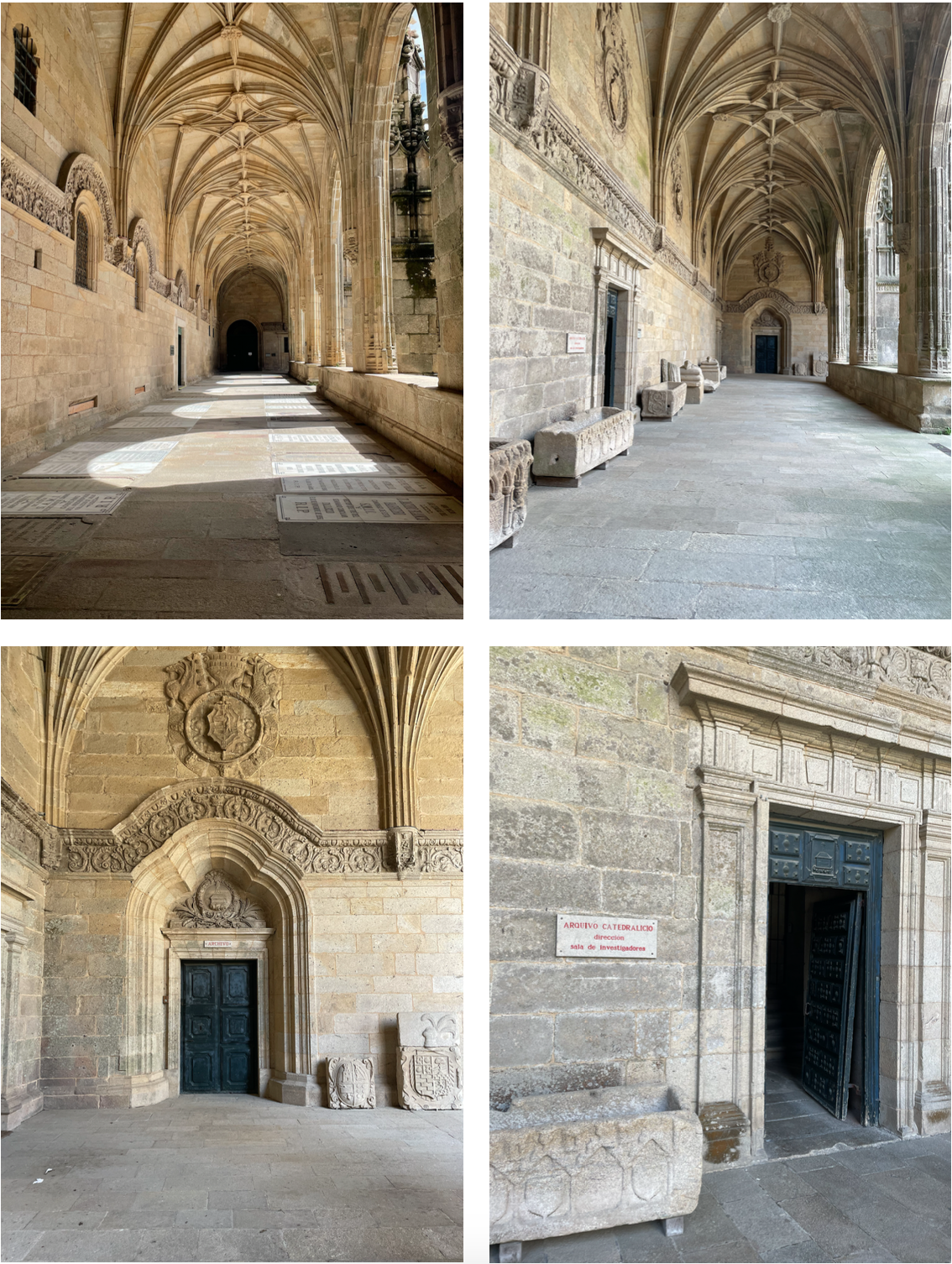
Photos in the research room of the Cathedral were not allowed, but here are some images of the
stunning cloister and door leading to the Archive, that I saw every morning (a privilege!):


The main aim of my trip was to see several sculptural groups which represented Pregnant
Annunciations, still in situ in their chapels or naves, unlike the one in Santiago. In the morning of
March 23rd I visited León, where I could inspect the Cathedral and the Basilica de San Isidoro
Annunciations
. In the afternoon I stopped by Toro, to see the pier sculptures in the Colegiata de
Santa María la Mayor
. That same evening I arrived to Coimbra, Portugal, where I visited, on the
24th, the Museu Nacional Machado de Castro and its breathtaking sculpture collection – the
museum holds a very special ensemble of 14th century limestone figures, some of which are
possibly from the same workshop of the Santiago Annunciation.

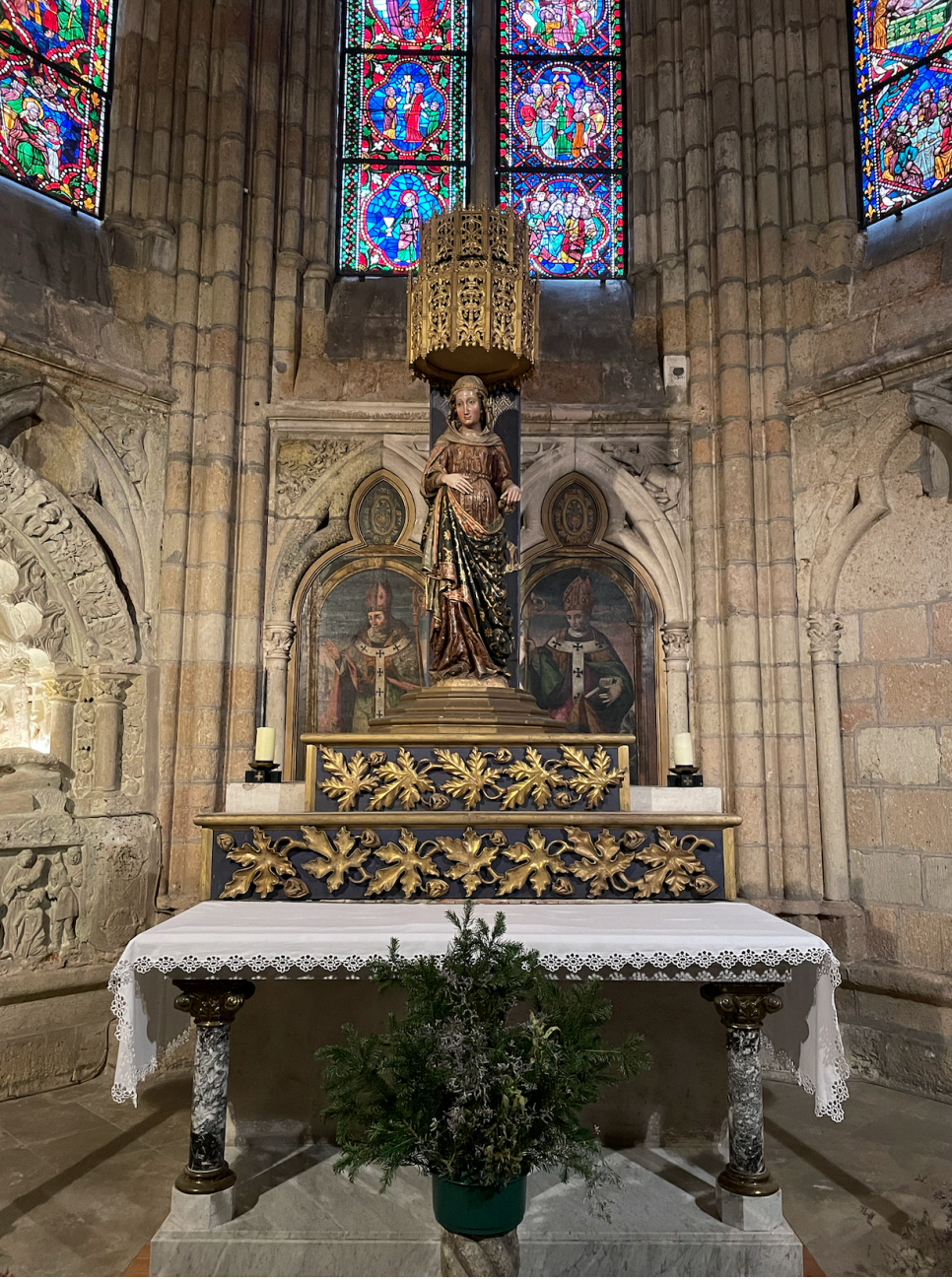
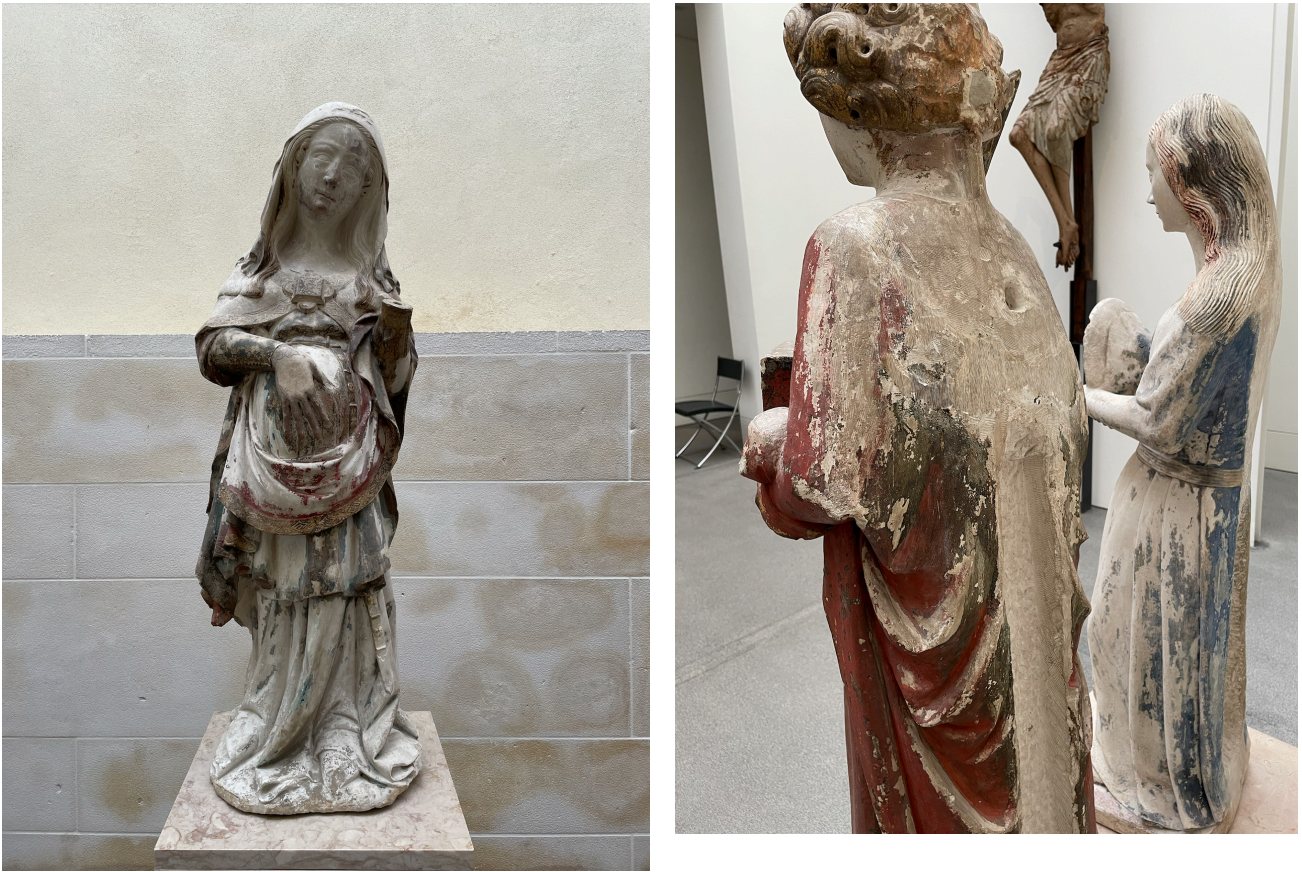
Nuestra Señora la Preñada, Cathedral of Santa María de Regla, León, Spain.
St Gabriel, known as Ángel de Reims, Catedral de Santa María de Regla, León, Spain. This is believed to have been of a Pregnant Annunciation, together with the Pregnant Virgin shown to the left.
Pregnant Annunciation in the Basílica de San Isidoro, León. Angel (left) and Pregnant Virgin (right).
Pregnant Annunciation in the Colegiata de Santa María la Mayor, Toro, Spain.
Looking at 14th century limestone sculptures at the Museu Nacional Machado de Castro, Coimbra,
Portugal.


After my Pregnant Annunciation road trip – possible thanks to ARTES and the CEEH, but
also to my parents, who drove over a thousand kilometres in 72 hours and observed countless 13th
and 14th century sculptures with me (!) –, I arrived to Santiago de Compostela. There I could, with
the guidance of the scientific team of the Archive of the Cathedral (Arturo Iglesias Ortega, Jorge
García, and Ma Elena Novás Pérez, to whom I am thankful), carry out extensive research on the
history of the Annunciation.


During my stay in Santiago I also had the chance to meet Ramón Yzquierdo Peiró, Director
of the Museum, to whom I am also grateful for his advice and directions. Last but not least, during
my visit I also met the photographic historian Carlos Castelao, who generously helped me and
shared with me 19th and 20th century images of the Cathedral from the Archivo Castelao, crucial
for my dissertation.


All of this was possible thanks to the support of ARTES and the CEEH. The trip, the
archival research, and the intellectual exchange with scholars that derived from it, are among the
most useful experiences I have had until now in my academic career (my dissertation was marked
with a distinction, achieved also thanks to all of this). I have learnt so much and enjoyed every bit
of it. Grateful for the opportunity,

Sincerely,
Helena Santidrián Mas

ARTES-CEEH UK PhD Scholarship Report | Daniela Castro Ruiz, Durham University

ARTES is delighted to share Daniela Castro Ruiz’s report of her work, funded by the ARTES-CEEH UK PhD Scholarship.

Thanks to the generous scholarship provided by ARTES-CEEH, I had the opportunity to explore various libraries and archives across the United Kingdom. This enabled the analysis of several natural history illuminations and illustrations, facilitating a deeper comprehension of the significance of images —specifically illuminations and woodcuts— in the bestiary tradition. Furthermore, this exploration shed light on the way natural history illustration was used in the development and production of art and scientific knowledge.

This preliminary archival research played a crucial role in understanding and finding the images and texts filiations associated with my doctoral subject: the Bestiario de Don Juan de Austria (c. 1570), the only extant bestiary composed in Castilian and the only one that is extensively illustrated, offering depictions of a range of creatures, from the mythical (the unicorn, the phoenix, etc) through to the exotic (the parrot, the hippopotamus, etc), and the everyday (the dog, the dolphin, etc) in a range of natural landscape settings completed by signifiers of society.

The originality of my research lies in its focus on the illustrations of the Bestiario and how they can be related both to the tradition and circulation of illuminated manuscripts in fifteenth- and sixteenth-century Spain, as well as to the representation of living creatures more broadly. I seek in particular to understand the relationship between the animals depicted in the manuscript and the social milieu in which it was produced. My research interrogates the question of how visuality forms an essential part of communication. This work is predicated on an in-depth analysis of images and symbols, discussing questions of provenance and iconography, it will be supplemented by a palaeographic and codicological study of the manuscript that will shed light on the way in which it was produced and assembled. The Bestiario is an exemplary object of study because its symbolic mechanisms disclose the complexity of the transition between the late Middle Ages and the Early Modern period, evidencing the relevance of natural history illustration and illuminated manuscripts in art historical studies. 

Senate House Special Collections

Among the illustrated books that I examined, the Moffet Insectorum (1634 V2 [Moffet] fol. SR) was particularly valuable because of its textual and visual similarities. With regard to insects, medieval bestiaries from the twelfth and thirteenth centuries typically depict a limited number of species. However, with the beginning of the Renaissance and humanist education, there emerged an increased interest in representing and comprehending arthropods and invertebrates, leading to new observations and classifications. Notably, the Bestiario adopts an innovative approach to portraying nature, resembling encyclopaedic knowledge while simultaneously attempting to readapt the moral significance of creatures. The illuminated manuscript distinctly focuses on the relationship between humans and insects, setting itself apart from other encyclopaedic and natural history books.

Moffet Insectorum (1634 V2 [Moffet] fol. SR). London, Senate House, Special Collections, UK.
 Villaverde Martín, Bestiario de Don Juan de Austria, fol. 191v, c. 1570, ink on paper, 24 x 17.5cm. Burgos, Santa María de la Vid Monastery Library.

Linnean Society 

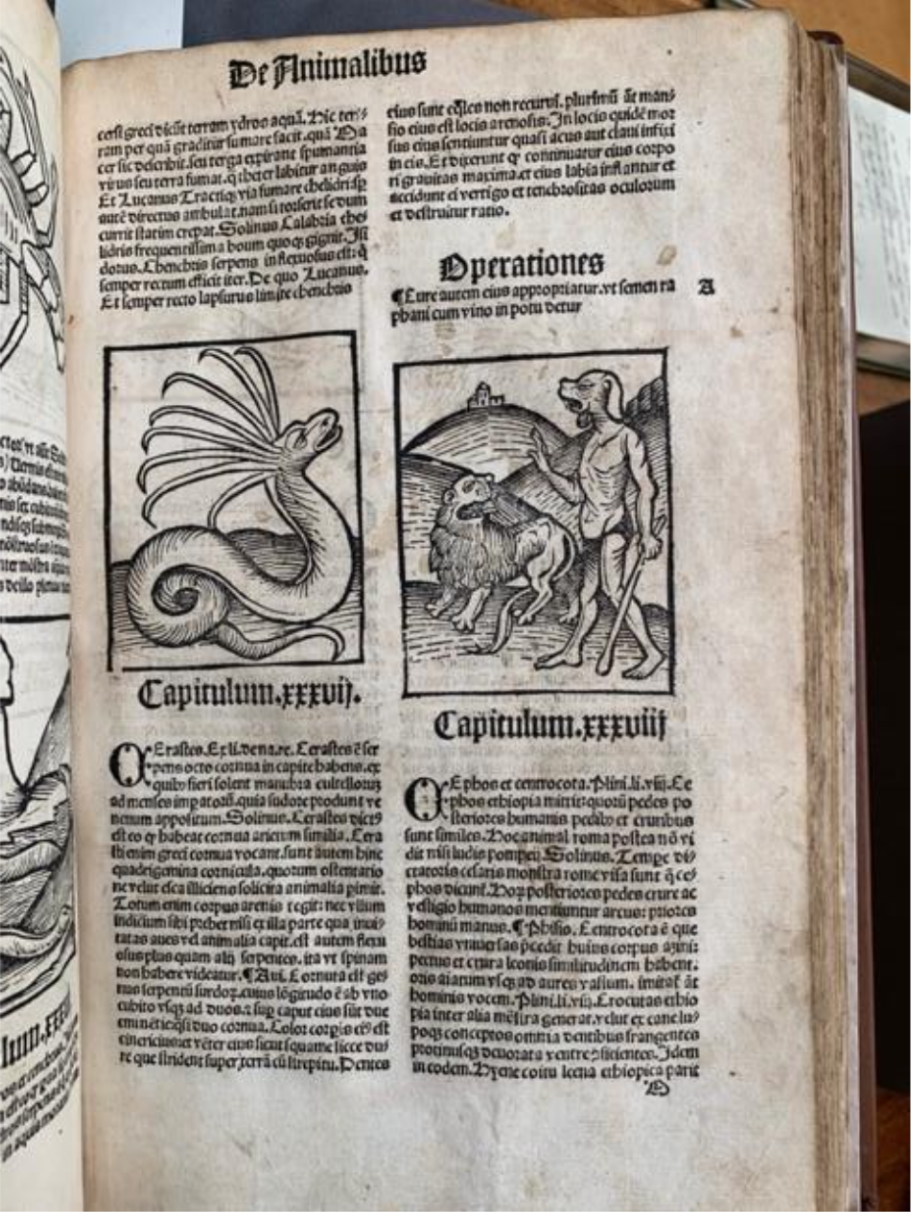
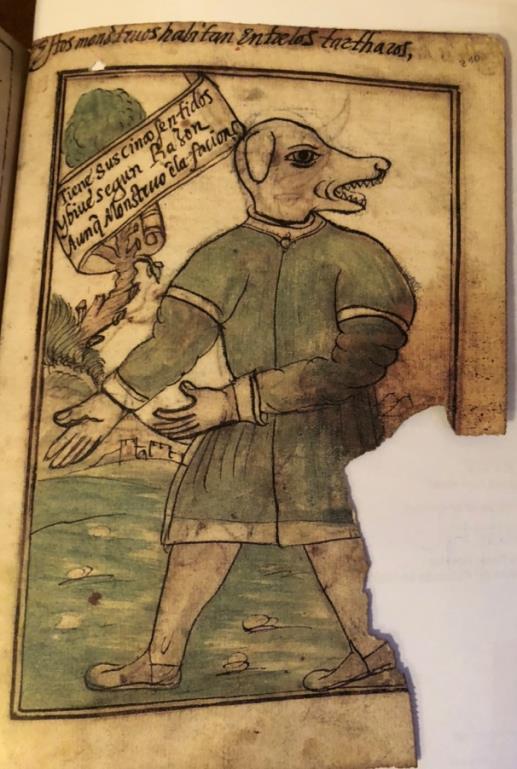
Amidst the numerous marvels within the Linnean Society archive, I had the privilege of consulting several renowned herbals and bestiaries, namely the Ortus sanitates (1499), Brunfels Herbarium vivae eicones (1539, BL.795A: Linnaeus copy), Fuchs’ De historia stripium (1542, RF. 542, with contemporary hand colouring), and Mattioli’s Commentarii (1565, RF. 565). These four works captured my attention because of their chronological proximity to the Bestiario. Of particular note is the cynocephalus depicted in the Ortus sanitates, which stood out for its likeness to the creatures featured in the Bestiario, encompassing certain Plinian monstrous races.

Ortus sanitates, 1499. London, Linnean Society
page2image7325728
Villaverde, Bestiario de Don Juan de Austria, fol. 210 v c. 1570, ink on paper, 24 x 17.5cm. Burgos, Santa María de la Vid Monastery Library.
A person looking at a book

Description automatically generated
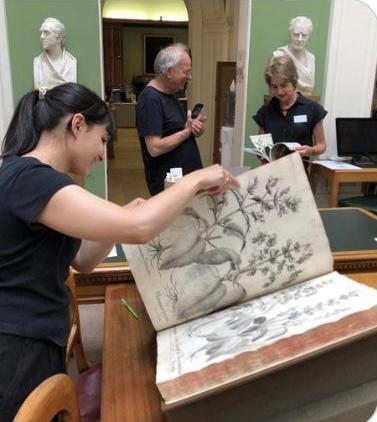
Besler, Hortus Eystettensis, 1613 (REF. 613, lacks engraved titles for four seasons, uncoloured) London, Linnean Society. 

Natural History Museum

The extensive archives of the Natural History Museum provided a lot of material, but my focus centered on Harley MS 4751, a Bestiary dating back to circa 1255 produced in Salisbury. In this Bestiary, my primary interest lay in shedding light on how the concealed alphabet of nature becomes perceptible through images and descriptions that show traces of Platonic-Christian thought, a characteristic prominently observed in manuscripts from the twelfth and thirteenth centuries. In contrast, the Bestiario adopts a more Aristotelian and empirical perspective in its understanding of the natural world. The examination of the Salisbury Bestiary and the subsequent comparison of how the world of animals and nature is depicted in both image and text proved crucial in revealing the intricacies of cultural appropriation and the evolution of the genre tradition.

Bestiary. Salisbury, circa 1255. Harley MS 4751. Fol. 68r. London, Natural History Museum, Special Collections, UK. 

Santa María de la Vid Monastery Library 

I am scheduled to examine the primary manuscript under study in May. My research trip to El Monasterio de Santa María de la Vid in Burgos, Spain—where the Bestiario is held—has been arranged in accordance with the preferred dates of the Librarian, and also because I have teaching commitments at Durham University. During this research trip, I will have the opportunity to analyse the original illuminated manuscript, conduct a thorough examination, and compare findings from various archives with those of the Bestiario. This comparative examination aims to shed light on the differences and similarities between cultures and regional identities, with particular emphasis on the distinctive Hispanic perspective on understanding nature. 

I express sincere gratitude for the generosity of the ARTES-CEEH scholarship. Without this support, I would not have been able to visit various magnificent archives, enriching my research with diverse materials and ideas derived from the analysis of illuminated natural history manuscripts and books.

ARTES-CEEH Spanish PhD Scholarship Report | Emma Luisa Cahill Marrón, University of Murcia

ARTES is delighted to share Emma Luisa Cahill Marrón’s report of her work, funded by the ARTES-CEEH Scholarship for Spanish PhDs.

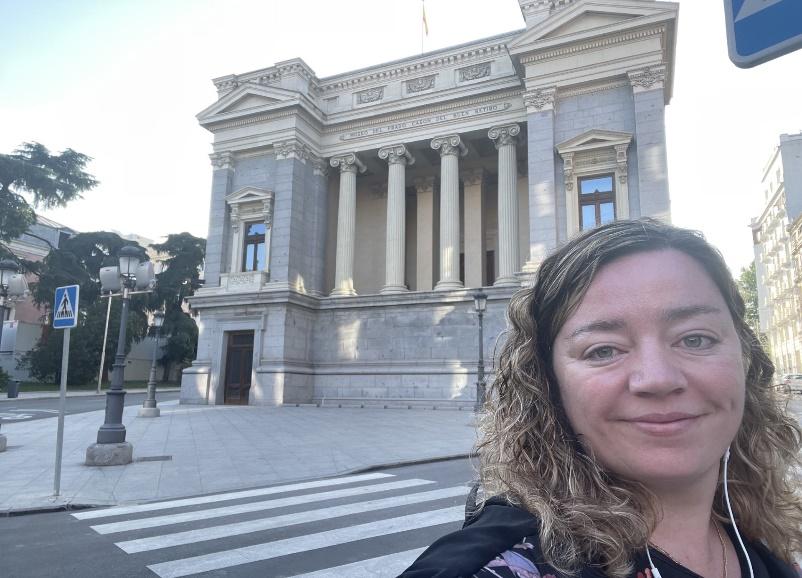
The ARTES-CEEH Spanish PhD Scholarship was a wonderful opportunity to research portraiture, gender, and the construction of the image of power in the beginning of the Spanish and English royal collections. It enabled me to conduct a week-long research stay in the Study Centre of the Museo Nacional del Prado in Madrid. In the Casón del Buen Retiro I was able to document examples of royal portraits linked to Anglo-Spanish relations and royal women’s artistic patronage in the fifteenth, sixteenth, and seventeenth centuries. I learned of the importance of King Charles II of Spain’s consort, Queen Maria Luisa of Orleans, who was the daughter of Henrietta of England. She brought several portraits of her English relatives to Spain such as effigies of her mother or Kings Charles II and James II of England. These became incorporated to the Spanish royal collection and are now part of the Prado Museum. 

A person taking a selfie in front of a building

Description automatically generated
Emma in front of the Casón del Buen Retiro

I was invited by the social media team to talk about this project in their daily Instagram live session to explain England’s role in the presence of iconic female portraits in this museum, like the one of Queen Isabella I of Castile or the one of her granddaughter Queen Mary I of England. 

15 June 2023. Instagram Live at the Prado Museum

I focused on Mary I’s portrait because of the presence of a pair of gloves that are very similar to those present in other female portraits of her relatives painted by the same artist also displayed in room 56. They currently have an interactive installation that recreates the smell of these gloves. According to Dr. Alejandro Vergara, Head of the Conservation Area of Flemish Painting and Northern Schools, these luxurious objects were infused with perfume and sent as expensive gifts. I was able to trace a gift of ten pairs of gloves sent from an unnamed Spanish noblewoman in Mary’s privy purse expenses. As a nod to her, a pair of these gloves is most likely the ones chosen by the Tudor monarch to be represented for a portrait that she knew was going to end up in Spain. 

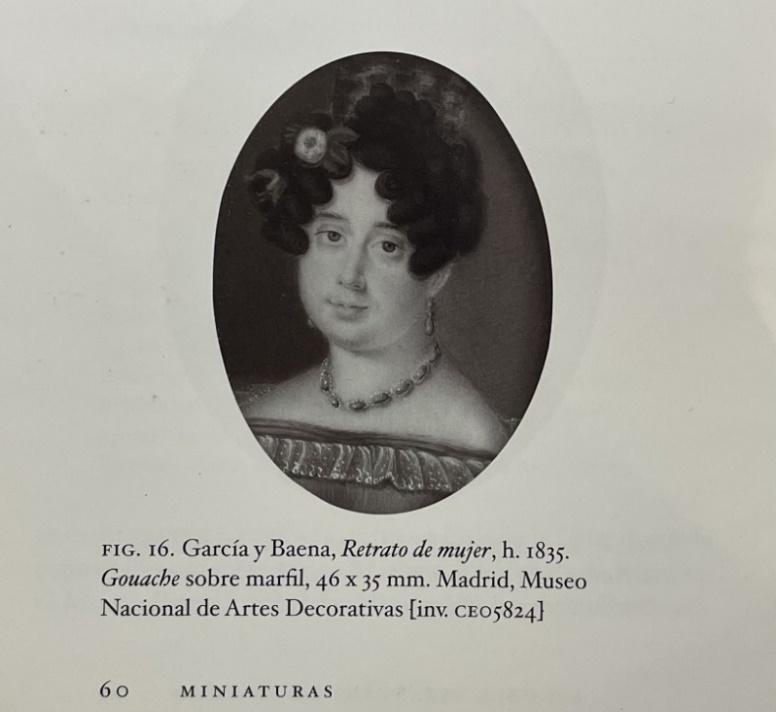
I studied their catalogue of miniature portraiture since this format was key in the introduction of Renaissance court portraiture into Tudor England. On the one hand, I was able to identify one labelled Retrato de mujer that is likely a depiction of the foundress of this institution, Queen Maria Isabel de Braganza. She was the consort of Ferdinand VII of Spain. On the other hand, I am still working on the identification of a second miniature portrait that could be a depiction of Queen Maria Luisa de Orleans who made key contributions to this museum’s collection in relation to English royalty previously mentioned.

A close-up of a person's face

Description automatically generated
Miniature portrait labelled Retrato de mujer possibly a depiction Queen Maria Isabel of Braganza foundress of the Prado Museum. © Museo Nacional del Prado
A person in a red dress

Description automatically generated

During the study of this catalogue, I identified an effigy of Benjamin Franklin, one of the Founding Fathers of United States of America. It was probably painted during the time that he served as the first ambassador to France of the newly founded United States of America (1776–1785).

Comparative analysis of surviving portraits of Benjamin Franklin with miniature portrait of in the collections of the Prado Museum (with blue background).

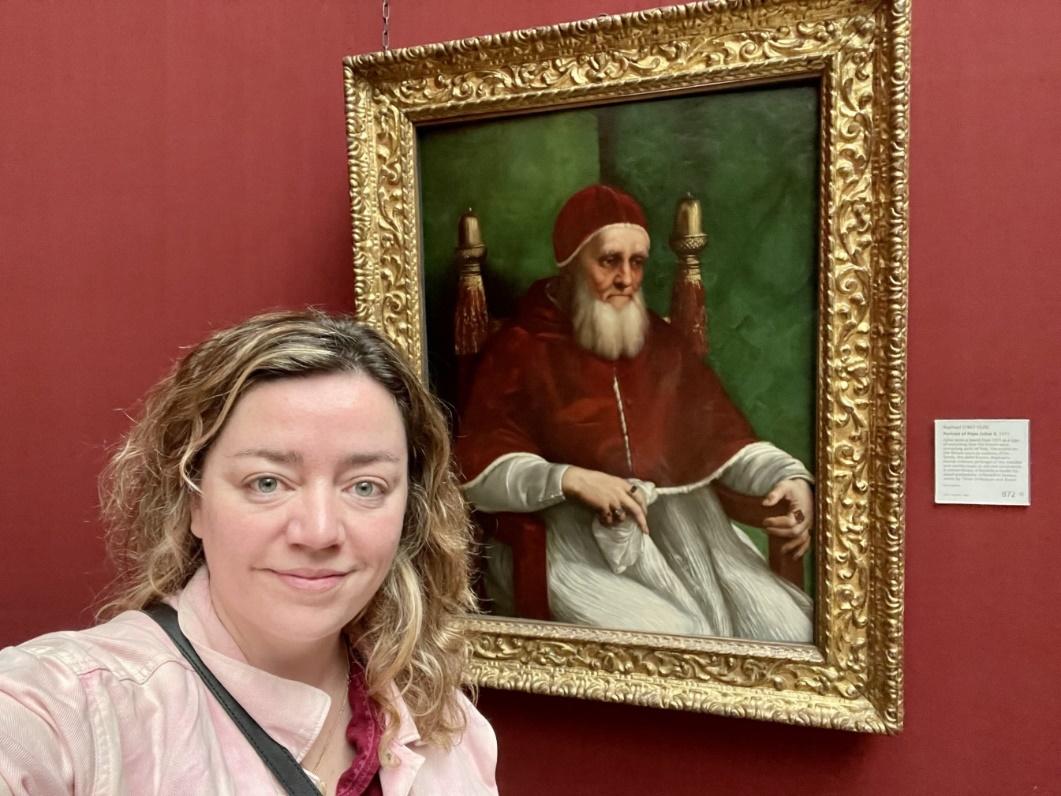
I also spent a very fruitful week-long research stay in London where I visited The National Gallery to study in-situ a portrait connected to Antonis Mor’s portrait of Mary I. This is the effigy of Pope Julius II painted by Raphael. Both portraits follow the same model established by the Italian artist in 1511. There is a version of Raphael’s portrait documented in the post-mortem inventory of Henry VIII in St. James’s Palace. This means that Mary I owned it and most likely asked Mor to follow this model and represent her in the same maner facing the other way. This would have allowed Mary I to display her version alongside the portrait of the pontiff who had authorised her parents’ marriage as a sign of her legitimacy as the first Queen Regnant.

A person taking a selfie in front of a painting

Description automatically generated
Emma next to the portrait of Julius II by Raphael in The National Gallery in London

I was very fortunate to meet with Charlotte Bolland, curator of the National Portrait Gallery. We discussed my project and my research. We visited the new Tudor display together and she showed me the archive. She gave me a lot of insight on how to use the museum’s resources. She also informed me of an exhibition focused on Henry VIII’s six wives this coming summer and asked me about my willingness to participate as an expert on Queen Catherine of Aragon. I was also very privileged to be able to visit the Witt Library where I found many useful images. I am still working on some new avenues that this visit opened in my research into female Renaissance portraiture. 

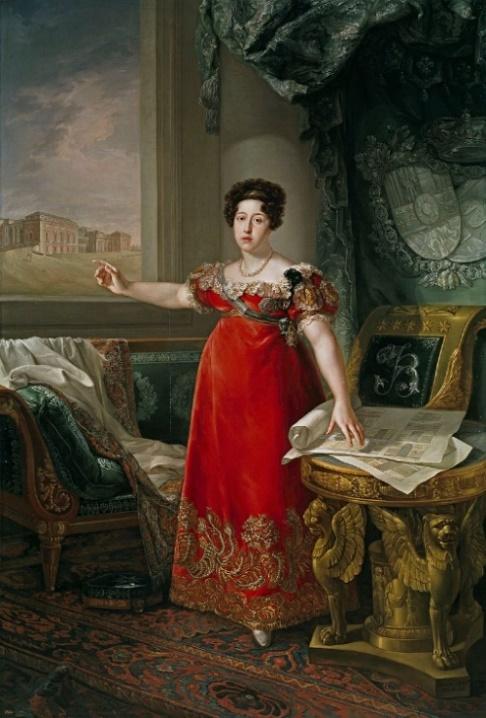
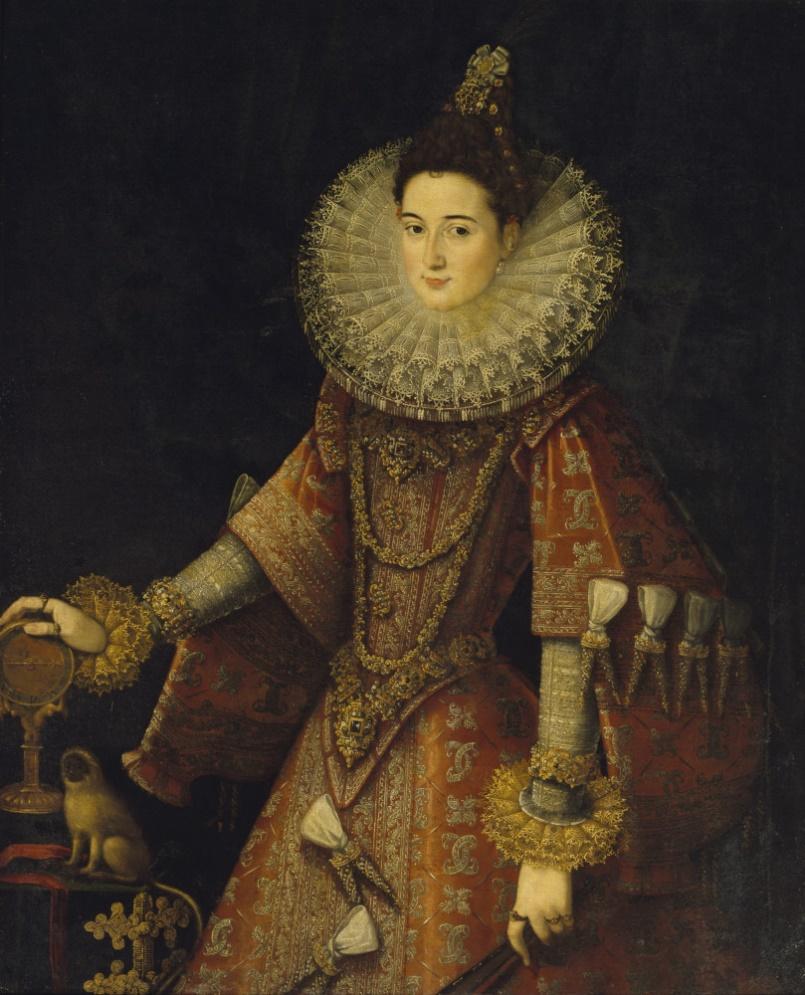
Finally, I was also able to document a misidentification in a Spanish royal female portrait in Petworth House. It is an effigy attributed to Juan Pantoja de la Cruz identified as the infanta Isabella Clara Eugenia. The presence of the ‘double C’, a symbol identified by graduate student Rafael Conesa Tornel of the Arte, Poder y Género Research Group. This means that the sitter is the infanta Catalina Micaela not her sister. We are now preparing the publication of this discovery where I will be able to show my gratitude to ARTES and the CEEH for funding this project focused on gender and Renaissance portraiture at the beginning of the Spanish and English royal collections. 

A painting of a person in a red dress

Description automatically generated
Portrait attributed to Juan Pantoja de la Cruz of the infanta Catalina Micaela labelled as Infanta Isabella Clara Eugenia, Archduchess of Austria (1566-1633). Petworth House © NTPL

ARTES-CEEH Travel Scholarship Report | Philip Muijtjens, King’s College – University of Cambridge

ARTES is delighted to share Philip Muijtjen’s report of his research trip, funded by the CEEH/ARTES Travel Scholarship.

The ARTES-CEEH Travel Scholarship enabled me to travel to the beautiful town of Burgos in May 2023 to carry out extensive archival research on the Spanish bishop and legal scholar Juan Díaz de Coca (d.1477).

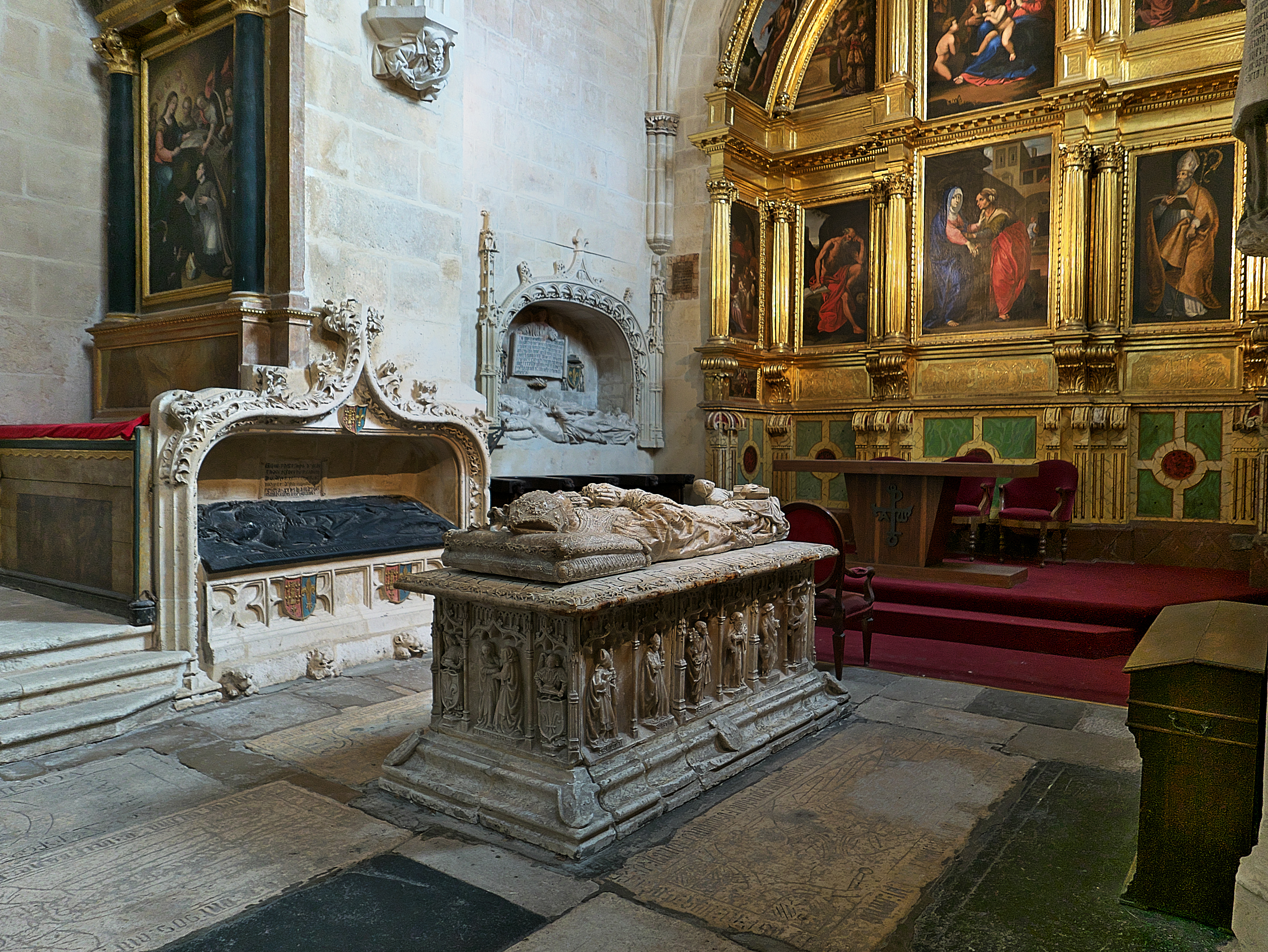
The Chapel of the Visitation in the cathedral of Burgos, with the tomb of Alfonso de Cartagena (d.1456) in the foreground.

Juan de Coca’s life is interesting for a number of reasons: he was from a family of conversos in Castille and he also became one of the most senior judges in the Catholic Church. During his busy and eventful life, he was very interested with his own burial and commemoration. During his time in Rome, he commissioned one of the most important fifteenth-century funerary monuments which can still be viewed in the Eternal City. Shortly before his death, however, he changed his mind and chose the cathedral of Burgos as his final resting place.


Juan would also play an important role the continuation of the so-called Chapel of the Visitation inside the Cathedral of Burgos, which was founded by his famous relative Alfonso de Cartagena (d.1456). Juan chose his second and final tomb there. Despite these and many other interesting details, Juan de Coca’s life remains almost completely unstudied.

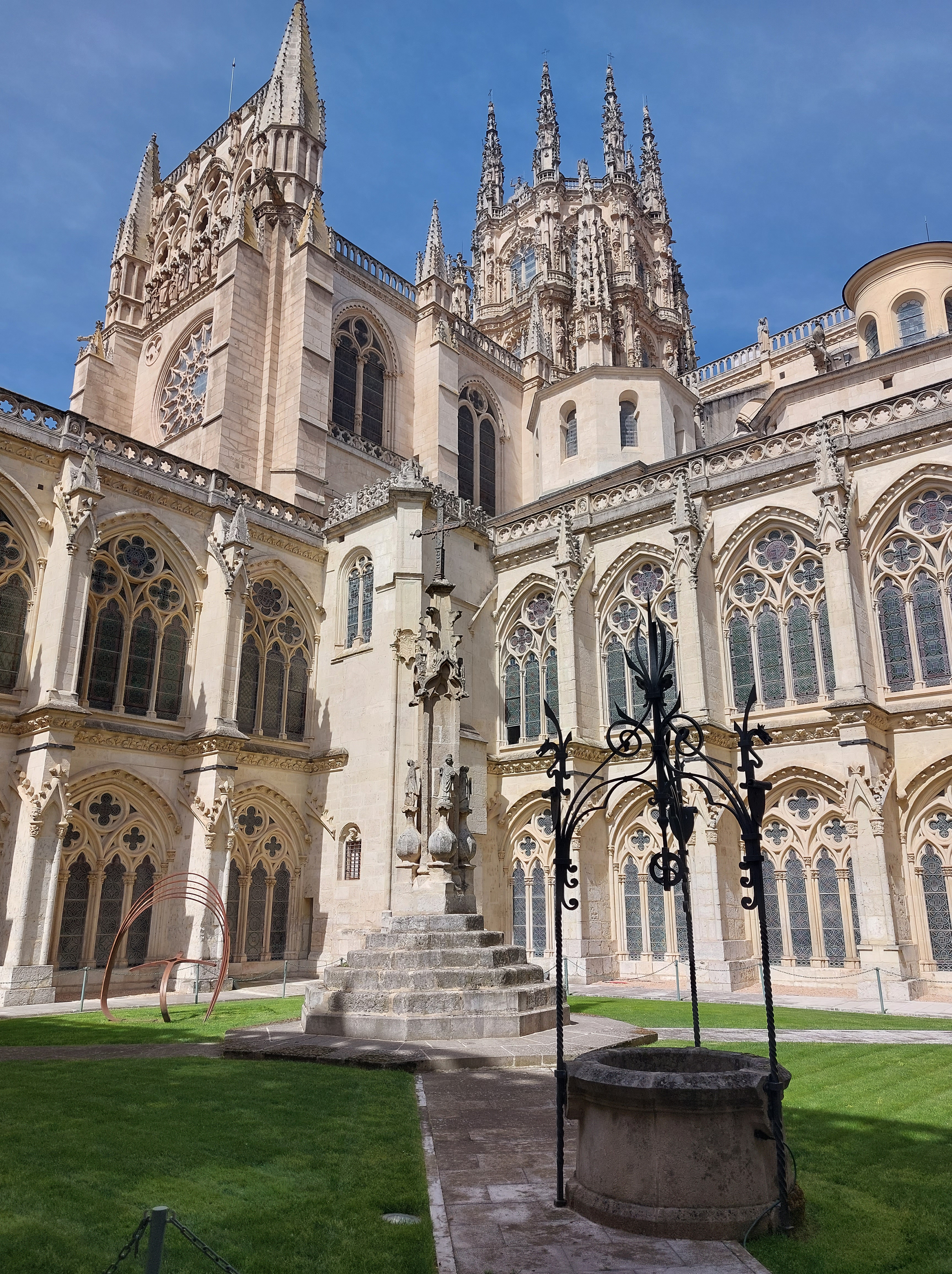
The cloister of the cathedral of Burgos.

With generous funding from ARTES-CEEH I was able to travel to the cathedral archive in Burgos, where I found extensive collections of new documents on Juan Díaz de Coca and on his interest in tombs and chapels. It was a great experience for a number of reasons. Apart from the joy of finding good sources for research, this archival trip made a dream come true: Burgos had been high on my list for years but I had never found the chance or means to visit it. The Travel Scholarship finally made that possible for me. 

While I spent a substantial part of my time in the archives in Burgos, I was able to see many things in person. This included the aforementioned Chapel of the Visitation (see photo), which still holds the second and final tomb of Juan Díaz de Coca. After spending a long time trying to trace Juan and reconstruct his life, it was fantastic to finally experience his physical presence and see the cathedral which he had so loved in the early years of his life before permanently moving to Rome.

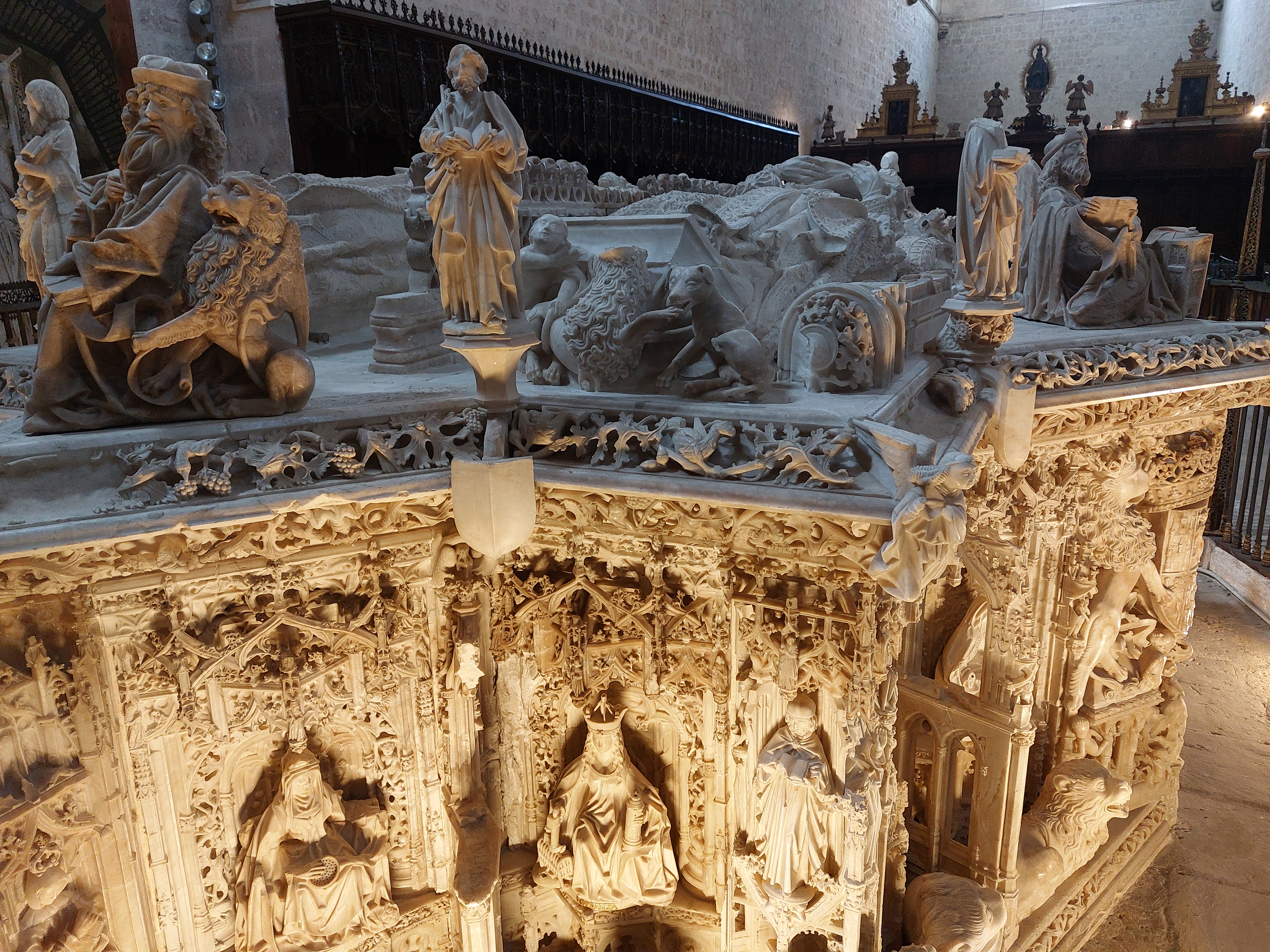
Detail of a tomb of  João I and his English wife Philippa of Lancaster from the Charterhouse of Miraflores.

Because Juan’s final tomb in the Chapel of the Visitation was a product of Burgos-based sculptors in the 1480s, I took the opportunity to see some other sites where examples of this sculpture could be seen. This included the famous Charterhouse of Miraflores and the stunning Cistercian abbey of Las Huelgas. I was able to appreciate how Juan’s own tomb in the cathedral was part of a bigger production of sculpture in and around the city. 

My visit to Burgos was an extremely valuable experience for me, as it opened me to new avenues of research topics on fifteenth-century Spanish art production. I owe it to the ARTES-CEEH Travel Scholarship that I could take this significant step as a researcher. 

CONVERSATION: Spanish Polychromed Sculptures and their Relationship to Easel Paintings

When: January 31st, 2024. 6:00 – 7:00pm (GMT)
Where: Zoom

Zoom details:

https://durhamuniversity.zoom.us/s/91739926026
Meeting ID: 917 3992 6026
Passcode: 645194

Lamentation

Please join us as Dr. Xavier Bray and Dr. Holly Trusted will be discussing Spanish polychromed sculptures, how they relate to easel paintings, some of the techniques involved, attitudes to such sculptures outside Spain, and why they are so central to the history of art.

Biographies

Dr Holly Trusted (formerly known as Marjorie Trusted) was a founder member and is now Honorary President of ARTES. She was Senior Curator of Sculpture at the Victoria and Albert Museum for over 30 years, and has lectured and published extensively on Spanish sculpture. She is currently working on a catalogue raisonné of Luisa Roldán with Catherine Hall-van den Elsen.

Dr Xavier Bray is an art historian specialising in Spanish art and Director of The Wallace Collection, London. He completed his PhD in 1999 at Trinity College, Dublin, on Goya as a painter of religious imagery. He was Chief Curator at Dulwich Picture Gallery, London and the Museum of Fine Arts, Bilbao, as well as Assistant Curator at the National Gallery. He has curated a wide range of exhibitions including El Greco, Velazquez, The Sacred Made Real: Spanish Painting and Sculpture 1600-1700, Murillo & Justino de Neve: The Art of Friendship, Goya: The Portraits and Ribera: The Art of Violence. Since joining the Wallace Collection he has overseen and co-curated several exhibitions including Richard Wallace: The Collector, Henry Moore: The Helmet Heads and Forgotten Masters: Indian Painting for the East India Company with the writer William Dalrymple. He most recently curated an exhibition at the Wallace Collection entitled Portraits of Dogs: From Gainsborough to Hockney, which ran from 29th March to 15th October 2023.

The event is part of the Research Seminar Series organised by Durham University’s Zurbarán Centre with the ARTES Iberian and Latin American Visual Culture Group in collaboration with the Instituto Cervantes and the Embassy of Spain in London.

The series provides an open forum for engaging with innovative research and exhibition projects relating to the visual arts in the Hispanic world.

CALL FOR PAPERS: Production, Transmission & Interpretation

An interdisciplinary conference on Islamic Art, Architecture, History and Archaeology 

Deadline: December 31st, 2023
All abstracts should be sent as pdf attachments to hist592@york.ac.uk 

Conference dates: 14th and 15th March, 2024 

With keynote addresses by Professor Robert Hillenbrand and Professor Marcus Milwright 

Islamic time begins with the Hijra; the integral responsibilities of every Muslim include the Hajj;  and studies of Islamic history have traditionally followed military marches and commercial/cultural  corridors that enabled the creation of the great gunpowder empires. More recently, mobility has also been manifested in the Islamic world in the fall of these empires, movement of their materials  through loots and repatriations, and voluntary and forced migrations. Until recently, these themes  have been predominantly researched divorced from Islam through incongruous positivist lenses  and euro-centric canons, and often with underlying colonial agendas.

It is with the aim to intervene within and disrupt this context that the Department of History of  Art and the Department of Archaeology at the University of York present Production,  Transmission, & Interpretation, a conference on Islamic Art, Architecture, History, and  Archaeology. Foregrounding the voices of the historically marginalised, founded in material  cultural narratives, and focussed on new sources and methodologies, this conference will bring  together the latest research from scholars ² doctoral to emeriti ² and draw upon a range of cognate  disciplines across the arts, humanities, and social sciences, to consider 1400 years of the Islamic  world and society. 

Submission Guidelines 

We welcome abstract submissions intended to culminate into the standard format of 20-minute  in-person academic paper presentations and invite applications from across disciplines, including art and architectural history, archaeology, conservation, heritage management, curation, museum  studies and cultural studies, on themes that may include 

  • Islamic heartlands, hinterlands, and frontiers 
  • Art and architecture of mobility, routes, travels, and transfers 
  • Patronage – imperial, sub-imperial, male, female, and non-binary 
  • Agency of architects, artists, and craftspersons 
  • Sources, oral histories, local archives, epigraphy, calligraphy, endangered languages
  • Archaeological material, bioarchaeological approaches, and conservation 
  • Islamic approaches past and present to nature, culture, environment and sustainability Conflicts, occupations, appropriations and adaptations 
  • Islamic art markets ² auctions, ethics, legislations

Abstracts should be limited to 250 words, indicate the target thematic cluster, and be accompanied  by the researcher’s name, institutional affiliation and stage of study, location, and a brief biography  not exceeding 100 words. 

Deadline for proposal submission is 31 December, 2023. 

All abstracts should be sent as pdf attachments to hist592@york.ac.uk 

If you have any questions, please email Parshati Dutta (parshati.dutta@york.ac.uk) or Nausheen  Hoosein (nausheen.hoosein@york.ac.uk).  

Conversations are underway with leading university presses to publish a thematic edited volume  of papers presented, therefore please declare if the material has been used before, and if not,  whether you would be interested in publishing with us.  

A limited number of travel bursaries may be provided. Please indicate if you would like to be  considered for the same. 

Becoming Actaeon: Titian and the Conceptual Gaze in Diego Velázquez’s Las Hilanderas

By Isabelle Kent, PhD candidate at University of Cambridge and winner of the ARTES 2023 Juan Facundo Riaño Essay Prize.

When: Monday, 4th December 2023 18:00GMT
Where: Instituto Cervantes London (15-19 Devereux Court London WC2R 3JJ) and zoom

In the background of Diego Velázquez’s enigmatic masterpiece, Las Hilanderas, the artist summarises with a few bravura strokes a treasure of the Spanish crown, Titian’s Rape of Europa. This citation, first identified in 1903, has underpinned many subsequent interpretations of the work, yet a second pivotal allusion to Titian’s poesie has passed unnoticed until now, that of Diana and Actaeon.

Taking these two citations as a starting point, this paper argues that Velázquez designed his painting within the intellectual framework of Conceptismo, with these quotations acting as ‘correspondencias’, mechanisms of interconnecting wit that weave art, metaphor and Ovidian myth. Combining this mode of intellectual thought as it applies to the poesie, with an embodied approach to how Velázquez as the curator of the King’s collection interacted with Titian’s paintings, this lecture (literally) pulls back the curtain on a new understanding the work, one that, as in Las Meninas, centres our ambiguous gaze.

To book your tickets – both in-person or zoom – please click here.

Isabelle Kent is a PhD candidate at Trinity College, University of Cambridge researching the heroic body in early modern Spanish art. She has been a visiting scholar at Universidad Autónoma de Madrid and El Consejo Superior de Investigaciones Científicas, and from 2017-19 she was the inaugural Enriqueta Harris Frankfort Curatorial Assistant at the Wallace Collection. Her work has been published in the Burlington Magazine, Apollo Magazine and the Hispanic Research Journal, and she is also editor of Collecting Murillo in Britain and Ireland (CEEH, 2020).

This event is organized by ARTES, in conjunction with the Instituto Cervantes London and with the support of the Spanish Embassy to London.

Guillaume Kientz (Hispanic Society of America), “Murillo. From Heaven to Earth”. 

When:  Tuesday, 24 October at 18.00 (GMT), on zoom

The talk will discuss the research for the exhibition Murillo. From Heaven to Earth curated by Guillaume Kientz at the Kimbell Art Museum in Forth Worth, 18 September 2022 – 29 January 2023. Inspired by the Kimbell’s mysterious Four Figures on a Step, the exhibition focused on Murillo’s earthly depictions of secular subjects and everyday life in seventeenth-century Seville. The show and its accompanying catalogue shed new light on Murillo’s innovative portrayals of beggars, street urchins and flower girls in the artist’s culturally rich narratives of youth and age, romance and seduction, faith and charity.  

Guillaume Kientz is the Director and CEO of the Hispanic Society Museum and Library, New York. He previously served as Curator of European Art at the Kimbell Art Museum and as Curator of Spanish and Latin American Art at the Musée du Louvre.  

To join the seminar, click on the link below, or copy and paste it into your browser:  

https://durhamuniversity.zoom.us/j/93702971057?pwd=TW9raVNlM1pxaHFkdGFueURvaWVrZz09

Meeting ID: 937 0297 1057

Passcode: 612894

The seminar has been organised by the Zurbarán Centre and the ARTES Iberian and Latin American Visual Culture Group in association with the Cervantes Institute, UK.  

Inaugural Session of Permanent Seminar: Iberian Worlds and Early Globalization

Date: Thursday, September 21st, 2023 (17:00 CET)

The permanent Seminar “Iberian Worlds and Early Globalization” resumes its activities the coming Thursday, September 21st, starting with an inaugural session focused on the figure of J.H. Elliott, titled “J.H Elliott y su Mundo / J. H. Elliott and his World”.

In this session, Dr. Richard L. Kagan (Johns Hopkins University) and Dr. Geoffrey Parker (Ohio State University) will consider the legacy of Professor Elliot based on the text recently published in The British Academy, which can be downloaded here:

Elliott, John, 1930-2022

The Seminar will be composed by introductory remarks by Dr. Bethany Aram (Área de Historia Moderna, UPO), the dialogue between Professor Kagan and Professor Parker, and the mediation of Dr. Bartolomé Yun (Área de Historia Moderna, UPO), which will only be transmitted online through the following Zoom link:

https://us06web.zoom.us/webinar/register/WN_asd2enYJQbOBJEPBqcAr6A

For more information, please see the full program here.