Call for Participation: Spanish Italy and the Iberian Americas

Call for Participation: 12 junior scholars to join the research group
“Spanish Italy and the Iberian Americas”

A Getty Foundation Connecting Art Histories Project
co-directed by Michael Cole and Alessandra Russo,
Columbia University

Deadline: Mar 31, 2016

The co-directors of the Connecting Art History project “Spanish Italy
and the Iberian Americas” seek twelve junior scholars to join the
research group during the period June 2016 to October 2017. Project
participants will collaborate to discern the common dynamics and study
the artistic ties that developed between these two regions in the early
modern period, especially during the sixteenth-century. Moving beyond
the concerns of national heritage and microhistory, the project depends
on scholars interested in changing their conceptions about their “home”
fields of “Renaissance” Italian or “Colonial” Latin American art. The
project will unfold in multiple stages, centered on travel and
conversation. Throughout the project, the junior scholars and a group
of senior faculty will collaborate and communicate regularly, sharing
bibliographies and contributing monthly to a research blog. As a group,
participants will travel to Italy in January 2017 to visit and discuss
works in historically Spanish regions of Italy. Each member will be
responsible for introducing a series of works, engaging information
across multiple fields. Six months after the visits in Italy, in a
second phase of the project, participants will convene in New York City
for a workshop. Each scholar will present a paper responding to the
conversation and insights elicited during the trip, and considering how
those ideas might provide prospects for the study of arts in Iberian
Americas. While in New York, the group will also visit archives and
museums in the city. The project will cover travel expenses to Italy
and New York.

Recent PhDs to junior faculty members working on early modern Italian
or Latin American art are eligible to apply though preference will be
given to those who did degrees or are working in Italian and Latin
American universities. Candidates should submit a statement (maximum
three pages) explaining their interest in participating; a description
(maximum two pages) of a current project; a CV; two letters of
recommendation; and a writing sample.

Application materials should be sent as a single PDF, clearly labeled,
to : connectingarthistories@columbia.edu  by March 31st, 2016.

Scott Opler Fellowship in Architectural History, 2016-2018

2016-03-worcester-college-1096

Scott Opler Fellowship in Architectural History, 2016-2018

Deadline: 14 April 2016

Worcester College, Oxford is pleased to be able to offer a two year residential Fellowship in the study of Renaissance or Baroque architectural history through the generosity of the Scott Opler Foundation.
Applications are invited from scholars of any nationality and academic affiliation in the final year of their dissertation or within the first four years after the completion
of their Ph.D., D.Phil. or comparable degree.
Applicants are asked to demonstrate a high level of skill in research methods and practice in the field of Architectural History, demonstrated via successful completion or near completion of a doctorate in a relevant area, possibly supported by conference papers and publications revealing skills in research practice and presentation.
The person appointed will conduct high level academic research in Architectural History and prepare the results of that work of publication. Conference and seminar attendance may well form part of the programme of research. Topics may include any area or aspect of European architectural history during the Renaissance or Baroque era including urbanism, landscape and garden history, drawing and design method, theory and publication, architectural representation, as well as studies of architecture and related disciplines. Research Fellows do not have a direct reporting line, but the Provost oversees the work and the well-being of all members of College, and is always willing to provide advice on research progress. Members of the Scott Opler Committee can sometimes offer specialist advice and the College Librarian can advise on the extensive holdings in Architectural History of the Old Library.

The Fellow is normally expected to work in Oxford, and to make use of the library resources of the University and the College, but visit to collections elsewhere may be necessary and are encouraged.

The Opler Research Fellow will receive a stipend of £26,537 per annum (revised annually) and will have access to certain travel, research and publication funds.  The Fellow is also entitled to accommodation to a value from £11,280 per annum and, when the kitchens are open, to free meals in the College as a member of the Senior Common Room.
Closing date for applications to be received is Thursday 14th April 2016 and should include an official Application Form, a statement of the proposed research programme, and a current curriculum vitae.  Applicants must also arrange for two confidential letters of recommendation to be sent direct to the College by the same date.  Applications and references may be sent by e-mail as PDF documents.  Interviews for a final group of candidates will be scheduled in June.
Further particulars and an application form may be downloaded below or obtained from the Provost’s PA, Worcester College, Oxford OX1 2HB, Tel +44 (0)1865 278362, email ilaria.gualino@worc.ox.ac.uk.

 Salary: £26,537 per annum
Application form:
Further particulars:


CFP: Islamic Art – Mudejar Art (Cordoba, 18-20 November 2016)

2016-03-CasaArabe

CFP: Islamic Art – Mudejar Art (Córdoba, Casa Arabe, 18-20 November 2016)

Deadline: 30 April 2016

Artistic Dialogue during the Middle Ages. Islamic Art – Mudéjar Art International Conference
Casa Arabe, Córdoba

Organized by: Prof. Dr. Alberto León (Universidad de Córdoba), Prof. Dr. Francine Giese (Universität Zürich)

The research about Spain’s medieval cultural heritage has experienced a great development in the last centuries. With the reassessment of the legacy of al-Andalus and of the Reign of Castile and Aragon during the nineteenth century, the historiography focusing especially on cultural connections and disconnections has grown extensively. Concepts like Reconquista, Convivencia and Mudéjar Art, are being interpreted as the result of Spain’s nineteenth century’s particular socio-political interests, related to the debate about national identity, religious intolerance and to an evolutionist conception of history. The special political and cultural reality of the Peninsula and its Middle Ages as a geographical and temporal frame of cultural coexistence, pluralism and heterogeneity has been controversially debated since that time. At present, we assist to a critical revision and to an intense debate on those inherited concepts. While the traditional historiography had delineated several political, religious and artistic frontiers, new conceptions of the medieval reality arise that interpret those frontiers as being permeable and dynamic. This perspective leads to the consideration of an artistic dialogue as the basis of shared vocabularies. Such a dialogue will be the common thread of the present conference: we intend to analyze, share and spread recent results and new research projects on the Islamic and Mudéjar past of the Peninsula. The conference will constitute a platform for novel lines of investigation contributing to the debate on the artistic dialogue of the medieval Iberian Peninsula. The following sections and themes are planned: – Nineteenth century’s historiography: the reassessment of the Islamic and Mudéjar past – Islamic and Mudéjar urbanism – Architectural reuse – The twelfth century: dialogue or confrontation? – The Iberian Peninsula and Europe: cultural connections – Al-Andalus and the three cultures Each presentation will be of 20 minutes, and may be given in Spanish or English. Please submit a proposal of maximum 300 words and a brief curriculum vitae by the 15th of April to the following e-mail address: conference@transculturalstudies.ch

CFP: Copies of Paintings in Portugal, Spain and the New World (Lisbon, 11-12 Oct 16)


2016-03-GulbenkianLogoCFP: Copies of Paintings in Portugal, Spain and the New World
International Congress, Lisbon, Fundação Gulbenkian
11-12 October 2016

Deadline: 29 April 2016

The international congress Copies of Paintings in Portugal, Spain and the New World, 1552-1752 invites reconsideration of the topic of the copy in these territories over the course of these two centuries. The period covered begins in 1552, the year in which Antonio Moro arrived in Portugal, and ends in 1752, when the Royal Academy of Fine Arts of San Fernando was established in Madrid. To a certain extent, these events mark the beginning and end of the history of the copy during the Early Modern Period in the Iberian world. This time period also includes the period of sixty years during which Portugal and Spain were unified under the same government owing to the turns of dynastic succession, the so called period of the “two Philips” (1580-1640).

Members of the academic community are invited to submit their proposals for this conference before 29 April 2016. Please email abstract proposals (up to 20 lines), including a brief CV (1 page), to copimonarch@gmail.com.  Papers will be accepted in Portuguese, Spanish, and English. The committee will inform of their selection to all the applicants in June 2016. A registration fee of 50 € will be required to all participants. The selected speakers will have the option of submitting their papers for publication in a special issue of the journal Revista de História da Arte –Serie W (http://revistaharte.fcsh.unl.pt/), due to appear in 2017. Papers for publication will have to comply with the journal’s editorial guidelines, including peer review.

Further information: please click here.


Al-Andalus: Intensive Summer Course (Cordoba)

Al-Andalus

Al-Andalus, Problems and Perspectives
CASA ÁRABE, CORDOBA
25-30 JULY 2016

This Intensive Summer Course held in Casa Árabe Cordoba will introduce English speakers to the fascinating history of al-Andalus. Specialists from different Spanish academic institutions will guide a select group of students in a series of seminar-style intensive classes throughout a week-long course.

Together we will explore the political, social and economic aspects of this history, examine the intellectual and artistic developments and achievements that the civilization of al-Andalus reached, and look at its various contemporary meanings and legacies. Students will be familiarized with various types of sources, textual and material remains, and the relevant scholarship in order to reach a better understanding of al-Andalus.

VENUE

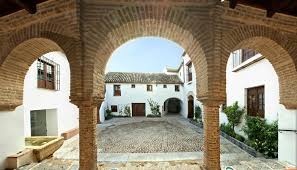
The choice of the Casa Árabe in Cordoba as the venue for the course hardly needs any explanation. It is housed in the beautiful Casa Mudejar, a 14-16th century building whose restoration received the World Heritage City Award 2011 from the Spanish Ministry of Education, Culture and Sports. The Casa is located at a three-minute walk from the Mosque-Cathedral.

INTENDED STUDENTS AND COURSE STRUCTURE

The course is directed at university students and scholars who – regardless of their specialization – want to become familiar with the most relevant issues related to the history of al-Andalus. Taught in English, it aims at guiding the participants to the wide range of scholarly research on al-Andalus. Thirty students will be selected from among the applicants (for the application procedure see below and click here).

Students are not required to have knowledge of Arabic or any other language except English; for those who are proficient in Arabic, guidance in the Arabic sources will be provided as a complement.

A basic bibliography of studies in English will be provided once the selection of students has been made and registration has been finalized. The students selected are expected to become familiar with that bibliography before the beginning of the course. A more comprehensive bibliography, including the most relevant studies in a variety of languages, will be provided during the course.

In each class unit (2 hours), the teachers will provide a brief outline of the topic dealt with and devote the rest of the class to reading texts (in English translation) illuminating some salient aspects of the respective topic.

As the course is intensive and text-oriented, students are required to be present at each class. An attendance certificate will correspondingly be provided. For those interested in producing a research paper, assignments will be given and upon submission (within six months) an examination certificate can be obtained.

SCHEDULE

The course will take place during the last week of July, from Monday 25 to Saturday 30, with a total of 30 hours. On Saturday morning, class will be held in the Umayyad palatine town of Madinat al-Zahra’. The course will be completed by two archeological workshops on Wednesday and Friday morning.


CFP: MEDIEVAL HISPANIC RESEARCH SEMINAR: XXV COLLOQUIUM


MEDIEVAL HISPANIC RESEARCH SEMINAR
SCHOOL OF LANGUAGES, LINGUISTICS AND FILM
QUEEN MARY, UNIVERSITY OF LONDON
23–24 JUNE 2016
XXV COLLOQUIUM
CALL FOR PAPERS: Deadline: 25 April 2016

Papers concerning any aspect of the literature, language, history and culture of the Iberian Peninsula in the Middle Ages will be considered. They will be delivered in either English or Spanish and will last a maximum of twenty minutes.

Proposals should be sent in the body of an email to mhrscolloquium@qmul.ac.uk by 25 April 2016. Please include name and institutional affiliation (as you wish them to appear on the programme), and a title and abstract of no more than 150 words.

Authors will receive confirmation of acceptance of proposals and details of registration via email after 6 May. Should you need a letter of confirmation please indicate this in your proposal email and provide full contact details.

Applications deadline, 18 March 2016: EEHAR-CSIC / Museo Nacional del Prado

Abierta la convocatoria de ayudas EEHAR-CSIC / Museo Nacional del Prado

EEHAR-CSIC / Museo Nacional del Prado

Deadline: Friday, 18 March 2016!

La Escuela Española de Historia y Arqueología en Roma-CSIC y el Museo Nacional del Prado comienzan una colaboración científica para promover iniciativas dirigidas a jóvenes investigadores en los campos de la Historia, la Historia del Arte y las Ciencias Humanas. La primera de ellas es la organización de un Taller dedicado a las Geografías de la pintura barroca, un encuentro entre especialistas de este campo y jóvenes investigadores que tendrá lugar en la Escuela Española de Historia y Arqueología en Roma entre los días 10 y 12 de mayo de 2016.
For more information, click here.

Eduardo Chillida (Wrocław, Poland)

2016-02-Chillida

Sounds: Eduardo Chillida

BWA AvantGarda Gallery, Wrocław, Poland
15 January – 13 March 2016

As part of Wrocław’s year as European Capital of Culture, twinned with the Basque city of San Sebastián, the Polish city  showing work by the Basque 20th-century sculptor, Eduardo Chillida. The exhibition focusses on the inspiration offered by his work to contemporary musicians.