
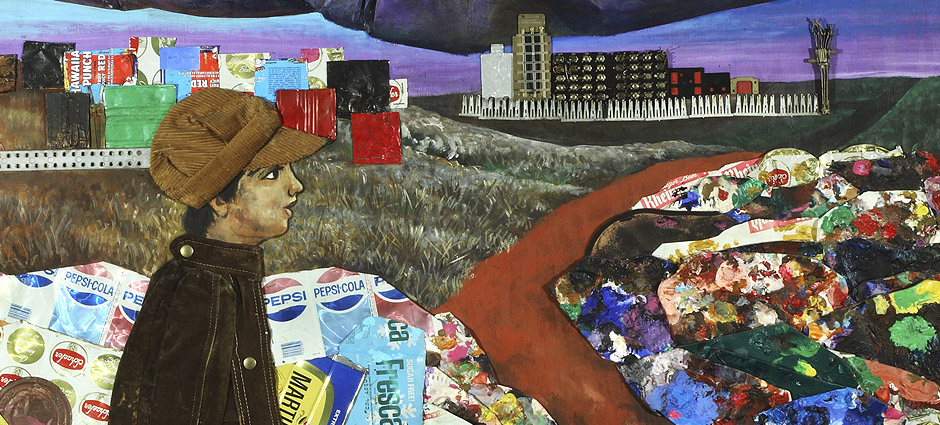
 Entre Tiempos, Museo Lázaro Galdiano, Madrid, 7 February – 12 May 2014. Display of some 80 twentieth century and contemporary works and installations, including photographs and video pieces, from the Argentinian Jozami collection, numbering some 1,000 items acquired by the sociologist and businessman Aníbal Yazbeck Jozami with his journalist wife Marlise Ilhesca. The collection has two main strengths modern and contemporary art from South America and international photographic and video art. The exhibition including works by Joaquín Torres García, Ana Mendieta and Vik Muniz, and is accompanied by a catalogue.
Dario de Regoyos, Madrid
 Dario de Regoyos (1857-1913): The Impressionist future,Museo Thyssen-Bornemisza, Madrid, 18 February – 1 June and in a reduced form to the Carmen Thyssen Museum, Málaga, 26 June -12 October. Major exhibition (previously in Bilbao) of over 140 works – oils, pastels, watercolours, prints and drawings – as well as photographs and documents, commemorating the centenary of the Asturian artist’s death. Divided into various chronological sections starting with his period in Belgium, passing through his Symbolist ‘España Negra’ series, peopled with widows, orphans, deaths and burials, and onto his ‘pointilliste’-inspired landscape views of the Basque countryside.
Post Picasso: Reacciones contemporáneas, Barcelona
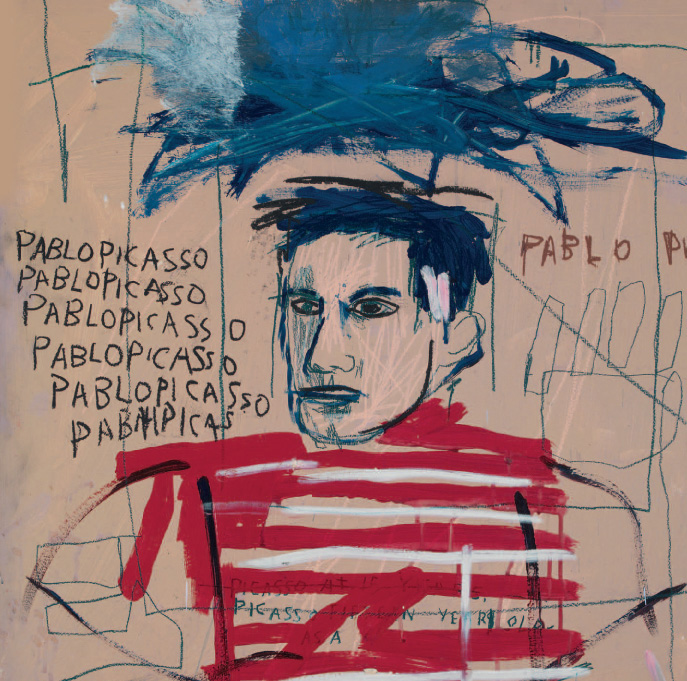 Post Picasso: Reacciones contemporáneas, Museu Picasso, Barcelona, 7 March – 29 June 2014. First exhibition to focus on the influence of Picasso’s art on contemporary visual arts since his death in 1973. Some 75 work including photography and video installations alongside paintings and sculpture, by 42 artists from across the world including Spain and South America. Curated by Michael FitzGerald, Professor of Art at Trinity College, Hartford USA.
Joan Colom, Barcelona
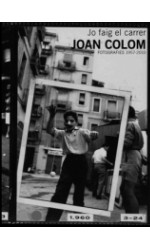
Joan Colom: Photographs 1957-2012, Museu Nacional d’Art Catalunya, Barcelona, 12 December 2013 – 25 May 2014. Major retrospective of this Barcelona-born photographer (b.1921), who revolutionised Spanish photo-reportage with his work in Barcelona especially his series focussing on its run-down barrios and red-light districts of the late 1950s and 1960s. Selected from the archive of more than 9,000 photographic prints and negatives recently given to the MNAC.
Cristina Iglesias, Brussels
 Shown in parallel with the Zurbarán exhibition, a two-room display of sculptures and installations in concrete, iron, alabaster, stained glass and textile, by the contemporary Spanish sculptor Cristina Iglesias, precedes and follows the Zurbarán. Runs until 25 May 2014.
Zurbarán, Brussels
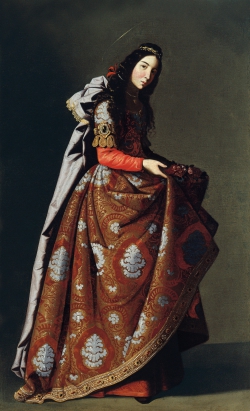 Francisco de Zurbarán (1598-1664), Palais des Beaux-Arts (BOZAR), Brussels, 29 January – 25 May 2014. Transferred from the Palazzo dei Diamanti, Ferrara. It is the first large exhibition (12 rooms) on the artist to be held outside Spain since the 1988 survey shown in New York and Paris. It displays several major works from private collections and a newly discovered painting Saint Anthony of Padua (1635-40), which was formerly in the nineteenth-century collection of the British vice-consul in Seville, Julian Williams, before it was presented by a later owner to the parish church of Étréham in Normandy, where it was recently discovered and conserved for display in the exhibition for the first time. Other important loans include Ashur and Levi, two of the sons from the series of Jacob and his Twelve Sons, from the display at Auckland Castle, which will join Benjamin lent by the anonymous family member of Willoughby de Eresby of Grimsthorpe Castle, Lincolnshire. Another discovery is The Rest on the Flight into Egypt (1638-40) which was presented to Seattle Art Museum in 2012 and a late Saint John the Baptist (1659) from a Spanish private collection, which is now accepted as fully autograph by Odile Delenda, author of Zurbarán’s catalogue raisonné. Also included are two still-lifes by Francisco de Zurbarán’s son Juan, who died of the plague in 1649, one formerly owned by the British art historian and Apollo Magazine editor Denys Sutton and now owned by the Moscow collector Inna Bazhenova, who publishes The Art Newspaper Russia. A downloadable 15-page leaflet-guide to the exhibition is available online at www.bozar.be.
Joana Vasconcelos, Manchester
 In Manchester UK the city’s Manchester Art Gallery has been taken over to display (free) numerous sculptural, ceramic and textile interventions across the permanent collection displays and in the 3-storey atrium by the contemporary Portuguese artist Joana Vasconcelos as well as a paying exhibition entitled Time Machine of some five works, 15 February – 1 June 2014. Many of the works are newly or recently made and are being shown in the UK for the first time
Contemporary art responses to El Greco, Toledo
 Contemporary art responses to El Greco: Cristina Iglesias will install a sequence of sculptures around Toledo in celebration of the artist and Elena Ochoa Foster has organised an exhibition of photographers’ responses to the city of Toledo in the city’s Centro Cultural San Marcos, 21 February – 14 June.
ARTES Lecture, 10 July 2014. Ronda Kasl: ‘The Sum of Virtues: Sovereignty and Salvation at the Cartuja de Miraflores’
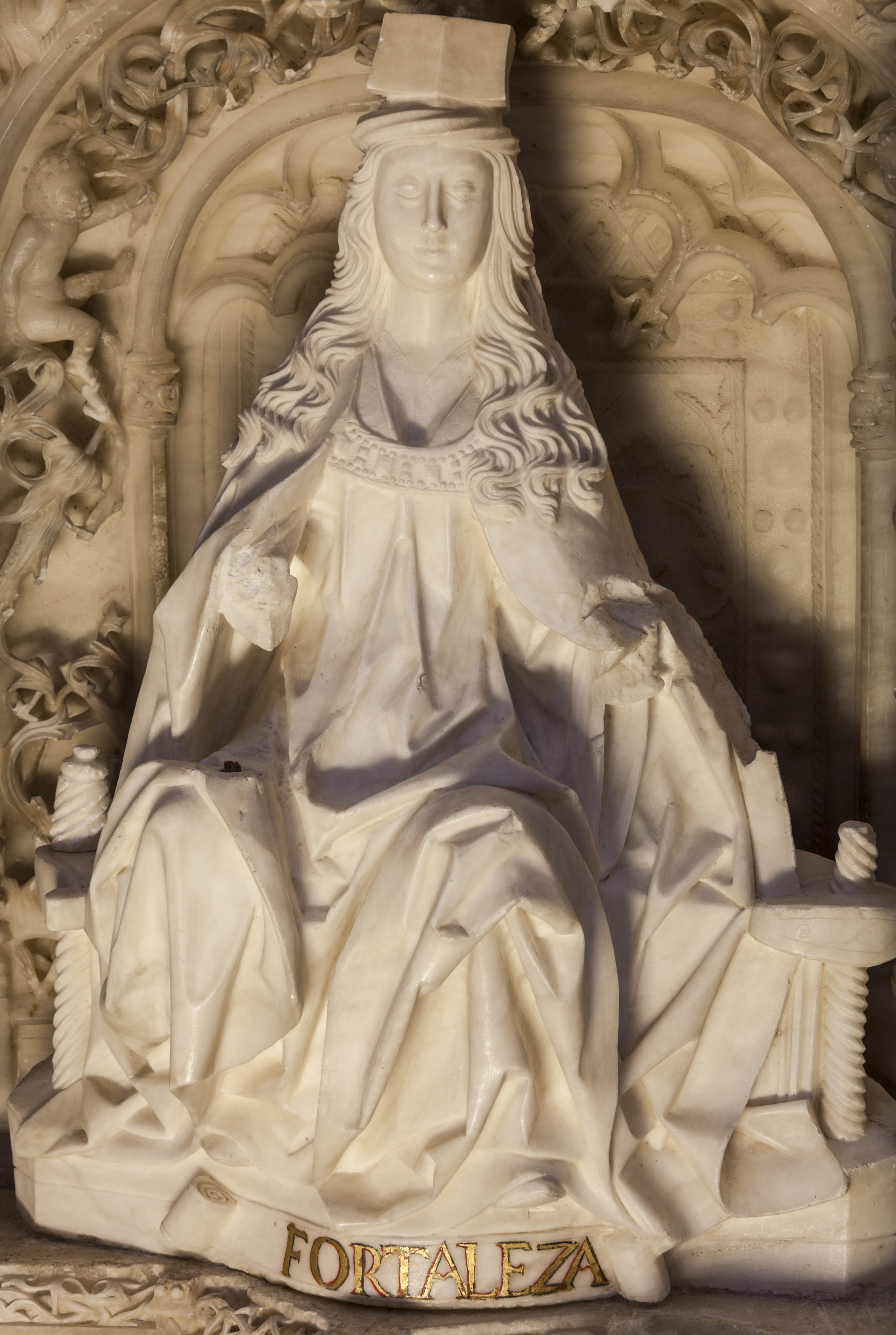 To conclude ARTES’ 2014 AGM, Ronda Kasl, Metropolitan Museum of Art, New York, will give a lecture at the Courtauld Institute at 5pm on 10 July 2014: The Sum of Virtues: Sovereignty and Salvation at the Cartuja de Miraflores
In 1442 Juan II of Castile gave the royal palace of Miraflores, near Burgos, to the Carthusian order and designated the new monastery as his burial place. Ten years later, and just two months before the king’s death, Miraflores burned to the ground. Construction of the royal monastery, which languished during the troubled reign of Enrique IV, resumed with some urgency after his half-sister, Isabel, consolidated her claim to the throne in 1476. Notwithstanding the queen’s pious motives, the decision to finish the project was not without political utility. As a dynastic monument, built in the aftermath of a civil war, Miraflores functions in an important sense as an assertion of Isabel’s legitimacy. The queen’s involvement intensified in 1486 as the monastic church neared completion and plans were commissioned from Gil de Siloe for the tombs of her parents and brother. Siloe’s alabaster tombs, finished by 1493, not only distinguish and exalt the queen’s lineage, they affirm the legitimacy of the Castilian monarchy itself. The tombs are marked by astounding formal and conceptual innovations that will be considered in light of the religious, commemorative, and political motives that animated Isabel’s efforts a Miraflores.
The Greek of Toledo, Toledo

The Greek of Toledo, 14 March – 14 June 2014, Museo de Santa Cruz and other venues across Toledo including the Cathedral Sacristy, Chapel of San José, the monastery of Santo Domingo el Antiguo, church of Santo Tomé and the Tavera Hospital. The lead exhibition is curated by Fernando Marías, Professor of Art History at the Autónoma University of Madrid and author of the recently published El Greco: Life and Work – A New History (Thames & Hudson, 2013). ARTES members may have heard him speak at the recent El Greco symposium on 28 February organised by ARTES. The exhibition is the largest on the artist, displaying over 100 works, and the first in Toledo to cover his entire career from Candia/Crete to Toledo and all forms of his activity including portraiture, sculpting and architecture.
 ARTES
ARTES 