
For more information, please see the conference website and the CFP below:

For more information, please see the conference website and the CFP below:
Join us tonight for the first talk in our ARTES/ Zurbarán Centre 2021 Autumn Seminar Series
Adam Lowe and Charlotte Skene Catling: In Ictu Oculi – In the Blink of an Eye. Rethinking the relationship between Authenticity and Originality
The seminar introduces the innovative exhibition display curated by the Madrid-based Factum Foundation and Skene Catling de la Peña at the new Spanish Gallery in Bishop Auckland, which incorporates a collection of facsimiles of paintings, sculptures and architecture. Among them are the sepulchre of Cardinal Tavera by Alonso Berruguete, a sculpture of the risen Christ by El Greco in its tabernacle from the Hospital de Tavera, the memento mori paintings by Valdés Leal from the Hospital de la Caridad, carvings and tiles from various buildings, such as the Casa de Pilatos.
This thought-provoking talk will address issues of technology, new approaches to museum display, aura and authenticity, whilst also providing insights into the creativity and thinking that underpinned the visual arts in early modern Spain.
You can join the seminar by clicking on the following zoom link: https://durhamuniversity.zoom.us/j/92019390916?pwd=aVd1ZGFUVm96T01yRzFrQkNIVWtJZz09
Meeting ID: 920 1939 0916
Passcode: 017679
For further information on Factum Foundation and their work at the Spanish Gallery (due to open on 14 October), please see: https://www.factumfoundation.org/ind/627/the-auckland-project
The seminar series has been jointly organised by the Zurbarán Centre and the ARTES Iberian and Latin American Visual Culture Group in association with the Embassy of Spain and the Instituto Cervantes.
The event is free and open to all. Please click here for the full programme and more information on the seminar series.
Please click here to register.
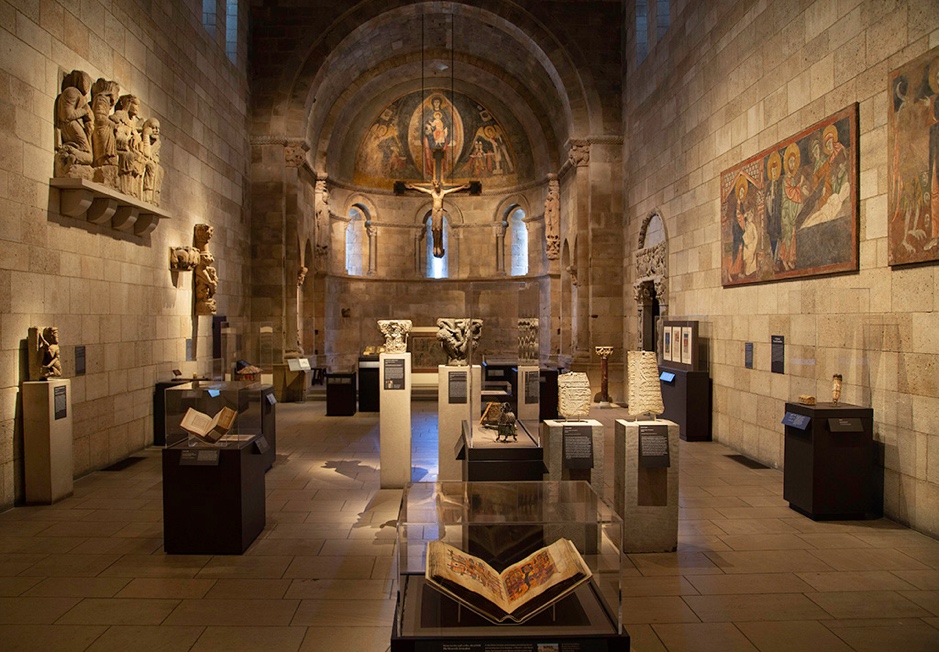
Communities of Christians, Muslims, and Jews lived side by side in Spain for centuries, creating vibrant artistic traditions that often intersected. At The Met Cloisters, however, interactions between faiths in the medieval Iberian Peninsula have not always been visible. In the Forsyth lecture, Julia Perratore, Assistant Curator of Medieval Art, The Met Cloisters, will discuss the process of planning and implementing Spain, 1000-1200: Art at the Frontiers of Faith, an exhibition which addresses this aspect of the museum’s permanent display.
For the first time since its inauguration at The Cloisters in 1961, the Fuentidueña Chapel gallery, which typically focuses on the Christian tradition, will present a group of works that testify to the diversity of Spanish medieval art. By telling a more nuanced story in this space, the exhibition demonstrates the ease with which objects and artistic ideas transcended differences of belief. Placed in dialogue with each other, the silk textiles, ivory carvings, illuminated manuscripts, frescoes, and monumental sculptures featured in the show reveal a dynamic, interconnected past that often mirrors the present. The exhibit opened on August 30, 2021, and will continue through January 30, 2022.
The webinar is made possible by the International Center of Medieval Art’s Forsyth Lecture fund with additional support from the UA Department of Art and Art History Visiting Artists and Scholar lecture fund.
Local Organizer: Jennifer M. Feltman, The University of Alabama, Department of Art and History, in collaboration with Erika Loic, Florida State University, Department of Art History
Hosted by The University of Alabama
For more info, see https://art.ua.edu/news/cloisters-curator-to-speak-on-medieval-spain/

Please see the conference’s Eventbrite page to register.
Attendance is open to anyone regardless of ICDAD membership, but we urge attendees to join ICDAD to enjoy the full benefits of membership.
Please note: when you register, you will receive a confirmation email that includes a Zoom link that is valid for all three days of the conference.
The schedule is below (NB: all start times are listed for Paris and New York, respectively):
THURSDAY, OCTOBER 21
16:00 Paris // 10:00 AM USA Eastern
Opening Remarks
Session 1: Creating History
Lieske Huits — “Modern Ornaments” or “Models of Ancient Production”? Egyptian Revival Jewelry from the Brogden Album
Martina Pall — The Revival of Chivalry in the 19th Century, Using the Example of a Room Stove
Christian Hörack — The Goldsmith Studio Bossard in Lucerne, a Swiss Contribution in the Age of Historicism
17:30 Paris // 11:30 AM USA Eastern
Session 2: ICDAD General Meeting
FRIDAY, OCTOBER 22
14:00 Paris // 8:00 AM USA Eastern
Session 1: Material
Ludmila Budrina — Russian Tradition of the Artistic Application of Hard Stone (“pietra dura”)
Anaïs Alchus & Edouard Papet — Reconsidering an Icon of Revivals: the Life-Size Biscoúit Porcelain Statue of Bernard Palissy by Gille Jeune (1860)
Samantha Coleman — The Viennese Enamel Revival Objects in the Medeiros e Almeida Collection
15:30 Paris // 9:30 AM USA Eastern
Session 2: Cultural Identity
Virginie Desrante — Sèvres Porcelain Manufactory Heritage in the 19th Century: New Thoughts on Néo-Sèvres by Sèvres
Mark Sagona — Baroque Revival Currents in the Decorative Arts in Malta,1870-1900
Susan Rawles — Home-Making: Nostalgia and The Country House Style
10:45 Eastern/16:45 Paris
Session 3: 20th and 21st Century Revivals
Melinda Farkasdy — The Verőce Super Group: Emerging Ceramists, and The Passion for Wood Fired Pottery
Kim Mawhinney — Parian Porcelain to Political Power: The Influence of the Belleek Pottery on Contemporary Artists
Christian Roden — A Museum Makes Landfall: The Kungsholm, The American Swedish Historical Museum, and the Rise of Swedish Design in America
SATURDAY, OCTOBER 23
8:00 Eastern USA/14:00 Paris
Session 1: National Romanticism
Cristina Neiva Correia — Revivals Fit for the King of Portugal: A Pair of Vases with Celebrities of the 15th and 16th centuries, by Sèvres
Ludmila Dementieva — “Encyclopedia” of Styles in the Objects of Russian Artistic Metal from the Collection of State Historical Museum
Anna-Sophie Laug — Rural Revival 1900: Vernacular Aesthetics in European Decorative Arts Between Historicism and Art Nouveau
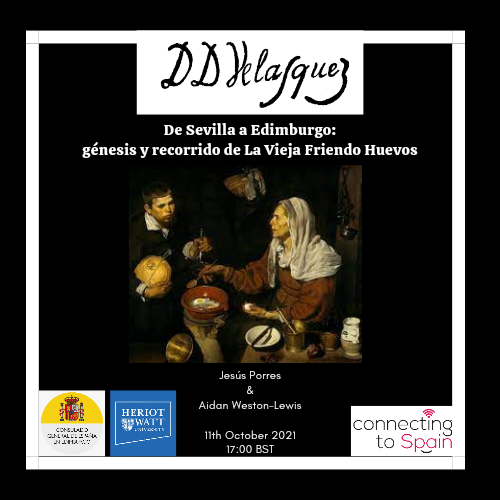
The “Old Woman Frying Eggs”, Diego Velázquez’s masterpiece, can be admired at the Scottish National Gallery. It is one of those unmistakable Spanish-Scottish connections we like to revisit through our online cultural seminars. Professor Jesús Ángel Porres, from Rey Juan Carlos University, will tell us about the artistic environment in Seville at the beginning of the 17th century, when the painting saw the light. He will be introduced by Aidan Weston-Lewis, head of the European Collection at the National Gallery of Scotland, who will speak about the painting’s vicissitudes before reaching the National Gallery.
The Meadows Museum, Dallas is hosting a series of online events this fall, open to all and accessible from around the world. NB the time zone for the events.
FURTHER AFIELD VIRTUAL TALK: Incarnating Black Sanctity: Fleshtones and “Lifelikeness” in Baroque Spanish Sculpture
Erin Rowe, associate professor of history, Johns Hopkins University
OCTOBER 5 | 12:00 pm CDT (6:00 pm BST)
Further Afield provides broader social, political, economic, and historical context for works of art at the museum. This fall, Further Afield focuses on early modern Spain, or the time period from roughly 1500 to 1800. These 45-minute talks take place exclusively online. This talk explores the contrast between representations of Black and White saints in Baroque Spanish polychromed sculpture. The process of painting fleshtones was key to Baroque artistic techniques of creating lifelike figural sculpture. Examining the distinct artistic choices made in painting fleshtones for Black and White saints reveals the spiritual meanings artists wished to convey about blackness and holiness.
$5; free for members and SMU faculty/staff/students
MOVIES WITH THE MEADOWS: The Disenchantment (El Desencanto) (1976), directed by Jaime Chavarri
Aaron Shulman, author
OCTOBER 7 | 12:00 pm CDT (6:00 pm BST)
Movies with the Meadows pairs scholar and screen. Registration includes a link to stream the film at your leisure October 6–8 and a link to a live Zoom talk on October 7 to explore the film in more depth with Aaron Shulman, author of The Epic Story of Spain’s Most Notorious Literary Family and the Long Shadow of the Spanish Civil War (2019). The cult documentary El Desencanto (The Disenchantment) is the collective story of the Paneros, a brilliant and tormented Spanish family whose eccentricities, incendiary declarations, and taboo-smashing exhibitionism turned them into a cultural phenomenon in Spain in 1976, when this film was released. A national classic, it is esteemed and remembered both for the role it played in the country’s transition to democracy and for the singular testimonies of the Panero family.
FREE
LUIS MARTÍN LECTURE SERIES IN THE HUMANITIES: Scratching the Surface: A History of Paintings Conservation
Claire Barry, Director of Paintings Conservation Emerita, Kimbell Art Museum
FRIDAYS, OCTOBER 15–NOVEMBER 12 | 10:30 am CT (NB Daylight savings in UK ends on 31/10/21)
This lecture series will use case studies to illuminate the evolution of conservation practices and theory over time. Five topics will be explored: painting materials; examination techniques; structural work; cleaning and varnishing; and compensation of losses. Throughout the series, the important role that collaboration between conservator, curator, and conservation scientist plays in decisions in the treatment of paintings will be discussed. The importance of conservation training, proper documentation, and the practice of reversibility in conservation treatment will be examined as individual case studies are explored. This program is made possible by gifts from the Fannie and Stephen Khan Charitable Foundation and the Eugene McDermott Foundation.
$60; free for members and SMU faculty/staff/students
LECTURE: Fashion and Fantasy in Eighteenth-Century France and Spain
Kimberly Chrisman-Campbell, fashion historian, curator, and journalist
OCTOBER 22 | 6:00 pm CDT (Midnight BST)
During Spain’s Golden Age, its fashions were admired and imitated across Europe. But the decline of Spanish power and the ascendancy of France under Louis XIV shifted the axis of fashion, art, and culture to Paris. Eighteenth-century travelers remarked that Spanish women dressed in “modern French fashion.” But their French counterparts increasingly looked to Spain’s past glories for inspiration. Neither antique nor modern, traditional Spanish costume was a picturesque and timeless alternative to the increasingly fickle fashions of the era, inspiring masquerade, theater, and court costumes as well as genre scenes and portraits à l’espagnole. Once easily distinguishable from French fashion, Spanish style began to permeate everyday dress and by the reign of Louis XVI, even the royal family embraced the new Spanish-accented rustic elegance. This lecture will explore the relationship between French and Spanish fashion during the eighteenth century. This program is sponsored by the Cultural Office of the Embassy of Spain.
$10; free for members and SMU faculty/staff/students
FURTHER AFIELD VIRTUAL TALK: Captive Objects: Catholic Artifacts Across the Early Modern Mediterranean
Daniel Hershenzon, associate professor; Department of Literatures, Cultures, and Languages; University of Connecticut
NOVEMBER 2 | 12:00 pm CDT (5:00 pm GMT)
Further Afield provides broader social, political, economic, and historical context for works of art at the museum. This fall, Further Afield focuses on early modern Spain, or the time period from roughly 1500 to 1800. These 45-minute talks take place exclusively online. Catholic artifacts—rosaries, relics, paintings, and more—circulated in the thousands in the early modern, western Mediterranean, crisscrossing religious boundaries. This mobility was largely a byproduct of piracy, to which 2–3 million Christians and Muslims fell fate between 1500 and 1800. This talk examines how objects trapped in the plunder economy became the center of the conflicting claims made by Catholic captives, renegades (captives who had converted to Islam), Moroccan sultans, and Algerian pashas. We will see how captivity transformed religious artifacts into religious boundary markers within and among religions.
$5; free for members and SMU faculty/staff/students
LECTURE: Making It: Creating Fashion in Early Modern Europe
Annette Becker, director and curator, UNT CVAD Texas Fashion Collection
NOVEMBER 18 | 6:00 pm CST (Midnight GMT)
Have you ever wondered how delicate, handmade lace was created, or how stiff ruffs stayed so crisp and white? And before department stores and boutiques, how did gentleman procure elaborately embroidered suits? In celebration of the exhibition Canvas & Silk: Historic Fashion from Madrid’s Museo del Traje, join Texas Fashion Collection director Annette Becker in an exploration of the lives of garments from the sixteenth through eighteenth centuries. Together we’ll discover the surprisingly laborious and often creative processes of commissioning, creating, and caring for garments represented in portraiture and featured in the exhibition, allowing us a greater understanding of how people’s lives were intertwined with clothing. This program is sponsored by the Cultural Office of the Embassy of Spain.
$10; free for members and SMU faculty/staff/students
FURTHER AFIELD VIRTUAL TALK: Dressing the Court of Philip IV
Amanda Wunder, associate professor of early modern European history, City University of New York (CUNY)-Lehman College
DECEMBER 7 | 12:00 pm CST (6:00 pm GMT)
Further Afield provides broader social, political, economic, and historical context for works of art at the museum. This fall, Further Afield focuses on early modern Spain, or the time period from roughly 1500 to 1800. These 45-minute talks take place exclusively online. The court of Philip IV (1621–1665) is best remembered today for the extreme fashions that were immortalized in the paintings of Diego Velázquez, most memorably in his iconic masterpiece Las Meninas. This talk goes behind the scenes in the Royal Palace to investigate the lives and works of the court artisans—tailors, embroiderers, shoemakers, and others—who dressed Philip IV and his family and played a crucial, if long-forgotten, role in shaping court culture in seventeenth-century Spain.
$5; free for members and SMU faculty/staff/students
FURTHER AFIELD VIRTUAL TALK: Mother, Daughter, Widow, and Wife: The Conundrum of Mary in Early Modern Hispanic Art
Charlene Villaseñor Black, professor of art history and Chicana/o studies, UCLA
JANUARY 11 | 12:00 pm CST (6:00 pm GMT)
Further Afield provides broader social, political, economic, and historical context for works of art at the museum. This fall, Further Afield focuses on early modern Spain, or the time period from roughly 1500 to 1800. These 45-minute talks take place exclusively online. Marian devotion is grounded in a conundrum: Mary is both exemplary and ordinary, superior to all other women and a conventional mother, daughter, widow, and wife. Focusing on this paradox in the seventeenth-century Hispanic world, this talk asks: How did sacred artworks serve as visual exemplars of gendered behaviors? How did artists, patrons, and devotees negotiate the contradictions at the heart of Marian veneration?
$5; free for members and SMU faculty/staff/students

This session will explore the legacy of Islamic art in Europe through its medieval ceilings, many of which are dispersed as architectural fragments in contemporary museums. It will focus on the case study of the Torrijos ceilings, four monumental wooden ceilings that were commissioned in the 1490s by a couple close to the Catholic Monarchs, for their palace in Torrijos near Toledo (Spain). The ceilings were separated in 1904 when the Torrijos palace was dismantled, and they are now dispersed across collections in Europe and the USA. Despite their significance to histories of both Islamic and European art, these important objects remain under-explored. As objects made using techniques and motifs associated with Islamic craftsmanship, the Torrijos ceilings are not considered European enough to sit within western art history; on the other hand, their commission for a Christian-owned palace using a style adapted to Gothic taste means that neither are they considered within Islamic art history.
Drawing from a new interdisciplinary BA/Leverhulme funded research project with these ceilings at its heart, this panel invites papers that more fully contextualise the ceilings and their role in understanding the complex history of Islamic art in Europe. We seek to discuss the circumstances of the ceilings’ original making and decorative choices; the relationship of their carpentry techniques to earlier traditions, especially in the wider Islamic world; their fragmentation and acquisition, in the wider context of the dispersal of Spain’s cultural heritage in the late 19th and 20th centuries; their modes of display, and the potential for these ceilings to foster a new understanding of Spain’s medieval craftsmanship among contemporary museum-going publics.
Mariam Rosser-Owen, Curator Middle East, Victoria and Albert Museum, m.rosserowen@vam.ac.uk, @mrosserowen
Anna McSweeney, Lecturer in History of Art and Architecture, Trinity College Dublin, mcsweean@tcd.ie
For more information, please see the CFP and the Crafting Medieval Spain project’s website
Call for Papers deadline 1 November 2021. Please submit your paper proposal to the convenor.

Akemi Luisa Herráez Vossbrink, Meadows Museum Center for Spain in America (CSA) Curatorial Fellow and ARTES member, will deliver a virtual lecture this Thursday for the Milwaukee Art Museum titled ‘Spanish Golden Age Masters in American Collections’, which focuses on works by Francisco de Zurbarán and Bartolomé Esteban Murillo
For more information and to register, please use this link: https://mam.org/events/event/virtual-in-conversation-spanish-art-and-american-portraiture/
This lecture is held in conjunction with the current exhibition “Americans in Spain: Painting and Travel, 1820-1920.” It is free and will take place at 6 pm BST/UK time (12 pm CDT/Milwaukee time) this Thursday September 30th. Registration is required.
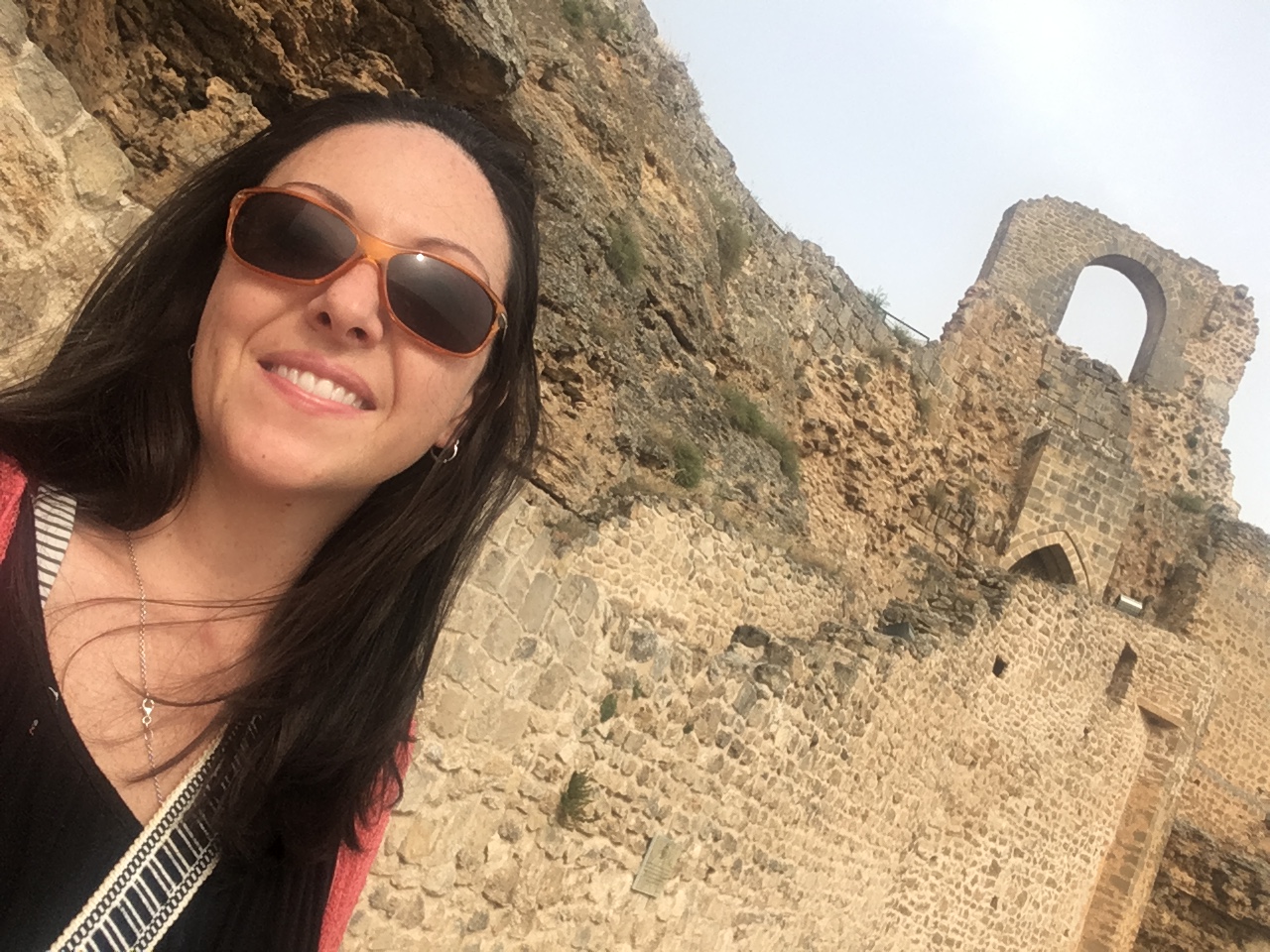
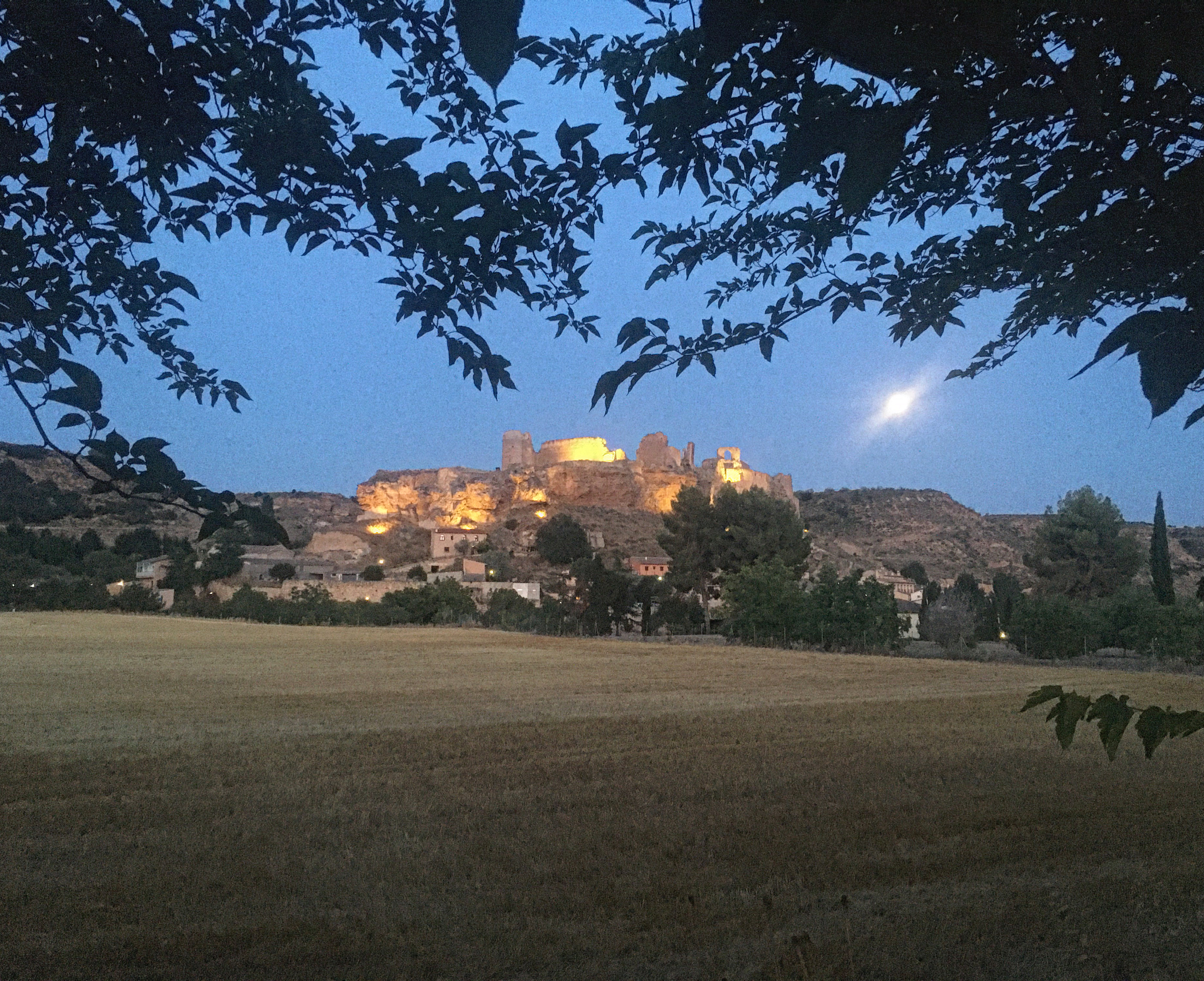
Covid-19 threw a wrench in so many projects, including my planned trip the summer of 2020 to Zorita Castle and the museums of central Spain. Thanks to the flexibility of the ARTES CEEH Travel Scholarship, I postponed my research to this past summer, and spent the greater part of July 2021 basking in the opportunity to work on the excavation of the necropolis of Zorita Castle, run by Dr. Dionisio Urbina and Catalina Urquijo of Archaeospain. The finds of this year primarily dated to the 12th and 13th centuries, during which the fortress acted as a seat for the Knights of the Order of Calatrava.
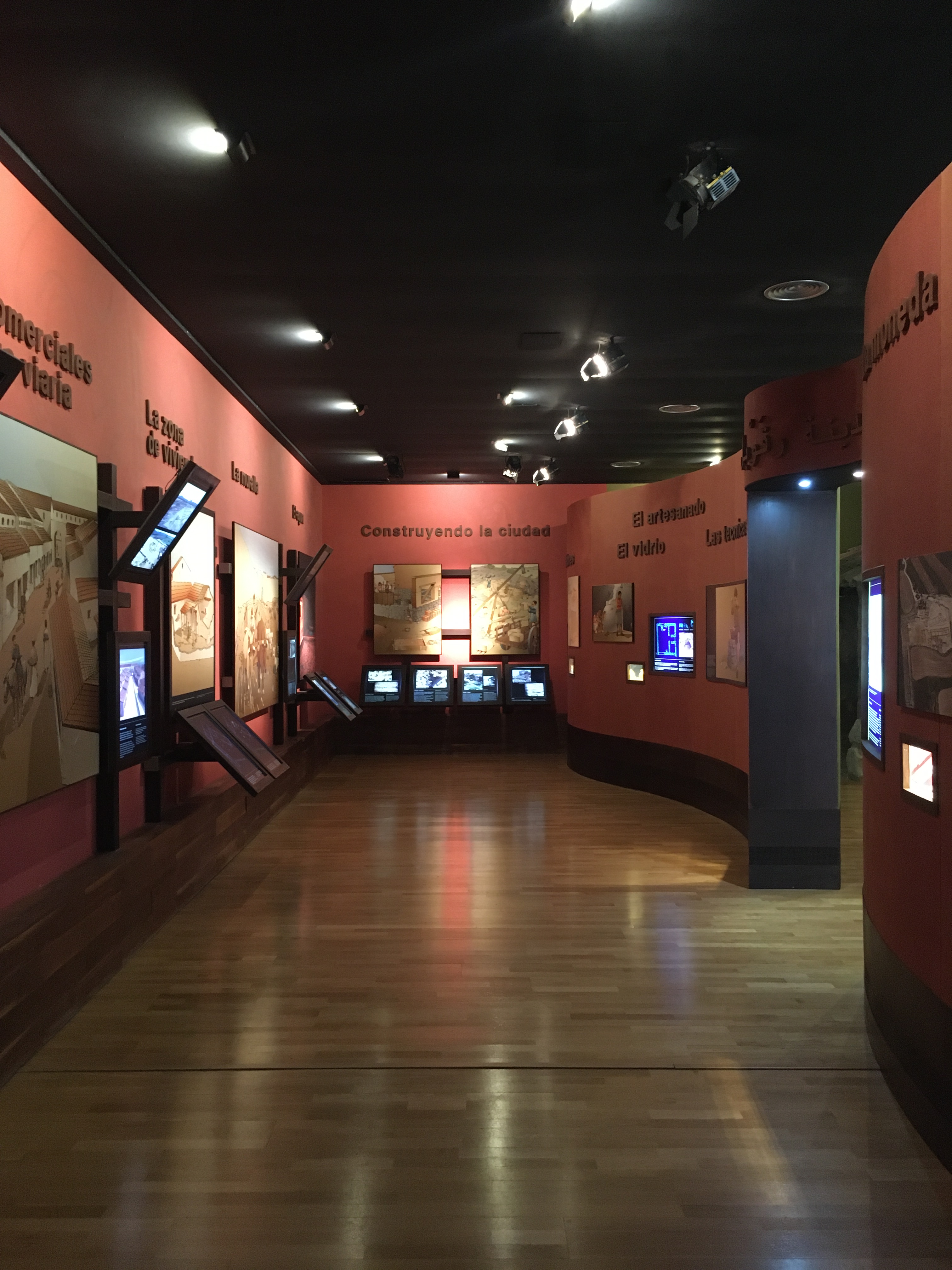
Life on site involved early mornings, working until about 2 pm every day. In my free afternoons, I documented the built landscape of the town of Zorita de los Canes, accessed local libraries, and recorded the ways in which the history of the fortress/castle of Zorita is told in the local museum at Recópolis. Perhaps most useful were the books I found in the town of Zorita de los Canes, rare local publications printed by the province of Guadalajara that rarely achieve international circulation.
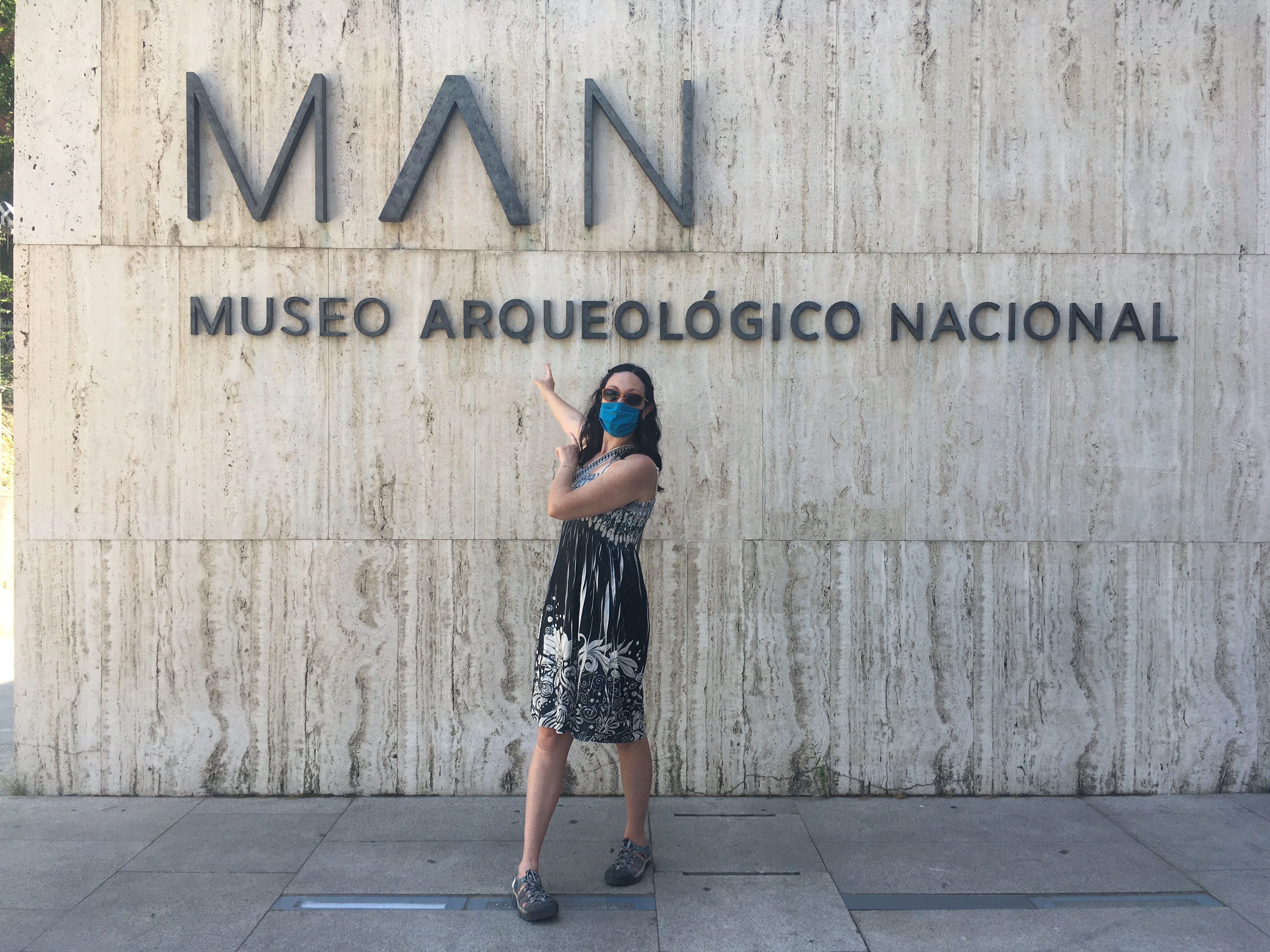
I took advantage of the weekends to travel to sites and museums in Toledo and Madrid, notably the Museo Arqueológico Nacional in Madrid (enthusiastic picture included), at which I spent a day documenting the artifacts on display as well as their descriptive labels and display strategies. Highlights included seeing the Pyxis of Zamora, an object which I have studied for many years, as well as a beautiful astrolabe of Ibrāhim ibn Sa’īd al-Shalī, a student of the Córdoban master Maslama al-Majrīṭī which was shown in the round. I also benefitted from visits to the gift shops of many of these museums, which afforded me the chance to purchase books geared towards visitors of each institution. These are crucial to understanding the ways in which museums present the history of their collections to a wider public.
I am thankful to the funding from ARTES CEEH that allowed me crucial research for my thesis. I had written as much as I could about the fortress of Zorita without being to site. The trip this summer allowed me to complete the aforementioned chapter of my thesis, collect research for future chapters, and the treat of seeing in-person for the first time some of those objects that made me fall in love with Islamic Iberia.
-Sarah Slingluff
 ARTES
ARTES 