
To register please email rw51@soas.ac.uk by 10 January 2021
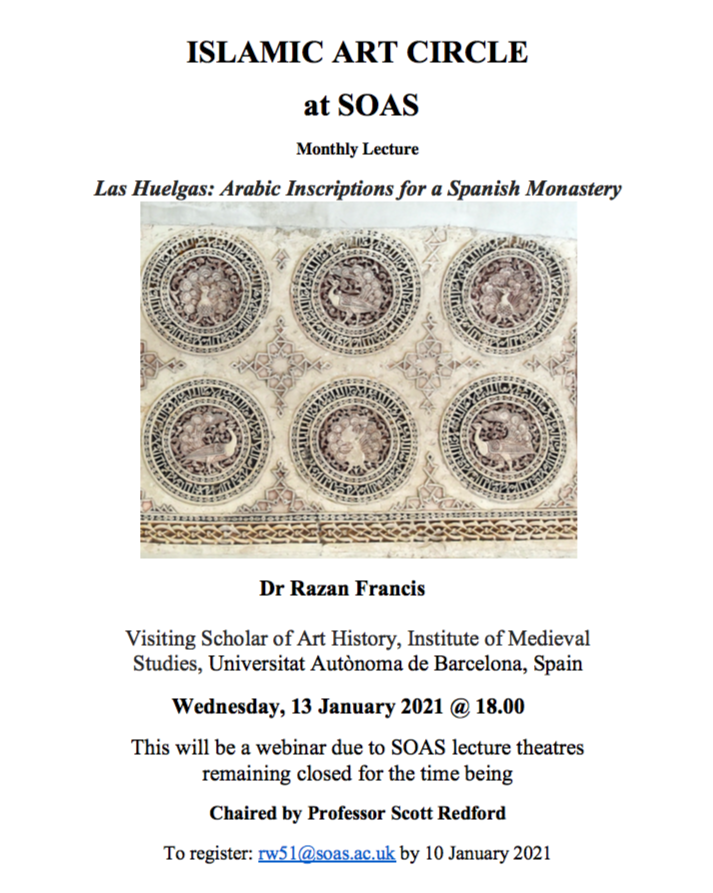
To register please email rw51@soas.ac.uk by 10 January 2021
We waited in Trafalgar Sq last Wednesday to go in at 9:30 for an ARTES private viewing of Artemisia. A cold grey London Morning with people out, hurrying through the handsome classical space, St Martins-in the Fields looking austere and fine. A grey day in winter suits the square.
Inside, empty rooms and the chance to take time to see the paintings. We all felt over-excited to be back in the National Gallery and were thankful to Letitzia Treves, the exhibition curator, and Lucy Chiswell, her assistant, for making the visit possible, as it was cancelled in November. We locked down, the very next day.
There was good discussion amongst the members, wide-ranging conversation, and reunions among friends after being isolated. Muffly chats in masks.
I am fond of the loan from Pozzuoli -St Januarius being taken to the coliseum in
Pozzuoli to be martyred with a huge wolf snarling, at his side, and giant bears/lions who look a bit sweet, sinking in homage at his feet, tamed by his presence, having come in to attack. It is for me, as a painter, a good example of how a commission is pieced together. Had Artemisia seen a lion? It is an excellent loan, tender, and compelling. A painting we mightn’t have seen, no matter how thoroughly we visit churches in the Bay of Naples.
Finest for me was Susanna and the Elders from Pommersfelden (detail included below). It is worth the visit alone, as is The Right Hand of Artemisia Gentileschi holding a Brush, a soft black and red chalk drawing on loan from the Prints and Drawings department of the the British Museum.

We do Plan more visits for the future!
Susan Wilson, ARTES
The Zurbarán Centre for Spanish and Latin American Art at Durham University invites applications for a doctoral scholarship in Spanish art-historical studies, commencing in the academic year 2021/22. The scholarship has been created thanks to the generous support of the CEEH (Centro de Estudios Europa Hispánica) in association with ARTES and The Auckland Project. It supports research projects on Spanish art from the Golden Age to around 1900, including the reception of Spanish art. The successful candidate will enjoy privileged access to the Spanish Gallery at The Auckland Project, which is due to open in 2021 in Bishop Auckland. The scholarship is tenable for three years full-time (or five years part-time). Details on the eligibility criteria and the application process can be found here. Interested candidates are advised to contact the Zurbarán Centre administration (Zurbaran.Centre@durham.ac.uk) at least four weeks in advance of the application deadline: 31 March 2021.
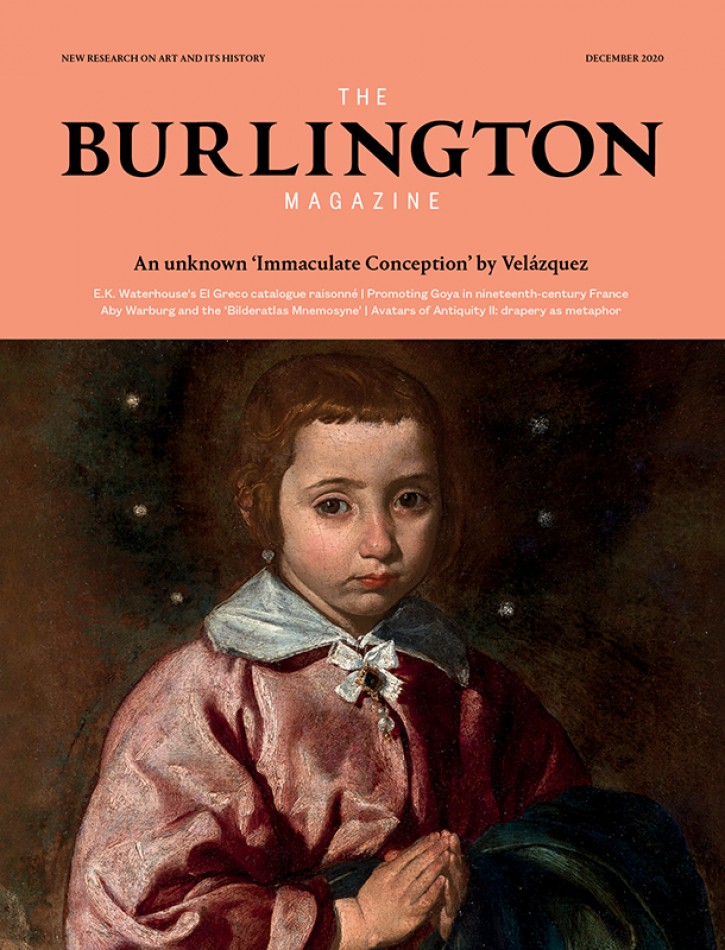
For more information or to purchase a printed or digital copy of this month’s issue, please click here
Thanks to the generous support of CEEH (Centro de Estudios Europa Hispánica), ARTES, awards a number of scholarships each year to students working on any aspect of Spanish visual culture before 1900. The deadline for all applications is 31st January each year and the Scholarship Committee usually informs successful applicants by 1st March. Scholarship winners are normally invited to an awards ceremony at the ARTES AGM in the summer. Please read the guidelines for each scholarship, as well as the general guidelines below.

Final year undergraduates and postgraduate students registered for a full or part-time degree course at a UK university may apply for up to £1000 towards the costs of travel to Spain for research purposes (which may include field work, attendance at a conference, or other recognised forms of research).
£3000 scholarship for PhD students at a UK university
ARTES offers one scholarship each year to a student registered for a full- or part-time doctoral degree at a UK university. The scholarship is intended to contribute towards the costs of tuition, living and/or research, and therefore students with full funding are not eligible.
Doctoral students or those who received their doctorate less than four years before the application deadline may apply for this scholarship provided that they were or are registered for doctoral study at a university in Spain.
ONLY A FEW PLACES STILL AVAILABLE – Please contact Susan Wilson at susanruddwilson@gmail.com ASAP if you wish to attend.
We are pleased to let ARTES members know that a small visit to Artemisia Gentileschi will take place on Wednesday December 9th at 0915.
Gentileschi spent some years working in Naples (from 1630- until her death, thought to have occurred in 1652, when it was part of the Spanish Empire.) Her patrons included Phillip IV and his ambassadors and Viceroys, eg The Duke of Alcala. We thought it made sense to visit the exhibition and follow on developing our understanding of the Spanish in Naples.
Due to the pandemic places are limited, to 10 only, masks must be worn and social distancing of 2 metres observed. We cannot form groups as we go through the exhibition.
If you want to include “Titian” please make an online booking for later that morning as combining the two exhibitions is not now possible due to the pandemic.
Meet Susan Wilson at the Sainsbury Wing Entrance at 0900 to enter at 0915.
Latecomers cannot be admitted. NB: If you reserve a place and cannot attend please let me know immediately as we can run a waiting list for this visit, but I would need to swap names over.
Please contact Susan Wilson at susanruddwilson@gmail.com ASAP if you wish to attend.
Please click here to buy the album, listen to a preview, or for more information
By the early 1620s – when Juan Gutiérrez de Padilla migrated from Cádiz to New Spain (modernday Mexico) in search of new horizons as a music director, composer and instrument-maker – the colony was an important and wealthy outpost of the Habsburg Empire, keen to maintain the religious and musical customs of its mother country. The cathedral of the young, thriving city of Puebla de los Ángeles was still a magnificent work in progress, but its music provision could already rival its European counterparts. Padilla stayed there for forty years, composing prolifically right up to his death in 1664, and had at his disposal a sizeable body of men and boys who not only sang but also played instruments – including guitars, sackbut, dulcian, and simple percussion such as the cajón.
Siglo de Oro’s programme explores the rich soundworld of this time and place: a sonic landscape ultimately quite different from the one Padilla had left behind in Europe. Evoking a Mass at Christmas Eve affords the opportunity to include a number of villancicos – energetic, dance-like pieces whose captivating mixture of Mexican, Afro-Hispanic and Portuguese influences would have invigorated even the most sober churchgoer.
Click here to register and for more information
Yarí Pérez Marín, Marvels of Medicine: Literature and Scientific Enquiry in Early Colonial Spanish America
Marvels of Medicine makes a compelling case for including sixteenth century medical and surgical writing in the critical frameworks we now use to think about a genealogy of cultural expression in Latin America. Focusing on a small group of practitioners who differed in their levels of training, but who shared the common experience of having left Spain to join colonial societies in the making, this book analyses the paths their texts charted to attitudes and political positions that would come to characterize a criollo mode of enunciation. Unlike the accounts of first explorers, which sought to amaze audiences back in Europe with descriptions of strange and astonishing lands, these texts instead engaged the marvellous in an effort to supersede it, stressing the value of sensorial experience and of verifying information through repetition and demonstration. Vernacular medical writing became an unlikely early platform for a new form of regionally anchored discourse that demanded participation in a global intellectual conversation, yet found itself increasingly relegated to the margins. In responding to that challenge, anatomical treatises, natural histories and surgical manuals exceeded the bounds set by earlier templates becoming rich, hybrid narratives that were as concerned with science as with portraying the lives and sensibilities of women and men in early colonial Mexico.
Andrew M. Beresford, Sacred Skin: The Legend of St. Bartholomew in Spanish Art and Literature
Sacred Skin offers the first systematic evaluation of the dissemination and development of the cult of St. Bartholomew in Spain. Exploring the paradoxes of hagiographic representation and their ambivalent effect on the observer, the book focuses on literary and visual testimonies produced from the emergence of a distinctive vernacular voice through to the formalization of Bartholomew’s saintly identity and his transformation into a key expression of Iberian consciousness. Drawing on and extending advances in cultural criticism, particularly theories of selfhood and the complex ontology of the human body, its five chapters probe the evolution of hagiographic conventions, demonstrating how flaying poses a unique challenge to our understanding of the nature and meaning of identity.
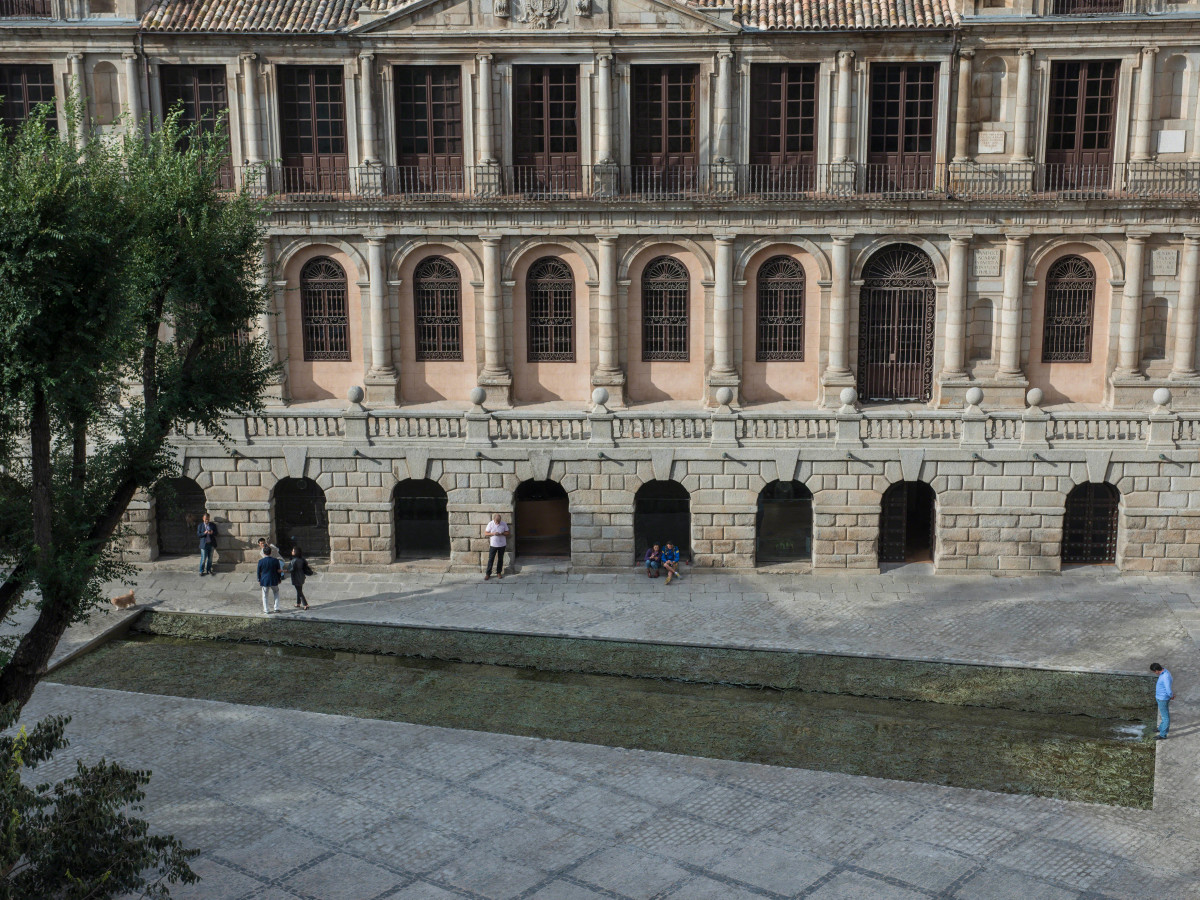
As part of its Architecture Awards 2020 the Royal Academy will be hosting an in conversation event online via Zoom between the Spanish sculptor Cristina Iglesias and the British architect Lord Norman Foster RA on 3rd December 6.30-7.45pm.
Click here to book and for additional information
The RA will begin by introducing the RA Dorfman Award Finalists and announcing the 2020 winner. Cristina Iglesias will then present a celebratory lecture, exploring her work and its connections to public space, followed by a conversation with the chair of this year’s jury, Norman Foster RA. Ranging from gallery spaces to city squares, their conversation will chart the important public aspect of Iglesias’ work. Following the lecture and conversation, there will be 15 minutes for the audience to ask questions.

Talk Description: Among the treasures of the Wallace Collection is a modest but very fine collection of Spanish paintings. They were largely collected by the 4th Marquess of Hertford in the 1830s and 1840s in Paris, when the fashion for collecting Spanish art was at its highest and works by Murillo and Velázquez were much sought after. The 4th Marquess acquired a total of thirteen paintings attributed to Murillo and eight to Velázquez, along with the only known Alonso Cano painting in the United Kingdom.
Although modern day scholarship no longer accepts some of these paintings as fully autograph, the Wallace Collection contains several icons of Spanish art such as Velázquez’s enigmatic portrait of a The Lady with the Fan and Murillo’s exquisite The Marriage of the Virgin, painted on a mahogany panel.
Join Director of the Wallace Collection and expert on Spanish art, Dr Xavier Bray, who will explore the context in which these works were made, whether Spanish ecclesiastical institution or royal palace, and their importance in the wider context of collecting in 19th-century Europe.
 ARTES
ARTES 