(CANCELLED TALK)“Murillo. From Heaven to Earth” – A talk by Guillaume Kientz (Hispanic Society of America).

ARTES would like to express our apologies for this last minute change. Due to unforeseen circumstances, the event ‘“Murillo. From Heaven to Earth” – A talk by Guillaume Kientz’ will be rescheduled for a later date yet to be determined. Please keep an eye out for the announcement!

Predoctoral Fellowship – Bibliotheca Hertziana

Deadline: May 31 2023, 12 pm CEST

The Lise Meitner Research Group “Decay, Loss and Conservation in Art History” led by Francesca Borgo at the Bibliotheca Hertziana – Max Planck Institute for Art History in Rome seeks to appoint a:

 Predoctoral Fellow (M/F/D)

The deadline for application is May 31 2023, 12 pm CEST. Interviews will be held virtually in June 2023. Candidates should propose a funding period of desired length within the academic year 2023/2024. Motivations for the length of period proposed should be made clear in the cover letter.

The Predoctoral Fellow will conduct their own research within the framework of the Research Group. Excellence in research, commitment to pursue new insights through original scholarship, and willingness to become part of a group of young, international scholars are essential. Fellows will actively participate in the Group’s activities and are invited to contribute to its publication output while benefitting from editorial and image licensing support. They will be responsible for planning and organizing seminars, workshops, visits, and fieldtrips in collaboration with other team members and under the supervision of the Group Leader. Candidates must be conversant in English and familiar with Italian and/or German.

This position is intended for a PhD student enrolled at any university worldwide who is in the finishing stages of their dissertation. In addition to clarifying how residence in Rome benefits their PhD research, candidates should include in their cover letter a statement of how their work advances the goals of the research group. Candidates should also seek the approval of their doctoral advisor. Candidates are expected to review the Research Group’s research agenda, past initiatives and event series, as well as the broader structure of the Bibliotheca Hertziana into which the Research Group fits. We welcome applications from doctoral students in every field within the history of art, technical art history, conservation history, and museum studies, with preference given to projects spanning traditional disciplinary boundaries. The selection committee aims to assess the ability of candidates to contribute in a collegial way to the intellectual life of the Research Group. 

This is a residential fellowship. By the start of the appointment, candidates are expected to have taken up residence in Rome. The fellowship may not be held concurrently with another major fellowship award; applicants must disclose any supplementary funding and may not take on other obligations during their fellowship period.

The Max Planck Society offers a fixed-term contract of employment. Stipend and benefits are determined according to the German Civil Service Collective Agreement (65% TVöD Bund E 13) or equivalent, depending on individual personal circumstances. Fellows enjoy all the privileges of the Institute, including library access seven days a week, a research budget, and their own carrel or desk.

We encourage women and individuals from communities that are underrepresented in academia to apply. The Max Planck Society is committed to fostering equal opportunities and diversity and welcomes applicants from all parts of society, regardless of gender, ethnicity, disabilities, or sexual orientation.

To apply the candidate must upload the following documents as separate PDF files to the application portal

  • Cover letter that clearly states the candidate’s contribution to the Research Group’s objectives
  • Description of proposed research project (max. 1000 words), accompanied by a bibliography
  • Curriculum vitae with list of publications (including those forthcoming, under revision, submitted, or in preparation)
  • One reference letter
  • Output proposal (max. 500 words). This could be a site visit, a collaboration with a local collection, a research seminar, a publishable piece of writing, or a contribution to a national or international conference. The proposal should detail specific names and locations and specify how the output aligns with the Research Group’s themes.

For more information, see here

“Murillo. From Heaven to Earth” – A talk by Guillaume Kientz (Hispanic Society of America).

When: April 18th, 2023 | 6 – 7pm (UK Time)

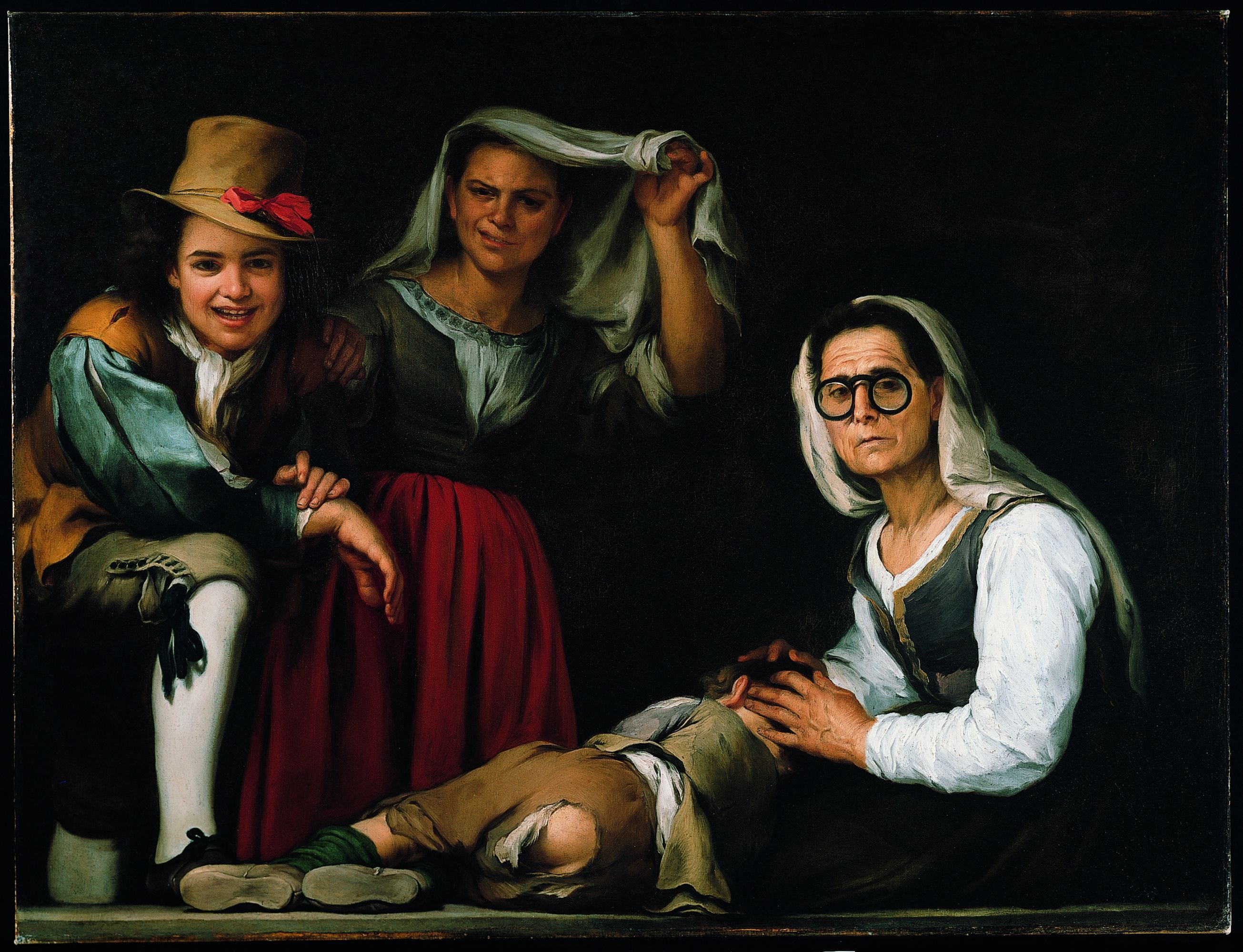
This talk will discuss the research for the exhibition Murillo. From Heaven to Earth curated by Guillaume Kientz at the Kimbell Art Museum in Forth Worth, 18 September 2022 – 29 January 2023. Inspired by the Kimbell’s mysterious Four Figures on a Step, the exhibition focused on Murillo’s earthly depictions of secular subjects and everyday life in seventeenth-century Seville. The show and its accompanying catalogue shed new light on Murillo’s innovative portrayals of beggars, street urchins and flower girls in the artist’s culturally rich narratives of youth and age, romance and seduction, faith and charity.

Guillaume Kientz is the Director and CEO of the Hispanic Society Museum and Library, New York. He previously served as Curator of European Art at the Kimbell Art Museum and as Curator of Spanish and Latin American Art at the Musée du Louvre.

To join the seminar, click on the link below, or copy and paste it into your browser:

Join Zoom Meeting

https://durhamuniversity.zoom.us/j/93702971057?pwd=TW9raVNlM1pxaHFkdGFueURvaWVrZz09

Meeting ID: 937 0297 1057

Passcode: 612894

The seminar has been organised by the Zurbarán Centre and the ARTES Iberian and Latin American Visual Culture Group in association with the Cervantes Institute, UK. 

CALL FOR PROPOSALS: JSAH Roundtable – Race and the Built Environment in the Iberian World, 1400-1800

Deadline for proposal submissions: 15 May 2023

Histories of architecture and histories of construction continue to debate the relationship of design and craft. The biographical model, privileging the architect’s intellectual gifts and relations to patrons, has long emphasized the circulation of architectural knowledge through treatises, writings, and travel accounts, while histories of construction and the vernacular focus on the organization of the architectural trades and the study of materials and construction technologies. Histories of construction underscore the fact that the building trades were hardly “democratic” in the early modern Iberian world, where cities and towns often issued legislation to control (not always successfully) artistic and architectural practices as well as urban development (e.g., Slater, Pinto, 2017). The implementation of official languages, urban regulations and design, cartography—or the way the world was represented and understood—consistently effaced both racial and religious minorities across these regions (e.g., Jones 2019; Mignolo, 2003; Mundy, 1996, Davies, 2016). Yet recent literature shows that Black and Indigenous subjects and other racial and religious minorities across the Spanish Atlantic actively litigated to gain rights (e.g. Ireton, 2020; Masters, 2023). While the biographical model has often silenced minority voices, histories of construction and the vernacular allow us to bring to the fore the major intellectual contributions of Black, Indigenous, and other minority architects, builders, masons, and non-architects. This roundtable seeks to re-examine the histories of construction and architecture to explore the role played by a diverse array of builders in shaping the Iberian World.

What does studying builders and the building trade in the Iberian world tell us, and why is it important? For example, architects and builders of Amerindian descent dominated the building trades in Mexico City and Quito (Mundy 2015; Webster 2011), even as several imperial systems enacted legal mechanisms to silence local, Black, and Indigenous knowledge of structures, materials, and design. And what happened in cities and locales where there were no architects but perhaps only carpenters or surveyors at work? Several essays in the recent JSAH Roundtables edited by David Karmon, “Constructing Race in Architecture, 1400–1800,” Parts 1 and 2, touch upon similar issues, further inviting us to rethink how we study architecture. Indigenous knowledge enabled the erection of buildings in regions with significant challenges, such as the suspended quincha vaults of colonial Peru, timber structures in areas with high seismic activity in Portugal, or buildings that sustained the monsoon in Asia (e.g. Carita, 2000 and 2003).

This JSAH Roundtable seeks contributions that rethink the relationship between race and the histories of craft, design, construction, the vernacular, and more traditional architectural histories by focusing on the Iberian world as an example of an imperial system. How was race constructed and reflected in the social organization of the trade and in buildings and cities across the Iberian world? It invites essays that focus on the social organization of the building trade and the construction of race in cities and regions across Europe, Asia, Africa, and America that formed part of the Iberian world between 1400–1800. Theoretically and historically rigorous studies that deal with issues of race, climate, gender, indigeneity, and/or indigenous knowledge, as well as interdisciplinary approaches, are especially encouraged. The editor is committed to working with the chosen contributors to develop their ideas for the roundtable.

Submission Guidelines
JSAH Roundtable consists of a series of short essays, each of approximately 1000 words, that will be collectively published in the place of a single article in an issue of JSAH. This format provides an opportunity for a range of contributors to explore new research directions through a variety of lenses, alongside the traditional full-length articles that are the JSAH mainstay. We welcome submissions by individuals at different career stages (including independent scholars) and different types of institutions (universities, government agencies, museums) that are diverse in their gender, racial, and national composition. To propose an essay for the roundtable, please submit a CV and a one-page abstract for review by roundtable editor Laura Fernández-González to: lfernandezgonzalez@lincoln.ac.uk

For more information, see here.

CALL FOR PAPERS: Ornament – Annual Conference, Lisbon, October 2023

Organized by: International Committee for Museums and Collections of Decorative Arts and Design
Submission Deadline: 15 May, 2023
Location: Lisbon, Portugal
Dates: 10 – 12 October, 2023

“Ornament is not only produced by criminals; it itself commits a crime,” So said architect and designer Adolf Loos in his 1910 lecture-turned-essay “Ornament and Crime,” where he described the effort in designing and creating ornaments as superfluous and wasteful and helped to set the stage for the minimalist, stripped-down forms that would shape modern architecture and design for much of the twentieth century. More than fifty years later, postmodern designers rejected the strict functionalism of modern design, with Robert Venturi declaring, “more is more, less is a bore,” and Ettore Sottsass poetically describing decoration as “a state of mind, an unusual perception, a ritual whisper.”

 The debate over ornament—what is its purpose, what should it look like, how should it be applied, and is it even necessary at all—chronologically and geographically transcends any of these figures and is in fact as old as the field of decorative arts itself. Skilled craftspeople have been producing ornament-laden decorative arts for more than a millennia. Throughout the world, cultures have developed complex relationships to ornament, making it an ideal topic for ICDAD’s 2023 annual meeting. 

This year’s ICDAD conference invites papers that consider the many dimensions of ornament and its multiple roles in decorative arts and design. For instance, what is its role today? How have relationships to decoration evolved over periods of time?  What are its social and political functions? Does ornament enhance or obscure meaning and use? How do different cultures address ornament and decoration, and where have they served as a connector between communities? How does decoration function in global art history, and how might the approaches taken by artists and makers in non-western countries illuminate alternative relationships to ornament? 

Lisbon is an interesting site for this productive dialogue; a city marked by its centuries-old tradition of decorative tile as well as gilded and polychrome wood carving. Lisbon is also the home of present-day designers rethinking associations to material and aesthetics. The ICDAD meeting in Lisbon will take full advantage of this fertile ground, visiting significant historical sites and museums throughout the city and the surroundings while engaging with contemporary collections and makers. 

The after conference tour shall be to Coimbra and Porto, in the north of Portugal, on 13 and 14 October.

For information on how to apply please click here.


2023-2024 Postdoc Fellowship, Custard Institute for Spanish Art and Culture2023-2024 Postdoc Fellowship

Includes travel to Spain and Italy, Sep 1, 2023–Sep 1, 2024

Institution: Custard Institute for Spanish Art and Culture (Dallas, Texas)
Deadline: Apr 20, 2023
Application materials should be sent in PDF format to:
Dr. P. Gregory Warden, Mark A. Roglán Director, Custard Institute gwarden@smu.edu

The Custard Institute Post-Doctoral Fellow is appointed by and reports to the director of the Custard Institute for Spanish Art and Culture at the Meadows Museum, SMU. They serve a full-time appointment of one year (12 months), beginning in September 2023 or as appropriate. The Fellow will work with the faculty and staff of the Custard Institute for Spanish Art and Culture (CISAC) at SMU, and of the Edith O’Donnell Institute of Art History (EODIAH) at the University of Texas at Dallas on the research project, Royal Power, Exoticism, and Technology: Porcelain Rooms from Naples to Madrid. This cultural heritage project brings together art historians and experts in digital technologies at the EODIAH and the CISAC to create digital models of two of eighteenth-century Europe’s great artistic and technological achievements: the porcelain rooms that the Bourbon King Charles of Naples (later King Charles III of Spain) commissioned from his court workshop for the royal palaces at Portici (10 km southeast of Naples) and Aranjuez (50 km south of Madrid).

Required
– Completion of the Ph.D. or equivalent
– Demonstrated knowledge of digital cultural heritage technologies, and demonstrated foundation in the history of art and architecture or archaeology
– Excellent proficiency in either Spanish or Italian

Preferred Qualifications
– At least one year of research experience or relevant digital cultural heritage experience
– Experience with collaborative projects and project management

Opportunities & Responsibilities
– Play a lead role in all aspects of the project to research and model the Bourbon porcelain rooms at Portici (now held at the Museo e Real Bosco di Capodimonte in Naples) and Aranjuez
– Conduct research to gather primary and secondary sources related to the design, construction, and later histories of the porcelain rooms
– Actively collaborate with CISAC and EODIAH faculty and staff, as well as the staffs of Aranjuez, Capodimonte, and Portici
– Spend periods of project-related work in Naples, Portici, and Aranjuez
– Teach a course on digital cultural heritage in the spring of 2024
– Manage your own travel/research budget

Fellows receive:
– An annual stipend of $50,000 to defray living expenses
– Additional funds available for research, travel, and other expenses
– In addition to SMU/CISAC appointment, a UTD/EODIAH affiliation as Visiting Researcher
– SMU benefit package

Applicants must submit:
• A curriculum vitae
• A statement (not to exceed 1,500 words) describing:
– the candidate’s background in digital cultural heritage, art history, architectural history, or archaeology;
– the applicant’s research goals;
– how these goals relate to or will benefit the Custard Institute and the porcelain rooms project; and
– the names and contact information of three academic and/or professional recommenders.

Deadline to apply: April 20, 2023

Application materials should be sent in PDF format to:
Dr. P. Gregory Warden, Mark A. Roglán Director, Custard Institute gwarden@smu.edu

For more information, see here

Graduate Teaching Fellowships – University of Lincoln

Graduate Teaching Fellowships – Three Positions: Transcending Boundaries in Late Antiquity and the Middle Ages

Deadline: April 17th, 2023

Background

Building upon our recent success in the national Research Excellence Framework (REF 2021), the School of Humanities and Heritage at the University of Lincoln is offering three fully-funded Graduate Teaching Fellow positions in Medieval Studies (comprising a PhD fee waiver, plus the equivalent of a UKRI stipend, for four years full-time). We invite talented individuals to submit applications for these fellowships, which combine PhD study with limited teaching duties at the University of Lincoln. We are particularly interested in interdisciplinary and comparative doctoral projects that link to our overarching theme of ‘Transcending Boundaries in Late Antiquity and the Middle Ages’ and draw upon our staff’s expertise in archaeology, archives, art history, history, linguistics, and literature.

Medieval Studies is an area of research excellence in the University that attracts scholars from around the world who work on Late Antiquity and the Middle Ages. Successful applicants will be supervised in undertaking their doctoral research, and will simultaneously be provided with a graduated introduction to teaching, involving mentorship, training, and support for attaining HEA Associate Fellow status. Teaching contact hours will build gradually up to a maximum of no more than 8 hours per week during term time over the course of the Graduate Teaching Fellowship.

Aims

The late antique and medieval world (300-1500) was one of blurred edges, where politics, societies, religions, and cultures mapped onto space and time in constantly shifting patterns. Yet modern scholarship tends to describe the period in rigid categories of race and denomination reflecting and supporting contemporary agendas of nationhood and state-building, and to reconstruct it with sets of tools determined by the divisions of modern university departments and disciplines. To encourage innovative, comparative, and intersectional approaches to examining Late Antiquity and the Middle Ages, we invite applications for our Graduate Teaching Fellowships that employ intersectional methodologies to studying Late Antiquity and the Middle Ages. Applications should be for doctoral projects that align with one of the following themes:

1.     Languages, communities, and beliefs: a proposal for a doctoral project that explores multilingual, intercultural, or inter-religious contacts, martyrs, and saints, and/or networks and networking in the Iberian Peninsula.

2.     Gender, identities, aristocracies, and power: a proposal for a doctoral project that reconceptualises women’s roles and/or explores new ways of understanding lordship and elites across different regions.

3.     Archives, heritage, and medievalism: a proposal for a doctoral project that uses, recovers, and/or reconstructs neglected collections, works, or sites, preferably in/around Lincoln and with digital approaches.

Research Environment 

The successful applicants will join the University’s thriving Medieval Studies Research Group, which enjoys an international reputation for its publications and projects. Situated within the beautiful cathedral city of Lincoln, the Group has strong links to civic partners, including Lincoln Cathedral with its peerless holdings of medieval manuscripts, the Collection Museum (soon to be renamed The Lincoln Museum) with its repository of ancient and medieval finds, Lincoln Castle, and Lincolnshire Archives, one of the UK’s largest regional collections. Our externally funded research includes the Medieval Iberian Saints Project (AHRC), and we host two Leverhulme early career researchers (Dr Hannah Boston and Dr Anaïs Waag).

The three Graduate Teaching Fellowship themes reflect the main research areas of the Medieval Studies Research Group:

1.   Languages, communities, and beliefs: The Group hosts the largest concentration of scholars working on pre-modern Spain and Portugal outside the Iberian Peninsula itself. Our members study aspects of Iberia and the Mediterranean world, including intellectual cultures, hagiographies, and Christian-Muslim exchanges. Current related research features: Making a Martyr in Medieval IberiaMedieval Iberian Saints; the Early Medieval Iberia Research GroupLate Antique and Early Medieval Iberia; and the Society for the Medieval Mediterranean.

2.   Gender, identities, aristocracies, and power: The Group includes a critical mass of scholars whose research examines the intersections of gender, identity, status, and power amongst European aristocracies and ruling elites. Current related research includes: Medieval People; and the Noblewomen Network.

3.   Archives, heritage, and medievalism: The Group’s members work on archives and medieval records, buildings and historic sites, literary and material culture, and digital interpretations and visualisations of the medieval past. Current related research encompasses: A State within A State: The Making of the Duchy of Lancaster; the Lincoln Record Society; the International Arthurian Society; and Ruralia – European Association for Medieval and Post-Medieval Rural Archaeology.

Requirements/Eligibility

This is a developmental role for those aspiring to an academic post in the future. You will be given the opportunity to work across disciplines and engage with colleagues from the University of Lincoln’s Medieval Studies Research Group. You should possess a good undergraduate Honours degree (2:1 or higher) and Master’s degree in Archaeology, Classical Studies, History, Art History, Linguistics, Medieval Studies, or English.

Interested applicants are encouraged to demonstrate skills, experience, and/or potential relevant to a future career in teaching and researching aspects of life and culture in Late Antiquity and the Middle Ages. Evidence of the ability to engage in postgraduate research and to work collaboratively as part of a teaching team, including excellent communication skills in both written and spoken English, are required. Successful applicants will enrol on an appropriate PhD programme at the University of Lincoln.

Funding

A Graduate Teaching Fellow position is a four-year, full-time role which combines PhD study with teaching duties. Applicants with relevant personal circumstances may be enrolled for six years on a part-time basis, but only where this is justified.

All Graduate Teaching Fellows will have their PhD fees waived, whether they incur home or international fees. They will also receive the equivalent of the standard UKRI stipend (£17668 p.a. in 2022-2023), partly as salary and partly as a stipend.

Graduate Teaching Fellows will be provided with appropriate training and support to undertake their teaching role. It is envisaged that their teaching duties, including associated administrative support and training, will not exceed 468 hours (0.3 FTE) per year and in no case will exceed 20 hours of duties per week.

How to Apply

To apply for this position, please send your CV, cover letter, personal statement, and EDI monitoring form to Professor Louise Wilkinson (medievalstudies@lincoln.ac.uk) with the subject heading “Medieval Studies Graduate Teaching Fellow Application”.

Your personal statement should provide: (1) information on how your qualifications and experience meet the requirements of the Graduate Teaching Fellowship Programme (500 words); (2) an outline of your proposed doctoral project, noting which theme it aligns with and your preferred supervisors (1000 words excluding bibliography); (3) a statement outlining how you would approach teaching Medieval Studies to undergraduates, including any relevant experience if applicable (500 words); and (4) the contact details for two academic references.

Candidates are strongly encouraged to contact their preferred supervisors for informal advice about developing their doctoral projects in advance of submitting their applications.

Application deadline is 17 April 2023.

ARTES-CEEH Travel Scholarships 2023!

ARTES is delighted to announce the winners of our annual travel scholarships, generously supported by CEEH.

Philip Muijtjens, Cambridge University – £750 for travel to Burgos

A Spanish Patron in Fifteenth-Century Rome and Burgos: Bishop Juan Díaz de Coca (d.1477)

Born into a family of conversos, Juan Díaz de Coca (1389-1477) started his ecclesiastical career in Burgos and worked his way up to the papal court in Rome. During his life, Juan remained an important contact for political and artistic patronage between the Cathedral of Burgos, his alma mater, and the papal circles of Rome. As a result, Juan can be connected to several important instances of patronage in both cities. This project focuses on newly found documentary evidence on Juan de Coca’s artistic patronage in Burgos and Rome.

Images: Marble tomb slab of Bishop Juan Díaz de Coca (d.1477) and Funerary monument of Bishop Juan Díaz de Coca, Chapel of San Raimondo de Penafort, Basilica of Santa Maria sopra Minerva, Rome. Ca.1470 © Soprintendenza per i beni artistici e storici del Lazio.

Megan Smith, Durham University – £850 for travel to Madrid, Toledo and Seville

In Ictu Oculi: Curation, Representation and Facsimiles in the Factum Foundation Display at Bishop Auckland’s Spanish Gallery

The Factum Foundation’s display in Bishop Auckland’s Spanish Gallery is the focus of my undergraduate dissertation. Factum have produced facsimiles of selected early modern Spanish works to create an immersive display intended to give a glimpse into the Spanish ‘Golden Age’. My research analyses Factum’s curatorial approach regarding the selection of artworks for replication, their assembly in an artificial gallery environment, and the meanings the works acquire in facsimile format and outside their original context. My project examines how visitors understand early modern Spain through the exhibit, and the effectiveness of a full-facsimile display of Spanish art in England.

Images:

The ‘In Ictu Oculi: In the Blink of an Eye’ exhibit created by Factum Foundation at the Spanish Gallery in Bishop Auckland. Everything on display is a facsimile of an in-situ artwork or architectural element in Spain; these tiles are facsimiles of ceramics in the Casa de Pilatos in Seville, and the ceiling is a replica of Mudejar architectural style. Factum’s exhibit displays these pieces in a new context, whilst retaining the details of the originals. 

© James Morris, https://www.factumfoundation.org/pag/exhibition-display-spanish-gallery

Belén Jimenez recording Finis Gloriae Mundi by Juan de Valdés Leal with the Factum Foundation’s non-contact 3D Scanner, in the chapel of the Hospital de la Caridad in Seville. This is the first step in the process of creating the facsimile of the artwork. My research will consider how this in-situ hanging of the painting differs from the installation of its facsimile counterpart in the Spanish Gallery. 

© Factum Foundation, https://www.factumfoundation.org/pag/valdes-leal

The facsimile of the above artwork, Valdés Leal’s Finis Gloriae Mundi, installed in the Factum Foundation exhibit in the Spanish Gallery in Bishop Auckland. 

© James Morris, https://www.factumfoundation.org/pag/valdes-leal

Helena Santidrián Mas, Courtauld Institute of Art – £400 for travel to Santiago de Compostela

Two Annunciations from the Museo de la Catedral de Santiago de Compostela reconsidered: iconography, original placement and current display.

The aim of this project is to study two sculptural groups originally placed in the Cathedral of Santiago de Compostela, now held in its museum. One of them was made by a local workshop, the other one in Coimbra and probably brought to Santiago by Saint Isabel of Portugal in 1325. Their location inside the church and its chapels has changed over the centuries. The objective of my research is to reconstruct these location changes and the causes that provoked.

Images:

A. Attributed to Mestre Pero (Coimbra, Portugal), Annunciation, c. 1325, polychromed limestone. Museo Catedral de Santiago, Santiago de Compostela, Spain © Fundación Catedral de Santiago

B. Workshop of Santiago de Compostela, Annunciation, first half of the XIII century, granite, rests of polychromy. Museo Catedral de Santiago, Santiago de Compostela, Spain © Fundación Catedral de Santiago

ARTES-CEEH Scholars 2023!

ARTES is delighted to announce our scholars for 2023, with thanks as always to CEEH for their generous support. Further information on our annual scholarships is available here.

Scholarship for students studying for a PhD in the UK: Daniela Castro Ruiz, Durham University

The Bestiario de Don Juan de Austria in the Context of Fifteenth- and Sixteenth-Century Spanish Illuminated Manuscripts

My PhD examines the Bestiario de Don Juan de Austria (c.1570), the only extant bestiary composed in Castilian and the only one that is extensively illustrated, offering depictions of a range of creatures, from the mythical (the unicorn, the phoenix, etc) through to the exotic (the parrot, the hippopotamus, etc) and the everyday (the dog, the dolphin, etc) in a range of natural landscape settings completed by signifiers of society. The aim is to understand the relationship between image and the text, looking principally at questions of visual reception.

Bestiario de Don Juan de Austria. Yuste, Spain c.1570. Printed Fascimile with introduction and commentaries by Alvar, Fradejas-Rueda, Martín-Pérez, Serna-Gómez de Segura and Penedo. Spain: Siloé, 1998. Santa María de la Vid Monastery Library, Burgos, Spain. Folios 11r, 52v, 58r and 150v.

Scholarship for the holder of a PhD from Spain: Dr Emma Cahill, University of Murcia

Portraiture, Gender, and the Construction of the Image of Power in the Beginning of the Royal Collection Trust and the Prado Museum.

This project studies the beginning of the Spanish and British royal collections with a special emphasis on portraiture and gender. Starting with Isabella of Castile and Ferdinand or Aragon and Henry VII and Elizabeth of York, the portrait exchanges between the Tudor dynasty and the Spanish Monarchy were the foundation of the extensive collections amassed by the royal houses of Great Britain and Spain. Women played an important role in this development but have been often overlooked. This study will vindicate their trailblazing role as patrons of the arts in the construction of the image of royal power.

Images:

  1. Anonymous, Queen Isabella I of Spain, Queen of Castille (1451-1501), xv century, oil on panel, 37.5 x 26.9 cm., RCIN 403445. Royal Collection Trust / © His Majesty King Charles III 2023
  2. Anonymous, Elizabeth of York (1465-1503), xv century, oil on panel, 38.7 x 27.8 cm., RCIN 403447. Royal Collection Trust / © His Majesty King Charles III 2023
  3. Anthonis Mor, Mary Tudor, Queen of England, 1554, oil on panel, 109 x 84 cm., P002108. © Museo Nacional del Prado

CALL FOR PAPERS – En Femenino: Art and Women in the Middle Ages

XVI Jornadas Complutenses de Arte Medieval
Madrid, October 19th – 20th, 2023
Universidad Complutense de Madrid

During the last decades, references to women’s participation in medieval artistic
processes have ceased to be the story of an absence. Similarly, studies of
medieval female iconography have transcended their mere representation as
wives, mothers, lovers, sinners and sin-inducers, or nuns. Throughout the
Middle Ages, women projected, enjoyed and created art; there is no doubt about
it. An increasing number of works focus on female patronage, sometimes shared
with her husband but often practiced autonomously and with incalculable value
as a self-affirmation mechanism. Other proposals highlight female identities
hidden among the list of male practitioners of any of the arts or give names to
faces represented in sacred and profane episodes. Through the testimonies of
material and visual culture linked to women, social realities different from the
power relations established in those times are being outlined more
straightforwardly and precisely. Even so, artistic studies still lag behind those
focused on other disciplines such as history, philosophy or literature.


In its sixteenth edition, the Conference will be devoted to highlighting the role
of Women in medieval artistic creation. This role will be understood in the
broadest possible way: from patronage to creation and reception, as a channel
for power strategies, a transmitter of science or a generator of specific
iconographic types, regardless of their active or passive role in all this creative
dynamic. Women and Gender will serve as the priority vectors to articulate the
scientific content of Conference sessions.

We invite the academic community to submit abstracts in Spanish, English,
Italian and French consisting of a 500 words summary highlighting the
innovative nature of the paper together with the chosen session and a brief
curriculum vitae (max. 300 words) before the 30th of April 2023 to the following
address: enfemenino@ucm.es

Proposed topics:
● Women and artistic creation: artists, trades, textiles
● Depictions and portraits, identity
● Female spaces and architecture
● Art and female spirituality
● Patronage and Memory management
● Costume and textile trade
● Cross-cutting gender issues: prostitution, transsexuality, marginalisation,
otherness, old-age
● Science, techné, art and women

Confirmed keynote speakers: Verónica Abenza (UCM), Jessica Barker (The
Courtauld Institute of Art), Bárbara Boloix (Universidad de Granada), Irene
González (UCM), Jitske Jasperse (CCHS-CSIC), Elizabeth L’Estrange (University of Birmingham), Diana Lucía (UCM), Therese Martin (CCHS-CSIC), Ana Maria Rodrigues (Universidade de Lisboa), and Marta Poza (UCM).

The organising committee shall acknowledge receipt of submissions and select
those considered most closely aligned with the meeting objectives, responding
before the 25th of May. Following peer review, these will be published in a
monograph.
Scientific-organising Committee: Marta Poza, Elena Paulino, Laura
Rodríguez, Alexandra Uscatescu, Irene González, Diana Lucía, Diana Olivares,
Verónica Abenza, Ángel Fuentes and Alba García-Monteavaro.

INFO: https://www.ucm.es/historiadelarte/en-femenino