Exhibition: Made in the Americas: The New World Discovers Asia (Boston, Winterthur)

2015-08-MadeInTheAmericas-Resized
Made in the Americas: The New World Discovers Asia
Boston, Museum of Fine Arts
18 August 2015 – 15 February 2016

Moves to

Winterthur Museum, Wilmington, Delaware, USA, 26 March 2016 – 8 January 2017

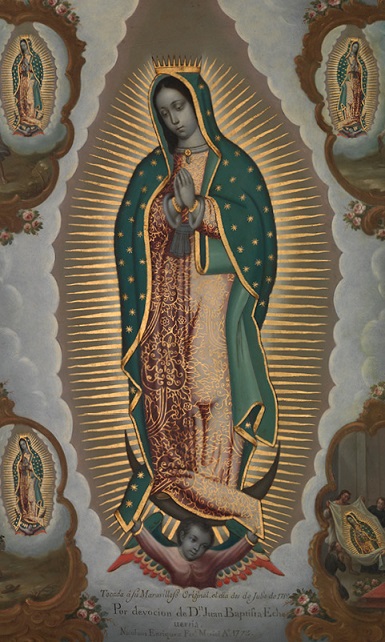
Survey exhibition of 94 items drawn from across the Americas from Canada to Peru all of which show influence of Chinese, Indian and Far Eastern imagery or incorporate their techniques into their own applied arts, such as eighteenth-century Mexican lacquer-work furniture and seventeenth-century Peruvian colonial embroidery.
Accompanying catalogue by Dennis Carr, with contributions by Gauvin Alexander Bailey, Timothy Brook, Mitchell Codding, Karina H. Corrigan, and Donna Pierce.

Review, by Eric Zafran, Burlington Magazine, December 2015, pp.885-6.


Focus-Abengoa Foundation: Online Collections

2015-08-Focus-Abengoa

The Focus-Abengoa Foundation launches a new tool to digitally disseminate its art collections devoted to the Baroque.

In recent years, the assets of the Focus-Abengoa Foundation have increased notably with the creation of the Centro Velázquez in 2008 and the receipt of the legacy of Professor Alfonso E. Pérez Sánchez in 2011. In order to adapt to the new technologies and disseminate its art collections online, since 2012 the Foundation has been working on an action plan that will allow it to manage its art collections more easily and effectively, and thus to ease access to its resources for researchers and anyone interested in them.

Thanks to its new multimedia programme, it is now possible to access much of the Foundation’s artistic collections with a detailed description and cataloguing which substantially improves knowledge of these collections at the highest level. The Focus-Abengoa Foundation’s ultimate goal is to promote the advancement of knowledge, to revitalise the debate on the Baroque period and ultimately to support the growth of society.

The collections available online are:

–       Room of Engravings
Made up of 327 prints from the 16th to 20th centuries, this is a collection specialised in the iconography of the city of Seville which dates back to 1982. It is a unique collection of its kind, as well as a reference tool for any scholar interested in the history of Seville. It is organised by four broad chronological sections: prints from the Baroque period, prints from the Enlightenment, Romantic and Costumbrist prints and finally contemporary prints.

–       Centro Velázquez
Created after the Focus-Abengoa Foundation’s 2007 acquisition of the painting by Diego Velázquez (1599-1660) Saint Rufina, one of the purposes of the centre is to recreate the historical and artistic universe in which the Sevillian genius lived from his early days in the city until his establishment in the Court as the painter to the king in 1624. The permanent collection of the Centro Velázquez is made up of 15 works that from now on will be accessible via an online catalogue that provides detailed information on the provenance, bibliography and exhibitions of the works, in addition to medium-resolution photographs.

–       Artistic heritage of the Hospital de los Venerables
The headquarters of the Focus-Abengoa Foundation, after it signed an agreement with the Archbishopric of Seville, is the Hospital de los Venerables, one of the most impressive complex of Sevillian Baroque art and a prime historical benchmark in Spain’s Golden Age, with works by artists like Bartolomé Esteban Murillo, Juan de Valdés Leal and Pedro Roldán. The inventory contains more than 400 works of art which encompass a broad timespan of five centuries, from the 16th to the 20th.


CfP: New Work on Spanish Illuminated Manuscripts in Honor of John William (Kalamazoo 2016)

2015-08-Kalamazoo2016-Medieval-congress

51st International Congress on Medieval Studies, Western Michigan University, Kalamazoo, 12-15 May 2016

CALL FOR PAPERS
Models and Copies, Masters and Pupils: New Work on Spanish Illuminated Manuscripts in Honor of John Williams (1928-2015),

Organized by David Raizman, Therese Martin, and Julie A. Harris

Session sponsored by the International Center of Medieval Art

In the colophon to the 960 Bible from León, Spain, the scribe Florentius, dressed in clerical garb, raises a bubbling toast to his “most cherished pupil, chosen by me.” The illuminator Sanctius responds in kind to his “Master,” lifting his cup and joining in praise to Christ for their completion of this magnificent book. On folio 12 of the same manuscript, however, in a grand display filling the entire page, it is Sanctius alone who asks the reader to remember him for his individual efforts. The two figures on the bible’s omega page thus serve as a metaphor for this session, which centers on copies that depart from their models and pupils who do not always tread directly in the footsteps of their masters. Our point of departure is John Williams’s inimitable work in the field of illuminated manuscripts, particularly the Beatus Commentaries on the Apocalypse, which has inspired scholars beyond the bounds of Spanish medieval studies.

Williams broke away from his early training which held that an unprecedented image must have been based on a lost model. He came to recognize originality in medieval works of art and to highlight the previously unperceived agency of illuminators from the early Middle Ages. For this session, therefore, we seek submissions from junior or senior scholars who have questioned traditionally-held assumptions of art historical scholarship, particularly concerning illuminations that do not consistently copy their models. We are interested in the choice to deviate from an archetype, especially the ways in which such decisions give rise to provocative new questions about intentionality and audience, likeness and divergence, and scholarly innovations that lead to paradigm shifts.

Organized by three former pupils of John Williams whose own work has taken tacks their master would never have pursued—Jewish manuscripts, women as makers of medieval art, and modern design—this session on Spanish illuminated manuscripts, by both up-and-coming and established scholars, will act as the counterpart to Williams’ latest groundbreaking work: a feature-length documentary on the Beatus manuscripts, which will have a Friday-night screening at WMU. Featuring extensive commentary on the Beatus tradition, in the film John Williams guides the viewers through the development of his thinking on this monastic phenomenon, bringing it up to date with recent discoveries. Beatus: The Spanish Apocalypse was directed and produced by Scottish filmmaker Murray Grigor and Iranian-American cinematographer Hamid Shams (BBP Films, MUSE Films and Television). Grigor and Shams will attend the Kalamazoo screening and answer questions afterwards.

Further, the session and film will coincide with the presentation of William’s final book, Visions of the End in Medieval Spain: Tradition and Context of the Beatus Commentary on the Apocalypse, with a Census of Illustrated Manuscripts and Study of the Geneva Beatus (Amsterdam University Press, 2016). With the sponsorship of the International Center of Medieval Art, this session in celebration of John Williams will carry his legacy into the future by stimulating debate and continuing his practice of challenging the discipline.

Deadline: Please send a 200-word abstract, two-page CV, and completed Participant Information Form by 15 September to:

Julie A. Harris (Spertus Institute for Jewish Learning and Leadership, marfiles@comcast.net)Therese Martin (CSIC, Madrid, therese.martin@cchs.csic.es)
David Raizman (Drexel University, raizmand@drexel.edu <mailto:raizmand@drexel.edu> )

Submissions that are not selected will be forwarded to the Medieval Institute to be considered for inclusion in the general sessions.

NB: Membership in ICMA is required of all speakers in this sponsored session.


Job posting: Registrar, Auckland Castle (Deadline: 10 August 2015)

2015-08-auckland-castleRegistrar, Auckland Castle, County Durham, UK
We are looking to appoint a Registrar. The postholder will be an experienced individual who can work with registrars across national and international partner institutions, ensuring compliance with all incoming loan requirements. The postholder will also ensure the highest standards of record keeping and collections management. Working with a collaborative Curatorial team, you will be proactive in ensuring that potential loans are secured for the permanent and temporary exhibitions programmes.

Deadline for applications: Monday, 10 August 2015

Download the full brief here. 
​To apply send your CV and a covering letter of no more than 2 sides of A4 to recruitment@aucklandcastle.org


Job details: 2015-08-Auckland Registrar

Job posting: Spanish Curator, Auckland Castle Trust (Deadline: 10 August 2015)

2015-08-auckland-castleSpanish Curator: To realise the development and delivery of the gallery spaces housing our new Spanish and Latin American Arts and Cultures display.

Recruiter: Auckland Castle Trust
Salary: £27,500–£35,000
Location: Bishop Auckland, County Durham, UK
Job type: Permanent
Hours: Full-time
Info for Applicants:

Job details

Deadline for applications:
10/08/2015


CFP: Zurbarán and his Reception in Art History (Düsseldorf, January 2016)

Francisco de Zurbarán, Portrait of Santa Casilda (Museo Thyssen, Madrid)

Call for Papers:
The Discovery of the Inconspicuous: Body, Materiality and Narrativity in the Work of Francisco de Zurbarán and his Reception in Art History
Annual conference of the Carl Justi Association for the Promotion of Art Historical Cooperation with Spain, Portugal and Ibero-America, in cooperation with Museum Kunstpalast, Düsseldorf and the Department of Art History of the Heinrich-Heine-Universität Düsseldorf
Museum Kunstpalast, Düsseldorf, 21–23 January 2016
Deadline for submissions: 30 September 2015

From 10 October 2015 to 31 January 2016 paintings by Francisco de Zurbarán will be shown for the first time in the German-speaking world in a monographic exhibition, organised by the Museum Kunstpalast, Düsseldorf in cooperation with the Museo Thyssen-Bornemisza, Madrid. Zurbarán’s work is barely represented in German collections, and while internationally his work has been discussed from many different perspectives, there has only been a limited amount of art historical research on it in Germany.
In its annual conference the Carl Justi Association wants to bring together the broad range of approaches to Zurbarán in German scholarship and also encourage further research into his work. Possible fields of enquiry include:
Intermediality. Early Zurbarán reception already emphasised the sculptural qualities of his paintings but more recent research has shown that the interrelation of painting and sculpture in seventeenth-century Seville cannot be understood from the context of contemporary art historical discourses alone, and we should also consider techniques and workshop practices in these two genres. This perspective could be broadened by considering Zurbarán’s place in a history of piety and exploring the role that his canvases played in paraliturgy.
Another area of research would be the interplay of body, space and materiality for the perception and reception of the sacred and the divine secrets of faith in each genre.
Zurbarán’s paintings are remarkable in their way of evoking the surface texture and haptic qualities of the many different materials used, which often, for example in the garments, enter into a dynamic relationship with the bodies perceived as holy. The conference would like to offer the possibility of discussing different approaches to this phenomenon, for example from the perspective of visual culture studies, image studies, costume history and textile history but also  that of restoration.
Narrativity. Zurbarán’s tendency to focus on the essential and his ‘iconographic’ condensation of motifs have been stressed repeatedly. But his works also contain seemingly marginal details: still life elements in religious scenes, or the signs of Christ’s Passion on his body that are barely recognisable in the dark background. These elements may not reveal themselves at first sight, which is why the conference also wants to explore the role of the seemingly             inconspicuous for the perception and interpretation of Zurbarán’s paintings.
New contexts of perception and experience. Francisco de Zurbarán’s era was shaped by great upheavals in both church and state politics. We thus need to explore how art positioned itself in a society undergoing profound social and cultural change. Possible themes here include art     production, which had to address the market challenges in the New World, as well as pictorial subjects and their treatment, such as t ambivalence of the ‘nature morte’ in religious art.
Reception. Finally, the conference would like to encourage scholars to examine the rather belated recognition of Zurbarán in German art history within the broader context of the history of his critical  reception, and to ask which ideas, images and myths art historians in different countries have associated with his work.

We welcome proposals which address one or more of these themes or other fields of enquiry. The conference will be held in German, Spanish and English. Grants to assist speakers in their travel and accommodation costs may be available but this has not yet been confirmed.

Please submit your abstracts of no more than 300 words, together with a short curriculum vitae (no more than two pages), by 30 September to:
Dr Kristin Böse
Institut für Kunstgeschichte
Heinrich-Heine-Universität Düsseldorf
Gebäude 23.32
Universitätsstraße 1
40225 Düsseldorf
Germany
Kristin.Boese@uni-duesseldorf.de

Exhibitions: London – The Spanish Contemporary Art Network’s Summer Shows – 23 June -12 Sept 2015

SATURATION | New Spanish Painting

In an image-saturated age, digital media, internet, television, film, and video entertain, inform and surround us every waking hour. Hand-held technologies have made us not only incessant consumers but also constant maker/editors of images. The artistic value of the painted image has been in crisis for a century and particularly in recent decades, painting has been relegated to the periphery of contemporary art discourse. Amidst numerous and expanding media and visual technology, what is the role of painting now?

SATURATION looks at the persistence of painting in contemporary artistic production. Coinciding with the 100th anniversary of Kazimir Malevich’s Black Square, SATURATION explores the range, methods and means of painting production today through the work of seventeen Spanish painters in three simultaneous London exhibitions.

23 June – 31 July 2015 

Monday – Friday 10 – 6 pm     Saturday 10 – 5 pm

The Fitzrovia Gallery   139 Whitfield St   London W1T 5EN
+44 (0)20 7209 9107     

FIGURE/GROUND

SCAN_Santiago-Ydanez_400x200-150x150

S/T ( Los Diablos)   Santiago Ydañez 2010

SCAN_PEPA-PRIETO_A-Trace-of-Transition_183x155cm_2014-150x150

A Trace of Transition  Pepa Prieto 2014  

ROSANA ANTOL     ANA BARRIGA     GLORIA CEBALLOS     VICTORIA IRANZO
KEKE VILABELDA     RUTH MORÁN     PEPA PRIETO     SANTIAGO YDAÑEZ

Figure/Ground explores readings of narrative and sub-narrative in works on canvas, paper, acrylic, and concrete. Drawing on techniques from film and photography, painters re-assemble appropriated imagery to overlay and alter associations, spatial and narrative hierarchies and meaning. Cut-and-paste, collage, scale distortions, photographic transfers and animation and video become tools for destabilising painting conventions and introducing fluidity and ambiguity to the medium.

What is foreground, what background? Is the viewer witness to the depicted event or a party to the act of witnessing itself? This reading of figuration elides such distinctions, offering both and neither. These borrowed images are neither stable nor steal- able. The fact of paint on a ground stands for itself alone.

16 July – 12 September 2015

Wednesday – Saturday 12 – 6pm and by appointment at any time

COPPERFIELD   6 Copperfield St   London SE1 0EP
07845 594549

ADD SUBRACT DIVIDE

4902710_orig

 Mitad tú, mitad yo    (Pedro) Guillermo Mora  2015

GUILLERMO MORA     MARÍA ACUYO     LOIS PATIÑO     RUBÉN GUERRERO
SONIA NAVARRO     ALAIN URRUTIA

Add Subtract Divide sees artists revisit the abstract painting tradition with new media, processes and experimentation. Some works take physical issue with the discipline by disassembling or reconfiguring canvas and stretcher, preferencing material qualities over any notion of the picture plane. The historical reading of flatness in the language of Modernist geometric painting is investigated using trompe l’oeil and collage, flickering between picture plane and referent. Other works experiment with scale and non-traditional materials to re-position otherwise familiar forms, investing them with political or gender narratives; Geometric abstraction is reworked in stitched lines and layers of applied felt, transforming the medium and linking it to other traditions of making.

17 July – 12 September 2015 

Wednesday – Saturday 12 -6pm and by appointment

The RYDER Projects   19a Herald St   London E2 6JT
07719 110821

PERFORMED PAINTING 

7077573

Ferran Gisbert wields a handmade paintbrush corresponding to his own height

ALAN SASTRE     VICKY USLÉ     FERRÁN GISBERT    ROSANA ANTOLÍ

Performed Painting explores the act and re-enactment of painting whether directly on the gallery wall or abstracted into video or film. Physical and visual limits are probed and tools or technologies deployed to extend the artist’s reach, expand the extent of a brushstroke or amplify the colour spectrum visible to the human eye. The image can resemble a movement-map for the eye to wander over and revisit, trailing the artist’s hand. This is action painting – or an idea of action painting – we can no longer be certain.

CFP: The Art Market, Collectors and Agents: Then and Now (London, 2016)

2015-07-CollectingAndDisplay-logo

Call for Papers:
The Art Market, Collectors and Agents: Then and Now
London, Institute of Historical Research, Senate House
13 June 2016
Deadline: 30 July 2015

Proposals should be c 350 words and sent with a short CV to Susan Bracken schbracken@btopenworld.com and Adriana Turpin turpinadriana@hotmail.com with cc to collecting_display@hotmail.com

Our usual July conference date has been shifted to complement the conference being held by Christie’s to celebrate the 400th anniversary of the auction house on 14 and 15 July 2016.

2015-07-CollectingAndDisplay

New book: The Casa del Deán: New World Imagery in a Sixteenth-Century Mexican Mural Cycle

2014-11-CasaDelDean
The Casa del Deán: New World Imagery in a Sixteenth-Century Mexican Mural Cycle, by Penny C. Morrill
(Austin: University of Texas Press, December 2014)
ISBN: 978-0-292-75930-5 (Joe R. and Teresa Lozano Long Series in Latin American and Latino Art and Culture)
“Extensively illustrated with new color photographs, this pioneering study of a masterpiece of colonial Latin American art reveals how a cathedral dean and native American painters drew on their respective visual traditions to promote Christian faith in the New World.”

Exhibition: Cristina Rodrigues, Knutsford, Cheshire

2015-07-CR
Cristina Rodrigues: ‘Guardian Angels’
Tatton Park, Knutsford, Cheshire
21 May – 4 October 2015
closed Mondays

The latest exhibition by Portuguese-born and Manchester-based installation artist and former architect and ethnographer, on display at a Georgian National Trust country house venue. Rodrigues’ art lends an artistic identity to functional objects within the house, such as tables, chairs and chandeliers, by covering or enveloping domestic furniture in silks, ribbons, lace and other woven or knitted fabrics simulating traditional Portuguese female crafts.