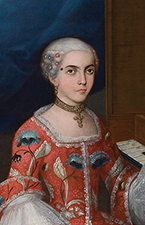
Exhibition: Dibujos españoles en la Hamburger Kunsthalle, Prado, Madrid

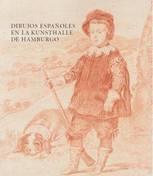
2014-11-DibujosEsp-HambKunsthalle2014-11-SpanishDwgsHamb-KunsthalleSpanish Drawings from the Hamburger Kunsthalle: Cano, Murillo and Goya, Museo del Prado, 30 October 2014 – 8 February 2015.
Previously on display as The Grand Gesture: Drawings from Murillo to Goya from the Hamburger Kunsthalle, at the Meadows Museum, Dallas, this exhibition has moved to the  Museo Nacional del Prado, Madrid.
A significant percentage of the collection, acquired for the Kunsthalle’s Kupferstichkabinett  (Department of Prints, Drawings and Photography) by its first Director, Alfred Lichtwark (1852-1914), is on view.
The exhibition is accompanied by a complete catalogue of all the drawings in the collection, written by Jens Hoffman-Samland with the collaboration of María Cruz de Carlos Varona, Gabriele Fialdi, José Manuel Matilla, Manuela Mena and Gloria Solache, curators at the Museo del Prado.
The exhibition has been co-organized by the Meadows Museum, SMU; the Museo Nacional del Prado; the Hamburger Kunsthalle; the Centro de Estudios Europa Hispánica; and the Center for Spain in America.

Juan DelGado’s audiovisual commission ‘The Flickering Darkness (Revisited)’ – Sat 8 Nov 2014 – CILAVS at Birkbeck University of London

The Centre for Iberian and Latin American Visual Studies (CILAVS) at Birkbeck University of London warmly invites you to

Juan delGado
The Flickering Darkness (Revisited)

Saturday 8 November 2015, 2.00-5.00pm
Birkbeck Cinema, 43 Gordon Square, London WC1H 0PD

Artist Juan delGado will present his recent commission The Flickering Darkness (Revisited) alongside the work by Agata Lulkowska. A panel will analyse and reflect on his audiovisual work to improve the understanding of current food policies and their impact in society and art by elaborating on the political and economic factors that promote them.

Juan delGado’s The Flickering Darkness (Revisited) is a video installation filmed at the Corabastos market in Bogotá. The market is the largest of its kind in Latin America. Produced during a three-month residency in the city in 2009 and re-edited for this exhibition, the project explores the journey produce sold at the market takes, from its arrival before dawn to its consumption. Reflecting on the idea of belonging, and the need we all have for locating ourselves in an environment, it creates sense out of the city’s chaos and order, while inviting wider reflections on society’s strata and how they fit together.

For more details visit http://www.bbk.ac.uk/cilavs/events#delGado

Please follow the link below to register

http://www.eventbrite.com/e/panel-discussion-the-flickering-darkness-the-implications-of-food-policy-in-society-and-art-tickets-13334119711

CAA annual conference: New York, February 2015

2014-11-CAA-logoCAA annual conference: New York, 11-14 February 2015
Registration is now open.
Sessions include:
Contemporary Art of Central America and Its Diaspora
-Old Technologies in Contemporary Latin American Art
-Artistic Exchange between the Spanish and British Empires, 1550–1900
-Imagining a US Latina/o Art History

New book: The Archaeology of Medieval Spain 1100-1500

2014-11-ArchaeologyMedievalSpain
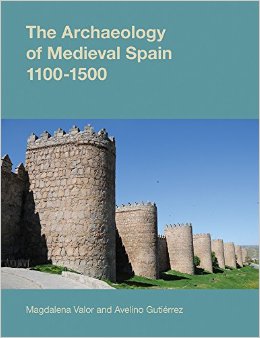
The Archaeology of Medieval Spain 1100-1500, edited by Magdalena Valor and Avelino Gutiérrez (Sheffield: Equinox Publishing, 2014) ISBN 9781845531737.
This book is the first attempt to make sense of the new data for the twelfth to the fifteenth centuries, a period when Spain was the hinge or fulcrum between Christianity and Islam, and that saw the gradual displacement of the previous Islamic culture and way of life by that of the Hispanic kingdoms.
Magdalena Valor is Professor of History and Medieval Archaeology at the University of Seville. Avelino Gutierrez is Professor of Archaeology at the University of Oviedo.
John Schofield has contributed the introduction and concluding chapter (‘Hopes for the future’). The book is published in the series ‘Studies in the Archaeology of Medieval Europe’ of which John was the founding editor. John says in his introduction that Spain was late in developing modern archaeological services but has since caught up: since the mid-1980s there has been ‘an explosion of archaeological excavations in towns and countryside, resulting in a mountain of new data, most of it undigested’.


Magistri Cataloniae, Barcelona, 7-8 November 2014

Clare Hills-Nova's avatarARTES

2014-09-MagistriCataloniae
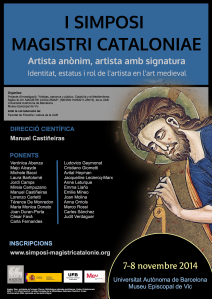
I simposi Magistri Cataloniae: artista anònim, artista amb signatura: Identitat, estatus i rol de l’artista en l’art medieval. (Part of the research project Artistas, patronos y público: Cataluña y el Mediterráneo: Siglos XI-XV.)
Barcelona,  Departament d’Art i de Musicologia, Universitat Autònoma de Barcelona, 7-8 November 2014.

Programme

Registration is now open.

View original post

Hispanic Visual Culture Essay Prize: Deadline 15th February

Artes logoSpanish embassy logo
***Juan Facundo Riaño Essay Medal: Call for Submissions. Deadline 15th February***
To encourage emerging scholars, ARTES (the Iberian and Latin American Visual Culture Group) awards an annual essay medal to the author of the best essay on the art, architecture or visual culture of the Hispanic world. The winner is also awarded a cash prize of £400, and the runner-up is awarded a certificate and prize of £100. Prize-winners receive a year’s free membership to ARTES, and the winning essays are considered for publication in the annual visual arts issue of the peer-reviewed Hispanic Research Journal.
ARTES welcomes submissions from researchers in a variety of circumstances, but envisages that most essays will be submitted from early career scholars, post-graduate students or undergraduates with exceptionally good end-of-degree dissertations. They must have some connection with the UK.
See www.artes-uk.org/awards for full details.

New England / New Spain: Portraiture in the Colonial Americas, 1492-1850, Denver, January 2015

2014-10-DenverSympo-01-2015
New England / New Spain: Portraiture in the Colonial Americas, 1492-1850, Symposium, Frederick + Jan Mayer Centre, Denver Art Museum, 23-24 January 2015.
Each year, the Denver Art Museum hosts a two-day symposium on a New World topic, alternating between a Pre-Columbian theme one year and a colonial Spanish theme the next year. The 2014 symposium, which has been edged into early 2015, is co-organized by Dr. Donna Pierce, the museum’s curator of Spanish colonial art.
Speakers: Michael A. Brown, Elizabeth Mankin Kornhauser, Clare Kunny, Karl Kusserow, James Middleton, Paula Mues Orts, Susan Rather, Michael J. Schreffler, Jennifer Van Horn, Kaylin Haverstock Weber.
Attendees will also be able to view the recently opened exhibition Glitterati: Portraits and Jewelry from Colonial Latin America.

Medieval Hispanic Research Seminar, London, 2014-2015

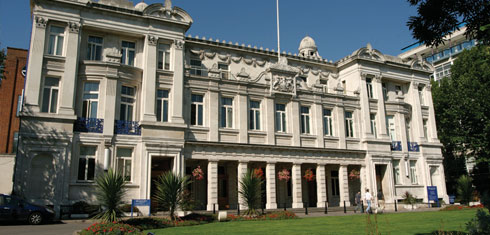
2014-10-QueenMaryULondonMedieval Hispanic Research Seminar, Queen Mary, University of London, Programme for 2014-2015.
The Research Seminar meets on Fridays at 3pm in room 1.36 of the Arts One Building, Mile End Campus. Papers last 45 minutes and are preceded by tea in The Gallery and followed by discussion.
Semester 1

Friday 21st November 2014 Kati Ihnat, University of Bristol ‘Mother of the Visigothic “Nation”: The Virgin Mary in Early Medieval Iberia’

Friday 12th December 2014 Francisco Bautista, Universidad de Salamanca/University of Cambridge ‘Don Juan Manuel y la herencia literaria de Alfonso X’

Semester 2

Friday 23rd January 2015 Aengus Ward, University of Birmingham ‘Digital editing and the Estoria de Espanna: of xml and crowdsourcers’

Friday 27th February 2015 Sizen Yiacoup, University of Liverpool ‘Movement, Stasis and the Translation of Power in El Viaje de Turquía

Friday 6th March 2015 Rosanna Cantavella, Universitat de València/University of Cambridge ‘The concept of “worthy rhymes” within the Troubadour poetic tradition’

Friday 27th March 2015 Rachel Scott, QMUL ‘“Esenta y señora”: The Paradox of the Prostitute in Celestina’

The Fitzwilliam Museum’s fundraising drive to acquire a Mater Dolorosa by Pedro de Mena proves successful

8f6bee4a-c7c2-4724-bf74-809302eecaf8-1

Pedro de Mena’s Virgin of Sorrows (Mater Dolorosa) saved by public appeal

In another example of public philanthropy, the Fitzwilliam Museum in Cambridge has acquired a the Mater Dolorosa (Virgin of Sorrows) by Pedro de Mena. The acquisition had been supported by grants of £30,000 from the Art Fund and £10,000 from The Henry Moore Foundation plus an astonishing £85,000 from the public appeal.

Tim Knox, Director of the Fitzwilliam, said, ‘This has been right to the wire, and every single penny has counted. Our sincere thanks go out to all who donated towards the appeal: you have helped secure an important and beautiful work of art for the nation’. Described as ‘mesmerisingly beautiful, with gently furrowed brows and natural flesh tones’, the bust was probably created for a private chapel, study or bedchamber and might originally have been paired with a similarly-sized bust of the Ecce Homo (Christ as the Man of Sorrows).

Pedro de Mena was taught the art of wood carving by his father, Alonso de Mena (1587—1646), a well-regarded sculptor of traditional religious images in Granada. Following his father’s death, the eighteen-year-old Pedro took over the workshop and was joined by established artist Alonso Cano (1601-67), who taught him how to paint sculpture realistically. As a result, Mena’s statues and busts have a remarkable lifelike quality. Mena left Granada in 1658 and spent the rest of his career in Málaga. He was well regarded by prestigious patrons from church and state and known for his religiosity, for which he was appointed censor of images by the Inquisition in Granada and Málaga.

Association of Art Historians – Annual Conference April 2015 – Call for Papers – Deadline 10 November 2014

img0

AAH2015
41st Annual Conference & Bookfair
Sainsbury Institute for Art, UEA, Norwich
9 – 11 April 2015

Portraiture and the Unworthy Subject in the Early Modern World

Paper proposals, to be sent to the session convenor in accordance with proposal guidelines.

Paper proposal deadline: 10 November 2014

Session convenor: Carmen Fracchia, Birkbeck, University of London, c.fracchia@bbk.ac.uk

In the early modern period, the production of portraiture was governed by restrictive conventions. According to the first European treatise on portraiture since antiquity (Francisco de Holanda’s Do tirar polo natural [On Taking Portraits from Life], 1548), the essence of the genre was the worthy sitter’s moral or intellectual prestige. Thus, the main function of the portrait image was to immortalise the worthy elite, with the implicit moral understanding that there could be no room for the portrayal of the unworthy subject. What are the political and visual implications of this belief about portraiture? What are the notions of human diversity that prevent the portrayal of undeserving subjects? How are these concepts negotiated in the production of the portrait image outside Europe?

This session aims to build on research by historians of art, literature and the colonial world, and work on slave narratives that illuminate the paradoxical nature of ‘slave portraits’ in the Atlantic World. It intends to explore a wider spectrum of what were considered ‘unworthy subjects’, and the complexity of the mutually exclusive categories of ‘portraiture’ and ‘undeserving subject’. It also seeks to tackle the oxymoronic categories of ‘self-portraiture’ and ‘unworthy subject’, and investigate how notions of human diversity might challenge the boundaries of traditional portraiture and self-portraiture.

Contributions are invited that address the portrayal of ‘undeserving people’ across different media and cultures in the early modern world, as well as the historical context of social inferiority and the ‘undeserving’ between the 15th and the 18th centuries.
– See more at: http://www.aah.org.uk/annual-conference/sessions2015/session24#sthash.8VY0zg3x.dpuf

co.ep.1971.86_16.1

Diego Rodríguez de Silva y Velázquez
Portrait of Juan de Pareja, 1650
oil on canvas
Metropolitan Museum of Art, New York