Art from Latin America Today (London)

2016-08-SouthLondonGalleryLogoUnder the Same Sun: Art from Latin America Today

South London Gallery, Camberwell, London
10 June – 4 September 2016

Touring exhibition from the Guggenheim MAP Initiative, showing works by some 20 contemporary artists born after 1968 and curated by the Guggenheim’s MAP curator of Latin American art, Pablo León de la Barra. The exhibition of installations, paintings, performance work, photography, sculpture, and video includes work by the Mexican artist Gabriel Orozco, who has also created (with the help of staff from Kew Gardens) a permanent garden for the South London Gallery.

This is the final venue on the exhibition’s international tour, following display at the Guggenheim Museum, New York in June 2014 and the Museo Jumex, Mexico City in November 2015.


El Siglo de Oro (Berlin)

2016-07-Siglo-Berlin2-CroppedEl Siglo de Oro. The Age of Velázquez
Gemäldegalerie, Berlin

01 July 2016 to 30 October 2016

This summer in Berlin, a major exhibition showcasing 17th century Spanish painting and sculpture in all its fascinating variety goes on show outside of Spain for the first time. El Siglo de Oro: The Age of Velázquez comprises more than 130 masterpieces by Velázquez, El Greco, Francisco de Zurbarán, and Bartolomé E. Murillo, as well as lesser-known artists such as Alonso Cano and Gregorio Fernández.

The Gemäldegalerie of the Staatliche Museen zu Berlin pairs its collection of Spanish paintings – one of Germany’s most important – with numerous international loans for the large-scale exhibition. Many of these works are on display for the first time in Germany, and reveal the wealth of 17th century Spanish art on a scale never before seen. A central task of the exhibition is to provide a comparative perspective on the development of painting and the sculpture of the period.

Exhibition catalogue (English ed.): click here for details

2016-07-SigloLogo


Ramon Casas in Barcelona

2016-07-Casas
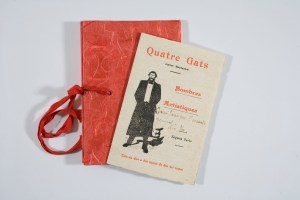
Ramon Casas and the shadow puppets at Els Quatre Gats. Bohemia and the popular imaginary
Barcelona, Museu Nacional d’Art de Catalunya (MNAC)
30 June – 20 October 2016
(http://www.museunacional.cat/en/ramon-casas-and-shadow-puppets-els-quatre-gats-bohemia-and-popular-imaginary)

The collection of Ramon Casas’s works held by MNAC has recently been enriched with the acquisition of an unusual group of 12 ‘Chinese shadow’ drawings or silhouettes designed by Casas, and cut and constructed by the painter Josep Meifrèn (Eliseu Meifrèn’s brother) and member of the circle of friends associated with the Els Quatre Gats bar. The display documents the link between Casas’ work and the artistic practices modelled on those popular in Parisian cabarets and adopted by Barcelona’s bohemia. The people portrayed in the silhouettes have been identified and include the owner of thr bar Pere Romeu and a Casas’ self-portrait. The exhibition will include other graphic elements such as posters, photographs, drawings, invitations, programmes, many of which are part of the museum’s collection and have not been published before.

Symposium – One Hundred Years of Cultural Transfer: Barcelona 1888-1992 – 24-25 Nov 2016 – Barcelona

International Symposium
One Hundred Years of Cultural Transfer: Barcelona 1888-1992

24-25 November 2016

Departament d’Humanitats-Institut de Cultura
Universitat Pompeu Fabra
Barcelona

The advent of Barcelona as a modern, cosmopolitan, innovative metropolis, open to the world, is punctuated by two founding events: the Universal Exhibition of 1888 and, a century on, the Olympic Games of 1992. Both are key moments for the presentation and (self-) representation of the city with a transnational and global scope.

The International Symposium One Hundred Years of Cultural Transfer: Barcelona 1888-1992 will examine, from a critical and multidisciplinary perspective, a string of cultural transfers marking the century spanning from 1888 to 1992, and opening the debate on how these transfers contributed to an interweaving between Barcelona and other Western capitals. Going beyond the privileged axis of exchanges between Barcelona and Paris, the Symposium will encompass other European and American centres of reference, such as London, Vienna, Berlin, New York, Mexico City or Buenos Aires, with the aim of lifting the discussion to a transnational dimension that transcends bilateral frameworks.

Organising Committee: Pol Capdevila (pol.capdevila@upf.edu), Tobias Locker (tobias.locker@upf.edu) and Tomas Macsotay (tomas.macsotay@upf.edu).

Centro de Arte y Comunicación (CAyC)

This post was written by Melanie Lenz, the V&A’s Curator of Digital Art. In this blog entry, posted to coincide with the 200th anniversary of Argentina’s independence, Melanie explores a small but remarkable number of the V&A’s digital artworks made in Argentina in the late 1960s.

cg1_c5d0b4d9db93f8a011364cc9e605929b
Grupo CAyC, around 1980

The V&A’s extensive collection of early digital artworks were primarily made by practitioners working in Britain, France, Germany, Spain and the United States. The prohibitive costs of the emerging new technology meant that initially sites of artistic production were largely limited to European and North American research laboratories and universities that could afford the required equipment. However, a small but intriguing number of early computer-generated works were created by Argentine artists associated with the Centro de Arte y Comunicación (CAyC). The full blog post explores the fascinating history behind these artworks and looks at how they ended up in the V&A’s collection.


Sorolla at CaixaForum

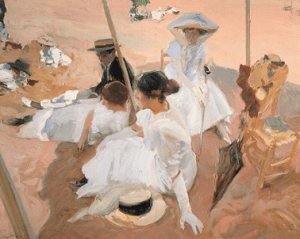
2016-06-SorollaSorolla. Apuntes en la arena
CaixaForum, Girona
28 June – 6 November 2016

(Then touring to CaixaForum, Tarragona, 23 November  – 5 March 2017)

123 works by Sorolla, primarily drawings selected by Consuelo Luca de Tena from the Museo Sorolla’s large holdings, and displayed alongside a small number of related large paintings and oil sketches or ‘colour notes’. The exhibition is divided into five sections covering his early career and different beach-side and fishing themes.

Picasso und Deutschland

2016-06-PicassoGermany
Picasso and Germany

Kunsthalle Würth, Schwäbisch Hall, Germany

6 April – 18 September 2016

Slightly reduced version of the exhibition previously shown at the Picasso Museum, Málaga, which revealed an important new area of research. Presents 22 records based on the connections, affiliations and divergences between Pablo Picasso and various groups of German artists who changed the direction of the history of art between 1905  (when Die Brücke group was founded) and 1955 (when the fist Documenta exhibition opened in Kassel).  Some 75 works by Picasso are on display alongside more than 100 works by artists such as Max Beckmann, Otto Dix, Max Ernst, George Grosz, Erich Heckel, Hannah Höch, Wassily Kandinsky, Ernst Ludwig Kirchner, August Macke, Paula Modersohn-Becker, Otto Mueller, Emil Nolde, Max Pechstein and Karl Schmidt-Rottluff. Also includes sixteenth-century paintings by Lucas Cranach the Elder and Younger and Frans Francken. The German version of the show includes major works from the Würth2016-06-PicassoGermany Collection, one of the most important private collections in Central Europe.

The Divine Morales: Final Venue, Barcelona

2015-12-catalogo-el-divino-morales-castellano
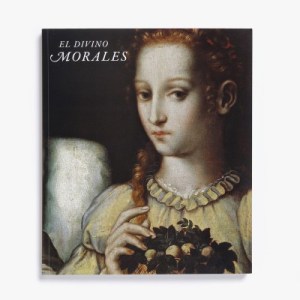
El Divino Morales

Museu Nacional d’Art Catalunya (MNCA)

Barcelona, 17 June – 25 September 2016
(Previously shown at the Prado and Bilbao).

Survey of 54 works by Luis de Morales (c.1510/11-1586) divided into five sections and starting with his Virgin of the Bird of 1546 along with other of his most important themes, the Virgin Dolorosa, Ecce Homo, Christ carrying the Cross and the Pietà. Another section is devoted to the artist’s images of the Virgin and Child including the panel of the Virgin and Christ Child with the Child Baptist from Salamanca Cathedral. Also on show are the only two drawings attributed to Morales, both from Lisbon’s Museu Nacional de Arte Antiga. The final section focuses on Morales’ most important patron, Juan de Ribera, the counter-reformation bishop of Badajoz between 1562 and 1568.