
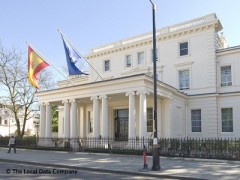
 ARTES Coll & Cortés Scholarships Awards Ceremony, Embassy of Spain, 39 Chesham Place, London SW1X 8SB, Tuesday, 30 September, 6:00-7:30PM. (ARTES members and members’ named guests only.) Thanks to the generous support of art dealers Coll & Cortés, ARTES awards a number of scholarships each year to students working on any aspect of Spanish, Portuguese or Latin American visual culture before 1800. Please join us as we celebrate the achievements of our first scholars at this special ceremony and drinks reception. RSVP Morlin Ellis: <artesiberia@gmail.com>. Please note: Photographic ID will be needed for entry.
10th London Spanish Film Festival 25 September – 5 October 2014
This is the 10th year of the London Spanish Film Festival and for 10 days there will be a wealth of film screenings, talks, tertulias, book presentations and Q&As with filmmakers and actors.
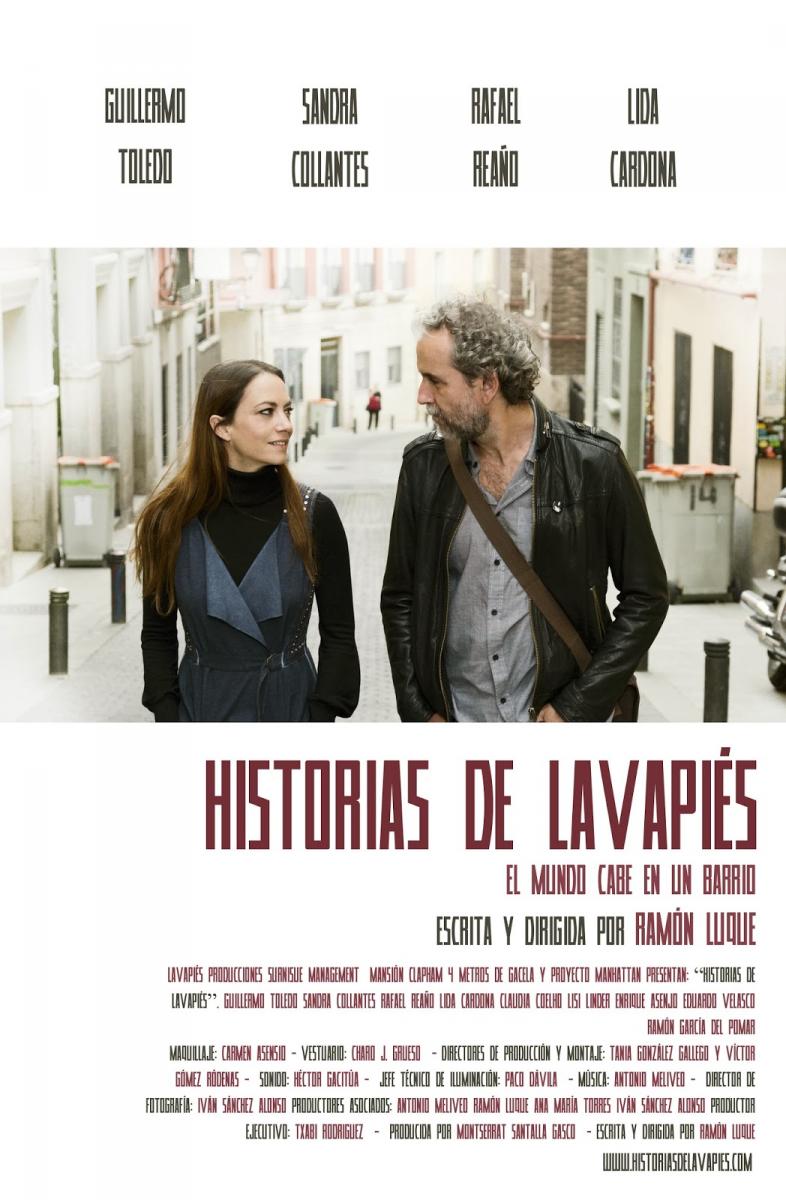
This year includes some delightful comedies, such as the opening film, Tres bodas de más, and Sánchez Arévalo’s latest comedy-drama, La gran familia española. Some films will offer glimpses into every-day life in Spain, such as Historias de Lavapiés or Os fenomenos. Others will examine the current situation in Spanish cinema, as well as its future (the Love Letter to Cinema section).
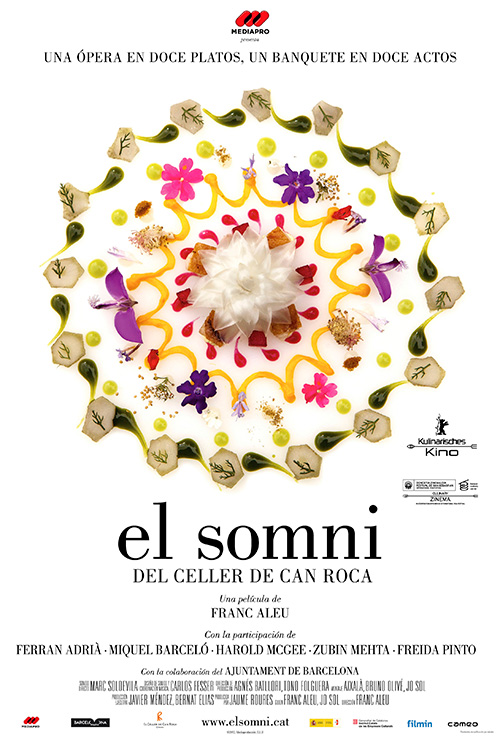
The relationship between food and film is something that has often been explored in cinema over the last few years – both in Spain and beyond. This there will be some more “culinary cinema” on offer, with The Food Guide to Love and El somni.
The Sixth Catalan Window will once more offer a glimpse into what has been produced in Catalonia – and the wealth of talent and craft there – with a small but strong selection of films such as producer Lluis Miñarro‘s first feature film, Stella Cadente, or Pau Teixidor‘s tense thriller Purgatorio.
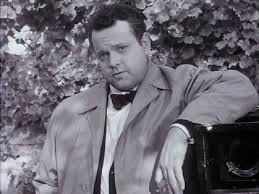
The Strength of Basque cinema will be celebrated in the Fifth Basque Window, offering – among other long and short films – Las brujas de Zugarramurdi, another demonstration of Álex de la Iglesia‘s distinctive and fascinating style. There will also be a special session with the screening of three short films showing two American filmmakers’ vision of the Basque Country: Orson Welles and Cyrus Sutton.
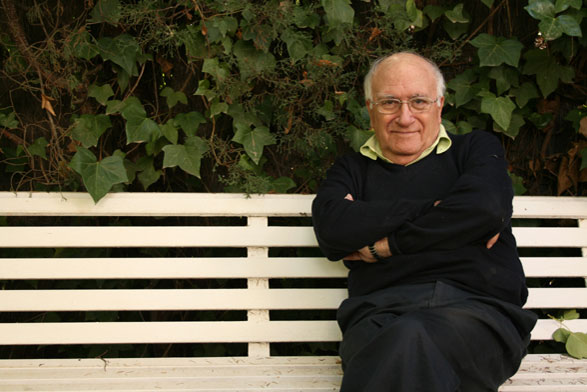
Sophisticated but controversial, Vicente Aranda is one of Spain’s most renowned filmmakers, and his films – exploring such themes as jealousy, sexual desire or complex social issues – have become cinematic classics. Taking the Prada brothers’ documentary, Vicente Aranda: 50 años de cine, as a starting point, there is a special feature dedicated to him in which some of the most important films of his career are explored. In addition to this there will be an exclusive stage interview with him.
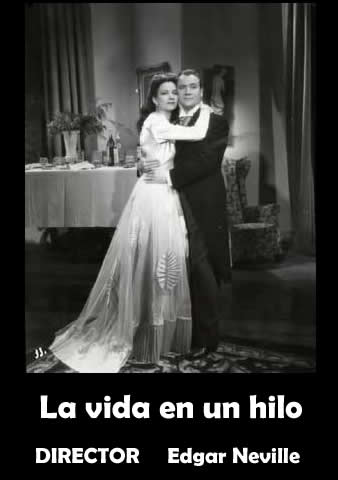
Last but not least, there is once again a treasure from the archives, which this year will be La vida en un hilo, a delightful screwball comedy by Hollywood devotee Edgar Neville, with Conchita Montes, one of Spain’s most popular actresses in the 1940s and ‘50s.
Film screenings and events will take place at the Ciné Lumière at the Insitut Français in South Kensington and the Instituto Cervantes just off Eaton Square.
The London Spanish Film Festival is organised by Joana Granero of Tristana Media in collaboration with the Institut Français, the Cultural Office of the Spanish Embassy and the Instituto Cervantes.
For the full programme go to: www.londonspanishfilmfestival.com
For further information, please, contact:
at the London Spanish Film Festival:
Noemi Cuetos Fernández noemi@tristanamedia.com
Giulio Olesen 07472326740 office@londonspanishfilmfestival.com
at Ciné Lumière:
Natacha Antolini natacha.antolini@institutfrancais.org.uk
Justine Goy 020 7871 3521 justine.goy@institutfrancais.org.uk
Tuesday 16 September 2014 – Concert in London: Music and art in Toledo at the time of El Greco
A celebration of the music and art of Toledo in the 16th century will held at the Church of St James – London’s ‘Spanish Church’ – in the West End on Tuesday 16th September. The event is the being organised by the BritishSpanish Society.
At the time of El Greco, Toledo was a major centre for sacred music and for centuries Spanish sacred music was known as Canto toledano. It still houses one of the richest libraries of sacred music in Spain as well as an outstanding collection of Flemish Renaissance music.

Music will be performed by the Coro Cervantes, the UK’s only chamber choir dedicated to Hispanic and Latin American classical music. Exploring these connections between music and art will be the choir’s musical director Carlos Fernández Aransay and Chief Curator of the Dulwich Picture Gallery and longtime supporter of ARTES, Xavier Bray.

Xavier has curated or co-curated all the major exhibitions of Spanish Golden Age art in London over the past 10 years: El Greco (National Gallery, 2004), Velázquez (National Gallery, 2006) and Murillo (Dulwich Picture Gallery, 2013); and is currently working on an exhibition of Goya’s portraits for the National Gallery in October 2015. In 2009 he conceived and curated the groundbreaking exhibition The Sacred Made Real: Spanish Painting and Sculpture 1600-1700 (2009), which was instrumental in bringing audiences in the UK and beyond to a greater understanding and appreciation of sacred Spanish art. The legacy of this exhibition continues. This summer Sotheby’s London held its first selling exhibition devoted exclusively to sacred paintings and sculpture; seventeen of the twenty-six works were Spanish. This exhibition, Contemplation of the Divine was masterminded by Alexander Kader, Senior Director & Head of Sculpture & Works of Art and ARTES member James Macdonald, Senior Director & Head of Private Sales, Old Master Paintings, both of whom were kind enough to take ARTES members on a private tour.
For more information see: ARTES post 24 Aug 2014, Fitzwilliam Museum Cambridge on Fundraising Drive to purchase a Pedro de Mena Mater Dolorosa. Particularly for the historic reception of Spanish art in the UK: Spanish Art in Britain and Ireland, 1750-1920. Studies in Reception in Memory of Enriqueta Harris Frankfort, edited by Nigel Glendinning & Hilary Macartney, Tamesis, 2011.
Tickets: £22 for non-members of the British Spanish Society, available from their Events Secretary or the Society’s website, www.britishspanishsociety.org. Membership of the Society is open to all (£25) and an application form can be found on the website. Tickets for members are £17.
Date Tuesday 16 September 2014 at 6.30pm, followed by a reception
Venue The Church of St James, Spanish Place, 22 George St, London W1U 3QY (near to the Wallace Collection). NB: Bond Street tube is not fully operational. Please check before using.

Call for Applicants – Research Grants (Casa de Velázquez, Madrid: 2015)
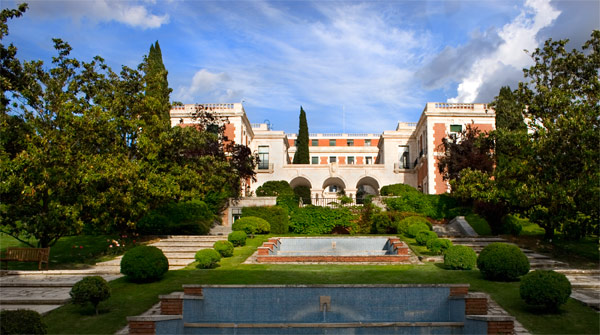
The Casa de Velázquez in Madrid is taking applications for “Resident Researchers” for 2015. Resident Researchers may be affiliated with French or non-French universities and research institutes, and can propose a stay of between one and ten months. Resident Researchers will receive accommodation, a monthly stipend and a partial reimbursement for travel costs.
The deadline for applications is September 30, 2014.
For more information, see <https://www.casadevelazquez.org/index.php?id=5&L=1&tx_cvzfe_news%5Bnews_uid%5D=1590>
 Ex ungue leonem. Marble heads by the Master of Cabestany, Barcelona, Museu Nacional d’Art de Catalunya, 4 April – 28 September 2014.
The four marble heads displayed in Room 4 of the Museum are fragments from the doorway of Sant Pere de Rodes, carved in the second third of the twelfth century, a masterpiece attributed to the Romanesque sculptor the ‘Master of Cabestany’. His work has been found in several places in southern Europe, from Tuscany (Italy) to Navarre, although most of the examples conserved are to be found in northern Catalonia and Languedoc. The doorway they once belonged to was destroyed sometime between 1800 and 1825. The four heads are on loan from private collections, and from the museums of Girona and the Fitzwilliam, Cambridge.
Josef Albers/Joan Miró, Palma de Mallorca
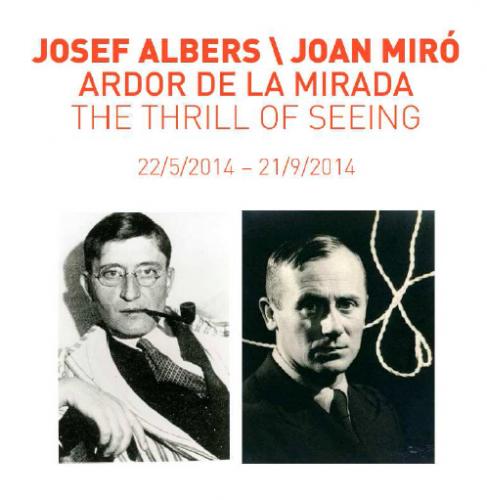 Josef Albers/Joan Miró The Thrill of Seeing, Fundacion Joan y Pilar Miró, Palma de Mallorca, 23 MAY – 21 SEPTEMBER 2014.
Exhibition contrasting the abstract art of two twentieth-century artists, who though they never met, the co-curators (Directors of the artists’ respective foundations) believe shared an inclusive vision. The show integrates Miró’s paintings, drawings, and sculpture, all from the collection of the Fundacion Joan y Pilar Miró, with Albers’s paintings, prints, and glass work, all from the Albers Foundation in Connecticut, so as to reveal “astounding visual and spiritual similarities”. [Reviewed in the news section of Guardian 12/07/14 p.21]
A two-page tri-lingual colour-illustrated leaflet about the exhibition can be downloaded from the exhibition web page (English text: http://miro.palmademallorca.es/documentos/D_428.pdf)
Documentary Photography in 1970s Spain, Madrid
 Tan lejos, tan cerca: Documentalismo fotográfico en los años 70
(Madrid: Real Jardín Botánico – CSIC, 4 Jue – 27 July 2014). Images by leading documentary photographers of 1970s Spain. Works by Anna Turbau, Cristina García Rodero, Cristóbal Hara, Fernando Herráez, Koldo Chamorro, Ramón Zabalza show rural and small-town societies, their festivals and their traditions, including those of marginalised cultures.
photobooks: Spain 1905-1977, Madrid
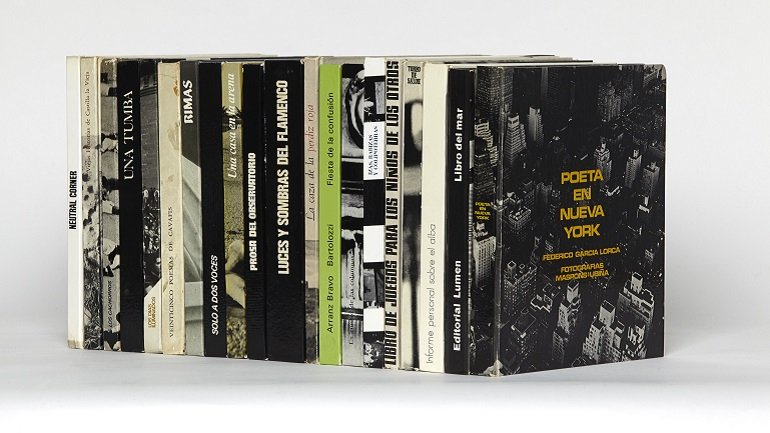 photobooks: Spain 1905-1977 (Madrid: Museo Nacional Centro de Arte Reina Sofía, 28 May, 2014 – 5 January, 2015). Exhibition organised in collaboration with Acción Cultural Española (AC/E) and curated by Horacio Fernández.
Shows the history of the photobook in Spain, from the beginning of the 20th century to the mid-1970s. The selection is drawn from the Museo Reina Sofía collection, together with an assortment of complementary material.
Accompanied by a catalogue raisonné of the collection, jointly published by the Museo Reina Sofía, Acción Cultural Española (AC/E) and RM.
Tamayo Museum on Tour: La Jolla
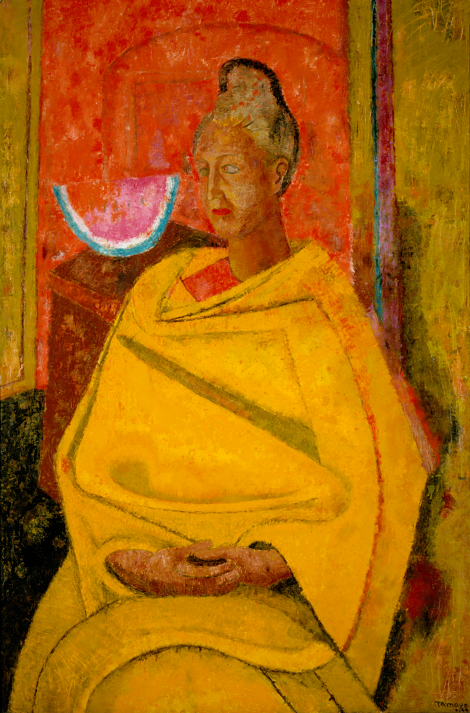 Treasures of the Tamayo Museum, Mexico City on Tour, Museum of Contemporary Art San Diego (La Jolla), 17 May – 31 August 2014.
Highlights from one of Mexico’s leading museums of modern and contemporary art, the Tamayo Museum which opened in 1981 to house the collections of Rufino Tamayo (1899-1991), of both his own art and works by contemporary artists from Mexico, Europe and USA.
The exhibition includes paintings by the artist, objects owned by him and works acquired since his death. Other Mexican artists exhibited include paintings by Francisco Toledo (born 1940) whose work influenced by Zapotec stone carvings and the Oaxacan landscape Tamayo championed.
Bilingual online captions to selected highlights from the exhibition can be found at http://www.mcasd.org/tours/treasures-of-tamayo.
Daniel Vázquez Díaz, Oviedo
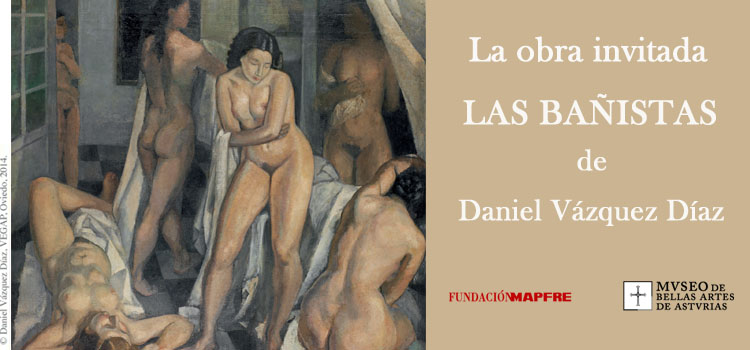 Daniel Vázquez Díaz (1882-1969), Museo de Bellas Artes de Asturias, Oviedo, 17 June – 21 September.
40 portrait drawings of the artist’s contemporaries selected from the series Hombres de mi tiempo in the collection of the Madrid-based Fundación Mapfre. Alongside the drawings the Asturias museum is also showing a key painting Bañistas / Desnudos en la piscina‘ (1930-1935), by the artist, who was a leading figurative artist during the first half of the 20th century, but whose style changes dramatically after the Spanish Civil War.
 ARTES
ARTES 