6.30pm, Research Forum South Room, Courtauld Institute of Art, Vernon Square, Penton Rise, London WC1X 9EW
From the dazzling spectacle of Burgos Cathedral to the cavernous nave of Palma Cathedral or the lacy splendour of San Juan de los Reyes, Spain preserves a remarkable variety of inventive but little understood Gothic buildings. Yet Gothic architecture in Spain and the Spanish kingdoms has traditionally been assessed in terms of its imitation of northern European architecture, dismissed for its ‘old-fashioned’ or provincial quality, and condemned for its passive receptivity to ‘Islamic influence’. But did imitation really triumph over invention in the architecture of medieval Iberia? Are the two incompatible? Can inventio and imitatio offer useful or valid analytical tools for understanding Gothic architecture? And to what extent are invention or imitation determined by patrons, architects, materials or technologies? This essay collection brings together leading scholars to examine Gothic architecture from across Iberia from the thirteenth to the sixteenth century, and provides the first significant account of Spanish Gothic architecture to be published in English since 1865.
The launch directly follows a Medieval Work-in-Progress Seminar by Beate Fricke, ‘Colour and Chaos’, starting at 5pm in the same room. Attendance is free and all are welcome to attend. Details here: https://courtauld.ac.uk/event/colour-and-chaos
We look forward to celebrating the life and work of the first Spaniard to graduate from Oxford with you!
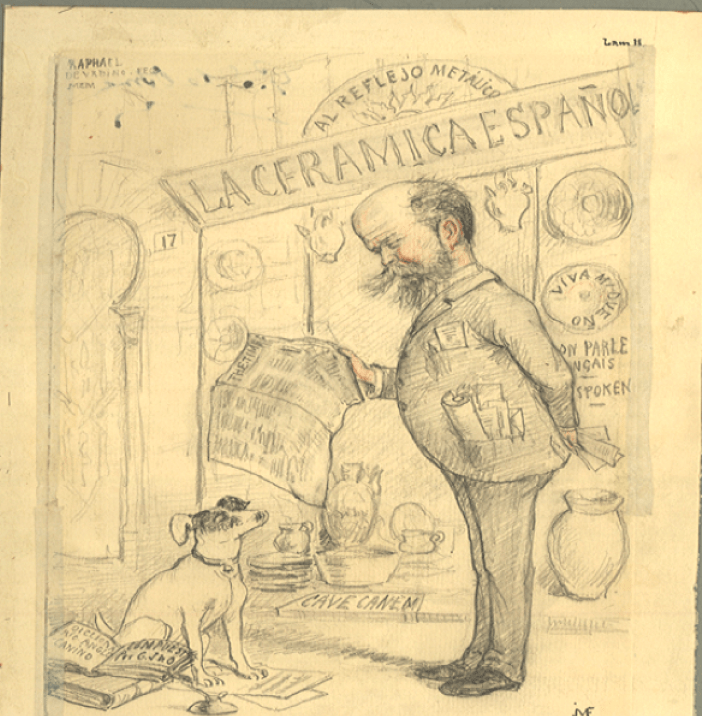
Osma Centenary 7 February Bodleian Library Pembroke College
Guillermo J. de Osma was the first Spaniard to study at Oxford after the Universities Test Act 1871, which opened Oxford, Cambridge and Durham universities to non-Anglicans. Osma was a diplomat, a politician, an art historian and an art collector. He served as the first president of the Board of Trustees of the Alhambra and founded the Instituto Valencia de Don Juan, a research centre in Madrid, which contains a wide-ranging collection of art works and archival materials, including medieval manuscripts, Philipp II’s state papers, textiles, ceramics, and rare books.
He then went on to found the first Spanish scholarship at Oxford – the Osma Studentship – in 1920. The Studentship, which was open to both men and women since its foundation, is under the exclusive remit of the Vice-Chancellor of the University of Oxford and has been held over the past century by many distinguished scholars and practitioners.
The one-day symposium will be held at the Bodleian Library on 7 February 2020 to coincide with the anniversary of Osma’s death and will convene Osma Students from across the generations and countries, specialists from Spain and the UK, and de Osma’s descendants from around the globe.
The symposium will be held in the Lecture Theatre at the Weston Library on Broad Street. Lunch will be served at Convocation House in the presence of the Vice-Chancellor, Professor Louise Richardson. After the symposium, we will make our way to Pembroke, where Osma read History, for an evening reception.
Welcome Coffee: 9.45 am Start: 10.30 am Reception: 5.30–7pm
Please click here for a conference programme and practical information.
Prester John illustration from Coleccion de los trages (shelfmark G.5.a.1) National Library of Scotland
ARTES members with experience of using the National Library of Scotland’s Astorga Collection or expertise in topics related to its formation and contents are encouraged to contribute to an upcoming conference organised by Dr Christopher Storrs, Reader in History at the University of Dundee, to be held in Edinburgh on Wednesday 20 May 2020.
The collection contains 3,617 early-modern Spanish printed books and is one of the National Library of Scotland’s lesser-known treasures. Part of the library of an aristocratic Spanish family, the Marqueses de Astorga, it was acquired in 1826 for the Advocates Library (the National Library’s precursor) by Sir Walter Scott’s son-in-law, J.G. Lockhart. The collection contains several texts on history, theology, geography and science, and illustrated books, some with maps or hand-coloured plates. Eleven are incunabula, and many others date to the sixteenth century.
At present, the conference programme includes presentations on Sir Walter Scott and Spain, J.G. Lockhart, and themes related to the Astorga collection in a nineteenth-century British context. Additionally, the organisers seek proposals addressing the collection from a Spanish viewpoint, notably on the Astorga family, the situation of Spain in the early nineteenth century, the book acquisitions and their value to historians. Papers on Golden Age holdings are particularly encouraged.
The collection is catalogued on the NLS’ website under the shelfmark G. (click here), but a handlist is also available upon application.
For further information, and to propose a conference paper, please email Dr Christopher Storrs, c.d.storrs@dundee.ac.uk.
The City of Agen and its Fine Arts Museum, located between Bordeaux and Toulouse in the South-west of France, will present, over the winter of 2019–2020, an outstanding exhibition with a fresh and unexpected view on Francisco de Goya y Lucientes (1746–1828) and his work.
Through a selection of works in several media (paintings, drawings, engravings), the exhibition will demonstrate the essential characteristics that remain constant in Goya’s work and reveal the role played by his collaborators in his studio.
The Museum’s scientific team is assisted in this project by one of the specialists of Goya’s work, Juliet Wilson-Bareau, and the event has received personal support from the French Minister of Culture.
Nearly 90 works loaned by museums and private collections around the world (France, Germany, Hungary, Spain, Switzerland, UK, USA) will be on display in the Jacobins’ Church (Église des Jacobins), an Agen architectural jewel and an emblematic place for the Museum’s temporary exhibitions.
Click here for an exhibition leaflet, and here for practical information.
Over the past two decades, Portugal’s colonial rule in Asia, South America, and Africa has been subject to increasingly intense debate both within academe and society at large. Innovative research has begun to question benign and Euro-centric approaches to the Portuguese imperial past and has now arrived at profoundly different views which expose the violent and exploitative character of colonial rule.
This set of new perspectives on Portugal’s colonial past, however, is also the result of an unprecedented involvement of activists and civic groups in public debate. One important example are the Associations of Portuguese of African descent, which campaign against still-prevailing forms of celebrating the Portuguese colonial past. These include the recent decision to create a ‘Museum of Discovery’ dedicated to Portugal’s maritime glory, or the monument dedicated to the Jesuit missionary António Vieira.
Scholarly revision and community activism both face hostile opposition. This talk discusses the main developments in an ongoing debate that continues to intensify, and that in itself highlights the importance of fostering critical debate about Portugal’s colonial past.
Professor Pedro Cardim’s main area of research is the history of the early modern Iberian world, with a focus on the interactions between Portugal and the Spanish Monarchy. He also works on the Portuguese colonial empire and the early modern Atlantic world. He has published numerous books and articles, including Portugal y la Monarquía Hispánica, ca.1550–ca.1715 (2017) and Polycentric Monarchies: How Did Early Modern Spain and Portugal Achieve and Maintain a Global Hegemony? (2012, with Tamar Herzog, Gaetano Sabatini and José Javier Ruiz Ibáñez). He has held visiting professorships at the École des Hautes Études en Sciences Sociales, New York University, Université de Toulouse Jean Jaurès, and Universidad Pablo de Olavide (Seville).
Ovid’s aphorism «Materiam superabat opus», evoked throughout the Middle Ages and beyond, reveals the special consideration given to skill, technique and craft in the artistic creation processes. Thus, ingenuity and mastery have been privileged qualities in our approach to works of art, according to a restricted vision assumed by Art History as a discipline. However, both the aesthetic reflections and the documents related to artistic commissions in the Middle Ages show the great importance given to the material and sensory aspects of artefacts and monuments. In line with this perception, once again valued in light of the «material turn» of the discipline in the last decades, the 14th Jornadas Complutenses de Arte Medieval propose to focus on materiality as an essential factor in the artistic production, as well as on the poetics of immateriality and the intangible condition of the aesthetic experience.
Beyond the technical analyses, which in recent decades have allowed us to reconsider common places in the study of the medieval artistic production, this congress aims to establish transversal debates in order to open up new perspectives. In this sense, the material conditions of artistic production (properties, supply, cost, transport or technology, among others), as well as their reflection in the written sources –from technical treatises to documentary and literary references– will be discussed. On the other hand, the congress will address issues related to the sensorial features of the medieval works of art and their relationship with intangible aspects, such as the material and chromatic qualities, the incidence of light, the acoustic and olfactory effects, and the impact of the natural environment. The poetics of the materials, their meaningful uses, and the symbolic values of the immaterial will have room in the debates. Likewise, it will be of interest to consider new interpretative concepts, such as «transmateriality» and «transmediality», which may include the morphological transformation of elements across different materials, the transfer and circulation of ornamental patterns, or the physical traces of mental, invisible or transient phenomena. Contributions that address non-hegemonic and / or under-treated practices and media in historiography are especially welcomed.
Proposed topics include (but are not limited to):
– Material conditions of artistic creation. – Underrated practices and media. – Poetics and semantic uses of the material and the intangible. – Cultural history of materials. – Sensoriality and immateriality. – «Transmateriality» and «transmediality».
Confirmed keynote speakers: Miquel Àngel Capellà Galmés (Universitat de les Illes Balears), Vincent Debiais (CRH – Centre national de la recherche scientifique), Beate Fricke (Universität Bern), Ruggero Longo (Bibliotheca Hertziana, Max-Planck-Institut für Kunstgeschichte), María Teresa López de Guereño Sanz (Universidad Autónona de Madrid), José Miguel Puerta Vílchez (Universidad de Granada), Laura Rodríguez Peinado (Universidad Complutense de Madrid), Elisabetta Scirocco (Bibliotheca Hertziana, Max-Planck-Institut für Kunstgeschichte), Noelia Silva Santa-Cruz (Universidad Complutense de Madrid), Ana Suárez González (Universidade de Santiago de Compostela), Jorge Tomás García (Universidad Autónoma de Madrid).
Call for papers:
Researchers interested in submitting a 20-minute paper on any of the topics listed above are invited to send their proposals in Spanish, English, French, Italian and Portuguese, including the following information:
– Title of the paper proposal.
– Name and surname of the author and email address.
– Abstract of about 500 words.
– Brief academic and research CV of about 300 words.
The proposals should be sent to the email address inmaterial@ucm.es by 3 April 2020. Authors will be notified of the outcome by 8 May 2020. Selected papers will be published later in a collective volume after peer review.
An annual event in honour of the great Hispanist Nigel Glendinning, supported by the Instituto Cervantes, and hosted in 2020 by the Warburg Institute.
04 March 2020, 17:30 to 20:00 The Warburg Institute, Woburn Square, London WC1H 0AB Click here to book a place
José Juárez, Saints Justus and Pastor, c. 1653–1655, Museo Nacional de Arte (México)
Benito Navarrete Prieto (Universidad de Alcalá): ‘Appropriation and Cultural Transfer in the Early Modern Iberian World’
In his influential work The Mediterranean and the Mediterranean World in the Age of Philip II Fernand Braudel regretted that: ‘We have museum catalogues but no artistic atlases’. Since then historians and art historians alike, such as Luisa Elena Alcalá, Peter Burke and Jean Michel Massing among others, have explored cultural appropriations to make sense of what Thomas DaCosta Kaufmann has famously called the geographies of early modern art. This lecture examines forms of assimilation and reception of images, and aims to contribute to the current scholarly conversation concerning early modern artistic circulations. The method of appropriation through which a canonical image is reinterpreted is fundamental to understanding the transferral of images within the Iberian World. This mechanism of appropriation is useful to examine the range of visual identities that configured the map of cultural circulations in the period, and is thus a useful theoretical framework for the study of global art history.
Juan Martínez Montañés (Alcalá la Real, 1568–Seville, 1649) marked a milestone in Spanish Baroque sculpture and a timeless model in the Sevillian school. This exhibition provides an insight into a select representation of 44 sculptures and reliefs by the brilliant artist, of a total of 58 works on display. Divided into three sections, the itinerary presents an exceptional repertoire of works that bear witness to the ambition of the major commissions he undertook, the sublime quality of his devotional images and the novelty of his iconographic models. The first section features works from his most outstanding groups or altarpieces, such as those from San Isidoro del Campo and the convent of San Leandro. The second one offers key examples of his magnificent religious imagery, such as Saint Christopher and Saint Jerome, and the third one highlights his most significant contributions to Sevillian Baroque iconography, as exemplified by the Infant Jesus from the Cathedral Side Chapel, ‘La Cieguecita’ (Little Blind One), and the Christ of Clemency.
The connections with the artistic and intellectual world of the day reveal the collaboration between Montañés and other artists, also represented here by paintings that formed part of altarpieces or were the pictorial expression of the new iconographies which the sculptor helped to establish. Many of the works on display have undergone conservation and restoration works specifically for the exhibition, enabling us to appreciate the extraordinary quality and beauty of the grand masterís work in all its glory. Thanks to the generous collaboration of the Archbishopric of Seville, the exhibition also includes works which the general public rarely have the opportunity to admire, either because they are located high up on altarpieces or hidden away in convents and monasteries.
Anonymous Portuguese cartographer, Cantino Planisphere (detail), ca. 1502. Map on parchment, 220 x 105 cm. Biblioteca Estense Universitaria, Modena, Italy. Source: Wikimedia Commons.
Travelling Objects, Travelling People aims to nuance our
understanding of the exchanges and influences that shaped the artistic
landscape of Medieval and Renaissance Iberia. Traditional narratives
hold that late fifteenth-century Iberian art and architecture were
transformed by the arrival of artists, objects and ideas from France and
the Low Countries, while 1492 marked a chronological rupture and the
beginning of global encounters. Challenging these perceptions, this
conference will reconsider the dynamics of artistic influence in late
medieval Iberia, and place European exchanges in a global context, from
Madeira to Santo Domingo. Bringing together international scholars
working on Spain, Portugal and a range of related geographies, it seeks
to address the impact of ‘itinerant’ artworks, artists and ideas, and
issues of migration and non-linear transfers of materials, techniques
and iconographies.
The theme of ‘travellers’—artists who reached or departed the region,
at times more than once in their lives, but also objects and concepts
imported and exported—will expand and inflect traditional narratives of
late medieval and Renaissance art, underscoring the complexity of global
interactions and exchanges which connected the Iberian peninsula to
Europe and beyond. Bringing together international scholars working on
Iberia and a range of related geographies, the conference seeks to
address the impact of ‘itinerant’ artworks, artists and ideas, and to
expand the field of analysis beyond Europe to encompass relationships
with newly acquired dominions, from Madeira to Santo Domingo.
Topics for papers may include, but are not limited to:
Iberian artists employed abroad, from the master mason Guillelm
Sagrera in Naples, to the sculptor Juan de la Huerta at the Chartreuse
de Champmol
The close imitation of northern artists in such works as the Portuguese copies of Quentin Metsys’s The Angel Appearing to Saints Clara, Colette and Agnes (early 16th century, Museu de Setúbal / Convento de Jesus, Portugal)
‘Iberian’ objects produced elsewhere, for example Christian ivory
carvings made in Goa or Kongo, Afro-Portuguese spoons, and Mexican
‘feather-work’ adopting the vocabulary of northern European late Gothic
painting
Works made for a non-Iberian audience but purchased and displayed by local patrons.
By encouraging conversations across such seemingly disparate topics and geographies, the conference aims to position the Iberian artistic landscape within the networks of artistic exchange that spanned the medieval and Renaissance worlds, challenging the significance of 1492 as a moment of rupture between the Middle Ages and Early Modern periods.
Proposals are welcome from postgraduate, early-career and established researchers working in all relevant disciplines. Please send a title and an abstract of no more than 300 words together with a short CV and 100-word biography to Costanza.Beltrami@courtauld.ac.uk and Sylvia.Alvares-Correa@history.ox.ac.ukby Friday 10 January 2020.
Papers should not exceed 20 minutes in length. Successful candidates will be notified by 17 February. In the first instance, applicants are encouraged to apply to their home institution for travel and accommodation funding. The organisers hope to provide financial support for travel and accommodation to speakers who require it. This conference is made possible by the kind generosity of Sam Fogg.