

Secundino Hernández at Victoria Miro (London)
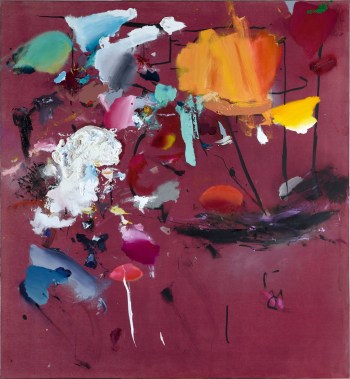 Secundino Hernández: Paso
1 April – 6 May 2017
A solo exhibition taking place across gallery locations at both Wharf Road and Mayfair, accompanied by a new publication.
Press release.
Victoria Miro, 16 Wharf Road, London N1 7RW
Private view: Thursday 30 March, 6-8pm
Victoria Miro Mayfair, 14 St. George Street, London W1S 1FE
Preview with the artist: Friday 31 March, 11am-1pm
American Society for Hispanic Art Historical Studies at College Art Association 2018: Call for session proposals

American Society for Hispanic Art Historical Studies
(ASHAHS)
If you have thought about chairing a panel at the annual meeting of the College Art Association, Los Angeles, 21-24 February 2018, please consider submitting a proposal for ASHAHS sponsorship. As an affiliated society, ASHAHS is able to sponsor one ninety-minute session at this conference.
We seek session proposals that represent the vibrant diversity found within Iberian and Ibero-American art history and welcome those panel topics that will stimulate both broad interest and robust discussion.
Guidelines for proposals from affiliated societies may be found here, including CAA’s requirements concerning membership.
If you would like a panel to be considered for ASHAHS sponsorship, please submit your proposal to Carmen Ripollés or Kelly Watt. Deadline: 7 April 2017.
Proposals will be evaluated on their scholarly strengths and, all other factors being equal, priority will be given to current ASHAHS members who have paid dues this calendar year. Our goal is to promptly notify the chair(s) of the proposal selected for ASHAHS sponsorship well in advance of CAA’s deadline for session and individual proposals.
Roundtable: Pilgrimage, Travel and Migration across Time and Space (Lincoln, 20 March 2017)
 On the Road: Pilgrimage, Travel and Migration across Time and Space
Roundtable, Monday 20th March, 6pm
David Chiddick Building, DCB 1101
(n. 18 on this map: http://www.lincoln.ac.uk/campusmap/)
Introduction by Francisco Singul (Xunta de Galicia)
Short presentations by Dr Antonella Liuzzo Scorpo, Dr Sarah Longair, Dr Robert Portass, Dr Michele Vescovi and Dr Jamie Wood
Wine reception
Exhibition: Hospitality on the Road to Santiago de Compostela
14th March – 2nd April 2017
Chapter House, Lincoln Cathedral
For more information on this event and/or the exhibition, please contact: aliuzzoscorpo@lincoln.ac.uk
New publication: Baroque Seville: Sacred Art in a Century of Crisis, by Amanda Wunder
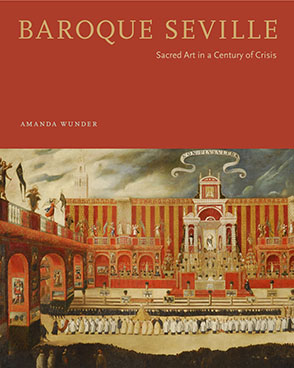
Amanda Wunder’s new book
Baroque Seville: Sacred Art in a Century of Crisis
Published: February-March 2017
232 pages
34 color / 59 b&w illustrations
cloth: $84.95 / £60.95 / €81.95
ISBN 978-0-271-06506-9
Special price: $59.47 / £42.67 / €57.37
Link here to special price flyer
Offer ends 30 April 2017
Conference, Index of Christian Art (Princeton)

The Medieval Iberian Treasury in the Context of Muslim-Christian Interchange
Index of Christian Art
Princeton, NJ,
19-20 May 2017
In collaboration with the Consejo Superior de Investigaciones Científicas in Madrid and Princeton University’s departments of Art & Archaeology and History, the Index of Christian Art will sponsor a two-day interdisciplinary conference,
The medieval treasury offers an extraordinary material witness to the desires, aspirations, and self-conception of its creators. Treasuries could function as sources of gifts (and obligations) for their allies, as prestigious private storehouses for ostentation before an elite audience, or as financial reserves that could be made use of in times of need. Luxury items from non-Christian cultures, such as the many Islamic objects that found their way into church treasuries, or those made from materials of great intrinsic value, such as ivory, gold, silver, or silk, became even more valuable if the piece were turned to a sacred use. We will examine these dimensions of the treasury by giving special emphasis to the rich holdings of the royal-sponsored monastery of San Isidoro de León in northern Spain. Taken as a whole, both texts and objects offer a rich body of evidence for interdisciplinary investigation and serve as a springing point for larger questions about sumptuary collections and their patrons across Europe and the Mediterranean during the central Middle Ages.
Hosted at the Princeton Institute for International and Regional Studies, the conference brings together international and US scholars from multiple disciplines and professions, with specializations including Islamic law and sumptuary production, Christian chronicles, patronage and royal studies, identity and gender studies, and political history across the cultures of medieval Spain. The diversity of questions and perspectives addressed by these scholars will shed light on the nature of treasury collections, as well as on the broad efficacy of multidisciplinary study for the Middle Ages.
For further information, contact Pamela Patton: ppatton@princeton.edu
SPEAKERS
THOMAS BURMAN, ROBERT M. CONWAY DIRECTOR OF THE MEDIEVAL INSTITUTE, UNIVERSITY OF NOTRE DAME: Title TBA
ANA CABRERA, VICTORIA & ALBERT MUSEUM, AND MARÍA JUDITH FELICIANO, INDEPENDENT SCHOLAR AND DIRECTOR, “MEDIEVAL TEXTILES IN IBERIA AND THE MEDITERRANEAN”: “Medieval Textiles in León in the Iberian and Mediterranean Context”
JERRILYNN DODDS, SARAH LAWRENCE COLLEGE: “The Treasury, Beyond Interaction”
AMANDA DOTSETH, MEADOWS MUSEUM, SOUTHERN METHODIST UNIVERSITY AND PRADO MUSEUM, MADRID: “Medieval Treasure and the Modern Museum: Christian and Islamic Objects from San Isidoro de León”
MARIBEL FIERRO, INSTITUTO DE LENGUAS Y CULTURAS DEL MEDITERRÁNEO Y ORIENTE PRÓXIMO, CONSEJO SUPERIOR DE INVESTIGACIONES CIENTÍFICAS: “Christian Relics in al-Andalus”
JULIE HARRIS, SPERTUS INSTITUTE FOR JEWISH LEARNING AND LEADERSHIP: “Jews, Real and Imagined, at San Isidoro and Beyond”
EVA HOFFMAN, DEPARTMENT OF ART AND ART HISTORY, TUFTS UNIVERSITY: “Arabic Script as Text and Image on Treasury Objects across the Medieval Mediterranean”
JITSKE JASPERSE, INSTITUTO DE HISTORIA, CONSEJO SUPERIOR DE INVESTIGACIONES CIENTÍFICAS: “Set in Stone: Questioning the Portable Altar of the Infanta Sancha (d. 1159)”
BEATRICE KITZINGER, DEPARTMENT OF ART AND ARCHAEOLOGY, PRINCETON UNIVERSITY: “The Treasury, a Material Witness to Long-Distance Contact and Pivot Point for Interdisciplinary Exchange”
EDUARDO MANZANO, INSTITUTO DE HISTORIA, CONSEJO SUPERIOR DE INVESTIGACIONES CIENTÍFICAS: “Beyond the Year 900: The ‘Iron Century’ or an Era of Silk?”
THERESE MARTIN, INSTITUTO DE HISTORIA, CONSEJO SUPERIOR DE INVESTIGACIONES CIENTÍFICAS: “Ivory Assemblage as Visual Metaphor: The Beatitudes Casket in Context”
PAMELA A. PATTON, INDEX OF CHRISTIAN ART, PRINCETON UNIVERSITY: “Demons and Diversity in León”
ANA RODRÍGUEZ, INSTITUTO DE HISTORIA, CONSEJO SUPERIOR DE INVESTIGACIONES CIENTÍFICAS: “Narrating the Treasury: What Medieval Iberian Chronicles Choose to Tell Us about Luxury Objects”
ITTAI WEINRYB, BARD GRADUATE CENTER: “The Idea of North”
SCAN Project Room 2017 (London)

SCAN
(Spanish Contemporary Art Network)
London, 2017
SCAN PROJECT ROOM
Herald Street Studio Building
Bethnal Green
The SCAN PROJECT ROOM aspires to become a reference project space in London, providing a platform for the contemporary art exhibitions and projects, featuring the work of the best creators of the new generation of Spanish and Latin American artists in dialogue with local artists.
Next event:

Future Archaeologies
SOLO Project by Fran Meana
March 8th to April 8th 2017. Opening March 8th, 18:30pm to 21:00 pm
Opening soon: Hispanic Society of America at the Prado

Visions of the Hispanic World
Treasures from the Hispanic Society Museum and Library
Museo del Prado
Madrid, 4/4/2017 – 9/10/2017
The exhibition will present around 200 works from the holdings of the Hispanic Society of America in New York. Founded in 1904 by Archer Milton Huntington (1870-1955), a passionate collector and Hispanic art enthusiast, the Hispanic Society houses the most important collections of Spanish, Portuguese and Latin American art to be found outside the Iberian Peninsula.
The selection of works in the exhibition includes some of the most celebrated objects from the Hispanic Society’s collections, including archaeological items, Islamic art and Spanish medieval art, works from the Spanish Golden Age, examples of Latin American colonial period and 19th-century art, and Spanish paintings from the 19th and 20th centuries.
Portuguese Women Artists (Oxford)
 Identities in Transit : Portuguese Women Artists since 1950
Wadham College & Taylor Institution LIbrary, Oxford
Workshop: Wadham College, 16-18 March, 2017 (NB: This is an invitation-only event)
Exhibition: Taylor Institution Library, 10-24 March 2017
Focusing on the transnational in the life and works of Paula Rego, Ana Hatherly, Lourdes Castro, Maria Velho da Costa and Menez.
Opening times: Mon-Fri, 9:00-18:30; Sat, 10:00-15:00.
Study Day: Global Middle Ages: Hibridación artística e intercambio en el Mediterráneo medieval

Global Middle Ages
Hibridación artística e intercambio en el Mediterráneo medieval
I JORNADA INTERNACIONAL MAGISTRI MEDITERRANEI
| La caiguda de Jerusalem en 1187 i la pèrdua d’Atenes pels catalans en 1388 marquen dos segles convulsos de moviment i expansió dels diferents estats llatins del Mediterrani que propiciaren com mai la mobilitat i transferència artística entre llatins, grecs, musulmans i cristians orientals. Tant la “protecció” i la peregrinació als Llocs Sants com la creació de noves rutes d’expansió militar i comercial portaren la Corona Catalano-Aragonesa a ciutats com Venècia, Pisa o Gènova, a afavorir diferents processos d’apropiació del sagrat, a l’adquisició de botins de guerra, o a l’intercanvi de regals de significació político-dinàstica o diplomàtica.
Es tracta d’un intercanvi que va en dues direccions, i que propicià interesants processos d’aculturació i introjecció artística fins ara no suficientment explorats per la historiografia i que han de ser entesos dins del paradigma d’una Global Middle Ages. DIRECCIÓ CIENTÍFICA Organitza: |
||
| 28 d’abril 2017 | ||
| Facultat de Filosofia i Lletres, Universitat Autònoma de Barcelona, Sala de Graus | ||
| Més informació Programa de la Jornada Internacional | ||
 ARTES
ARTES 