Exhibition: Blue on Blue: Indigo and Cobalt in New Spain (Santa Fe)

2015-09-IndigoExhibition:
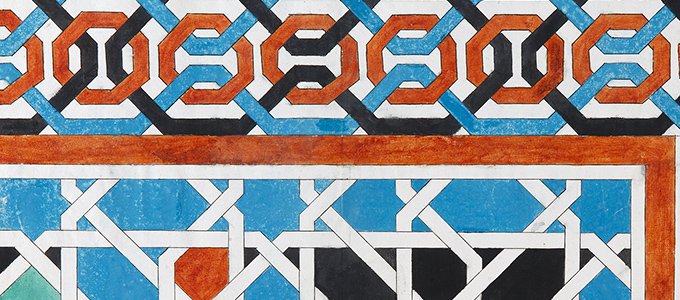
Blue on Blue: Indigo and Cobalt in New Spain

Museum of Spanish Colonial Art (Santa Fe)

Open until 28 February 2016.

This exhibition, in a sense, is complementary to The Red that Colored the World, recently on view at the Museum of International Folk Art (Santa Fe).  The cochineal exhibition is due to open at its next venue, the Bowers Museum (Santa Ana, California), on 31 October.

Lecture: Eduardo Carrero Santamaria (University of Barcelona), ‘Gothic architecture in 13th- and 14th-century Spain and its historiography’. Courtauld Institute, 5.30pm, 28th October 2015

The first in a series of lectures on Spanish medieval architecture, hosted by the Courtauld Institute, and sponsored by Coll & Cortes

Lamperez, Palencia pierSince the late 19th century, scholarship on 13th– and 14th-century Spanish architecture has largely depended on formal analysis and systems of cataloguing. From this have emerged fundamental studies of cathedrals, including those of Burgos, León and Toledo, of monasteries such as Las Huelgas in Burgos, or of parish churches such as Santa Maria del Mar in Barcelona. But what are the premises of such approaches? As interest in gothic architecture wanes amongst early 21st-century art historians, some of Spain’s most significant buildings still lack basic analysis. And yet perhaps the biggest problem is not the absence of studies but their methods, mediated by contemporary contexts.

The lecture is open to all and free to attend, though it is recommended that you arrive by 5.20 in order to secure a seat.

Eduardo Carrero Santamaria is Professor of Art History at the Universitat Autonoma de Barcelona

Film screening: The Apocalyptic Visions of Heaven and Hell which Shaped Medieval Art

2015-09-BeatusFilm Screening, followed by Q&A:

The Apocalyptic Visions of Heaven and Hell which Shaped Medieval Art

Monday 12 October 20156:00 pm


Kenneth Clark Lecture Theatre, The Courtauld Institute of Art, Somerset House, Strand, London WC2R 0RN, UK, WC2R 0RN.

Further information: 2015.10.12_Beatus film screening


Lecture: The Ceramics Collection of the Portuguese Royal Family (Wallace Collection, London)

2015-09-WallaceCollection

Lecture
The Ceramics Collection of the Portuguese Royal Family: the King Consort’s Collection
By Maria de Jesus Monge, Director of the Museu-Biblioteca da Casa de Bragança, Vila Viço
Wallace Collection, London
Monday, 28 September, 5:30 – 6:30PM

Admission free.

El legado de al-Ándalus: Las antigüedades árabes en los dibujos de la Academia (Madrid)

2015-08-Legado-RealAcademia

Exhibition
El legado de al-Ándalus: Las antigüedades árabes en los dibujos de la Academia
Real Academia de Bellas Artes de San Fernando
Madrid
22 September – 8 December 2015

Includes 175 works, the majority drawings along with six paintings and various prints from the Academy’s collections which illustrate Moorish antiquities from Andalucia.

Online catalogue, by Antonio Almagro and others.


Golden Age of Neapolitan Painting (Montpellier, Musée Fabre)

MMM-MuseeFabreAgeOrPeinture-Affiche_8m2_Mural_Decaux_3140x2300mm

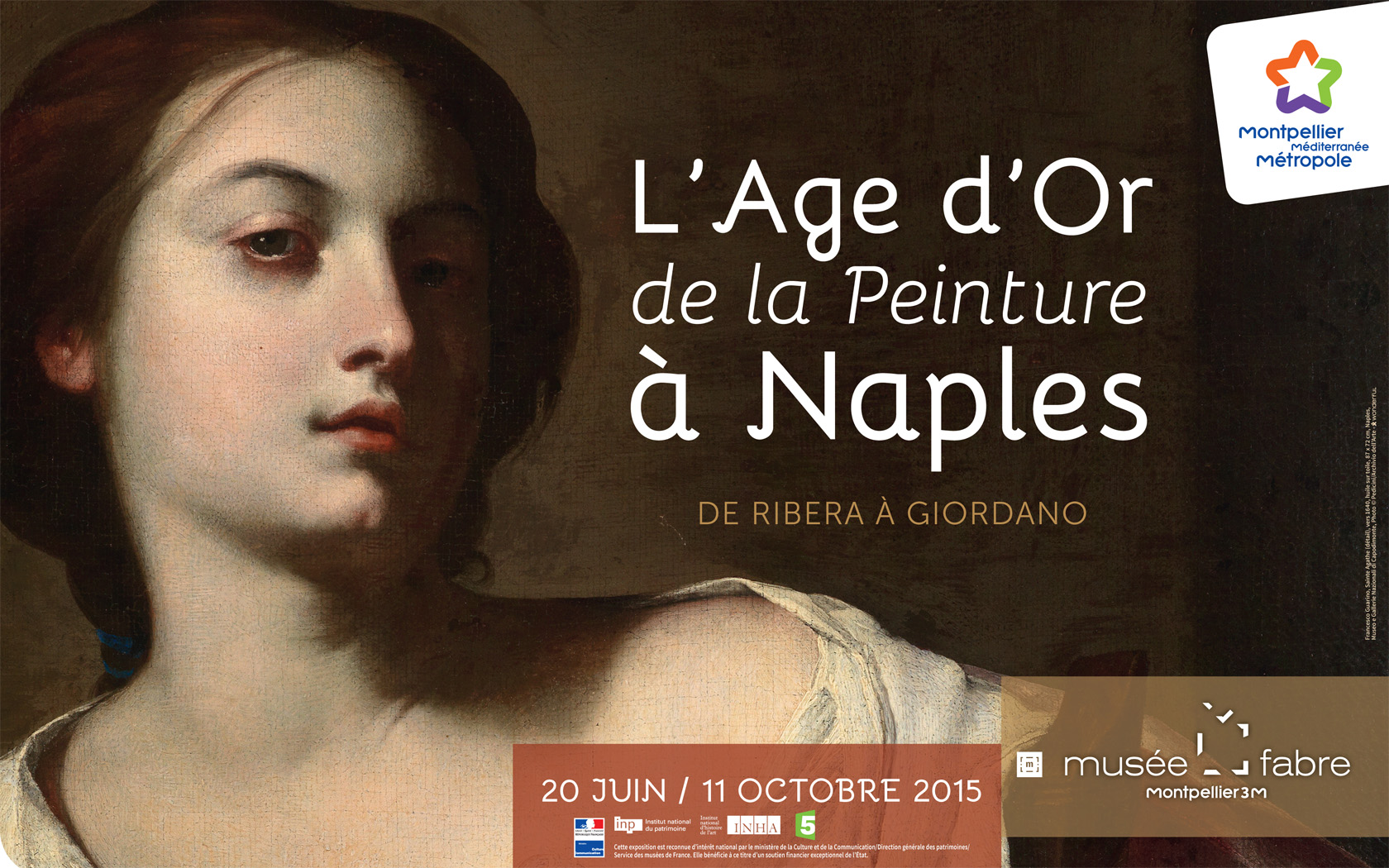
The Golden Age of Neapolitan Painting
From Ribera to Giordano
Exhibition, Musée Fabre, Montpellier
20 June to 11 October 2015

A national loan exhibition exploring 17th-century Neapolitan painting displaying about ten works by Ribera, including his Portrait of a Club-footed Boy, shown alongside work by his Neapolitan contemporaries.

SelgasCano, Serpentine Pavilion 2015 (London: 25 June – 18 October 2015)

2015-09-SelgasCanoPavilion-serpentine_2015_03

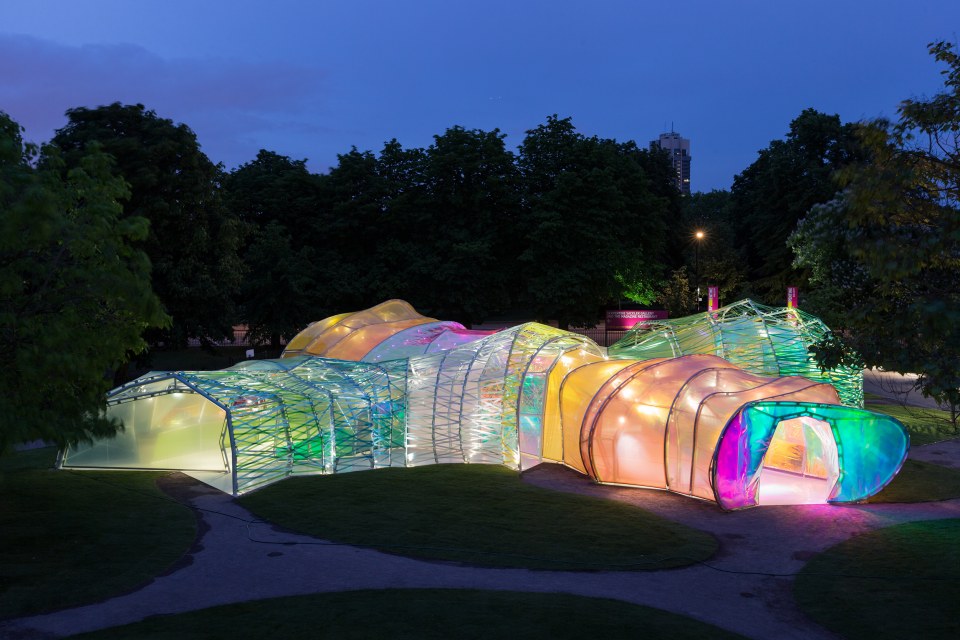
SelgasCano has designed the 2015 Serpentine Gallery Pavillion
Serpentine Gallery
Kensington Gardens/Hyde Park, London

Open to visitors until 18 October 2015.

The Spanish architectural practice SelgasCano unveiled the 2015 Serpentine Gallery Pavilion on the lawns outside the Serpentine Gallery in Hyde Park on 25 June. It has been designed as multifunctional reception and café space in the form of an irregularly-shaped multi-coloured ‘chrysalis’ with many entrances. SelgasCano is the first Spanish architectural firm to have been granted the opportunity to design a temporary pavilion for the Serpentine Gallery.

Jaume Plensa in Chicago

2015-08-Plensa

Jaume Plensa: 1004 Portraits
Richard Gray Gallery, Chicago, 17 June 2014 – 1 December 2015.

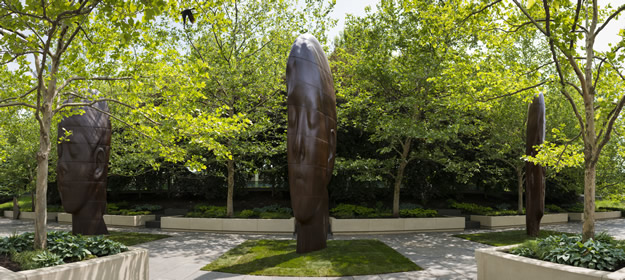
Four of Plensa’s portrait heads in stone and cast iron, ranging from 21 to 36 foot in height, are on display in Chicago’s Millenium Park to celebrate its 10th anniversary. They continue the story of the Barcelona-based Plensa’s original 1000 video portraits of local Chicago residents that have illuminated the Crown Fountain since 2004 and are entitled Awilda, Laura, Paula and Ines.

Exhibition: Tiempos de melancolia (Valladolid, Valencia and Palma de Mallorca)

2015-09-Tiempos-Melacolia
Tiempos de melancolía. Creación y desengaño en la España del Siglo de Oro
Museo Nacional de Escultura, Palacio de Villena, Valladolid
2 July – 12 October, 201.

Then touring to:

Museo de Bellas Artes de Valencia
4 November 2015 – 7 February 2016

CaixaForum, Palma de Mallorca
2 March – 11 June 2016.

Thematic and multidisciplinary exhibition of some 60 works focuses on Spain’s role as a key but often forgotten link in the crystallization of melancholy and disillusionment across sixteenth and seventeenth-century Europe. The exhibition includes images by artists such as El Greco, Murillo, Ribalta, Ribera and Velázquez as well as literature and botanical and medical treatises published in Spain.

EXHIBITION Art in Naples, a Golden Age 20 June – 11 Oct 2015 Musée Fabre, Montepellier, France

The Musée Fabre is showing Art in Naples, a Golden Age from 20 June to 11 October 2015. This follows on from the highly successful Caravaggio exhibition held in 2012.

In the XVIIth century Naples – second to Paris – was the most populated city in Europe and nearly Paris’ equal as a centre of art and culture. It was in Naples, rather than in Rome, that the naturalistic forms, monochrome palette and sharply directed ‘cellar’ lighting invented by Caravaggio and introduced by him to the city by in 1606, evolved and developed, primarily in the work of Caracciolo, Stanzione and, above all, Ribera, who, with his immediate followers dominated Neapolitan art in the first half of the century. These artists, whose best paintings are of great, often tragic, intensity, coexisted with painters of highly-finished exquisite canvases, often on a small scale, such as Cavallino and Guarino, whose approach ultimately derived from an earlier, less intense and more voluptuous phase of Caravaggio’s work. But, in the second half of the century, painters such as Mattia Preti, Luca Giordano, and, in the genre of still-life, Giovanni Battista Recco, moved away from the extreme severity and concentration of the Caravaggesque tradition and gradually came to terms with the exuberance and amplitude of the Baroque with its sensual and fluid employment of colour and its grand patterns of movement, a development that culminated in the European-wide triumph of Solimena in the years around 1700.

The exhibition also illustrates the close connections between Neapolitan art and the city’s turbulent history, from the eruption of Vesuvius in 1631, through Masaniello’s revolt of 1647, to the devastating plague of 1656.

For more information about the exhibition and the Musée Fabre see:
Art in Naples a Golden Age – The Musée Fabre, Montpellier

musée fabre expo été naples
 
Musée Fabre
39 boulevard Bonne Nouvelle
34000 Montpellier
France
TEL: 00 33 4 67 14 83 00
Tram Line 1 Comédie or Corum
Tram Line 2 Corum

Opening times Tuesday to Sunday, 10am to 7pm
Closed Mondays. Open on July 14th and August 15th (Bank Holidays)
Entrance fee 10€   Concessionary fee 8€

Guided tours & times every day except Monday
In June, July & August at 11am & at 4pm
In September & October at 11am, 1pm & 4pm
Prices 13 €   With a Pass’Agglo/Pass’Métropole 10,50€   Concessionary rate 9,50€

expo naples fabre 2015
© Jusepe de Ribera, Le Pied Bot, 1642, huile sur toile, 164 x 93,5 cm, Paris, musée du Louvre, Photo © RMN-Grand Palais / Stéphane Maréchalle
 
expo naples 2015 musée fabre
© Bernardo Cavallino, Judith, vers 1650, huile sur toile, 101 x 94 cm, Stockholm, Nationalmuseum, Photo © Nationalmuseum, Stockholm