Exhibition: Miró y el Mori el Merma, Valencia

2015-07-Mori-Merma
Miró y el Mori el Merma
Centro del Carmen, Valencia
11 June – 13 September

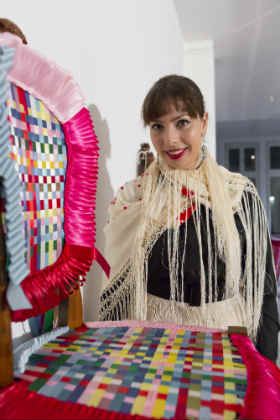
In 1978 Miró collaborated with the theatre company Teatre de la Claca to design, decorate and produce the masks and giant puppet figures for their production of Mori el Merma a play based on Alfred Jarry’s tyrannical Ubu figure, whom the artist associated with Franco’s reign. The production opened in Mallorca and Barcelona and subsequently toured Europe including a showing at the Riverside Studios in London. The exhibition displays for the first time since 1980 the masks and puppets, recently restored by the Instituto Valenciano de Conservación y Restauración, alongside a series of drawings and three portfolios of lithographs that Miró produced during the design process.

CFP: Orientalism and Spain in the 19th and 20th Centuries, Edinburgh, April 2016

2015-07-AAH logo
Call for Papers:
Orientalism and Spain in the 19th and 20th Centuries
Association of Art Historians
University of Edinburgh
7-9 April 2016
Convened by Claudia Hopkins (University of Edinburgh) and Anna McSweeney (School of Oriental and African Studies, University of London)

Spain represents a unique and fertile context in which to explore attitudes to the art and culture of the Islamic world. Spain was routinely ‘orientalised’ by northern European cultures in the 19th century, as foreign visitors indulged in oriental reveries when reflecting on Spain’s Islamic past (711–1492) and admiring its ‘Moorish’ remains at the Alhambra palace in Granada, the mosque/cathedral in Cordoba, or the Giralda in Seville. For the Spaniard, however, this Islamic heritage raised potentially disorientating questions about cultural roots and national identity. Spanish attitudes to the Islamic past were further complicated by Spain’s ambivalent relations with the Islamic present in Morocco, ranging from war and conflict (1859–60) to Franco’s recruitment of Moroccans at the start of the Spanish Civil War. This session builds on recent research by historians of art, literature and culture, whose work has revealed that the European discourse on the Islamic world is much more polyphonic than traditional postcolonial theory assumed. The session invites papers that examine 19th- and 20-century visual responses to Spain’s Islamic past and Spain’s nearest ‘Orient’, Morocco, by both Spanish and non-Spanish artists across all media (architecture, fine art, illustrated books, photography, film, fashion etc.). How did artists translate Spain’s Islamic world into visual formats? How was such imagery produced, viewed, and marketed? What were the artistic, ideological, political, and social positions on which visual responses were grounded? How important were they in the formation of broader attitudes to the Islamic world?

Deadline for submission of proposals for papers: 9 November 2015.

More information and link to proposal form: Click here.


Exhibition: The Red that Colored the World, Santa Fe

2015-07RedThatColoredTheWorldThe Red That Colored The World

Museum of International Folk Art
Santa Fe, New Mexico
17 May – 13 September 2015

Next venue:
Bowers Museum (Santa Ana, California)
From 31 October 2015

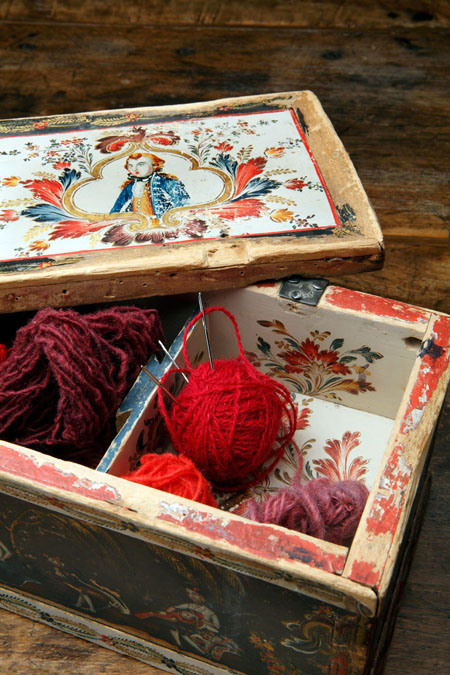
(Photo: Sewing box with cover with cochineal dyed wool yarn -detail). Box, Patzcuaro, Michoacan, Mexico, late 18th century. Wood, paint, metal, gold leaf, 4 3/4 x 17 5/16 x 5 inches. IFAF Collection, Courtesy of the Museum of International Folk Art, Photo, Addison Doty)

From Antiquity to today, as symbol and hue, red has risen to the pinnacle of the color spectrum. Throughout art history, a broad red brushstroke has colored the finest art and expressions of daily life. Yet, while most people know red, few know of its most prolific and enduring source: American Cochineal, a tiny scaled insect that produces carminic acid. Fewer still know the story behind its explosive global spread after its first encounter by Spain in 16th

Accompanying publication: A Red Like No Other: How Cochineal Colored the World.

Position at the Bowes Museum: Assistant Curator of Fine Art Specialising in Spanish Art

2015-07-BowesMuseum
The Bowes Museum is seeking an Assistant Curator of Fine Art to join its curatorial team. The postholder will curate an internationally renowned collection of European art spanning five centuries and will have an interest in, and preferably a good knowledge of, Spanish art.

The Bowes Museum and Auckland Castle are partners, and have between them a significant interest in promoting an understanding and enjoyment of Spanish Art in the North East. The successful candidate will thus work for part of their time at two sites, The Bowes Museum and Auckland Castle.
Position: Fixed term post for three years initially, subject to further funding
Salary: £21,500 per annum
Application: Application pack and CV.
Closing date: 12pm, 15 July 2015
Interviews: Week commencing 27 July 2015
Further information and link to an application pack: Click here


CFP: Netherlandish Art and Luxury Goods in Renaissance Spain (Leuven, 4-6 February 2016)

2015-06-NetherlandishArtLuxuryCFP: Netherlandish Art and Luxury Goods in Renaissance Spain

International conference, University of Leuven, Belgium, 04. – 06 February 2016
Deadline: Oct 1, 2015

Initiated and organized by Illuminare – Centre for the Study of Medieval Art, KU Leuven. 
In 2010, Illuminare – Centre for the Study of Medieval Art (KU Leuven) acquired the archive of the eminent Belgian art historian professor Jan Karel Steppe (1918-2009). Steppe is internationally renowned for his ground breaking research on the influence of Netherlandish art and luxury goods in fifteenth- and sixteenth-century Spain. By Spring 2016 the inventory the Steppe Archive will be accessible online. To celebrate this accomplishment, Illuminare is organizing an international conference on this area of Steppe’s research.
This conference will focus on a large variety of media, ranging from painting and tapestry to broadcloth and astrolabes. Special attention will be paid to the driving forces behind this export-driven market, such as artists, patrons, collectors and merchants. By taking into account cultural, religious, political and socio-economic dynamics, the conference aims to shed new light on the multifaceted artistic impact of the Low Countries on the Iberian Peninsula in the fifteenth and sixteenth centuries.
We welcome 20-minute papers by established and early career scholars that revisit or expand Steppe’s topics of research and, equally important, enhance these with recent methodologies and theoretical frameworks. The official language of the conference is English, although papers in French may be taken into consideration. Proposals of no more than 300 words and a brief CV should be submitted to drs. Robrecht Janssen (robrecht.janssen@arts.kuleuven.be) and drs. Daan van Heesch (daan.vanheesch@arts.kuleuven.be) by the 1st of October 2015.
Speakers will be invited to submit their papers for a peer-reviewed publication on the topic.
Scientific committee:  Barbara Baert (KU Leuven), Krista de Jonge (KU Leuven), Bart Fransen (KIK-IRPA, Brussels), Robrecht Janssen (KU Leuven / KIK-IRPA, Brussels), Maximiliaan Martens (Ghent University), Werner Thomas (KU Leuven), Paul Vandenbroeck (Royal Museum of Fine Arts Antwerp / KU Leuven), Jan Van der Stock (KU Leuven), Daan van Heesch (KU Leuven), Koenraad Van Cleempoel (Hasselt University), Annelies Vogels (KU Leuven), Lieve Watteeuw (KU Leuven)


The Mayas, Liverpool, June – October 2015

2015-06-mayas-head
Exhibition:
Mayas: Revelation of an Endless Time

World Museum, Liverpool
19 June – 18 October 2015

Large exhibition produced by the Instituto Nacional de Antropología e Historia (INAH) in Mexico City, exploring the Mayan civilization of eastern Mexico and modern day Guatemala, Belize, western Honduras and El Salvador. 385 objects, from museums and Mayan sites, ranging from striking funerary masks to intricate jade jewellery. It will be the only opportunity in the UK to see this exhibition, which has been organised as part of the 2015 ‘Year of Mexico in the United Kingdom’ and ‘Year of the United Kingdom in Mexico’. Entry free of charge.

2015-06-MXUK-logo

2015-06-Maya-catalogue-largeCatalogue:
Mercedes de la Garza ed., Mayas: Revelation of an Endless Time, Instituto Nacional de Antropología e Historia, 2015, 240 pp, 365 colour illus., £25. ISBN 9786074846515.
Extremely well illustrated, with colour photos, maps and an extensive comparative timeline from 3,000 BC to 1500 AD across civilizations in the Americas, Europe, Africa and Asia. Seven essays focusing mainly on the different regional characteristics of the Maya civilization in the Mexican Yucatan peninsula introduce brief catalogue entries on all 303 objects divided into eight thematic sections.


CFP: The Alhambra in a Global Context (Zürich, 16-17 September 2016)

2015-06-Alhambra-Loewenhof
CFP: The Power of Symbols: The Alhambra in a Global Context
Zürich, September 16 – 17, 2016
Deadline for submission: 1 September 2015
Organisers: Prof. Dr. Francine Giese / Dr. Ariane Varela Braga (University of Zürich)
Keynote Speakers: Fernando Valdés Fernández (Universidad Autónoma de Madrid) / Pedro A. Galera Andreu (Universidad de Jaén)
The following sections are planned:
– The Alhambra in Islamic Times
– The Alhambra and national identity
– The Alhambra in the World
– The Alhambra in the 21st century – New Challenges

Papers should have a duration of 20 min. Conference languages will be German, English and French. Abstracts of no more than 300 words, together with a short CV, should be sent to: conference@transculturalstudies.ch


Exhibiton: Miró, Düsseldorf

Installationsansicht der Ausstellung "Miró. Malerei als Poesie" im K20 Grabbeplatz, Foto: Achim Kukulies, © Successió Miró / VG Bild-Kunst 2015
Installationsansicht der Ausstellung “Miró. Malerei als Poesie” im K20 Grabbeplatz, Foto: Achim Kukulies, © Successió Miró / VG Bild-Kunst 2015


Miró: Malerei als Poesie (Miró: Painting as Poetry)
Kunstsammlung Nordrhein Westfalen, Düsseldorf
13 June – 27 September 2015

Previously on at the Bucerius KunstForum, Hamburg, now on in an expanded form. Exhibition of about 50 paintings from across the artist’s career together with a representative selection from the more than 250 illustrated books that he designed. The exhibition explores two main themes: how Miró’s work was informed by contemporary literature both in Barcelona and in Paris after 1920; and how contemporary poets, such as André Breton, Paul Eluard and Tristan Tzara later collaborated with or were inspired by Miró’s work.
Reviewed in The Burlington Magazine May 2015 (pp 371-373) by Lesley Thornton-Cronin, former ARTES Facundo Riaño Essay Prize winner.

Catalogue: Miró. Malerei als Poesie
ISBN: 978-3-941773-30-1
29,90 EUR

Exhibition: Francisco de Zurbarán, Madrid

2015-06-zurbaran_cabecerahomeZurbarán: A New Perspective; Zurbarán: una nueva mirada

Museo Thyssen-Bornemisza, Madrid
9 June – 13 September 2015

The exhibition will include the recently conserved St Serapion — click here for video  (before its redisplay in the new European galleries at Wadsworth Atheneum, Hartford, Connecticut), and aims to provide a new insight into the artist’s work by showing, for the first time in Spain, recently rediscovered works alongside paintings by the best of his pupils including his son Juan de Zurbarán’s still lives. Curated by Zurbarán specialist Odile Delenda and Mar Borobia, Head of Old Master Paintings at the Museo Thyssen-Bornemisza.