

The Church in Western Iberia: International Medieval Congress, University of Leeds, July 6-9, 2015

The Church in Western Iberia (León, Asturias, Galicia, and Portugal).
International Medieval Congress, University of Leeds, July 6-9, 2015.
Organiser: James D’Emilio, Department of Humanities, University of South Florida.
Five sessions:
Session 1016: Wednesday, July 8, 9:00 – 10:30
The Church in Western Iberia (León, Asturias, Galicia, and Portugal), I: Early Medieval Galicia
Session 1116: Wednesday, July 8, 11:15 – 12:45
The Church in Western Iberia (León, Asturias, Galicia, and Portugal), II: The Power of Tradition in the 11th- and 12th-Century Leonese Church
Session 1216: Wednesday, July 8, 14:15 – 15:45
The Church in Western Iberia (León, Asturias, Galicia, and Portugal), III: Women’s Religious Communities
Session 1316: Wednesday, July 8, 16:30 – 18:00
The Church in Western Iberia (León, Asturias, Galicia, and Portugal), IV: Cistercians and Their Patrons
Session 1516: Thursday, July 9, 9:00 – 10:30
The Church in Western Iberia (León, Asturias, Galicia, and Portugal), V: Books, Libraries, and Archives
Download the complete provisional programme and list of speakers here.
The International Medieval Congress (IMC) is organised and administered by the Institute for Medieval Studies (IMS). Since its start in 1994, the Congress has established itself as an annual event with an attendance of over 1,800 medievalists from all over the world. It is the largest conference of its kind in Europe.
Journal of Medieval Iberian Studies (JMIS): Best Article Prize (2015)

Journal of Medieval Iberian Studies: Best Article Prize (2015). The editors of the Journal of Medieval Iberian Studies (JMIS) and Routledge announce the first annual $500 prize for the most outstanding article published in JMIS in 2015.
All articles published in JMIS in 2015 will automatically be considered for the Best Article Prize, and all submissions received during the calendar year 2014 will be considered for publication in 2015.
We welcome work that engages peninsular Iberia in relation to other parts of the ‘post-classical’ world, which explores links of colonization and exchange with the Maghreb, addresses Iberia’s presence in the Mediterranean, or adopts a transatlantic frame.
The prize will be awarded by a panel of judges appointed by the Editor-in-Chief of JMIS. The judges’ decision will be final, and no correspondence will be entered into.
All submissions should be uploaded electronically through our online submission system (http://mc.manuscriptcentral.com/jmis).
The Journal of Medieval Iberian Studies (JMIS) is an interdisciplinary journal for innovative scholarship on the multiple languages, cultures, and historical processes of the Iberian Peninsula, and the zones with which it was in contact. We encourage submission of all innovative scholarship of interest to the community of medievalists and Iberianists. JMIS, which aims to bring theoretically informed approaches into creative contact with more empirically minded scholarship, encompasses archaeology, art and architecture, music, philosophy and religious studies, as well as history, codicology, manuscript studies and the multiple Arabic, Latin, Romance, and Hebrew linguistic and literary traditions of Iberia.
Please direct any inquiries to Simon R. Doubleday, Hofstra University.
Fundación Carolina: Call for scholarship applications, 2015-2016
 The Fundación Carolina (Spain) has released its call for scholarship applications, 2015-2016, in a variety of fields including “artes, humanidades, y comunicación”. Applications are not limited to individuals in Spanish-speaking countries; the Fundación Carolina invites applications from Brazilian scholars, too.
The range of support appears to extend, for example, to students working on doctoral degrees as well as to postdoctoral applicants.
For further details, go to: <http://www.fundacioncarolina.es/formacion/convocatoria-2015-2016/>.
SEMINAR with Brad Epps – Nouvelle Vague Tango: Hugo Santiago’s ‘Invasión’ – Tues 2 Dec 2014 – Birkbeck, Univ of London (CILAVS)
The Centre for Iberian and Latin American Visual Studies at Birkbeck
warmly invites you to the seminar
Nouvelle Vague Tango: Hugo Santiago’s Invasión
with
Brad Epps (University of Cambridge)

Tuesday 2 December 6.00pm, Room 417, Malet Street (entrance via Torrington Sq.), Birkbeck, University of London, Main Building, London WC1E 7HX
Invasión, one of the most celebrated and least seen and studied ‘cult’ films in the history of Argentine cinema, is rife with secrets, enigmas, and riddles, ellipses and tropes of estrangement. Its screenplay was written by Hugo Santiago, its director, in collaboration with Jorge Luis Borges, that master of conundrum and paradox, from a story penned by Borges in collaboration with his friend Adolfo Bioy Casares. This paper examines some of the political and aesthetic implications of a film in which sound and sight are anything but unobstructed, communication and perception anything but straightforward, meaning anything but clear, and identity anything but sure and stable.
Brad Epps is Professor of Spanish and Head of the Department of Spanish and Portuguese at the University of Cambridge

For more details visit http://www.bbk.ac.uk/cilavs/events#Epps
All welcome, but registration is required. Please follow the link below to register.
http://www.eventbrite.co.uk/e/nouvelle-vague-tango-hugo-santiagos-invasion-tickets-8874595153
ARTES visit to Malta, November 2014, by Susan Wilson
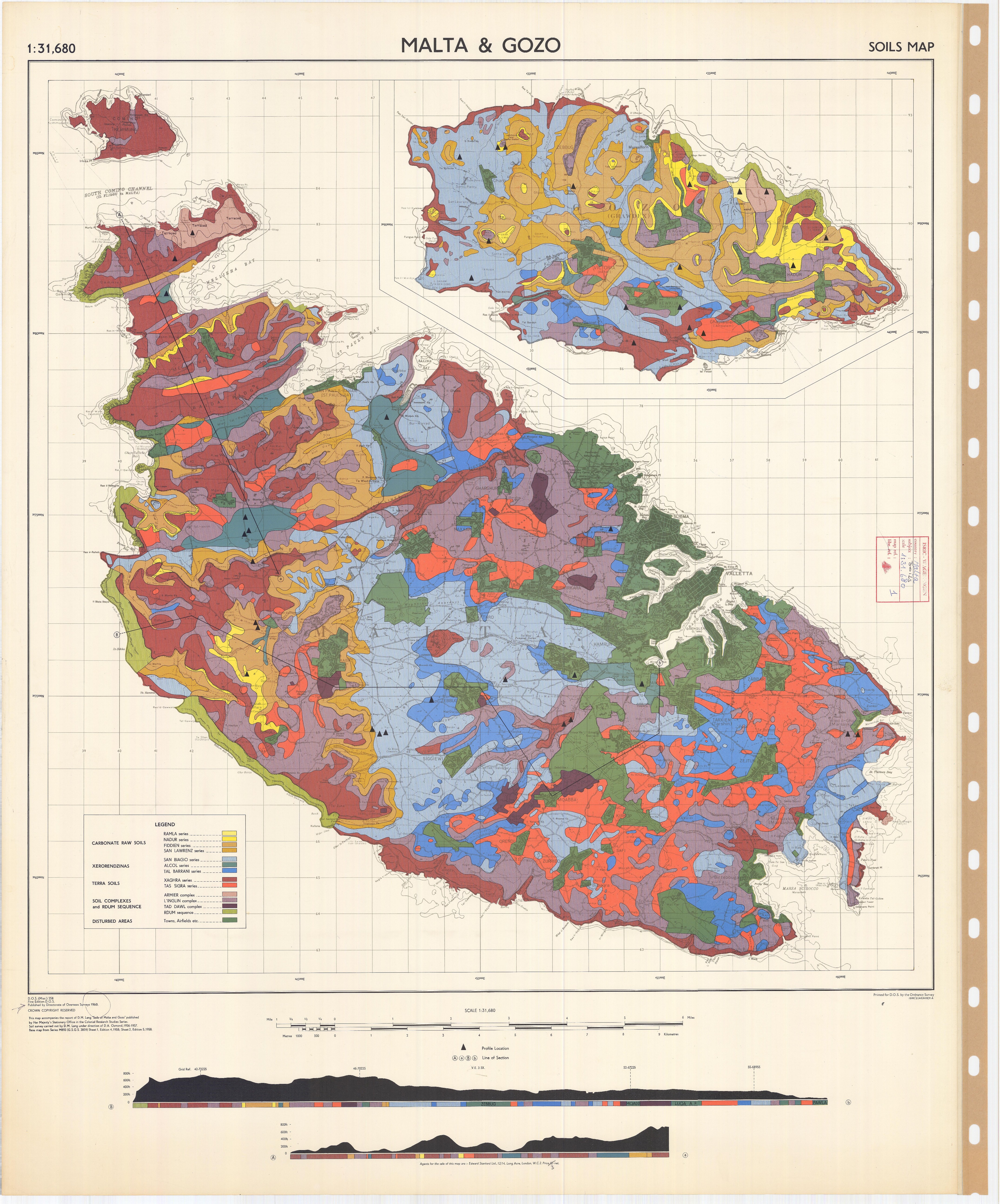
ARTES visit to Malta, November 2014, by Susan Wilson
Malta was warm and sunny when the ARTES group landed: cacti, stony, tiny fields, palm trees, the sirocco blowing. Then the next day a huge grey-brown cloud rose up, it poured with rain, and cars were covered with Saharan dust.
Valletta is charming, the giant ramparts of soft golden brown stone startling you as you enter the city over a bridge, a deep gulf below, and find Wembley stores, Piccadilly tea rooms, splendid baroque facades, handsome balconies, steep steps, delightful squares and gardens, and always the sea at the end of the street.
I walked around the town, up and down steep streets, to the sea, to the giant 900-bed ward of the Hospital of the Knights of St John, on the ramparts by the sea.
The ARTES group visited St John’s Co-Cathedral, its vault painted by Mattia Preti, fabulous in soft rich colour, with scenes from the life of St John. Elsewhere in the Cathedral we saw Caravaggio’s Beheading of St John and his St Jerome.
Traces of Spanish art and architecture abound on Malta. On our first evening we went to Mdina where Fr. Dun Edgar Vella gave us a comprehensive survey of Nativity cribs and their construction, using his own collection to illustrate his points. We went back to Mdina on Friday, and there saw in the Cathedral Museum a large altarpiece by Luis Borrasa, brought to the island by sea in sections. During our visit the winds rose and a gale began – rain lashed down, streets flooded. Our journey back to Valletta in our minibus took an hour, instead of the expected 20 minutes.
On Saturday the storm prevented us going to the island of Gozo, and instead we visited prehistoric sites in Malta. I walked to a Spanish fort, a tall and severe, impregnable, square stone tower built on a cliff edge over rocky coast, one of a ring of forts built to alert the people of invasion.
The group made the visit so good. Our dinners were alive with great discussion, thoughts on Malta and the Spanish and I remain grateful to all who went for their stimulating company.
As a follow-up to our visit, in London’s National Gallery, Room 37, be sure to see the small painting by Adam Elsheimer, St Paul Shipwrecked: A storm rages, trees are hurled across the foreground, the seas are wild, it is dark and St Paul, is being bitten by the serpent. There is a crowd on the beach, all is very vivid. Or is that because of the storm we all experienced? The Church of St Paul’s Shipwreck in Valletta revealed the devotion among the Maltese to St Paul, their patron saint, and inside the church Marjorie Trusted showed us the small dressed figure, above an altar, of a Mater Dolorosa, by the Granada sculptor Pedro de Mena.
John Elliott recommended reading Ernle Bradford’s The Great Siege and on Tuesday I tracked a copy down to the bookshop at The Brunswick Centre. It is excellent and, though I did not see Malta’s Three Cities (Cospicua, Vittoriosa, and Senglea) – and wish I had – I feel I now know them well.
Exhibition: Dibujos españoles en la Hamburger Kunsthalle, Prado, Madrid
 Spanish Drawings from the Hamburger Kunsthalle: Cano, Murillo and Goya, Museo del Prado, 30 October 2014 – 8 February 2015.
Previously on display as The Grand Gesture: Drawings from Murillo to Goya from the Hamburger Kunsthalle, at the Meadows Museum, Dallas, this exhibition has moved to the Museo Nacional del Prado, Madrid.
A significant percentage of the collection, acquired for the Kunsthalle’s Kupferstichkabinett (Department of Prints, Drawings and Photography) by its first Director, Alfred Lichtwark (1852-1914), is on view.
The exhibition is accompanied by a complete catalogue of all the drawings in the collection, written by Jens Hoffman-Samland with the collaboration of María Cruz de Carlos Varona, Gabriele Fialdi, José Manuel Matilla, Manuela Mena and Gloria Solache, curators at the Museo del Prado.
The exhibition has been co-organized by the Meadows Museum, SMU; the Museo Nacional del Prado; the Hamburger Kunsthalle; the Centro de Estudios Europa Hispánica; and the Center for Spain in America.
Juan DelGado’s audiovisual commission ‘The Flickering Darkness (Revisited)’ – Sat 8 Nov 2014 – CILAVS at Birkbeck University of London
The Centre for Iberian and Latin American Visual Studies (CILAVS) at Birkbeck University of London warmly invites you to
Juan delGado
The Flickering Darkness (Revisited)
Saturday 8 November 2015, 2.00-5.00pm
Birkbeck Cinema, 43 Gordon Square, London WC1H 0PD
Artist Juan delGado will present his recent commission The Flickering Darkness (Revisited) alongside the work by Agata Lulkowska. A panel will analyse and reflect on his audiovisual work to improve the understanding of current food policies and their impact in society and art by elaborating on the political and economic factors that promote them.
Juan delGado’s The Flickering Darkness (Revisited) is a video installation filmed at the Corabastos market in Bogotá. The market is the largest of its kind in Latin America. Produced during a three-month residency in the city in 2009 and re-edited for this exhibition, the project explores the journey produce sold at the market takes, from its arrival before dawn to its consumption. Reflecting on the idea of belonging, and the need we all have for locating ourselves in an environment, it creates sense out of the city’s chaos and order, while inviting wider reflections on society’s strata and how they fit together.
For more details visit http://www.bbk.ac.uk/cilavs/events#delGado
Please follow the link below to register
CAA annual conference: New York, February 2015
 CAA annual conference: New York, 11-14 February 2015
Registration is now open.
Sessions include:
–Contemporary Art of Central America and Its Diaspora
-Old Technologies in Contemporary Latin American Art
-Artistic Exchange between the Spanish and British Empires, 1550–1900
-Imagining a US Latina/o Art History
New book: The Archaeology of Medieval Spain 1100-1500
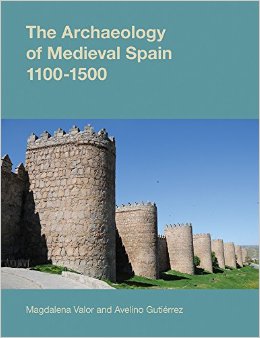
The Archaeology of Medieval Spain 1100-1500, edited by Magdalena Valor and Avelino Gutiérrez (Sheffield: Equinox Publishing, 2014) ISBN 9781845531737.
This book is the first attempt to make sense of the new data for the twelfth to the fifteenth centuries, a period when Spain was the hinge or fulcrum between Christianity and Islam, and that saw the gradual displacement of the previous Islamic culture and way of life by that of the Hispanic kingdoms.
Magdalena Valor is Professor of History and Medieval Archaeology at the University of Seville. Avelino Gutierrez is Professor of Archaeology at the University of Oviedo.
John Schofield has contributed the introduction and concluding chapter (‘Hopes for the future’). The book is published in the series ‘Studies in the Archaeology of Medieval Europe’ of which John was the founding editor. John says in his introduction that Spain was late in developing modern archaeological services but has since caught up: since the mid-1980s there has been ‘an explosion of archaeological excavations in towns and countryside, resulting in a mountain of new data, most of it undigested’.
 ARTES
ARTES 