There is a new page on the ARTES website dedicated to 3D models of architecture and objects from the Iberian Peninsula (click here). A page dedicated to 3D models for Latin America is coming soon. Find them under the ‘Online Resources’ tab on the top of the site. These lists are not exhaustive, and will be updated regularly.
Have anything to add to the Iberian list, or ideas for the Latin American list? Please comment on this post with your suggestions (‘leave a reply’).
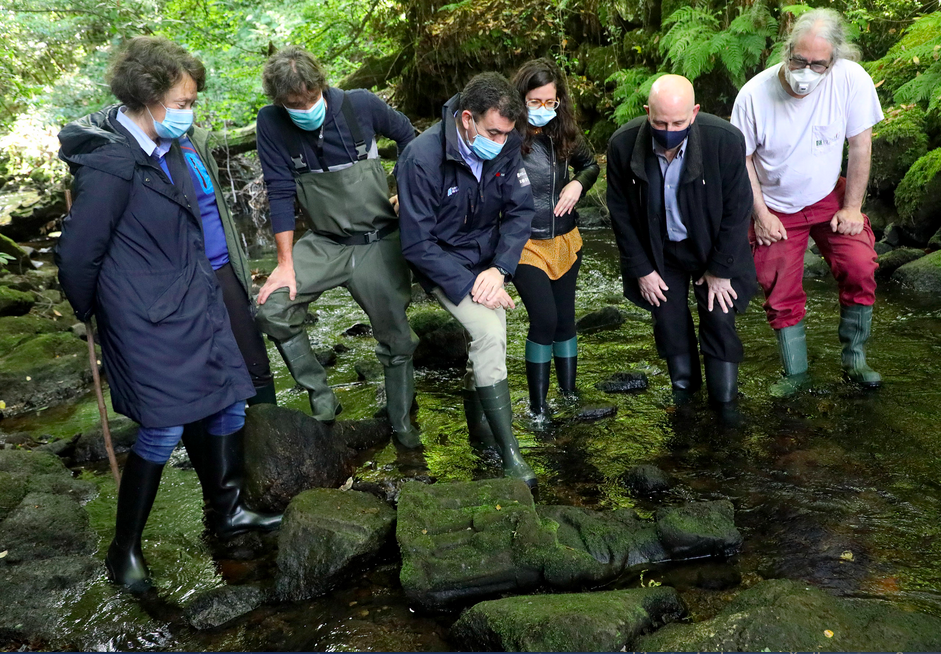
Photo: Conchi Paz, Courtesy of Galician regional government
On June 5th, fisherman Fernando Brey tripped over a moss covered stone in the Sar river in Galicia when he was struck by its unusual shape. Indeed, this was not an ordinary riverbed rock. He had literally stumbled upon a sculpture of the Virgin and Child, whose faces are now missing, with two worn angels behind the Virgin’s shoulders, who appear to hold up her mantle. Brey quickly shared his discovery with Apatrigal, a local heritage association, and the Galician Ministry of Culture, who believe the work dates to the 14th century.
According to Apatrigal’s statement, the 150kg granite sculpture is carved on all sides other than the back, including the underside of its base, leading them to believe it was meant to be suspended on a wall. They also hypothesize that the work may have originally been located in the now-lost 12th-century Convent of Santa María de Conxo, which was very close to the discovery site in the Sar river. The sculpture has now been moved to the Museo das Peregrinacións in Santiago de Compostela, where it will be cleaned and analysed to determine its probable origin and dating. ‘Studies should tell us whether this is a very valuable gothic statue’, regional minister of culture Román Rodríguez said, as reported in The Guardian, ‘but beyond its cultural and historic value, we’ll also need to try to put together the story of this statue: What happened, and how could it remain undiscovered so close to the city for so many centuries? It must be quite a story’.
Bartolomé Esteban Murillo’s original work (left) and two attempts at restoring a copy of it. Photograph: Cedida por Coleccionista/Europa Press 2020
News outlets across the globe have shared the story of another failed restoration in Spain. The work was a copy of Murillo’s The Immaculate Conception of El Escorial, and the original remains unscathed at the Prado. It is important to note that the viral image above is slightly misleading, as it compares the two ‘restored’ versions (right) to Murillo’s original painting (left), rather than to the copy before the restoration effort.
The copied painting belongs to a private art collector in Valencia, who had hired a furniture restorer to clean the work. The collector has now asked another specialist to attempt to fix the botched restoration.
The Association of Conservators and Restorers in Spain (ACRE) has released a statement, stating that they ‘regret once again the loss of a cultural asset and, under these circumstances, we request not to take this instance as a social media source of fun, as happened already formerly. Moreover, we all must be alarmed to think that our heritage is disappearing because of these disastrous actions’. They also emphasize that ‘no professional technician with an official academic training would perform such an attempt against cultural heritage’. They warn against the lack of regulations for art conservation in Spain, which ‘allows unskilled people intervening on [art], facing, at best, mere administrative penalties’.
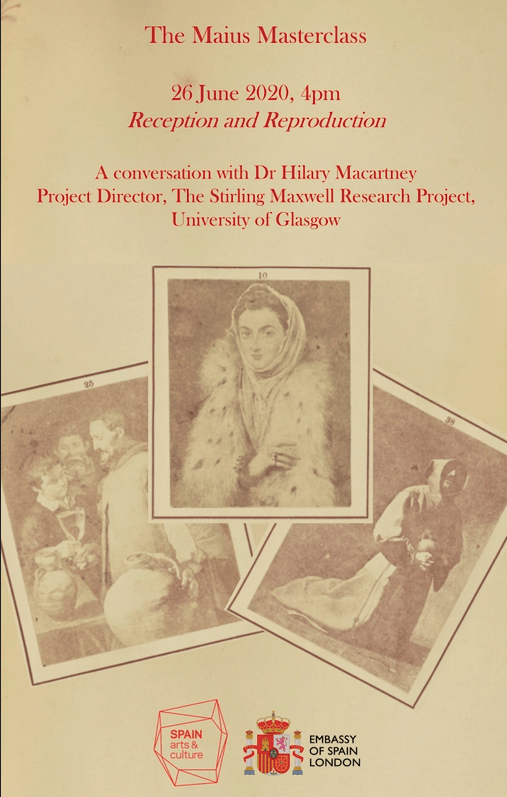
This series of masterclasses encourages creative dialogue between early-career and established scholars. We have invited historians of art and culture who have challenged established classifications, chronologies and geographies. Discussing texts and objects from their research, they will share experiences of investigating the Iberian and Latin American past, reflect on their academic journeys, and provide both intellectual and practical advice.
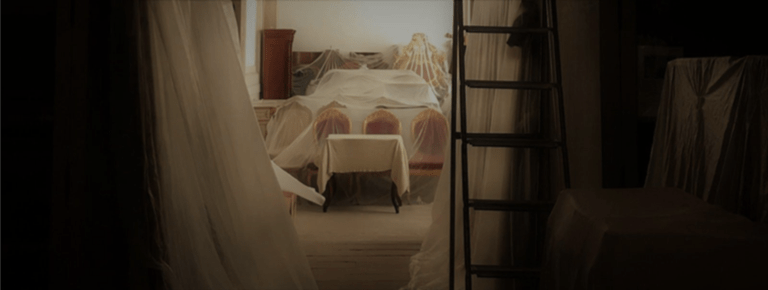
Storeroom – National Palace of Ajuda, Lisbon. Photo: ICOM-ICDAD.
Deadline approaching! ICOM-ICDAD is hosting a virtual conference (previously scheduled to take place in Lisbon) on the theme of ‘Hidden Gems’, which will run October 15 – 16, 2020. They welcome a diverse range of presentations on this topic, exploring everything from hidden collections to underrepresented designers and artists. The deadline for proposals is July 1, and abstracts should be between 250 to 300 words. For more information on the conference and proposal requirements, please view ICOM-ICDAD’s full CFP here.
Watch the installation of Reunited (6/6/20 – 13/9/20), as the Prado’s director, Miguel Falomir, discusses the exhibition on the museum’s Youtube channel
The Prado has reopened a quarter of its gallery space with Reunited, a new display of nearly 200 paintings from its permanent collection. The exhibition will run until 13 September 2020. The museum’s masterpieces are displayed in novel juxtapositions, offering a new perspective on the permanent collection. For example, for the first time Rubens’ 17th-century “Saturn Devouring His Son” will be adjacent to Francisco Goya’s depiction of the same subject, painted nearly 200 years later. See the Prado’s website for more details on the works included, the new pairings, and additional videos on the exhibition.
The Prado has reopened with a limited capacity of only 1,800 people per day, compared to 15,000 on peak days last year. Visitors will have to book at least 24 hours in advance, have their temperatures checked at the entrance, wear masks throughout the visit, and there will be markings on the floor to indicate safe distances. The museum’s finances remain a concern despite reopening. Ticket prices will be halved until September 13th, and as the museum receives approximately half its funding from ticket sales. Furthermore, foreign tourists usually represent 70-80% of its visitors. The director of the Prado, Miguel Falomir, plans to showcase the museum’s permanent collection, which will help lower costs. Like many in the art world, he is concerned about the sustainability of the expensive ‘blockbuster exhibition’ model, which relies on loans from international collections and includes high insurance costs. However, in an interview with AFP, Falomir ended on a positive note, stating ‘It will take a while, but tourists will once again fill up the museums’.
Joaquín Sorolla, The Drunkard, Zarauz(1910), The National Gallery, London
On Tuesday, The National Gallery officially announced the acquisition of The Drunkard, Zarauz (1910) by the Spanish master Joaquín Sorolla (1863-1923). A year ago, the gallery featured the artist in the monographic exhibition Sorolla: Spanish Master of Light which was splendidly inaugurated with royal presence. The last exhibition on the artist in the United Kingdom took place at London’s Grafton Galleries in 1908 and was coordinated by the artist. Also, very few British Museums own paintings by Sorolla and these are not usually on display. This acquisition thus marks an important milestone by promoting him as one of Spain’s most renowned artists.
Known for his sunny beach scenes, this painting represents an unfamiliar period of his career anticipating the painting cycle of the regions of Spain commissioned for the Hispanic Society of America in New York (painted between 1911 and 1919). It also relates to his early career during which darker scenes of social subjects predominate. Set in the coastal town of Zarauz (Gipuzkoa), Sorolla was on a holiday with his family and, due to the bad weather, was constrained to indoor scenes including the local taverns. He was especially fascinated by the man facing him frontally, called Moscorra, who he represented on another occasion in a more pronounced inebriated state (Museo Sorolla, Madrid). Moscorra slumps forward with bloodshot eyes while another drunkard pushes another drink towards him. Sorolla masterfully captures this moment in a quick sketch with white highlights and earth-tones blurring the foreground and the background. He avoids idealisation, as portrayed in Velázquez’s Drunkards (1628-1629, Museo del Prado, Madrid), representing the issues of alcoholism in an increasingly industrialised Spain.
The Wallace Collection has produced a short documentary on the year-long process of the cleaning, restoration, and technical analysis of their painting, Prince Baltasar Carlos in the Riding School, by the Studio of Velázquez. This conservation and analysis was generously supported by the Centro de Estudios Europa Hispánica. More information about the project and the painting can be found in this Wallace Collection blog post.
In case you missed it, the BSR has shared a recording of last week’s talk by Piers Baker-Bates and James W. Nelson Novoa, The Iberian and the Other in early modern Rome.




 ARTES
ARTES 