
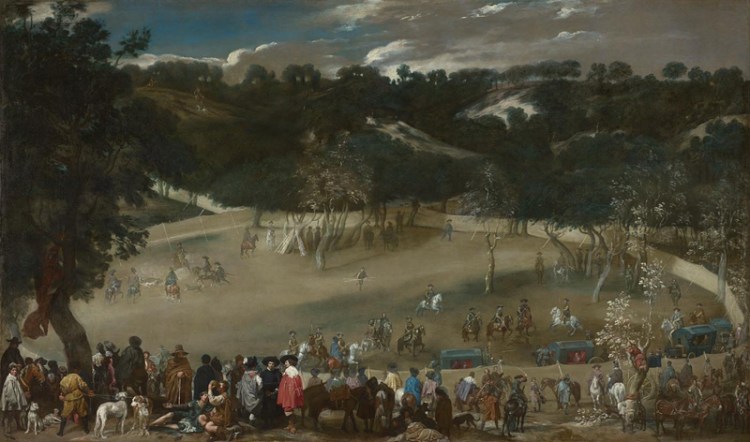
Please note that as very few members signed up for this trip (originally planned for November 9, 2017) the organisers have decided to postpone it until the new year.
Please note that as very few members signed up for this trip (originally planned for November 9, 2017) the organisers have decided to postpone it until the new year.
 Post-doc: 3 position, 3-year contracts, ERC Advanced project 740618: The origin and early development of philosophy in tenth-century al-Andalus: the impact of ill-defined materials and channels of transmission (2017-2022), Université catholique de Louvain, Belgium
Deadline: 10 November 2017
PhilAnd is a five-year Advanced ERC project to start in October 2017 at the Université catholique de Louvain (UCL) under the supervision of Prof. Godefroid de Callataÿ. The objective of PhilAnd is to conduct a large-scale exploration of how, and under which form, philosophy appeared for the first time in al-Andalus. At the crossroads of several major lines of enquiries in modern scholarship and in line with recent discoveries having important chronological implications, PhilAnd focuses on the 10th century, a period usually disregarded by historians on the assumption that philosophy as such was not cultivated in the Iberian Peninsula before the 11th-12th centuries. Its originality is also to put emphasis on ‘ill-defined’ materials and channels of transmission, a field which remains largely unexplored. PhilAnd will be conducted in partnership with the Warburg Institute (University of London).
As part of this project, three post-doc positions of three years each (to start from 2 January 2018) are offered at the UCL in relation with the three following sub-projects (SP):
1) the Ikhwān al-Ṣafā’: This SP will aim at producing a comprehensive survey of all the elements which are likely to inform us about the chronology of redaction and – where applicable – of introduction into al-Andalus of the three works that have commonly been ascribed in sources to this most influential group of thinkers known as Ikhwān al-Ṣafā’ (‘The Brethren of Purity’), namely: a) the Rasā’il (‘the Epistles’); b) the Risāla Jāmi‘a (‘The Comprehensive Epistle’) and, c) the Risāla Jāmi‘at al-Jāmi‘a (‘The Super-Comprehensive Epistle’). This chronology is currently far from clear.
2) Ibn Waḥshiyya and the Nabatean Corpus: This SP aims to evaluate the impact of the Filāḥa Nabaṭiyya (‘The Nabatean Agriculture’), a complex and enigmatic Arabic treatise on agriculture written in the Orient, on the development of both Islamic and Jewish Neoplatonism in al-Andalus from the 10th to the 12th century. The focus will be on the reception of the ‘philosophical’ and bāṭinī (rather than agronomical) aspects of the work, with the aim of understanding why this notoriously esoteric work remained so influential even to Jewish thinkers like Judah Halevi and Maimonides.
3) Ibn Masarra: This SP will lead to the first monograph entirely devoted to Ibn Masarra’s Kitāb khawāṣṣ al-ḥurūf (‘The Book of the Properties of Letters’), consisting of an extensively annotated translation of this mystical treatise, together with an in-depth exploration of its place in the history of ‘ilm al-ḥurūf, the Islamic science of letters – including its links with the Jewish Kabbala – up to the time of Ibn ‘Arabī. This will fill an important gap and provide a valuable resource for the study of Islamic mysticism in al-Andalus.
The qualifications required for any of these sub-projects are:
These three post-doc positions are full-time equivalent. They are offered for a period of 12 months, renewable twice (three years in total) upon good performance. The post-docs retained will be required to reside in Belgium for the whole period of their fellowship. They will be asked to contribute to the intellectual life of the ERC project and of the UCL.
How to apply?
Applications should be made via pdf files and contain the following:
(1) a cover letter setting out the candidate’s qualifications and motivation for applying for one of the three positions offered (maximum 2 pages);
(2) a curriculum vitae (maximum 3 pages);
(3) a list of publications;
(4) two samples of published work (articles, chapters) in pdf (preferably in English);
(5) a transcript of grades and/or copy of the PhD certificate;
(6) the name (with title, affiliation and email) of four people who have accepted to be contacted as potential referees.
Applications should be made electronically and sent to the following address:
godefroid.decallatay@uclouvain.be
The application deadline is 10 November 2017
Interviews will be arranged between 4 and 6 December 2017.
Candidates selected for the interviews will be contacted by mid-November 2017, and asked to write a short research design on a topic to be announced at that moment.
Employment should become effective from 2 January 2018.

El desafío del blanco. Goya and Esteve, retratistas de la Casa de Osuna/portraitists to the House of Osuna, Museo Nacional del Prado, Madrid. Closes 1 October 2017
This displays presents for the first time in the Prado the portrait of Manuela Isidra Téllez-Girón, the future Duchess of Abrantes, which was painted in 1797 by Agustín Esteve y Marqués, and which was recently acquired with the help of funds from the donation by Óscar Alzaga Villaamil. The child’s portrait is considered one of the finest works by the Valencian-born Esteve, the most important court portraitist after Goya. The exhibition brings together for the first time all the portraits painted by Agustín Esteve of the children of the Duke and Duchess of Osuna, on loan from private collections such as the Fundación Casa Ducal de Medinaceli, the Colección Duque del Infantado, Colección Masaveu and Colección Martínez Lanzas-de las Heras. In addition the display is accompanied by portraits of the 9th Duke Osuna, Pedro de Alcántara Téllez-Girón (1755-1807) and his wife and cousin, María Josefa de la Soledad Alonso-Pimentel (1752-1834), and their five children by other court artists including Goya’s family portrait of 1787-88 and a miniature by Guillermo Ducker (fl. 1795-1830) of Joaquina Téllez-Girón, Marchioness of Santa Cruz. The exhibition’s title refers to Esteve’s and Goya’s ability to meet the challenge of representing the transparent and pristine white materials worn by their sitters.
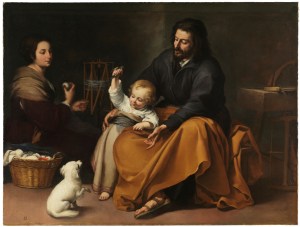
BSS Concert, VIII Edition: Murillo Sacred and Secular in Spanish Art and Song, Guildhall School of Music, London, Monday 23rd October, 6pm to 7pm followed by reception
The concert will be a one-hour illustrated performance titled ‘Sacred and Secular in Spanish Art and Song.’ Curated by Ricardo Gosalbo and Professor Barry Ife, it will commemorate the 400th anniversary of the birth of Murillo. The programme features a rich and varied programme of songs and images celebrating four hundred years of the birth of the Spanish painter Bartolomé Esteban Murillo in 1617. Guildhall postgraduate singers perform settings of Spanish Golden-Age lyrics by Joaquín Turina, Eduard Toldrá, Joaquín Rodrigo, Joaquín Nin, Amadeo Vives, Fernando Obradors and Frederic Mompou against a vibrant backdrop of some of Murillo’s finest drawings and paintings.
Following the stunning performance, guests will have the opportunity to have a small wine reception with the performers.
Tickets: BSS members £15, non members: £25.
Tickets include a glass of wine.
55 tickets available. Book early to avoid disappointment.
Any benefits from ticket sales will go towards the BSS Grants which some of the Guildhall School of Music artists have won. This event is supported by the Guild Hall School of Music and the Embassy of Spain.
 The new George Campbell Prize of the University of Malaga/Aula María Zambrano is dedicated to researches associated with Spanish or Irish universities who study any kind of relationship (artistic, historical, cultural, political, social, economic, etc.) between Ireland and Spain in the period 1965–2000.
The prize winner will receive 1,000€, and the runner-up 200€. More information on how to apply will soon be published on the Aula María Zambrano Transatlantic Studies web site, www.uma.es/amzet.
The Prize is named after the Irish artist George Campbell. Born in Arklow, Ireland, Campbell made Malaga his second home, spending more than six months in the city every year. His art was deeply influenced by the city, and the barrio where he lived, El Palo, features constantly in his work. The creation of this Prize matches the celebration of the first centenary of his birth, which will also be celebrated in Arklow with a small exhibition and the dedication of a memorial plaque on Campbell’s birthplace.

Ligereza y atrevimiento. Dibujos de Goya, Centro Botín, Santander. Closes 24 September 2017.
One of the first exhibition’s in the recently opened Renzo Piano designed Centro Botín, this show is curated by the Prado’s Head of Drawings and Prints, José Manuel Matilla, and the Chief Curator of the Goya and 18th-century Art Department, Manuela Mena. The exhibition includes 80 drawings, from the Prado’s holdings of some 520, selected as representative of the different periods of Goya’s artistic activity from 1796 to his death in 1828. Also shown are preparatory drawings for a selection of prints from his series, Sueños, Caprichos, Desastres de la guerra, Tauromaquia and Disparates. This exhibition is the result of an ambitious research and cataloguing project based on the drawings of Francisco de Goya, thanks to the collaboration agreement entered into by the Fundación Botín and Prado Museum in 2014. The first volume of the catalogue raisonné is due to appear later in 2017 and a larger exhibition is provisionally scheduled at the Prado in 2019.
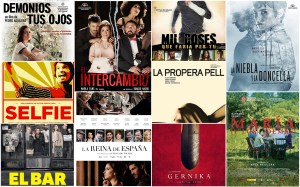 The London Spanish Film Festival launches its 13th edition with an extraordinary line-up of recent Spanish films, most of them UK premieres and a unique opportunity to view them in London. From enigmatic thrillers to fresh comedies, from moving or poetic dramas to international coproductions, documentaries and promising shorts, this selection offers an insight into the compelling variety of Spanish cinema.
Some featured movies:
Click here for information and bookings.
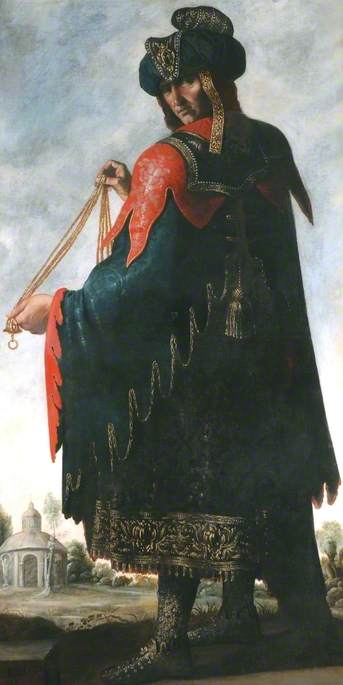
Zurbarán: Jacob and his Twelve Sons, Paintings from Auckland Castle, Meadows Museum, Dallas, USA, September 17, 2017 – January 7, 2018
Francisco de Zurbarán was born in Fuente de Cantos, in Western Spain, but spent most of his working life in Seville. Like Ribera, Zurbarán is also considered a Caravaggista (a follower of the Italian painter Michelangelo Merisi da Caravaggio, active 1571-1610) particularly for his exceptional use of chiaroscuro.
These 13 paintings (12 by Zurbarán and one a direct copy of the work by Zurbarán) are a visual narrative of Jacob’s deathbed act of bestowing a blessing on each son, foretelling their destinies and those of their tribes. Although each painting holds its own as an exceptional portrait, seeing the works together provides a unique experience for viewers, transporting them across history to make them a witness to that moment. At the Meadows, the paintings will be displayed together in one gallery.
It is not known who originally commissioned the series, but they were auctioned from the collection of a Jewish merchant named Benjamin Mendez in 1756. Richard Trevor, Bishop of Durham, acquired the paintings for Auckland Castle, seeing in the public presentation of these works an opportunity to make a statement about the need for social, political and religious understanding and tolerance between Christians and Jews in Great Britain.
While in the USA, the paintings will also undergo in-depth technical study for the first time at the Kimbell Art Museum. This will include the use of infrared reflectography, ultra-violet light, x-radiography and pigment analysis. The goals of this work are twofold: first, to gain a better understanding of Zurbarán’s artistic process by exploring this unique series of related works; and second, to identify any additional needs for their ongoing conservation and care after they return to the U.K.
Accompanying the exhibition and conservation research will be an illustrated catalogue containing scholarly essays exploring the series from various historical, religious and artistic perspectives. Dr. Mark A. Roglán, Director, Meadows Museum, is the scientific director of the project and has helped to gather contributions by Claire Barry, Director of Conservation, Kimbell Art Museum; Professor John Barton, Oriel and Laing Professor of the Interpretation of Holy Scripture, Emeritus at Oxford University; Dr. Jonathan Brown, Carroll and Milton Petrie Professor of Fine Arts at New York University; Dr. Christopher Ferguson, Curatorial, Conservation and Exhibitions Director, Auckland Castle; Dr. Susan Grace Galassi, Senior Curator, The Frick Collection; Akemi Herráez Vossbrink, PhD Candidate at the University of Cambridge; Alexandra Letvin, PhD Candidate at Johns Hopkins University; and Dr. Edward Payne, Senior Curator, Spanish Art, Auckland Castle. This exhibition and study have been co- organized by the Meadows Museum, SMU; The Frick Collection; and Auckland Castle; in association with the Kimbell Art Museum. A generous gift from The Meadows Foundation has made this exhibition and study possible, with additional support from the Centro de Estudios Europa Hispánica and the Center for Spain in America.
Tour of art collection and rooms. Kingston Lacy has works by Velasquez, Tintoretto, Rubens, Van Dyck and Breughel (Visits starts at 1030 approximately)
Lunch
Visit to grounds and kitchen garden, including Japanese gardens.
Visit ends at 1600.
Those requiring lunch are requested to make a booking with the kitchen at Kingston Lacy (philip.anderson@nationaltrust.org.uk)
The visit cost per head is £14.50 for members and £20 for non-members.
National Trust Members will have free access but may be required to pay £2.50 for the tour with the curatorial team.
Provisional train times (to be confirmed in September):
-Train out at 0720 to arrive in Poole – taxi to Kingston Lacy for 1030;
-Return journey depart KL at 1600 for 1640 train from Poole to London arr 1906
To attend, please advise Susan Wilson (susanruddwilson@sky.com) by 20 September 2017. In your email, please specify if you are a National Trust member. Please make your own booking for the train & lunch if required.
 The Red de Estudios Medievales Interdisciplinares is the result of a collaboration between scholars researching Medieval Art at various departments of the University of Compostela, other Galician and Portuguese universities and the Instituto de Estudos Gallegos “Padre Sarmiento” del CSIC (Consejo Superior de Investigaciones Científicas).
The group welcomes scholars in Spain and abroad, and runs various research activities, for example: cultural and formative site visits, training courses, events leading to multidisciplinary publications, website articles, European research projects.
To learn more and get involved in their research activities, visit their website.
 ARTES
ARTES 