According to The Art Newspaper, El Greco’s Saint Francis and Leo (around 1600) is one of the highlights of the upcoming London sales. With an estimated sale price of £5m-£7m, the work is one of 51 from the collection of the late Stanford Rothschild consigned for sale to Christie’s. The sale will take place on 7 December. Click here for more information about this painting.
The Maius Workshop is an interdisciplinary group that brings together graduate students and early-career scholars dealing with Hispanic art (broadly considered to include literature, theatre, music, etc.) and history from the Middle Ages to the Early Modern Period. The Maius Workshop is kindly supported by ARTES.
The first meeting of the Maius Workshop took place in October at the Warburg Institute. The Maius Workshop’s second meeting will take place on Monday 11 December 2017 from 6.00 to 7.30 pm at the Research Forum Seminar Room of the Courtauld Institute.
We hope attendees will share documents, images and problems from their research related to this topic. While some members have already volunteered to present their research, there are still a few spaces left for informal presentations of 5 to 10 minutes. If you would like to present material from your research, please get in touch with us by Friday 8 December.
If you are interested in presenting your evidence, please drop us an email by Friday 8 December. You can present your evidence in Powerpoint or handout format. If you would like us to print out your evidence to share with the group, please email it to us by Saturday 9. Secondary readings for discussion are also very welcome.
Otherwise, please come along for a lively discussion!
If you are planning to attend this event, please register on Eventbrite at https://www.eventbrite.co.uk/e/the-maius-workshop-2nd-meeting-11-december-2017-tickets-39407191972
If you wish to contact us please use our email address, maiusworkshop@gmail.com
We celebrate with ARTES (Iberian and Latin American Visual Culture Group) the publication of a new edition of Nigel Glendinning’s Goya and his Critics by Dr Sarah Symmons and Dr Jesusa Vega.
Nigel Glendinning’s Goya and His Critics was first published in English in 1977 and appeared in Spanish some five years later. This was the first great synthesis of the reception of Goya as an artist and this new edition assesses the importance of Glendinning’s research not only for Goya studies but for Hispanic art and culture in general. This study includes essays by Jesusa Vega and Sarah Symmons, a foreword by Valeriano Bozal and analyses Glendinning’s mission to reveal the mysterious and evocative art of Goya to a culture which found the artist’s originality disturbing as well as inspiring.
Sarah Symmons-Goubert has won numerous awards for her academic work. She has published five books on art history, including Art & Ideas, Goya (Phaidon Press, 1998) and Goya, a life in letters (Pimlico, Random House, 2004).
El Greco comes to America: The Discovery of a Modern Old Master, directed by Inge Reist and José Luis Colomer
Este libro es un homenaje a los soberbios ejemplos de la obra del Greco
conservados en Estados Unidos. El estilo tan personal del artista tenía
un aire de modernidad que atraía a los coleccionistas de aquel país,
gracias a lo cual los museos americanos poseen muchos de los mejores
Grecos que hay fuera de España. Once especialistas abordan el estudio
de coleccionistas particulares como Arabella Huntington, Louisine
Havemeyer, Henry Clay Frick, Peter Widener y Duncan Phillips, pero
analizan también el impacto de las exposiciones en las que pudieron
verse obras del cretense y el papel que desempeñaron artistas-asesores
como Mary Cassatt, John Singer Sargent y Roger Fry.
Partiendo de una rica documentación de archivo, en gran parte inédita
hasta ahora, los autores de este volumen demuestran el denuedo con el
que los coleccionistas americanos compitieron por las obras del Greco y
el lugar tan destacado que concedieron en sus casas a los cuadros del
cretense, que a menudo colgaron junto a otros de pintores más modernos
como Degas o Manet. Al hacerlo, y al fomentar la compra de cuadros del
Greco por parte de las instituciones públicas que financiaban, forjaron
la reputación internacional de este artista entre el público
contemporáneo, garantizando un aprecio por su estilo único que se
mantiene todavía.
INGE REIST, doctora por la Universidad de Columbia, donde dio clase
durante unos años, es directora del Center for the History of
Collecting de la Frick Art Reference Library. Dirigió también el
Archivo Fotográfico de la Frick Collection y fue presidenta de la
Association of Research Institutes in Art History. Es experta en
historia del coleccionismo, tema sobre el que ha publicado trabajos y
dado conferencias en numerosos museos y congresos. Ha coeditado con Gail
Feigenbaum _Provenance: An Alternative Art History_ (2012), aunque sigue
interesándose por otras cuestiones, como prueba su «_All the World’s a
Stage: The Theater Conceit in Early Modern Italy_» para el Blackwell
Companion to Renaissance and Baroque Art (2012).
JOSÉ LUIS COLOMER es doctor en Literatura Comparada por la Universidad
de Bolonia y licenciado en Historia del Arte por la Sorbona. Actualmente
dirige el Centro de Estudios Europa Hispánica y el Center for Spain in
America. Sus investigaciones abordan las relaciones culturales entre
España e Italia en el siglo XVII a través de agentes diplomáticos y
del intercambio de regalos artísticos entre las cortes europeas y los
reyes de España, así como el segundo viaje a Roma de Velázquez y sus
vínculos con personajes italianos en la corte de Madrid. En 2012
codirigió con Inge Reist el libro Collecting Spanish Art: Spain’s Golden Age and America’s Gilded Age.
The exhibition Intacta María. Política y religiosidad en la España barroca, opening on 30 November 2017, analyses the process through which devotion to the Immaculate conception was created and popularised in early modern Spain. While the Immaculate Conception only became dogma in 1854, as early as 1616 the Spanish Monarchy became a staunch supporter of the theory, turning its defence into a national priority. In the following years, the Immaculate Conception became Spain’s most heartfelt devotion and a sign of national identity. Art played an important role in this process, amounting to what we may describe as a marketing campaign. This will be the focus of the Museo de Bellas Artes’ forthcoming exhibition, featuring more than 50 paintings, sculptures, prints and books borrowed from notable Spanish museums and churches such as the Museo Nacional de Escultura de Valladolid, the Cathedral of Seville, the Biblioteca Nacional de España, and many others.
Please click here for more information on the exhibition.
Call for papers: The Courtauld Institute of Art’s 23rd Annual Medieval Postgraduate Colloquium: Collecting (in) the Middle Ages, The Courtauld Institute of Art, 16 February 2017 Deadline: 15 November 2017
The Courtauld Institute of Art’s 23rd Annual Medieval Postgraduate Colloquium invites speakers to consider the nature of medieval collections, the context of their creation and fruition, and their legacy — or disappearance — in the present.
Inspired by objects such as a cedar box chest once kept in the Holy of Holies of the Lateran, this colloquium seeks to explore a diverse set of topics surrounding medieval practices of collecting. This wooden box may seem simple, but once opened it reveals a priceless collection: fragments of rock and wood from the Holy Land, each labelled with its precise place of origin by a sixth-century hand. Here and there, stones have fallen out, leaving imprints in the soil. The wooden relic chest is an object of small size and almost no material value, but has nevertheless been treasured for centuries by one of the largest and most powerful institutions of the medieval world.
The study of medieval collecting raises a variety of questions. How and why were objects collected, practically and conceptually? What was their expected time-span and what enabled their survival? How have medieval collections impacted modern scholarship, and how do modern collecting and display practices influence our interpretation of the past?
Applicants to the colloquium are encouraged to explore these issues from a diverse range of methodologies, analysing objects from the 6th to the 16th century and from a wide-ranging geographical span. Possible areas of discussion might include:
Collecting through time: How do we define the medieval collection/collector? How did medieval objects take on new meanings in medieval collections, ie. in the case of spolia? How has scholarship on medieval art been influenced by varying collecting practices and curatorial strategies across time?
Collecting in space: can the idea of the ‘collection’ be expanded to include objects, places and spaces spread across different geographical locales? Could objects or spaces communicate their commonality across a distance? How did pilgrimage routes, travel narratives and travel guides conceptualize their surroundings and weave a thread through geographical and historical difference?
Collectors, intermediaries, and craftsmen: how did institutions and single collectors acquire and expand their collections? For example, did they rely on a merchant network to acquire foreign objects or new relics? Did they collect newly commissioned objects, and display them in purpose-built spaces?
Collections and Legacies: how did inheritance impact the notion of collecting, looking forwards as well backwards? How did the meaning of objects change as they were passed down through families and dynasties? What happened to collections when familial lines ended? How did individuals link themselves to courts or dynasties through collections?
Accessibility: When, how and why were collections visible? Were there different levels of accessibility and interaction and who was allowed to ‘access all areas’? How were restricted collections advertised and open collections protected? And did objects themselves interact with each other, for example in specific displays or assemblages?
Organising Collections: What were the systems for assembling a collection, and for how they were curated? How did purpose-built spaces impact the growth of collections, and vice-versa? What were the roles of documents in collections, and how have medieval recording practices influenced modern views of the medieval collection?
The Medieval Postgraduate Colloquium offers an opportunity for research students at all levels from universities across the UK and abroad to present, discuss and promote their research. To apply, please send a proposal of up to 250 words for a 20 minute paper, together with a CV, to costanza.beltrami@courtauld.ac.uk and maggie.crosland@courtauld.ac.uk no later than 15 November 2017.
Los últimos veinticinco años han conocido una notable renovación y ampliación de las investigaciones centradas en aspectos diversos del reinado de Felipe III (1598-1621), especialmente, en lo que respecta al estudio del valimiento de Lerma y su influencia cortesana, política y cultural. Se han revisado, además, múltiples cuestiones de la política exterior de la Monarquía en este periodo conocido como la Pax Hispanica. Ahora, en 2017, nos hallamos en Madrid inmersos en la celebración de la construcción de uno de los espacios más emblemáticos de la capital: su Plaza Mayor. Parece este un momento excelente para reflexionar sobre cuáles son los rasgos propios de este periodo, que tantas veces queda ensombrecido por la proyección desmesurada de los longevos reinados que le preceden y que le suceden.
Este seminario nace con el objetivo de debatir en torno a los rasgos específicos y los procesos que definen el nuevo gusto que se aprecia en el reinado de Felipe III, prestando particular atención a los cambios que experimentan las artes y la arquitectura en la corte y en otros espacios cortesanos de su monarquía. Uno de los ejes vertebradores lo constituye el análisis del gusto por la apariencia, tanto en la configuración de los espacios como en las formas de auto-representación a través de ceremonias, usos y fiestas. La grandeza de la monarquía y del poder se refleja de manera mesurada y armónica a través de su arquitectura. El deleite de los sentidos y del ingenio se pone de manifiesto en el diseño funcional de palacios de recreo con galerías, huertas, jardines, parques y bosques. La materialidad terrenal basada en un lujo suntuario se combina con el retiro de la clausura y el rigor de las prácticas devocionales en la concepción misma de los conjuntos palaciegos. Se verifica, además, una verdadera proliferación de fundaciones religiosas y benéficas que transforman el tejido urbano.
Miércoles 29 de noviembre de 2017
Inauguración – Presentación institucional a las 16.00 horas.
Introducción al seminario (Alfonso Rodríguez G. de Ceballos y Bernardo García García)
I. Idea y configuración de la corte
16.00-20.00 / Salón de Actos – Fundación Universitaria Española (calle Alcalá 93)
Arquitectura e imagen en la corte de Valladolid
Jesús Urrea Fernández (Universidad de Valladolid)
El valido-arquitecto. La construcción de la grandeza de los Sandovales
Bernardo J. García García (Universidad Complutense de Madrid y Fundación Carlos de Amberes)
Discusión
Pausa
Tras la estela de Antonio Moro. La construcción de la imagen regia durante el reinado de Felipe III
Álvaro Pascual Chenel (Universidad de Valladolid)
«No había Pintor eminente en España, de quien haya tantas Pinturas en público, como de Vicencio Carducho». La decoración de los espacios de la corte.
II. El arte de representar. Imagen, fiesta y Ritual
9.30-13.30 / Salón de Actos – Fundación Universitaria Española (calle Alcalá 93)
La correspondencia de Annibale Iberti: sobre viajes, pinturas, fiestas y un carrozzino en los espacios cortesanos de Valladolid
Alicia Cámara Muñoz (Universidad Nacional de Educación a Distancia)
Francisco de Mora, arquitecto de la Corte y la Villa de Madrid
Beatriz Blasco Esquivias (Universidad Complutense de Madrid)
Discusión
Pausa
«Por escalones de vidrio… subido a la alta esfera». El mecenazgo del primer marqués de Siete Iglesias: un modelo efímero de construcción de la identidad nobiliaria (1599-1621)
Santiago Martínez Hernández (Universidad Complutense de Madrid)
La carrera de un dramaturgo cortesano durante el reinado de Felipe III: el caso de Luis Vélez de Guevara
George Peale (California State University, Fullerton)
Discusión
Jueves 30 de noviembre de 2017
III. Mujeres y redes de familia
16.00-20.00 / Salón de Actos – Fundación Universitaria Española (calle Alcalá 93)
Fundaciones religiosas en la corte. La familia de Lerma y Margarita de Austria según confesores y predicadores
Alfonso Rodríguez G. de Ceballos (Fundación Universitaria Española)
La emperatriz María en el cuarto real de las Descalzas y el duque de Lerma
María Ángeles Toajas (Universidad Complutense de Madrid)
Discusión
Pausa
El Monasterio de la Encarnación de Madrid: red de mujeres, y mujeres en red
Leticia Sánchez Hernández (Patrimonio Nacional)
«En tierra ajena, lexos de mi Rey». Giovanna d’Austria, entre la corte de Felipe III y la de los virreyes de Nápoles y Sicilia
Isabelle Kent, Enriqueta Harris Frankfort curatorial assistant at the Wallace Collection, will give ARTES members a tour of the exhibition on 21st November at 10:00.
Please RSVP to artesiberia@gmail.com by 15 November.
This conference brings together scholars, curators, filmmakers, writers, and post-graduate students from Latin America and the Caribbean, the United States, Europe, and the UK. It stems from the ongoing collaboration between members of staff from the programmes of Spanish, Portuguese and Latin American Studies at Birkbeck, University of London, UK and the Department of Hispanic Languages and Literatures, at the University of Pittsburgh, USA.
The processes we associate with contemporary forms of ‘globalization’ have – be they economic, political or cultural –spawned a variety of re-worldings that, via a number of transdisciplinary formations, have reconfigured the humanities, including Hispanism and Latin-Americanism, Cultural Studies, Postmodernism, Post-colonialism and even Post-structuralism being the most well-known. After the financial crisis, new (and not so new) trans, de-, and/or non-national or regional objects, subjects and assemblages are coming to the fore, redrawing and digitalizing established frontiers and differences as well as re-defining the politics of culture and its study. Before our very eyes, the transversal routes of migration world-wide are breaking down established frontiers, both in the old metropoli and in the so-called peripheries, at whose sites new cultural and political subjects are emerging. In the light of this global expansion of neoliberalism and new forms of governmentality, as well as the histories globalization brings into view, what are the concerns that are or should define the research agenda of a newly globalized Hispanism? In this conference, we revisit Luso-Hispanic and Latin@-American geographies, and reconsider the subjectivities emerging out of the above mentioned processes, in their varying conditions and trajectories, and also by way of the items in the material culture that conspire in their fashioning.
This conference is generously supported by The Birkbeck Institute for the Humanities (BIH) and the Centre for Iberian and Latin American Visual Studies (CILAVS), both at Birkbeck, University of London. The Instituto Cervantes has also provided support for this event. In collaboration with Canning House and the Centre for Iberian and Latin American Visual Studies (CILAVS), a conversation between Ticio Escobar and John Kraniauskas will be hosted on Thursday 23 November 2017. Further information TBA.
Programme
Friday 24th November
Venue: Birkbeck, University of London Clore Management Lecture Theatre, Clore Management Centre, Torrington Square, London WC1E 7JL
9.30-9.45am Welcome
Carmen Fracchia and Mari Paz Balibrea (CILAVS), Birkbeck, University of London
Session 1 Black Nations in Imperial Spain
Chair, Carmen Fracchia, Birkbeck, University of London
9.45-11.15am Elizabeth Wright, University of Georgia, ‘A Black Bard in the Court of Philip II’
Luis Méndez Rodríguez, University of Seville, ‘Another Way of Seeing Black Spain, Art, Society and Religion’
Helen Melling, Institute of Latin American Studies, University of London, ‘Envisioning Black Confraternities in Nineteenth-Century Peru’
11.15-11.30am Tea/Coffee Break
Session 2 New Ecologies/ Post-Indigenism/ Museum Cultures in Latin America* Chair, Luciana Martins, Birkbeck, University of London
11.30-12.45pm Sarah Radcliffe, University of Cambridge, ‘Border knowledges and socionatures: Sumak kawsay and de-/re-colonising food sovereignty in Ecuador’
Agata Lulkowska, PhD student, Birkbeck, University of London, ‘Transcending the borders of ‘indigenous’ filmmaking in Colombia’
Ticio Escobar, Museo de Arte Indígena Asunción, Lawyer, Author, Art Critic, and, former Minister of Culture of Paraguay, ‘Cultural critique as a positioning of the frontier, contemporaneity and difference’
*Please note that Ticio Escobar’s paper ‘La crítica cultural como posición de frontera, contemporaneidad y diferencia’ will be presented in Spanish.
12.45-2.30pm Lunch
Session 3 Transgressing Political Borders*
Chair, Luís Trindade, Birkbeck, University of London
2.30-4.00pm Polly Savage, SOAS, University of London, ‘Transnational Art Education and International Solidarity with Independent Mozambique’
Christabelle Peters, University of Bristol, ‘Mana Africa, The Cultural Politics of Female Solidarity in Cuban-African Cooperation’
Inês Galvão, PhD student, University of Lisbon, ‘Crossing struggles through militant journalism: anti-apartheid, feminism and anti-colonialism in the trajectory of Stephanie Urdang’
*Please note this panel will continue at Birkbeck Cinema after the break. The Birkbeck Cinema is in 43 Gordon Square, London WC1H 0PD.
4.00-5.00pm Tea/Coffee Break
6.00 – 9.00pm
Film Screening*: Spell Reel, 2017. Germany/Portugal/France/Guinea-Bissau. Directed by Filipa César. In Portuguese, Fula, Guinea-Bissau Creole, English, French; English subtitles. 96 min.
*To be screened with the presence of filmmaker Filipa César.
Spell Reel is the result of a multifaceted research and digitisation project that she initiated in 2011 with Sana na N’Hada and Flora Gomes. Having studied film in Cuba, the two began using the camera to observe the fight for independence in Guinea-Bissau (1963–74). After the decaying visual and audio material was digitised in Berlin, the filmmakers travelled with a mobile cinema to the places where the footage had originally been shot and showed it to audiences for the first time, adding their own commentary. They then moved on, also returning to Berlin. Spell Reel watches an archive at work to produce the present.
Programme
Saturday 25th November
Venue, Birkbeck, University of London. Room B36, Malet Street Main Building, London WC1E 7HX. Torrington Square entrance
Session 4 Deterrioralization-Reterriorilization
Chair, John Kraniauskas, Birkbeck, University of London
10-11.30am Juan Duchesne-Winter, University of Pittsburgh, ‘Neoanimism, South-South deterritorializations’
Jerome Branche, University of Pittsburgh, ‘The Bones of San José: Of Memory, Museums, and the Necropolitics of Slavery’
Conrad James, University of Birmingham, ‘You Should Know the Score by Now’, Spanish Caribbean (Native) New Yorkers’
11.30-11.45am Tea/Coffee Break
Session 5 Spaces of Flow, Travel and Friction
Chair, Patricia Siqueiras Bras, Birkbeck, University of London
11.45-1.15pm Rory O’Bryen, University of Cambridge, ’The Fetish of Flow, Circulating Capital and The Novel in Nineteenth-Century Colombia’
Toby Green, King’s College London, ‘Travelling Concepts in the Atlantic World, Decoding Origins, Rethinking Alternatives’
Juan Poblete, University of California-Santa Cruz, ‘Americanism/o, Latin/o American frictions inside the United States’
1.15-3.00pm Lunch
Session 6 Latin Americanism in its Transtemporal Globality
Chair, Emily Baker, Birkbeck, University of London
3.00-4.30pm Gonzalo Lamana, University of Pittsburgh, ‘Unthinkable Indians, Race, Coloniality and Metanoia in Colonial Peru’
Daniel Balderston, University of Pittsburgh, ‘Piglia’s Diaries, Recovering the Gestation of Plata quemada’


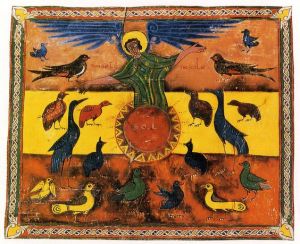 The Maius Workshop is an interdisciplinary group that brings together graduate students and early-career scholars dealing with Hispanic art (broadly considered to include literature, theatre, music, etc.) and history from the Middle Ages to the Early Modern Period. The Maius Workshop is kindly supported by ARTES.
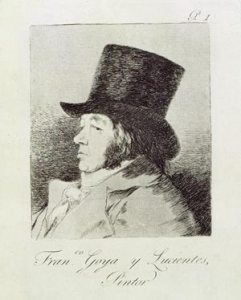 We celebrate with ARTES (Iberian and Latin American Visual Culture Group) the publication of a new edition of Nigel Glendinning’s Goya and his Critics by Dr Sarah Symmons and Dr Jesusa Vega.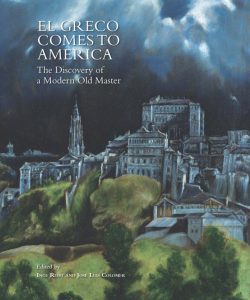
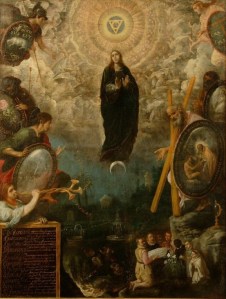 The exhibition Intacta María. Política y religiosidad en la España barroca, opening on 30 November 2017, analyses the process through which devotion to the Immaculate conception was created and popularised in early modern Spain. While the Immaculate Conception only became dogma in 1854, as early as 1616 the Spanish Monarchy became a staunch supporter of the theory, turning its defence into a national priority. In the following years, the Immaculate Conception became Spain’s most heartfelt devotion and a sign of national identity. Art played an important role in this process, amounting to what we may describe as a marketing campaign. This will be the focus of the Museo de Bellas Artes’ forthcoming exhibition, featuring more than 50 paintings, sculptures, prints and books borrowed from notable Spanish museums and churches such as the Museo Nacional de Escultura de Valladolid, the Cathedral of Seville, the Biblioteca Nacional de España, and many others.
 Call for papers: The Courtauld Institute of Art’s 23rd Annual Medieval Postgraduate Colloquium: Collecting (in) the Middle Ages, The Courtauld Institute of Art, 16 February 2017
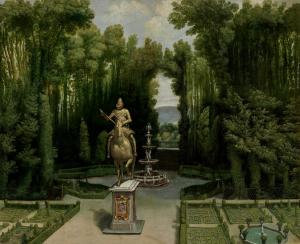 Los últimos veinticinco años han conocido una notable renovación y ampliación de las investigaciones centradas en aspectos diversos del reinado de Felipe III (1598-1621), especialmente, en lo que respecta al estudio del valimiento de Lerma y su influencia cortesana, política y cultural. Se han revisado, además, múltiples cuestiones de la política exterior de la Monarquía en este periodo conocido como la Pax Hispanica. Ahora, en 2017, nos hallamos en Madrid inmersos en la celebración de la construcción de uno de los espacios más emblemáticos de la capital: su Plaza Mayor. Parece este un momento excelente para reflexionar sobre cuáles son los rasgos propios de este periodo, que tantas veces queda ensombrecido por la proyección desmesurada de los longevos reinados que le preceden y que le suceden.

 ARTES
ARTES 