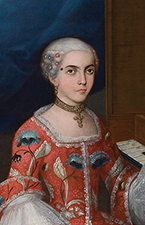
New England / New Spain: Portraiture in the Colonial Americas, 1492-1850, Symposium, Frederick + Jan Mayer Centre, Denver Art Museum, 23-24 January 2015.
Each year, the Denver Art Museum hosts a two-day symposium on a New World topic, alternating between a Pre-Columbian theme one year and a colonial Spanish theme the next year. The 2014 symposium, which has been edged into early 2015, is co-organized by Dr. Donna Pierce, the museum’s curator of Spanish colonial art.
Speakers: Michael A. Brown, Elizabeth Mankin Kornhauser, Clare Kunny, Karl Kusserow, James Middleton, Paula Mues Orts, Susan Rather, Michael J. Schreffler, Jennifer Van Horn, Kaylin Haverstock Weber.
Attendees will also be able to view the recently opened exhibition Glitterati: Portraits and Jewelry from Colonial Latin America.
Medieval Hispanic Research Seminar, London, 2014-2015
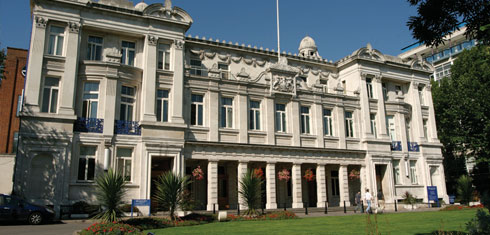
Medieval Hispanic Research Seminar, Queen Mary, University of London, Programme for 2014-2015.
The Research Seminar meets on Fridays at 3pm in room 1.36 of the Arts One Building, Mile End Campus. Papers last 45 minutes and are preceded by tea in The Gallery and followed by discussion.
Semester 1
Friday 21st November 2014 Kati Ihnat, University of Bristol ‘Mother of the Visigothic “Nation”: The Virgin Mary in Early Medieval Iberia’
Friday 12th December 2014 Francisco Bautista, Universidad de Salamanca/University of Cambridge ‘Don Juan Manuel y la herencia literaria de Alfonso X’
Semester 2
Friday 23rd January 2015 Aengus Ward, University of Birmingham ‘Digital editing and the Estoria de Espanna: of xml and crowdsourcers’
Friday 27th February 2015 Sizen Yiacoup, University of Liverpool ‘Movement, Stasis and the Translation of Power in El Viaje de Turquía’
Friday 6th March 2015 Rosanna Cantavella, Universitat de València/University of Cambridge ‘The concept of “worthy rhymes” within the Troubadour poetic tradition’
Friday 27th March 2015 Rachel Scott, QMUL ‘“Esenta y señora”: The Paradox of the Prostitute in Celestina’
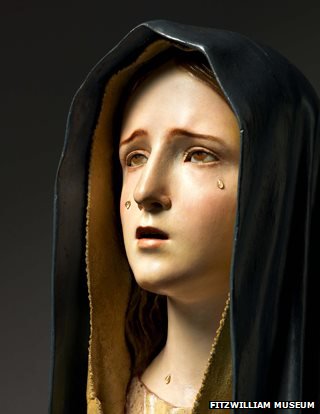
The Fitzwilliam Museum’s fundraising drive to acquire a Mater Dolorosa by Pedro de Mena proves successful
Pedro de Mena’s Virgin of Sorrows (Mater Dolorosa) saved by public appeal
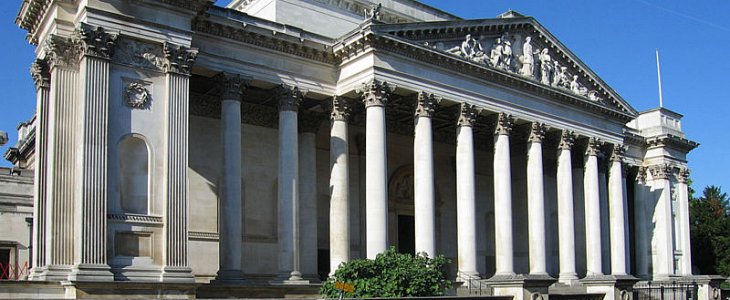
In another example of public philanthropy, the Fitzwilliam Museum in Cambridge has acquired a the Mater Dolorosa (Virgin of Sorrows) by Pedro de Mena. The acquisition had been supported by grants of £30,000 from the Art Fund and £10,000 from The Henry Moore Foundation plus an astonishing £85,000 from the public appeal.
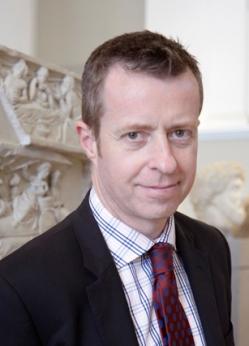
Tim Knox, Director of the Fitzwilliam, said, ‘This has been right to the wire, and every single penny has counted. Our sincere thanks go out to all who donated towards the appeal: you have helped secure an important and beautiful work of art for the nation’. Described as ‘mesmerisingly beautiful, with gently furrowed brows and natural flesh tones’, the bust was probably created for a private chapel, study or bedchamber and might originally have been paired with a similarly-sized bust of the Ecce Homo (Christ as the Man of Sorrows).
Pedro de Mena was taught the art of wood carving by his father, Alonso de Mena (1587—1646), a well-regarded sculptor of traditional religious images in Granada. Following his father’s death, the eighteen-year-old Pedro took over the workshop and was joined by established artist Alonso Cano (1601-67), who taught him how to paint sculpture realistically. As a result, Mena’s statues and busts have a remarkable lifelike quality. Mena left Granada in 1658 and spent the rest of his career in Málaga. He was well regarded by prestigious patrons from church and state and known for his religiosity, for which he was appointed censor of images by the Inquisition in Granada and Málaga.
Association of Art Historians – Annual Conference April 2015 – Call for Papers – Deadline 10 November 2014
AAH2015
41st Annual Conference & Bookfair
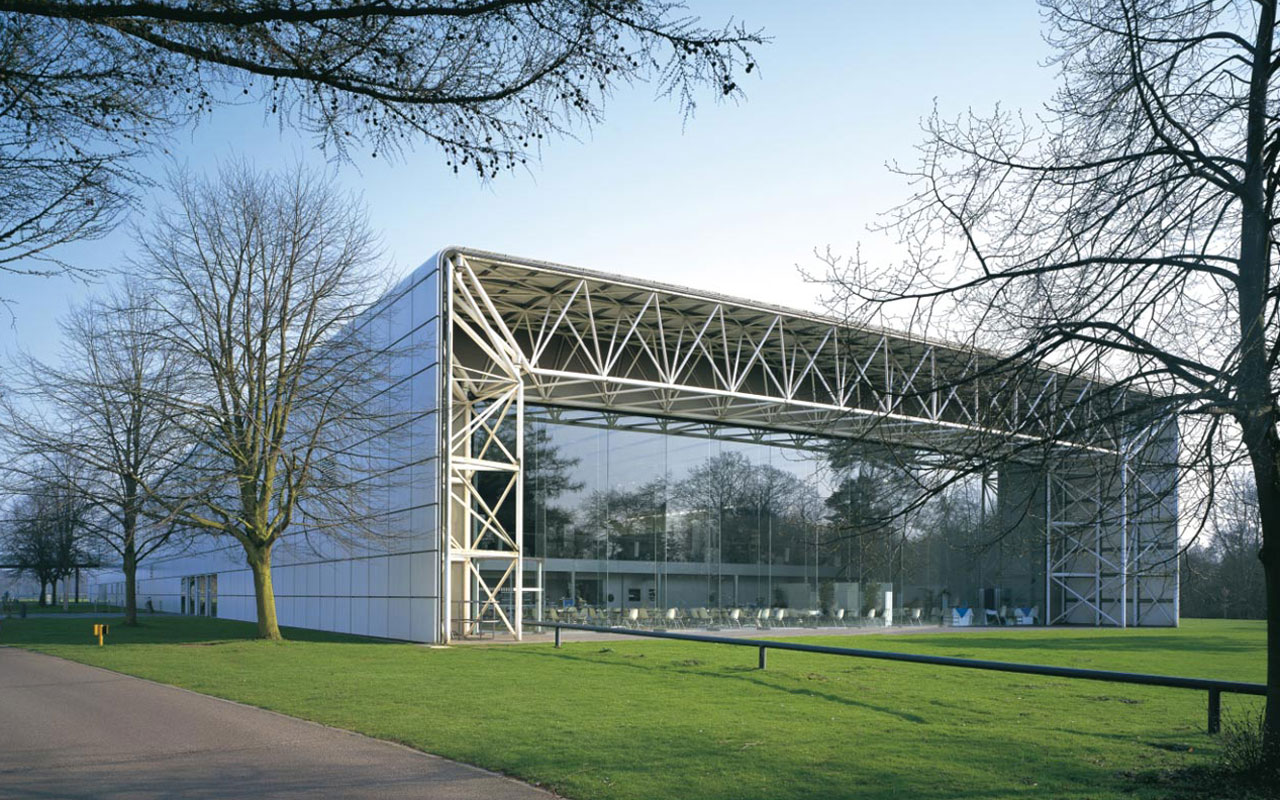
Sainsbury Institute for Art, UEA, Norwich
9 – 11 April 2015
Portraiture and the Unworthy Subject in the Early Modern World
Paper proposals, to be sent to the session convenor in accordance with proposal guidelines.
Paper proposal deadline: 10 November 2014
Session convenor: Carmen Fracchia, Birkbeck, University of London, c.fracchia@bbk.ac.uk
In the early modern period, the production of portraiture was governed by restrictive conventions. According to the first European treatise on portraiture since antiquity (Francisco de Holanda’s Do tirar polo natural [On Taking Portraits from Life], 1548), the essence of the genre was the worthy sitter’s moral or intellectual prestige. Thus, the main function of the portrait image was to immortalise the worthy elite, with the implicit moral understanding that there could be no room for the portrayal of the unworthy subject. What are the political and visual implications of this belief about portraiture? What are the notions of human diversity that prevent the portrayal of undeserving subjects? How are these concepts negotiated in the production of the portrait image outside Europe?
This session aims to build on research by historians of art, literature and the colonial world, and work on slave narratives that illuminate the paradoxical nature of ‘slave portraits’ in the Atlantic World. It intends to explore a wider spectrum of what were considered ‘unworthy subjects’, and the complexity of the mutually exclusive categories of ‘portraiture’ and ‘undeserving subject’. It also seeks to tackle the oxymoronic categories of ‘self-portraiture’ and ‘unworthy subject’, and investigate how notions of human diversity might challenge the boundaries of traditional portraiture and self-portraiture.
Contributions are invited that address the portrayal of ‘undeserving people’ across different media and cultures in the early modern world, as well as the historical context of social inferiority and the ‘undeserving’ between the 15th and the 18th centuries.
– See more at: http://www.aah.org.uk/annual-conference/sessions2015/session24#sthash.8VY0zg3x.dpuf
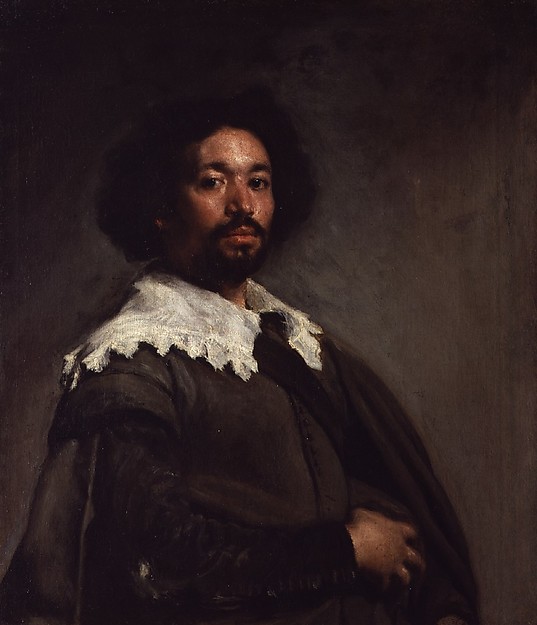
Diego Rodríguez de Silva y Velázquez
Portrait of Juan de Pareja, 1650
oil on canvas
Metropolitan Museum of Art, New York
Spanish Art Symposium – Auckland Castle, The Bowes Museum & Durham University – Thursday 23 October to Saturday 25 October 2014
A symposium on Spanish Art will take place from 23-25 October in Co Durham, highlighting collections in the area and launching a book on treasures of Spanish Art in Country Durham. The three-day event will include exclusive access to view Zurbarán’s Jacob and his Twelve Sons and a conference dinner at Auckland Castle.
Below is a provisional programme for the event (the pdf is available here: Spanish Art Symposium Programme – Co Durham – 23-25 Oct 2014
To book a place, or for further information, please contact:
Rosie Bradford
Groups and Events Co-ordinator
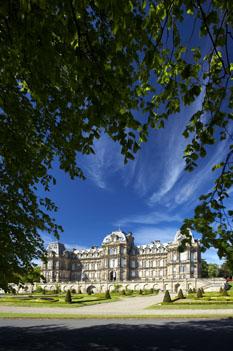
The Bowes Museum
symposium@thebowesmuseum.org.uk
01833 694615
Thursday 23 October 2014
Auckland Castle, Market Place, Bishop Auckland, County Durham, DL14 7NR
Friday 24 October 2014
The Bowes Museum, Barnard Castle, County Durham, DL12 8NP
Saturday 25 October 2014
Palace Green, Durham University, Durham, County Durham, DH1 3RN
Jointly organised by Auckland Castle, The Bowes Museum, and Durham University, this three-day symposium aims to highlight the outstanding collections of Spanish art held in County Durham. Internationally renowned academics and museum professionals will present a wide range of papers that will place these significant collections within their artistic, cultural, and historic context. The symposium will also be an opportunity to consider the reception of seventeenth-century Spanish art in Britain, marking the bicentenary of the arrival of Velázquez’s The Rokeby Venus in Teesdale (now in the National Gallery, London).
County Durham has historically been a hot spot for the collection and display of Spanish art, which fascinated influential figures such as Bishop Richard Trevor, John and Joséphine Bowes, and Frank Hall Standish. Today the results of this interest are to be found in the collections at The Bowes Museum and Auckland Castle, which together represent the most significant UK holdings of Spanish Golden Age art outside of London.
The symposium heralds a wider, long-term vision shared by Auckland Castle, The Bowes Museum, and Durham University, to establish County Durham as a centre for the study of Spanish art in the UK, and as a world-class visitor destination.
El Greco (1541-1641), The Tears of St Peter, 1580-1589, oil on canvas, The Bowes Museum
PROGRAMME
23 October 2014
Auckland Castle
09.30 – 10.00 Registration
10.00 – 10.30
Welcome Remarks
Jonathan Ruffer, Chairman of the Auckland Castle Trust
10.30 – 11.30
Zurbarán and Britain (Title TBC)
Gabriele Finaldi, Associate Director of Curatorship and Research, the Museo del Prado, Madrid
11.30 – 12.00 Coffee Break
12.00 – 13.00
Francisco de Zurbarán’s representations of Saint Francis in the National Gallery
Letizia Treves, Curator of Italian and Spanish Paintings 1600-1800, The National Gallery, London
13.00 – 14.30 Lunch – Tours of proposed Spanish Art Gallery site in Bishop Auckland Market Place
14.30 – 15.30
The Sons of Jacob: the first dysfunctional family why did Zurbarán paint them?
Alastair Laing, former Curator of Pictures and Sculpture, The National Trust
Thomas Gainsborough’s response to the work of Spanish masters
Anthony Mould, Fine Art Agent and Dealer specialising in British Art
15.30 – 16.00 Refreshments
16.00 – 17.00
The Museo del Prado and the visual construction of the history of Spanish painting in the nineteenth century
Javier Portús, Senior Curator of Spanish Painting, Museo del Prado, Madrid
17.00 – 17.45 Concluding Remarks
18.00 – 19.00 Drinks Reception and Book Launch
19.00 – 22.00 Conference Dinner
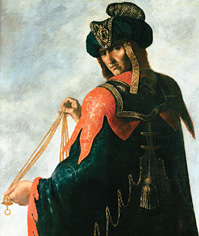
Francisco de Zurbarán (1598-1664), Levi, 1640-45, oil on canvas, Auckland Castle, Bishop Auckland, Co Durham
24 October 2014
The Bowes Museum
09.30 – 09.45
Welcome and Introduction
Adrian Jenkins, Director of The Bowes Museum
09.45 – 10.25
Art collecting as a language of friendship and affinity between England and Spain
during the seventeenth century
Toby Osborne, Senior Lecturer in History, Durham University
10.25 – 11.05
Spanish masters and the spoils of war: the circulation of Spanish art in the era of Napoleon
Tom Stammers, Lecturer in History, Durham University
11.05 – 11.30 Coffee Break
11.30 – 12.10
Preliminary thoughts on materiality and spirituality in the works of Francisco de Zurbarán
Cordula van Whye, Lecturer in History of Art, University of York
12.10 – 12.50
Madrid’s monastic, artistic, and cultural heritage before the Confiscation of 1835. Report by the Royal Academy of Fine Arts of San Fernando
Itziar Aranna, Research Fellow, Academia de San Fernando,
12.50 – 14.00 Lunch – optional tours of the Museum
14.00 – 14.30
Frank Hall Standish (1799-1840), Collector of Durham, Duxbury and Seville
Howard Coutts, Keeper of Ceramics, The Bowes Museum
14.30 – 15.00
Frank Hall Standish and his paintings acquisitions in Seville
Xanthe Brooke, Senior Curator (Continental European Fine Art), Walker Art Gallery, Liverpool
15.00 – 15.40
John Bowes and the sale of the Quinto Collection: an opportunity or a question of taste?
Véronique Gérard Powell, Senior Lecturer (Honorary) University of Paris-Sorbonne
15.40 – 16.15 Tea Break
16.15 – 16.45 Closing Remarks
17.00 – 18.00 Tours of Picture Gallery and Exhibition
18.00 – 22.00 Drinks Reception and Conference Dinner
25 October 2014
Durham University
09.30 ‒ 09.45 Arrival and Coffee
09.45 ‒ 10.15
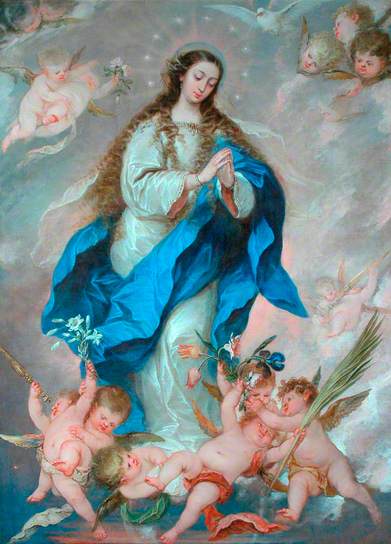
Sugar and spice and all things nice: José Antolínez and the Immaculate Virgin of the Bowes Museum
Lesley K. Twomey, Reader in Medieval and Golden Age Iberian Art, University of Northumbria
10.15 ‒ 10.45
Sacred skin: the martyrdom of St Bartholomew in Spanish Golden Age art
Andy Beresford, Professor of Spanish, Durham University
10.45 ‒ 11.10 Coffee Break
11.10 ‒ 11.40
The art of Seville and the collection of a scholar: Stirling Maxwell and the Fiestas de Sevilla
Hilary Macartney, Lecturer in Hispanic Art, University of Glasgow
11.40 ‒ 12.10
In the wake of Colonna and Mitelli: Quadratura in the Court of the Last Habsburg
Jeremy Robbins, Forbes Chair of Spanish, University of Edinburgh
12.10 ‒ 12.40
Spanish art and the Catholic Revival in Britain
Stefano Cracolici, Reader in Italian, Durham University
12.40 ‒ 13.30 Lunch
13.30 ‒ 14.30 Round Table Discussion
‘Engaging public interest in Spanish religious art’
14.45 ‒ 15.30 Optional Tour of Durham Castle Collection
The Fitzwilliam Museum in fundraising drive to acquire a Mater Dolorosa by Pedro de Mena
A sculpture by Pedro de Mena (b. Granada 1628 – d. Malaga 1688) of the Mater Dolorosa or Virgin of Sorrows has gone on display at The Fitzwilliam in Cambridge in a drive to help publicise the Museum’s funding-raising appeal for the acquisition of the work.
Tim Knox Director of the Museum, who has kindly entertained a group of ARTES members at his home, commented to the BBC , “Much of Mena’s work was destroyed during the Spanish Civil War and there is not a single autograph piece by Mena in a UK museum. The Mater Dolorosa [Virgin of Sorrows] would be a fantastic addition to our small but significant collection of… wood sculpture.”
This polychrome wood bust of the Virgin is an outstanding and rare example of the sculptor’s work. Very few pieces by de Mena are to be found anywhere except in the churches, monasteries and convents for which they were originally commissioned. This particular work was most probably made for private devotional purposes and would have been part of a pair with an Ecce Homo.
The Fitzwilliam has already raised nearly £60,000 towards the purchase of this work but it still needs to secure a further £25,000 before the end of this coming month (September 2014). If you would like to give something to help, please go to the online donation site Just Giving or contact Sue Rhodes, Development Officer by email at Sue Rhodes or call 01223 332939.
ARTES Malta visit: Wed 5 November – Mon 10 November 2014
ARTES is visiting Malta from 5-10 November 2014. This visit is being organised by Marjorie Trusted of the V&A (ARTES Hon Vice-President) and Giuseppe Schembri Bonaci of the University of Malta (ARTES member). The programme is detailed below and includes a symposium on Spanish Baroque Art in Malta being hosted by the Spanish Embassy.

ARTES Visit to Malta: 5 – 10 November 2014
Programme
Wednesday 5 November
Day: Arrival
Evening: 5.30 pm – Talk by Fr Dun Edgar Vella
The Baroque Neapolitan Crib in Malta
Followed by drinks reception and dinner
Thursday 6 November
Day Spanish Art on Malta Symposium at the Spanish Embassy
See link below for the provisional schedule:
Spanish Art on Malta Symposium – Thurs 6 Nov 2014
Evening Reception at the Spanish Embassy
Friday 7 November
Day Visit to St John’s Co-Cathedral with Professor Keith Sciberras
Followed by tour of Valletta (including the Wignacourt Museum)
Lunch With transport to Mdina
Afternoon Visit to Mdina Cathedral Museum with Fr. Dun Edgar Vella
& to St Paul’s Church, Rabat
Evening Santa Caterina Church, Valletta & Lecture by Peter Vassallo
The Sojourn of Ángel de Saavedra, Duque de Rivas, in Malta (1825-30)
& the Composition of Al faro de Malta and El moro expósito
Saturday 8 November
Day Visit to Gozo to see churches & private collections with Mark Sagona
Sunday 9 November
Day Three cities tour
Lunch at Vittoriosa Quay
Afternoon Visit to National Museum of Fine Arts
& St Paul’s Shipwreck Church
Monday 10 November
Departure

Sevilla – Simposio internacional sobre El joven Velázquez 15-17 octubre de 2014
Un simposio internacional sobre El joven Velázquez tendrá lugar en el Instituto de la Cultura y las Artes de Sevilla (ICAS), del 15 al 17 de octubre de 2014, bajo la dirección científica y coordinación de Benito Navarrete Prieto Universidad de Alcalá
contacto: Francesca Ortiz fortiz.cultura@sevilla.org
PROGRAMA
15 de octubre (tarde) 17:00
Presentación del simposio a cargo de Juan Ignacio Zoido, Alcalde de Sevilla, Salvador Medina, Santander Universidades y Jock Reynolds, Director de la Yale Art Gallery University.
Conferencia inaugural Salón Colón del Ayuntamiento de Sevilla 18:00
Xavier Salomon Chief Curator of The Frick Collection NY 18:00
El joven Ribera y el joven Velázquez
Espacio de Santa Clara
Sevilla en tiempos de Velázquez
Carlos Alberto Sánchez Universidad de Sevilla 19:30
De la pluma al pincel. Retóricas gráficas de la época de Velázquez
Alfredo Morales Universidad de Sevilla 20:00
“Un olor de ciudad, un otro no se que”. Arquitecturas de la Sevilla de Velázquez
16 de octubre (mañana)
La cultura y los círculos intelectuales
Vicente Lleó Cañal Universidad de Sevilla 10:00
El joven Velázquez y el círculo de Olivares
Fernando Marías Universidad Autónoma de Madrid 10:30
Materia, objetos y pintura en Velázquez
Luis Méndez Rodríguez Universidad de Sevilla 11:00
La cultura sevillana en la formación de Diego Velázquez
Tanya Tiffany Milwaukee University EEUU 11:30
El Retrato de Madre Jerónima de la Fuente de Velázquez y el Convento de Santa Clara de Sevilla
Descanso 12:00
Jeremy Roe Honorary Research Fellow University of Nottingham 12:30
La recepción de la pintura por el espectador culto: testimonios del “Arte de la Pintura” entre otras fuentes
Peter Cherry Trinity College Dublín 13:00
Velázquez el sevillano y el arte del retrato
16 de octubre (tarde)
La formación del genio. Pacheco y la cárcel dorada del arte
Bonaventura Bassegoda i Hugas Universidad Autónoma de Barcelona 16:30
Velázquez visto por Pacheco: de la perplejidad a la admiración
José Riello Universidad Autónoma de Madrid 17:00
El Greco y Velázquez: afinidades electivas
Enrique Valdivieso Universidad de Sevilla 17:30
Francisco Pacheco, maestro de Velázquez
Ignacio Cano Museo de Bellas Artes de Sevilla 18:00
El retrato como fundamento en Pacheco y Velázquez
Antonio Martínez Ripoll Universidad de Alcalá 18:30
Educación y aprendizaje. Diego Velázquez, pintor autodidacta
Descanso 19:00
José Roda Peña Universidad de Sevilla 19:30
La iconografía de Santa Ana enseñando a leer a la Virgen y sus modelos escultóricos en Sevilla
Odile Delenda Wildenstein Institute París 20:00
La educación de la Virgen: problemas de iconografía
17 de octubre (mañana)
Las formas y las obras: más allá de la pintura
José Manuel Cruz Valdovinos Universidad Complutense de Madrid 10:00
Constantes y variantes en la pintura sevillana de Velázquez
Salvador Salort Pons Detroit Institute of Art (EEUU) 10:30
Velázquez y el Bodegón
Guillaume Kientz Museo del Louvre 11:00
Velázquez y el caravaggismo
Xavier Bray Dulwich Picture Gallery. London 11:30
Velázquez y la escultura policromada
Descanso 12:00
Véronique Gérard Powell Universidad de la Sorbona 12:30
¿Por qué perdimos de Sevilla las pinturas del joven Velázquez?
17 de octubre (tarde)
La técnica pictórica
Carmen Garrido Museo del Prado 17:00
Estudio técnico de la Inmaculada de la Fundación Focus-Abengoa
Jaime García Mahiquez Museo del Prado 17:30
Los calcos de Velázquez
Valme Muñoz Museo de Bellas Artes de Sevilla 18:00
Estudio técnico de la “Santa Ana enseñando a leer a la Virgen” de Juan de Roelas: confluencias y disonancias con Velázquez
Mesa Redonda de Clausura: La Educación de la Virgen de Yale restaurada 18:30
John Marciari Independent Curator. Baltimore (EEUU)
Ian McClure Yale Art Gallery. Yale University (EEUU) 19:45
Carmen Albendea Yale Art Gallery. Yale University (EEUU)
Lawrence Kanter Yale Art Gallery. Yale University (EEUU)
Javier Portús Museo del Prado
Artes Coll & Cortés Scholarships Awards Ceremony, London, 30 September 2014
ARTES Coll & Cortés Scholarships Awards Ceremony, Embassy of Spain, 39 Chesham Place, London SW1X 8SB, Tuesday, 30 September, 6:00-7:30PM. (ARTES members and members’ named guests only.) Thanks to the generous support of art dealers Coll & Cortés, ARTES awards a number of scholarships each year to students working on any aspect of Spanish, Portuguese or Latin American visual culture before 1800. Please join us as we celebrate the achievements of our first scholars at this special ceremony and drinks reception. RSVP Morlin Ellis: <artesiberia@gmail.com>. Please note: Photographic ID will be needed for entry.
10th London Spanish Film Festival 25 September – 5 October 2014
This is the 10th year of the London Spanish Film Festival and for 10 days there will be a wealth of film screenings, talks, tertulias, book presentations and Q&As with filmmakers and actors.
This year includes some delightful comedies, such as the opening film, Tres bodas de más, and Sánchez Arévalo’s latest comedy-drama, La gran familia española. Some films will offer glimpses into every-day life in Spain, such as Historias de Lavapiés or Os fenomenos. Others will examine the current situation in Spanish cinema, as well as its future (the Love Letter to Cinema section).
The relationship between food and film is something that has often been explored in cinema over the last few years – both in Spain and beyond. This there will be some more “culinary cinema” on offer, with The Food Guide to Love and El somni.
The Sixth Catalan Window will once more offer a glimpse into what has been produced in Catalonia – and the wealth of talent and craft there – with a small but strong selection of films such as producer Lluis Miñarro‘s first feature film, Stella Cadente, or Pau Teixidor‘s tense thriller Purgatorio.
The Strength of Basque cinema will be celebrated in the Fifth Basque Window, offering – among other long and short films – Las brujas de Zugarramurdi, another demonstration of Álex de la Iglesia‘s distinctive and fascinating style. There will also be a special session with the screening of three short films showing two American filmmakers’ vision of the Basque Country: Orson Welles and Cyrus Sutton.
Sophisticated but controversial, Vicente Aranda is one of Spain’s most renowned filmmakers, and his films – exploring such themes as jealousy, sexual desire or complex social issues – have become cinematic classics. Taking the Prada brothers’ documentary, Vicente Aranda: 50 años de cine, as a starting point, there is a special feature dedicated to him in which some of the most important films of his career are explored. In addition to this there will be an exclusive stage interview with him.
Last but not least, there is once again a treasure from the archives, which this year will be La vida en un hilo, a delightful screwball comedy by Hollywood devotee Edgar Neville, with Conchita Montes, one of Spain’s most popular actresses in the 1940s and ‘50s.
Film screenings and events will take place at the Ciné Lumière at the Insitut Français in South Kensington and the Instituto Cervantes just off Eaton Square.
The London Spanish Film Festival is organised by Joana Granero of Tristana Media in collaboration with the Institut Français, the Cultural Office of the Spanish Embassy and the Instituto Cervantes.
For the full programme go to: www.londonspanishfilmfestival.com
For further information, please, contact:
at the London Spanish Film Festival:
Noemi Cuetos Fernández noemi@tristanamedia.com
Giulio Olesen 07472326740 office@londonspanishfilmfestival.com
at Ciné Lumière:
Natacha Antolini natacha.antolini@institutfrancais.org.uk
Justine Goy 020 7871 3521 justine.goy@institutfrancais.org.uk