Previously at the Prado, a monographic exhibition of some 48 works by Bartolomé Bermejo, one of Spain’s leading 15th-century painters, has recently re-opened at the MNAC in Barcelona. It will be on show until 19 May. Click here for more information.
To complement the exhibitions, two 50-minute lectures given at the Prado during the Bermejo exhibition are available on You Tube. The first lecture (click here) was given by Laura Alba, head of the Prado’s conservation studio, and Maite Jover. It focuses on Bermejo’s skilled technique. The second (click here) features the lead curator of the collaborative Prado/MNAC exhibition, Juan Molina of Gerona University.
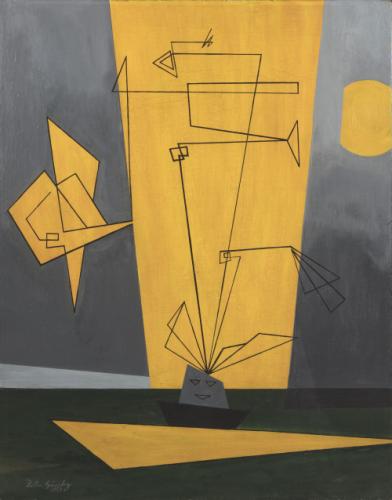
Zilia Sánchez Afrocubano (1957) Oil on canvas, 27 ½ × 21 ½ in., Private collection, Madrid
The Phillips Collection presents the first museum retrospective of Cuban artist Zilia Sánchez (b. 1926, Havana). This long-overdue exhibition examines the artist’s prolific yet largely unknown career that spans almost 70 years, featuring more than 60 works including paintings, works on paper, shaped canvases, and sculptural pieces, alongside illustrations, design sketches, and ephemera. The exhibition traces Sánchez’s artistic journey from her early days in Cuba to her extended visits to Europe and residence in New York, and finally her move to Puerto Rico, where she now lives and works. Many of Sánchez’s works reference protagonists from ancient mythology (such as Trojans, Amazonians, and Antigone—all warriors and female heroines). Others have reoccurring motifs of lunar shapes, erotic topologies, and tattoo drawings that map physical and psychological spaces and add another dimension to her curvilinear geometry, rich with metaphorical meaning. The exhibition title, Soy Isla (I Am an Island), serves as a personal metaphor for Sanchez’s experience as an islander—connected to and disconnected from both the mainland and mainstream art currents.
The next meeting of the Maius Workshop will take place on 18 February, 5–6pm, in the Research Forum, Courtauld Institute of Art, Vernon Square, Penton Rise, Kings Cross, London WC1X 9EW (*Please note the change of address).
Alex Letvin, Andrew W. Mellon and Maude de Schauensee Postdoctoral Curatorial Fellow in the Department of European Painting and Sculpture at the Philadelphia Museum of Art, will discuss work-in-progress research on Spanish Golden Age painters Zurbarán and Murillo.
Maius is a friendly platform for informal dialogue and collaborative research. Our sessions are open to all, and research in early stages of development is especially welcome. We look forward to seeing you at Alex’s presentation, and please feel free to email us with ideas and suggestions for future events.
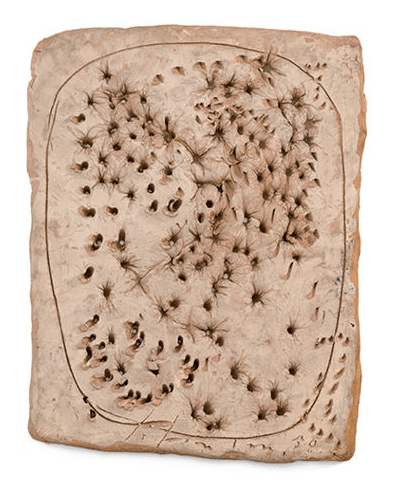
Spatial Concept, The Bread (Concetto Spaziale, Il Pane) Lucio Fontana (Italian, 1899–1968) | Fondazione Lucio Fontana, Milan
The first major survey of Lucio Fontana (1899–1968) in the United States in more than forty years, this exhibition will reexamine the career of one of the most innovative artists of the twentieth century. The Argentine-Italian artist is widely known for his Cuts series, slashed paintings that became symbols of the postwar era. The exhibition will present extraordinary examples of this iconic body of work. It will also explore Fontana’s beginnings as a sculptor, including his exquisite work in ceramic, as well as his pioneering environments, contextualizing the radical gesture of his Cuts as part of the artist’s broader search to integrate the space of art and the space of the viewer.
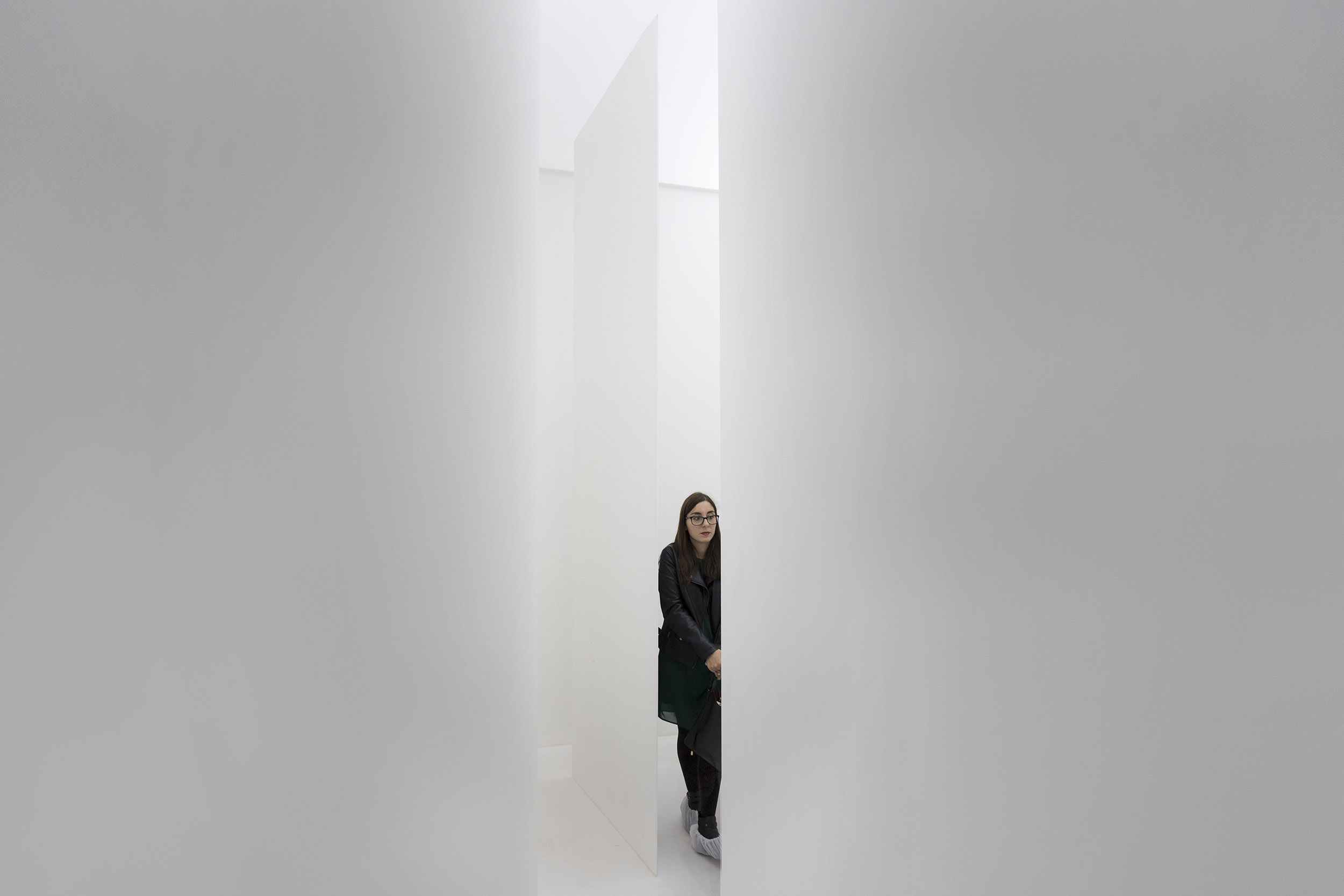
Another striking work by Fontana will is on show at El Museo del Barrio during the run of the Met exhibition. Presented at Documenta 4 in Kassel, Germany, in 1968, Spatial Environment [Ambiente Spaziale] is an immersive, all-white, labyrinthine work of art conceived in relation to the artist’s innovative Spatialism movement.
ARTES warmly congratulates Ana Dias on a successful viva of her PhD thesis, ‘The Apocalypse in early medieval Iberia: the function and impact of the illuminated “Beatus”’. Ana’s research at Durham University was supported by ARTES through a PhD Scholarship (2015) and an ARTES Coll&Cortes Travel Scholarship (2017).
ARTES is a Registered Charity (no. 1112883) dedicated to raising awareness and understanding of Iberian and Latin American Visual Culture. You can support our work by becoming a member of our friendly, enthusiastic and international community.
The Meadows Museum, SMU, Dallas, has announced that the Center for Spain in America (CSA) will support the museum’s pre-doctoral curatorial fellowship for 2019–2020. Established in 2011, the pre-doctoral fellowship provides an intensive scholarly, professional experience with the opportunity to research Spanish art at the Meadows and other national and international institutions.
CSA will also underwrite the catalog for the forthcoming exhibition Alonso Berruguete: First Sculptor of Renaissance Spain(National Gallery of Art, October 13, 2019–February 17, 2020; Meadows Museum, March 29–July 26, 2020). It will be the first general book on Berruguete published in English.
The New York-based CSA fosters the study of Spanish history, art and literature by creating and funding doctoral fellowships at European and American universities, as well as research centers with archival and bibliographical material relevant to the field of Hispanism. The Center and its Spanish counterpart, Centro de Estudios Europa Hispánica (CEEH), have collaborated with the Meadows Museum on several projects prior to this announcement, including the exhibition and catalog for The Lost Manuscripts from the Sistine Chapel: An Epic Journey from Rome to Toledo (2011); the exhibition and catalog for The Spanish Gesture: Drawings From Murillo to Goya in the Hamburger Kunsthalle (2014); Sorolla in America: Friends and Patrons (2015), a study of the major collectors of Sorolla’s work; and the catalog for Zurbarán: Jacob and His Twelve Sons, Paintings from Auckland Castle.
Students wishing to apply for the CSA Curatorial Fellowship can find more information on the Meadows Museum’s website.
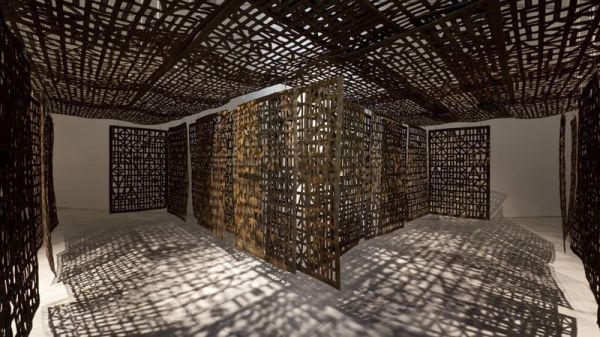
Corredor Suspendido I, 2006 925 x 795 cm Hierro dulce trenzado, cables de acero y sombra. Vista de instalación Museo Nacional Centro de Arte Reina Sofía, 2013 Foto: Attilio Maranzano
A recipient of Spain’s National Visual Arts Award in 1999, Cristina Iglesias (San Sebastián, 1956) is an internationally renowned Spanish artist. This exhibition consists of a huge collection of pieces that will be on display on the second floor of the west wing of the Centro Botín. Well-known for her sculptural pieces with hanging pavilions, latticework, corridors and labyrinths, Iglesias combines industrial materials and natural elements to create unusual, experiential spaces.
Cristina Iglesias has developed a close relationship with the Fundación Botín and its recently opened arts centre in Santander. This relationship translated into a site-specific sculptural intervention at the Centro Botín and the Pereda Gardens, titled Desde lo subterráneo (From the Underground), which features four pools and a pond in stone, iron and water. Moreover, in September 2018, Iglesias led a Villa Iris Visual Arts Workshop, an annual project sponsored by the Botín Foundation since 1994. The latest grand exhibition by Cristina Iglesias in Spain was on at the Reina Sofía Museum and Arts Centre in 2013. Her upcoming exhibition at the Centro Botín will offer a great chance to enjoy both her older and more recent pieces.
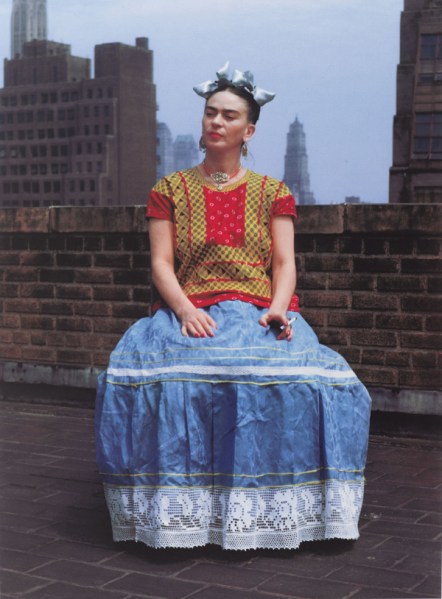
Mexican artist Frida Kahlo’s unique and immediately recognizable style was an integral part of her identity. Kahlo came to define herself through her ethnicity, disability, and politics, all of which were at the heart of her work. Frida Kahlo: Appearances Can Be Deceiving is the largest U.S. exhibition in ten years devoted to the iconic painter and the first in the United States to display a collection of her clothing and other personal possessions, which were rediscovered and inventoried in 2004 after being locked away since Kahlo’s death, in 1954. They are displayed alongside important paintings, drawings, and photographs from the celebrated Jacques and Natasha Gelman Collection of 20th Century Mexican Art, as well as related historical film and ephemera. To highlight the collecting interests of Kahlo and her husband, muralist Diego Rivera, works from the museum’s extensive holdings of Mesoamerican art are also included.
Kahlo’s personal artifacts—which range from noteworthy examples of Kahlo’s Tehuana clothing, contemporary and pre-Colonial jewelry, and some of the many hand-painted corsets and prosthetics used by the artist during her lifetime—had been stored in the Casa Azul (Blue House), the longtime Mexico City home of Kahlo and Rivera, who had stipulated that their possessions not be disclosed until 15 years after Rivera’s death. The objects shed new light on how Kahlo crafted her appearance and shaped her personal and public identity to reflect her cultural heritage and political beliefs, while also addressing and incorporating her physical disabilities.
Frida Kahlo: Appearances Can Be Deceiving is based on an exhibition at the V&A London curated by Claire Wilcox and Circe Henestrosa, with Gannit Ankori as curatorial advisor. Their continued participation has been essential to presenting the Brooklyn exhibition, which is organized by Catherine Morris, Sackler Senior Curator for the Elizabeth A. Sackler Center for Feminist Art, and Lisa Small, Senior Curator, European Art, Brooklyn Museum, in collaboration with the Banco de México Diego Rivera and Frida Kahlo Museums Trust, and The Jacques and Natasha Gelman Collection of 20th Century Mexican Art and The Vergel Foundation.
In 2019, as an exceptional cultural highlight, the Fondation Beyeler is mounting a unique exhibition devoted to Pablo Picasso’s masterpieces of his early Blue and Rose periods. This will be the most comprehensive presentation ever seen in Europe of Picasso’s paintings and sculptures from 1901 to 1906, each one of which is a milestone on the road to recognition as the twentieth century’s paramount artist. Picasso’s pictures from this period are counted among the most beautiful examples of modern art and are certainly some of the most valuable art works anywhere in the world.
At the age of just twenty, the aspiring genius Picasso (1881 – 1973) was already engaged in a restless search for new themes and forms of expression, which he immediately brought to perfection. One artistic revolution followed another, in a rapid succession of changing styles and visual worlds. The forthcoming exhibition at the Fondation Beyeler places the focus on the Blue and Rose periods, and thus on a central phase in Picasso’s work. It also sheds fresh light on the emergence, from 1907 onward, of Cubism, as an epochal new movement that was nevertheless rooted in the art of the preceding period.
In these poignant and magical works, realized in Spain and France, Picasso – the artist of the century – creates images that have a universal evocative power. Matters of existential significance, such as life, love, sexuality, fate, and death, find their embodiment in the delicate beauty of young women and men, but also in depictions of children and old people who carry within them happiness and joy, accompanied by sadness.
The exhibition features around 75 masterpieces on loan from major museums and private collections worldwide. In a multimedia space, fascinating and interactive books and a film allow visitors to immerse themselves in the young artist’s life and work.
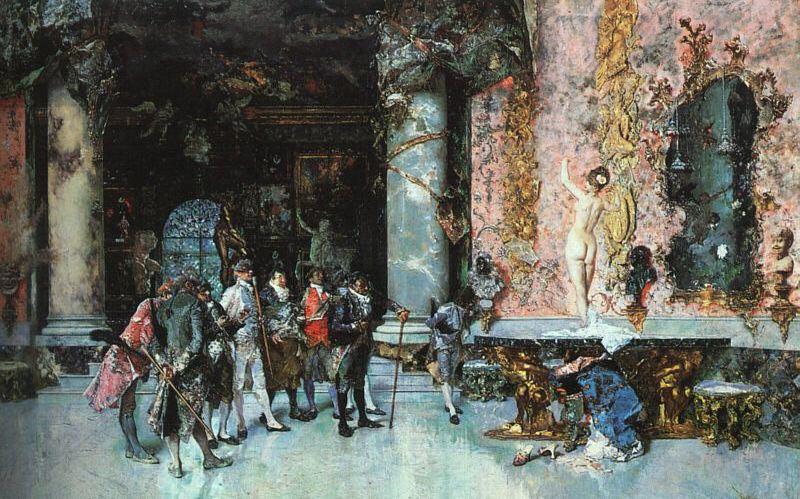
Mariano Fortuny y Marsal (Spanish, 1838–1874), The Choice of a Model, 1868–74. Oil on wood. National Gallery of Art, Washington. Corcoran Collection (William A. Clark Collection), 2015.143.12.
A painting by Mariano Fortuny y Marsal (1838–1874), The Choice of a Model (1868–74), is on long-term loan from the National Gallery of Art, DC, to the Meadows Museum. In honor of this prestigious loan, the Museum will host an exhibition dedicated to Fortuny and his world, drawing from its rich holdings of works on paper as well as key loans from private and public collections, including the Dallas Museum of Art and the Museum of Fine Arts, Houston, in order to showcase many of the friends, family, and followers who engaged with the popular Spanish painter’s work. Fortuny’s paintings were especially prized by nineteenth-century American collectors as well as by contemporaneous artists. The legacy of that popularity resonates with the distinctly American provenance of both the Meadows’s Beach at Portici and the National Gallery’s The Choice of a Model, and their current ownership by American museums.
Though today Fortuny is lesser known outside the country of his birth, the Spanish painter was extremely popular in both Europe and the United States during his lifetime and well into the early twentieth century. Imitators of his characteristically proto-Impressionist, painterly style and eclectic, “exotic” genre scenes were so plentiful that their style came to be described with its very own “ism”: “Fortunismo” (Fortuny-ism). Fortuny: Friends and Followers explores that legacy by bringing together a diverse group of artists, including the important French artists Jean-Léon Gérôme (1824–1904), James Tissot (1836–1902), Jean Louis Ernest Meissonier (1815– 1891). Fortuny’s sphere of influence is explored through a variety of themes including intimate representations of family and home, trends of modern life in European cosmopolitan centers like Paris and Venice, cultural arts from Spain and beyond, and much more.





 ARTES
ARTES 