Skip to content
ARTES

ARTES

Iberian & Latin American Visual Culture Group

  • About Us
    • Who we are
    • The ARTES Committee
    • ARTES Annual Report
  • Events
    • In Person Events
    • Online Programme
    • Event Videos
  • Awards
    • ARTES CEEH Scholarships
    • Juan Facundo Riaño Essay Medal
    • ARTES Travel Scholarship for Artists
  • Publications
    • InformARTES
    • Hispanic Research Journal
    • CEEH/ARTES Publications
  • Useful Information
    • Links
    • 3D Models
  • Join Us
  • News

ARTES Coll & Cortés Travel Scholarship report: Pablo Ordás (PhD, Universidade de Santiago de Compostela, 2017)

My name is Pablo Ordás and I was granted an ARTES Coll & Cortés Travel Scholarship to conduct research in the UK. Thanks to this scholarship I was able to spend three weeks (22/10/2018–10/11/2018) at The British Library, researching Spanish manuscripts closely related to my previous PhD research, dedicated to ‘The Gothic Cloister in the Kingdom of León: Spaces, Destinies and Images’.
dav
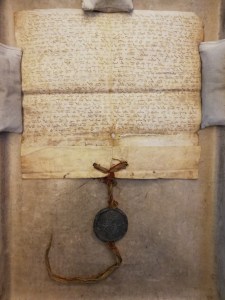
British Library, Add Ch 24807. Copyright: British Library

The British Library houses a small but very interesting collection of Spanish charters (Add Ch 24802–24815 & 24819) that date back from the reign of Alfonso IX of León (†1230) to a papal confirmation of Innocent VIII (†1492). Because of my previous research I was especially interested in the two confirmation of privileges granted by Alfonso XI, for different reasons: Add Ch 24805 preserves the lead seal of the king, something exceptional since most of the documents were stripped of their seals in the following centuries; Add Ch 24807 is a confirmation of previous privileges that were confirmed by the king’s father, Fernando IV (†1312) and that date back to his grandfather Sancho IV (†1295). Remarkably, the first 9 lines of the latter document are a series of intitulationes that describe the original documents. Another interesting aspect is that this charter was given during the tutorship of the infantes don Pedro and don Juan, Alfonso XI’s uncle that died in the Disaster of the Vega de Granada in 1319. The rarity of royal confirmations during the minority of age of the king and this first tutoría (1312–1319) make this document exceptional.
dav
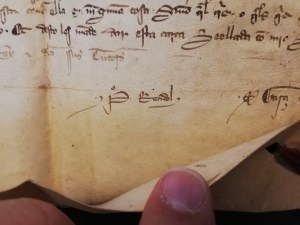
Detail of British Library, Add Ch 24807. Copyright: British Library

A real surprise came under the fold at the bottom of the parchment, where the name of Pedro Rendol is mentioned. Pedro Rendol is a somewhat obscure character that paid an important role in the rebellion of 1296 when infante don Juan el de Tarifa (†1319) and Alfonso de la Cerda (†1333) claimed the crowns of León and Castile respectively. Apparently don Juan was crowned at León, with the agreement of the clergy and the city council, thanks, among others, to Pedro Rendol. When the rebellion was suppressed and Fernando IV punished its most important leaders, Pedro Rendol’s possessions were confiscated but he managed to remain a relevant player in Castilian politics. His presence in this royal charter, next to his former patron infant don Juan, proves it.

Add Ch 28406 is the testament of Doña Blanca de Portugal, abbess of the monastery of Las Huelgas de Burgos. I was interested in the fragments of a wax pendant seal that are still attached to the silk threads hanging from the document. The condition of wax seals such as this is generally worse than that of lead seals. This example no exception: the seal is broken and only the upper half is preserved.

Finally, I was able to work with a very remarkable manuscript, the Primera Partida by king Alfonso X (Ms Add 20787). The miniatures of this manuscript have been barely studied and only a monography from the 1970s (Juan Antonio Arias Bonet, Alfonso X el Sabio: Primera Partida según el manuscrito Add. 20.787 del British Museum, Valladolid,  1975) is dedicated to this exceptional book. The volume is illuminated with 26 miniatures, from capital letters (7) to vignettes (19) that are used as visual representations of the following tituli.

Fig. 3
The Law Code of King Alfonso X (‘el Sabio’), Primera Partida, British Library, Add 20787. Copyright: British Library

The book is usually related to the same workshop that illuminated the most famous of Alfonso’s literary productions, the Cantigas de Santa María. However, some questions arise from a study of the manuscript’s miniatures: no traces of the Cantigas’ characteristic frames with royal arms are present in the British Library manuscript; illustrations related to the reigns of Alfonso X’ (1252–1284) and his son Sancho IV (1284–1295), always depict the the king beardless, something that would become common under the reigns of Fernando IV (1295–1312) and Alfonso XI (1312–1350). Could this be a later manuscript that follows the aesthetic path of the Cantigas? A deeper study should be undertaken in order to answer this question. So far we can only attest to the importance of the volume’s iconography and the close relationship between the miniatures and the text.

I am sure that these documents will make my research richer and I will be able to include this information in my future research. The charters related to Alfonso XI and Doña Blanca are of particular importance for the history of León cathedral.

To conclude, I am indebted to Dr. Tom Nickson from The Courtauld Institute for his support and guidance, and for organising the seminar Art, music and ceremony in Medieval Castile at Trinity College (Cambridge, 29/10/2018) while I was in the United Kingdom. Finally, I would like to express my sincere gratitude to ARTES and Coll & Cortés for their generous support, without which this stay would have been impossible.
Posted bycostanzabeltramiDecember 9, 2018Posted inScholarships, UncategorizedTags:Alfonso X, Alfonso XI, Artes, ARTES Coll & Cortés Travel Scholarship, British Library, charters, Coll & Cortes, Doña Blanca de Portugal, Jobs & Funding, lead seals, León cathedral, manuscript studies, manuscripts, medieval history, medieval studies, Middle Ages, Pablo Ordás, Pedro Rendol, pendant seals, Primera Partida, seals, spanish history, travel grant, travel scholarship, wax sealsLeave a comment on ARTES Coll & Cortés Travel Scholarship report: Pablo Ordás (PhD, Universidade de Santiago de Compostela, 2017)

Featured Exhibition: Roma en México/México en Roma: las academias de arte entre Europa y el Nuevo Mundo (1843–1867), Museo Nacional de San Carlos, Mexico City, until April 28, 2019

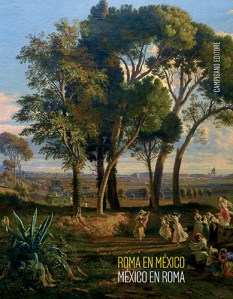
cop_0174The exhibition Roma en México/México en Roma: las academias de arte entre Europa y el Nuevo Mundo (1843–1867) presents the academic and artistic exchange between Italy and Mexico through 93 nineteenth-century works. It focuses on the relations between the Accademia de San Luca and the Academia de San Carlos, and presents the results of an extensive research project by Professor Stefano Cracolici, Director of the Zurbarán Centre for Spanish and Latin American Art at Durham University, and Professor Giovanna Capitelli, of the Università della Calabria in Italy.

Roma en México/México en Roma is divided in eight sections: La fábrica del prestigio discusses Rome’s legitimising power; Obras de viaje is dedicated to the import of exemplary paintings and sculptures from Rome to Mexico; Dramatis personae presents the portrait as the most sought-after genre in the period; Virtud de los clásicos focuses on the importance of Greek and Latin literature in inspiring iconographies; La riqueza del pueblo is a display of works after the live model; La escuela del paisaje includes landscapes by the Hungarian painter Károly Markó El Viejo, among others; La internacional del arte sacro contains religious paintings by students of the Academia de San Carlos; El espectáculo de la historia concludes the exhibition with major historical works.

The show foregrounds works by Mexican artists, from the lesser-known Tomás Pérez, Primitivo Miranda, Tiburcio Sánchez and Epitacio Calvo, to better-known personalities such as Juan Cordero. Francesco Coghetti, Francesco Podesti and Giovanni Silvagni are examples of Roman painters whose works arrived in Mexico and were used to illustrate the art of painting to students of the Academia.

A major publication by Campisano Editore accompanies the exhibition, acting as both an exhibition catalogue and a scholarly introduction to this under-researched topic.


Posted bycostanzabeltramiDecember 8, 2018Posted inExhibition, UncategorizedTags:19th century, Academia de San Carlos, Academies of art, Accademia di San Luca, america, art, art history, artistic exchange, Epitacio Calvo, exchange, Francesco Coghetti, Francesco Podesti, Giovanni Silvagni, Juan Cordero, México en Roma, Mexico, Mexico City, Museo Nacional de San Carlos, Painting, Primitivo Miranda, Roma en México, Tiburcio Sánchez, Tomás Pérez, Zurbarán CentreLeave a comment on Featured Exhibition: Roma en México/México en Roma: las academias de arte entre Europa y el Nuevo Mundo (1843–1867), Museo Nacional de San Carlos, Mexico City, until April 28, 2019

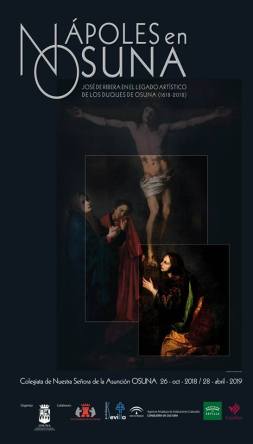
Featured Exhibition: Nápoles en Osuna: José de Ribera en el legado artístico de los duques de Osuna (1618-2018), Colegiata de Osuna (Seville), until 18 April 2018

ribera-osunaThe collegiate church of Osuna, established in the 16th century by Juan Téllez-Girón, 4th Count of Ureña, contains important artworks commissioned and donated by the Dukes of Osuna. Several members of the family held important position in the government of such Spanish imperial domains as Sicily, Milan and Naples.

Works acquired in the latter city are the focus of a fascinating exhibition in the collegiate church, Nápoles en Osuna: José de Ribera en el legado artístico de los duques de Osuna (1618-2018). Curated by Pedro Jaime Moreno de Soto, the exhibition is open until 28 April 2018. Stars of the exhibition are five paintings by the Spanish-Neapolitan artist Jusepe de Ribera. They were commissioned by Pedro Téllez Girón, 3rd Duke of Osuna, and donated to the church by his widow Catalina Enríquez de Ribera. Among the works on show is a breathtaking Crucifixion which decorated the collegiate church’s high altar for almost a century.

The exhibition in the collegiate church is complemented by a small display of Italian artworks in the nearby Monasterio de la Encarnación.

Click here for opening hours and more information.


Posted bycostanzabeltramiDecember 5, 2018Posted inExhibition, UncategorizedTags:17th century, Baroque, Catalina Enríquez de Ribera, Colegiata de Osuna, Dukes of Osuna, italian art, Italy, Jusepe de Ribera, Monasterio de la Encarnación, Naples, Osuna, Painting, Seville, Spain, Spanish Art, Téllez-GirónLeave a comment on Featured Exhibition: Nápoles en Osuna: José de Ribera en el legado artístico de los duques de Osuna (1618-2018), Colegiata de Osuna (Seville), until 18 April 2018

Call for Applications: Fellowships at the Madrid Institute for Advanced Study, 2019–20

Marcel Bataillon Fellowship


Profile: Holders of a doctorate obtained between 01/01/2008 and 31/12/2015

Residency duration and period: 10 months, start date 1 October 2019

Number of contracts offered in 2019-2020: 3

Disciplines: All Human and Social Science disciplines

Financial conditions:
Gross salary of around 27,000€. Contract of local Spanish law
Provision of accommodation in the Casa de Velázquez facilities

Apply:

Click here for more information and to access the application portal. 
The application portal is shared for the Marcel Bataillon and the Tomás y Valiente programmes
Portfolio to be written in French and English or Spanish and English

Incomplete or incorrect applications cannot be accepted. Files exceeding the limit on the number of pages will be rejected.

MIAS contact form

Application deadline: 11 December 2018 at 17h (Madrid time)

Tomás y Valiente Fellowship


Profile: Holders of a doctorate obtained between 01/01/2008 and 31/12/2015

Duration: 3 years, renewable for an additional two years

Number of contracts offered in 2019-2020: 2

Disciplines: Human and Social Science disciplines as listed as reference department in this document (includes art history).

Financial conditions: 
Gross salary of 31,600€ Contract of local Spanish law
Provision of accommodation in the Casa de Velázquez facilities during the first year of the contract 

Apply:
Click here for more information and to access the application portal. 
The application portal is shared for the Marcel Bataillon and the Tomás y Valiente programmes
Portfolio to be written in French and English or Spanish and English

Incomplete or incorrect applications cannot be accepted. Files exceeding the limit on the number of pages will be rejected.

Contact: servicio.investigacion@uam.es (The e-mail must be written in French and English or Spanish and English)

Application deadline: 11 December 2018 at 17h (Madrid time)

Posted bycostanzabeltramiNovember 26, 2018November 26, 2018Posted inFellowship, Jobs & FundingTags:art history, Casa de Velázquez, Humanities, Madrid Institute for Advanced Study, Marcel Bataillon, MIAS, post-doctoral, Social Sciences, Tomás y ValienteLeave a comment on Call for Applications: Fellowships at the Madrid Institute for Advanced Study, 2019–20

International Study Day: Iberian Polychromed Sculpture, Musée L (Université Catholique de Louvain), Louvain, December 7, 2018

The Royal Institute for Cultural Heritage (KIK-IRPA) in Brussels, in collaboration with the Université Catholique de Louvain (UCL), organises  the first conference in Belgium devoted to Iberian polychromed sculpture and its relation to other Europeans regions. Referring to UCL’s Spanish sculpture collections, this conference brings together scholars specialised in the sculpture from Spain, Belgium, Italy and Mexico. The speakers will trace the sculptures from their production, their technics, their links and reception in other European regions.

1. Lectures (Auditoire du Musée L)

09:15-09:50 –  Welcome

09:50-10:00  – Introduction remarks – Eduardo Lamas-Delgado (Royal Institute for Cultural Heritage, Brussels)

The polychrome Sculpture in Spain and Latin America (chairwoman, Abigail Newman, Universiteit Antwerpen)

10:00-10:20 – Manuel García Luque (Universidad de Granada), El escultor Pedro de Mena y el naturalismo matérico

10:20-10:40 – Pablo Amador (Instituto de Investigaciones Estéticas, Universidad Nacional de México), Aspectos técnicos de la escultura policromada hispánica

10:40-11:00 – Géraldine Patigny (Université Libre de Bruxelles – Royal Institute for Cultural Heritage, Brussels), La sculpture polychromée espagnole dans les collections belges

11:00-11:15 – Questions and debate

11:15-11:30 – Coffee break

The Spanish polychrome Sculpture and Europe (chairman, Ralph Dekoninck, Université Catholique de Louvain)

11:30-11:50 – Roberto Alonso Moral (Universidad Complutense de Madrid), La migración de escultura entre Nápoles y España durante el siglo XVII y su impacto: algunos problemas de identificación

11:50-12:10 – Wendy Frère (Université Libre de Bruxelles), La polychromie dans la sculpture baroque des anciens Pays-Bas méridionaux et la Principauté de Liège

12:10-12:30 – Holly Trusted (Victoria and Albert Museum, London), Passion and Prejudice: Attitudes towards Spanish Sculpture in Britain in the Nineteenth Century

12:30-12:40 – Questions and debate

12:45-13:45 – Lunch

2. Study session: the Spanish Medieval and Early Renaissance Sculptures from Val-Duchesse (chairwoman, Corinne Van Hauwermeiren, CONSERVART)

14:00-15:00 Emmanuelle Mercier (Royal Institute for Cultural Heritage, Brussels), Erika Rabello (Royal Institute for Cultural Heritage, Brussels), Mathieu Somon (Université Catholique de Louvain).

15:00-15:15 – Questions and debate

15:15-15:30 – Concluding remarks

3. Visit to the Museum Collection

Free, booking required. Click here to reserve a place and for more information.

Posted bycostanzabeltramiNovember 24, 2018November 24, 2018Posted inConferenceTags:17th century, Baroque, Belgium, britain, Collecting, Holly Trusted, Italy, KIK-IRPA, Latin America, Liège, Louvain-la-Neuve, Mexico, Musée L, Naples, Pedro de Mena, Polychrome Sculpture, Spain, technical exhamination, université catholique de louvain, Val-DuchesseLeave a comment on International Study Day: Iberian Polychromed Sculpture, Musée L (Université Catholique de Louvain), Louvain, December 7, 2018

Curators in Conversation: Looking at Spanish Old Masters Today, Colnaghi Foundation, 6 December 2018, 6:30–8:30pm

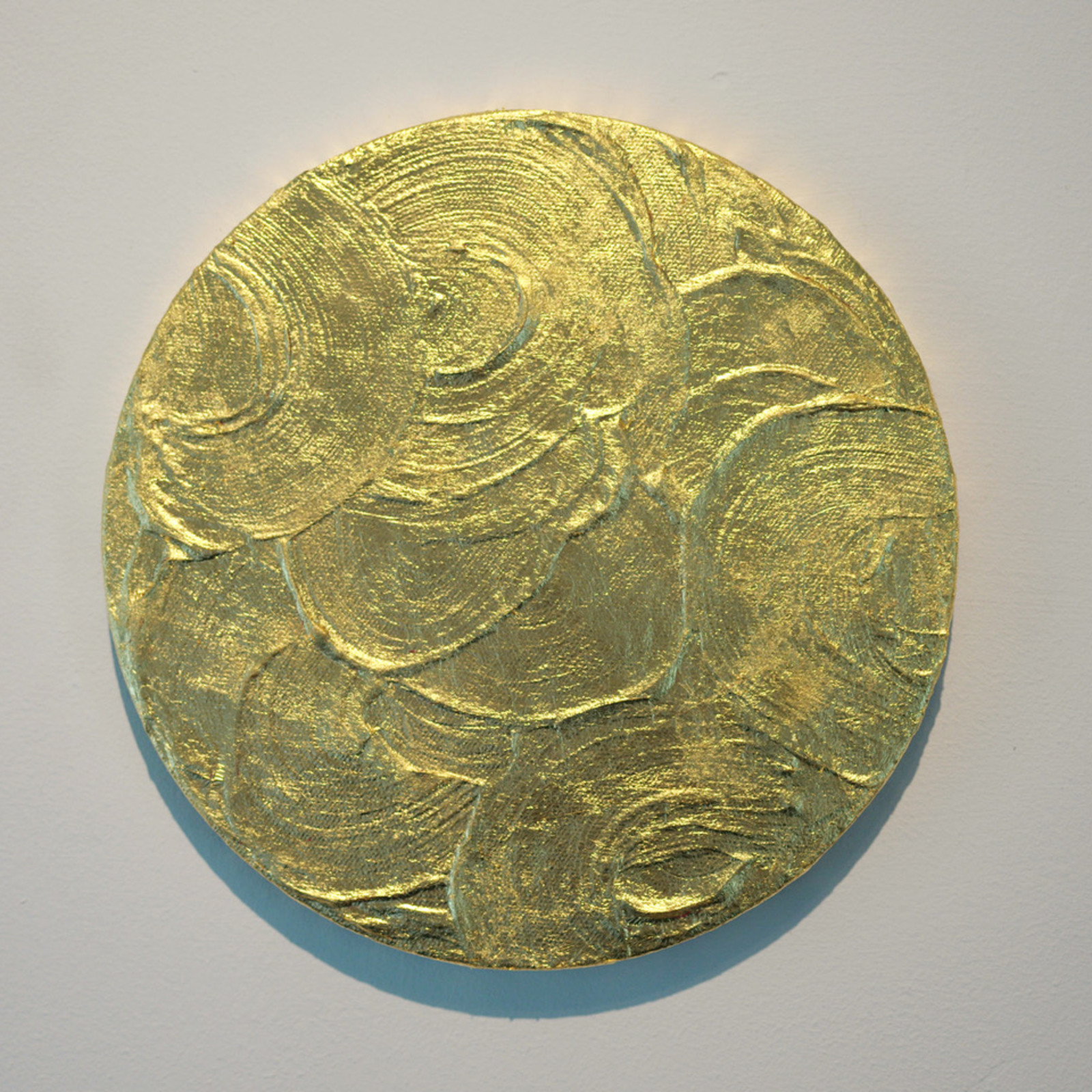
Michael Petry, Libation to Apollo (IX), 2018, 24k gold leaf on acrylic on canvas, 20 x 1 cm

Curators in Conversation: Looking at Spanish Old Masters Today

with

Nicola Jennings, Director, Colnaghi Foundation 

and 

Michael Petry, Artist & Director, MoCA London 

Discussing the lasting influence of Spanish Old Masters in contemporary arts practice. This event is part of Spain NOW! – celebrating the 10th anniversary of the season of contemporary arts and culture in London. 

Thursday 6th December 
6:30 – 8:30 pm


Colnaghi Foundation
26 Bury Street
St James’s
London, SW1Y 6AL

Michael Petry studied at Rice University, Houston (BA), London Guildhall University (MA), and has a Doctor in Arts from Middlesex University. Petry is an artist, author and Director of the Museum of Contemporary Art (MOCA) London. Petry co-founded the Museum of Installation, was Guest Curator at the Kunstakademiet, Oslo, and was Curator of the Royal Academy Schools Gallery. Petry co-authored Installation Art (1994), and Installation in the New Millennium (2003), and authored Abstract Eroticism (1996) and A Thing of Beauty is…(1997), The Trouble with Michael. His book Hidden Histories: 20th century male same sex lovers in the visual arts (2004) was the first comprehensive survey of its kind, and accompanied Hidden Historieswhich he curated for The New Art Gallery Walsall. Golden Rain (2008) accompanied his installation for the On the Edge exhibition for Stavanger 2008, European Capital of Culture. Petry was the first Artist in Residence at Sir John Soane’s Museum (2010/11) and his one man show The Touch of the Oracle at the Palm Springs Art Museum (2012) was accompanied by a ten year career review book. Petry’s work was included in the 2015 Frontiers Reimagined at the Venice Biennale, and his one-man show AT the Core of the Algorithm accompanied his Campbell Lectures at Rice University. Petry’s books include The Art of Not Making: The New Artist Artisan Relationship (2011), Nature Morte: Contemporary Artists reinvigorate the Still-Life tradition (2013) and The WORD is ART (2018).

Nicola Jennings is Director of the Colnaghi Foundation and Associate Lecturer at the Courtauld Institute of Art. She completed her MA and doctorate at the Courtauld, and has worked at the National Gallery and City University in London. Her research and publications focus on art and patronage in Spain in the fifteenth, sixteenth and early seventeenth centuries, with a particular interest in northern European artists working in Iberia, conversos, and polychrome sculpture. She is a co-author of the first two volumes in the Coll & Cortés Studies series, Lorenzo Mercadante: Virgen del Buen Fin, and Alonso Berruguete: Renaissance Sculptor.

RSVP to info@colnaghifoundation.org

Posted bycostanzabeltramiNovember 22, 2018November 22, 2018Posted inUncategorizedTags:colnaghi foundation, Contemporary art, curators in conversation, Michael Petry, MoCA, Nicola Jennings, old masters, Spain NOW!Leave a comment on Curators in Conversation: Looking at Spanish Old Masters Today, Colnaghi Foundation, 6 December 2018, 6:30–8:30pm

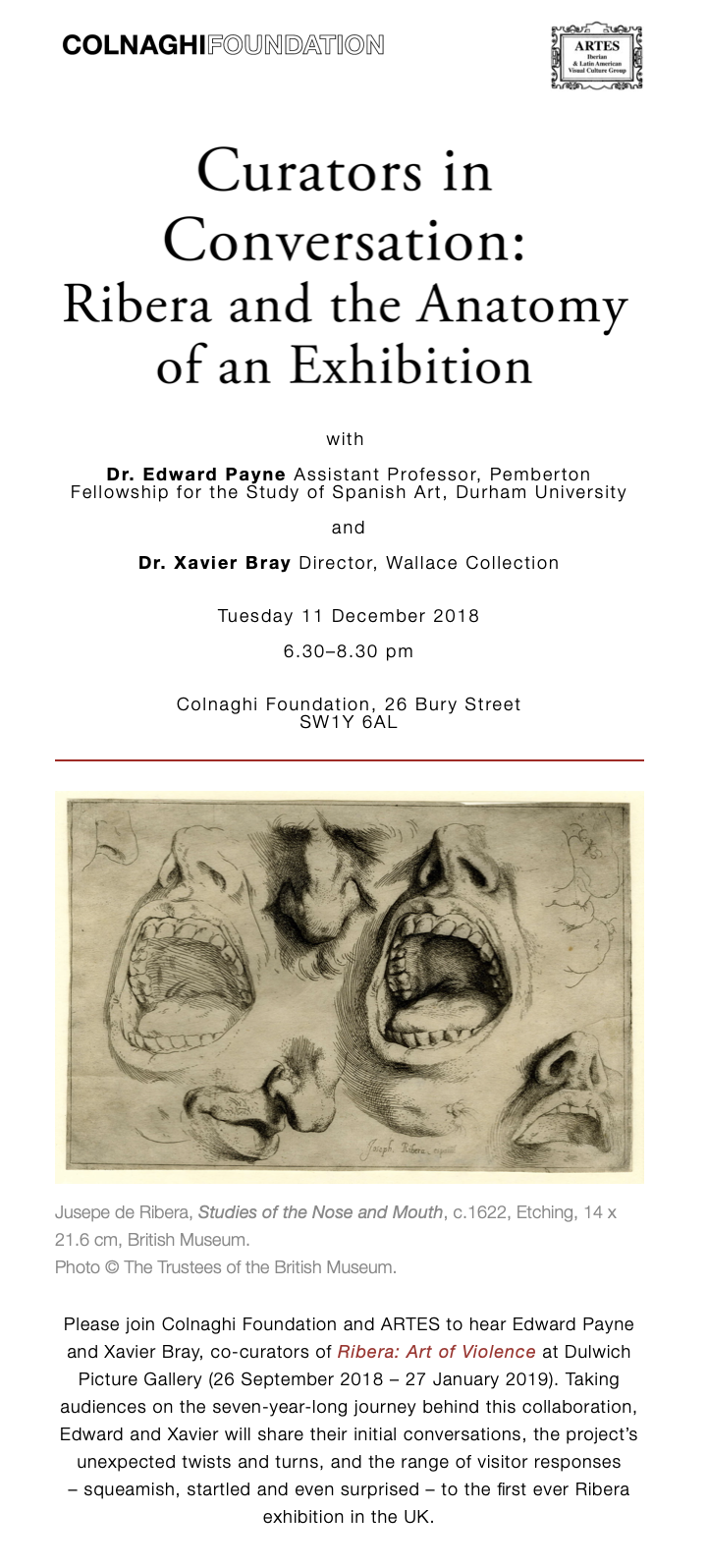
Members’ Event: Curators in Conversation: Ribera and the Anatomy of an Exhibition, Colnaghi Foundation, 11 December 2018, 6:30–8:30pm

Email info@colnaghifoundation.org to book a place.

Posted bycostanzabeltramiNovember 19, 2018November 19, 2018Posted inARTES EventTags:ARTES events, colnaghi foundation, curators in conversation, Edward Payne, London, Ribera: Art of Violence, Xavier BrayLeave a comment on Members’ Event: Curators in Conversation: Ribera and the Anatomy of an Exhibition, Colnaghi Foundation, 11 December 2018, 6:30–8:30pm

Funding: I.M. Pei Graduate Scholarship in Islamic Art and Architecture (Oxford)

The Khalili Research Centre (University of Oxford) is offering a fully-funded graduate scholarship from the beginning of the academic year 2019–2020 for a student undertaking either doctoral research or a combined four-year programme consisting of a Master’s course proceeding to a D.Phil.

The Scholarship is awarded on the basis of academic merit and potential. The Scholarship will cover full course fees, and maintenance costs equivalent to the U.K. national minimum doctoral stipend. Applicants should first consult the Further Particulars that may be downloaded here.

Applicants, whether internal or external, should then apply to the University under the standard procedures for graduate degrees. The University’s application procedures are described at http://www.ox.ac.uk/admissions/graduate. Applications should be made on-line (www.graduate.ox.ac.uk/applyonline) and submitted before 12:00 noon on Friday 11 January 2019.

Applicants to the M.St., M.Phil. or D.Phil in Islamic Art and Archaeology at the Khalili Research Centre may also be considered for other fully-funded scholarships. For further details, please visit: https://krc.web.ox.ac.uk/article/courses

Posted bycostanzabeltramiNovember 19, 2018Posted inJobs & FundingTags:DPhil, I.M. Pei, Islamic Archeology, Islamic Art, Khalili Research Centre, Master, Mst, Oxford, PhD, postgraduate scholarship, University of OxfordLeave a comment on Funding: I.M. Pei Graduate Scholarship in Islamic Art and Architecture (Oxford)

Members’ Event: Spanish Casts at the V&A’s Newly Renovated Cast Courts

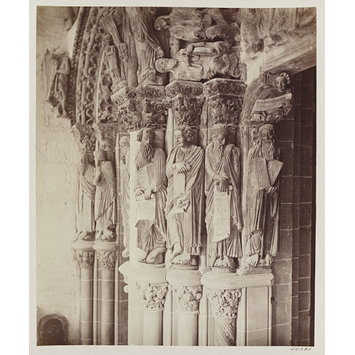
2015hw0169_jpg_dsThe V&A’s Cast Courts have been recently renovated (a project lasting nearly ten years in total), and are re-opening to the public on 1 December. ARTES members are invited to a talk on 17 December at 10.30 am on the Spanish casts in the galleries, to be given by ARTES Hon Vice-President and Lead Curator of the Cast Courts, Holly Trusted. We will look at a number of these important and fascinating plaster copies, including the Portico de la Gloria from Santiago de Compostela and the Romanesque sculptures from Oviedo and Santo Domingo de Silos.
Please email artesiberia@gmail.com to book a place.

Posted bycostanzabeltramiNovember 16, 2018Posted inARTES Event, UncategorizedLeave a comment on Members’ Event: Spanish Casts at the V&A’s Newly Renovated Cast Courts

Conference: ‘Ribera’s Art of Violence: New Intersections and Interventions’, Dulwich Picture Gallery, London, December 10, 2018

INTERNATIONAL STUDY DAY

Ribera’s Art of Violence: New Intersections and Interventions

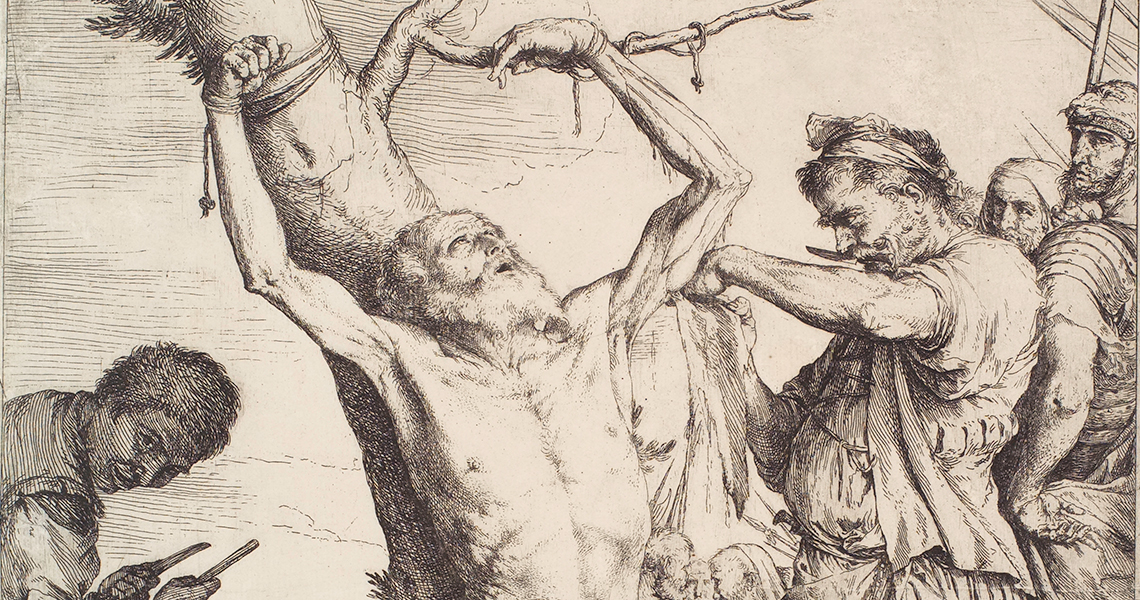
Dulwich Picture Gallery is holding a study day inspired by the exhibition Ribera: Art of Violence. Examining Ribera’s art from various interdisciplinary perspectives, the event will bring together established and emerging voices to explore new approaches to the artist, his works, myths and audiences. The study day will be structured around the exhibition’s five thematic sections: Religious Violence; Skin and the Five Senses; Crime and Punishment; The Bound Figure; and Mythological Violence. Situating his paintings, prints and drawings within their historical context, this event will address the relevance of Ribera’s violent imagery in contemporary art and thought.

PROGRAMME
[Chaired by Edward Payne and Xavier Bray]

2-2.10pm
Introduction and Welcome: Edward Payne (Durham University) and Xavier Bray (Wallace Collection)

Session 1: Religious Violence

2.10-2.25pm
Jack Hartnell (University of East Anglia)
Backwards through Bartholomews: Tools and Techniques of Stripping Skin

2.25-2.35pm
Respondent: Helen Hills (University of York)

Session 2: Skin and the Five Senses

2.35-2.50pm
Carlo Avilio (University of Warwick)
See with the Fingers, Touch with the Eyes: Ribera and the Failure of Painting

2.50-3pm
Respondent: Joanna Woodall (Courtauld Institute of Art)

Session 3: Crime and Punishment

3-3.15pm
Stephen Cummins (Max Planck Institute)
Punishing Bodies in Ribera’s Naples: Torture, Incarceration and Slavery

3.15-3.25pm
Respondent: Lorenzo Pericolo (University of Warwick)

3.30-4pm: Tea Break

Session 4: The Bound Figure

4-4.15pm
Caroline Fowler (Clark Art Institute)
Losing Control: Ribera’s Examination of Desire and Will

4.15-4.25pm
Respondent: Gabriele Finaldi (National Gallery, London)

Session 5: Mythological Violence

4.25-4.40pm
Bogdan Cornea (University of York)
Opening the Body, Opening Touch: Rethinking Violence in Ribera’s Apollo and Marsyas

4.40-4.50pm
Respondent: Mechthild Fend (University College London)

Keynote Address

4.50-5.20pm
Javier Moscoso (Centro de Ciencias Humanas y Sociales)
The Liminality of Skin in the History of Pain

5.20-5.30pm
Concluding Remarks: Edward Payne (Durham University) and Xavier Bray (Wallace Collection)

Click here to buy a ticket for this event

Posted bycostanzabeltramiNovember 10, 2018November 26, 2018Posted inConference, UncategorizedTags:Apollo and Marsyas, Bound figure, Crime and Punishment, Dulwich Picture Gallery, Edward Payne, Five senses, golden age, Jusepe de Ribera, male nude, mythological violence, Naples, religious art, religious violence, Ribera: Art of Violence, Saint Bartholomew, sensory perception, Skin, Spanish Art, Study Day, Xavier BrayLeave a comment on Conference: ‘Ribera’s Art of Violence: New Intersections and Interventions’, Dulwich Picture Gallery, London, December 10, 2018

Posts pagination

Newer posts 1 … 41 42 43 44 45 … 104 Older posts
ARTES, Create a website or blog at WordPress.com
  • Subscribe Subscribed
    • ARTES
    • Join 600 other subscribers
    • Already have a WordPress.com account? Log in now.
    • ARTES
    • Subscribe Subscribed
    • Sign up
    • Log in
    • Report this content
    • View site in Reader
    • Manage subscriptions
    • Collapse this bar
 

Loading Comments...