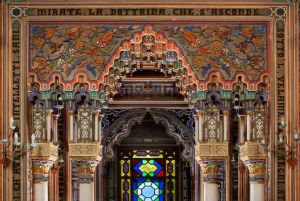
 IUAV, Venice, February 1 – 02, 2019
Negotiating the Past. Islamic Heritage in Italy and Spain
International Conference, Venice
Organizers: Prof. Dr. Guido Zucconi (IUAV) / Prof. Dr. Francine Giese (UZH) / Prof. Dr. Juan Calatrava (UGR) / Dr. Ariane Varela Braga (UZH)
Friday 1 February 2019, Palazzo Badoer, Santa Croce 2468, Venice
9.00 Welcome and registration
9.30 Opening Remarks
Guido Zucconi, Francine Giese, Juan Calatrava, Ariane Varela Braga
KEYNOTE LECTURE
Chair: Juan Calatrava (Universidad de Granada)
10.00-11.00 Antonio Almagro (Consejo Superior de Investigaciones Científicas Escuela de Estudios Árabes)
Emulación o asimilación. La arquitectura palatina entre Castilla y al-Andalus
SESSION I: Islamic heritage in Italy and Spain
Chair: Juan Calatrava (Universidad de Granada)
11.00-11.30 Susanna Calvo Capilla (Universidad Complutense de Madrid)
El mundo clásico y la construcción de la identidad en la Córdoba omeya y en Bizancio en el siglo X: escenarios y objetos
11.30-12.00 Anna McSweeney (University of Sussex) and Arianna D’Ottone Rambach (Sapienza – Università di Roma)
From al-Andalus to Rome: Hadith Bayad wa Riyad
Coffee Break
12.30-13.00 Laura Rodríguez Peinado (Museo de Artes Decorativas, Madrid)
Textiles andalusíes y sicilianos: la problemática de su estudio
13.00-13.30 Lamia Hadda (Università di Napoli “Suor Orsola Benincasa”)
La tradizione dell’iwan nell’architettura palaziale arabo-normanna in Sicilia
Lunch Break
SESSION II: Cross-cultural exchange in the Middle Age
Chair: Francine Giese (University of Zurich)
15.00-15.30 Luis Rueda Galán (EPHE, Paris / Universidad de Jaén)
La cristianización de aljamas en Castilla durante la Baja Edad Media. La catedral de Baeza
15.30-16.00 Noelia Silva Santa-Cruz (Universidad Complutense de Madrid)
Propaganda regia e imagen promocional en la sicilia normanda: préstamos iconográficos llegados de al-andalus y de la corte fatimí
Coffee Break
16.30-17.00 Julie Marquer (Université de Lyon 1)
Inscripciones árabes que alaban reyes cristianos. Estudio comparativo entre Castilla y Sicilia
17.00-17.30 Antje Bosselmann-Ruickbie (Johannes Gutenberg-University Mainz/Justus-Liebig-University Gießen)
A Silver-gilt Casket from Sicily (13th Century): Cultural Transfer in the Middle Ages
Saturday 2 February 2019, Palazzo Badoer, Santa Croce 2468, Venice
KEYNOTE LECTURE
Chair: Guido Zucconi (IUAV)
9.30-10.30 Ezio Godoli (Università di Firenze)
La fortuna dell’Alhambrismo in Toscana e Emilia nella seconda metà dell’Ottocento
SESSION III: Ideologies and identity building
Chair: Guido Zucconi (IUAV)
10.30-11.00 Carlos Plaza (Universidad de Sevilla)
Memoria histórica, identidad local y arquitectura “alla moresca”. El legado islámico y la moderna arquitectura del Renacimiento entre Sevilla y Palermo
Coffee Break
11.30-12.00 Angel Jiang (Columbia University)
From Lost Time to Timelessness: Madīnat al-Zahrā and the Place of Ruin in Identity Negotiations in Spain
12.00-12.30 Juan Carlos Ruiz Souza (Universidad Autónoma de Madrid)
Relatos de inclusión y exclusión de al-andalus y la historiografía del arte español. Gestión de memoria y creación de identidades.
Lunch Break
SESSION IV: Re-appropriating the Islamic past in 19th and 20th centuries art and architecture
Chair: Ariane Varela Braga (University of Zurich)
14.30-15.00 Alessandro Diana (Università di Firenze)
Islam delle lettere / Islam delle arti: il caso di Firenze fra XIX e XX secolo
15.00-15.30 Anna Mazzanti (Politecnico di Milano)
Interni d’artista e la voga islamica. Dall’atelier alla casa fra XIX e XX secolo
15.30-16.00 Sandra S. Williams (Los Angeles County Museum of Art)
The Life of Two Ceilings
Coffee Break
16.30-17.00 Angelo Maggi (IUAV, Venezia)
Ignazio Cugnoni e la documentazione fotografica dell’Alhambra
17.00 -17.30 Antonia Fernandez Nieto (Universidad Francisco de Vitoria, Pozuelo) and Marta Garcia Carbonero (Universidad Politécnica de Madrid)
Learning from the Alhambra: Houses and Gardens in Spain between Modernism and Islamic Tradition (1953-1975)
17.30-18.00 Eleonora Charans (IUAV, Venezia)
Architettura nei paesi islamici. La seconda mostra internazionale del settore architettura della Biennale di Venezia (1982)
18.00 Final Remarks
Guido Zucconi (IUVA, Venezia)

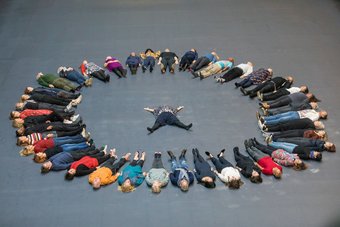 The Cuban artist Tania Bruguera (born 1968) has been selected to create the 2018 Hyundai commission for Tate Modern’s central four-stories high Turbine Hall. She is best known for her socially and politically engaged installations, which have in the past addressed topics of migration, border control and institutional power structures. She has created a unique concept for her political approach to art – Arte Util (useful art) – which is developed in her new work for the Turbine Hall. In 2012 Bruguera was also in residence at Tate Modern with her ongoing project Immigrant Movement International, in which visitors were required to line up and pass a lie detector test based on questions from the UK immigration form before being granted access to the Tate Tanks display. The installation is curated by Catherine Wood, Senior Curator of International Art (Performance) and Isabella Maidment, Assistant Curator of Performance, and accompanied by a new book from Tate Publishing (forthcoming March 2019).
 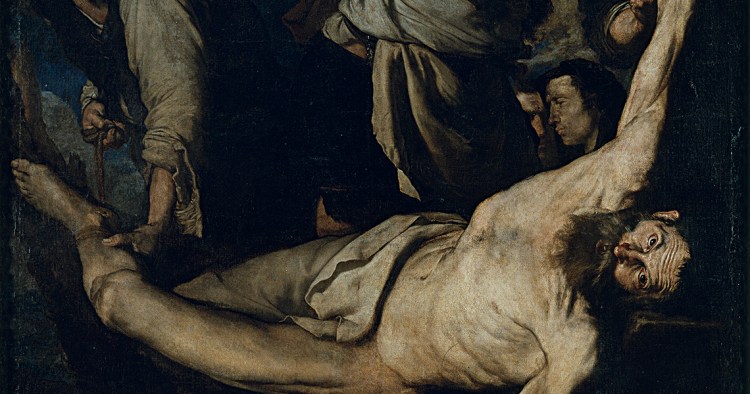 This is the first exhibition in the UK dedicated to the Spanish Baroque painter, draughtsman and printmaker Jusepe de Ribera (1591–1652). Born in Játiva, Valencia, Ribera emigrated to Italy as a young artist. Proud of his Spanish heritage, he eventually settled in Naples, then a Spanish territory, but never again returned to Spain. A hybrid figure, Ribera had a significant influence on the art of both countries in the seventeenth century.
 A
A  Born in Granada in 1871, Mariano Fortuny trained as a painter in Paris before settling in Venice at 18. Moving in international artistic circles, he befriended Gabriele D’Annunzio, Hugo von Hofmannsthal, Marchesa Casati and Prinz Fritz Hohenlohe-Waldenburg, among others. He was fascinated by the idea of the Gesamtkunstwerk, a total union of music, drama and visual presentation which he strove to realise in his set designs. In addition to his work for the theatre, he decorated aristocratic homes and museums. His luxury textiles were produced in a factory on the Guidecca in Venice and sold in shops in all European capitals. Towards the end of the 1930s Mariano Fortuny retired to a palace in the San Beneto district of Venice. Decorated by the artist, the palazzo now hosts the
  Currently on show at the museum is
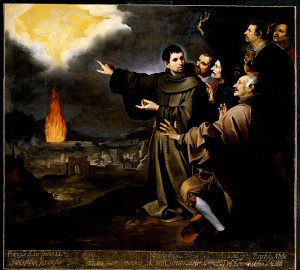
 Survey exhibition of some 150 works, including painting, sculpture, photography, video art and works on paper, by nearly 100 artists, covering the five decades from 1968, when a new generation of Basque artists born in the 1940s was joining the art scene, to 2018 when art made by women has become increasingly prominent. It also assesses the importance that the individual and collective careers that emerged in the region have had on both Spanish and international art. The show’s point of departure will be the collection of the Bilbao Fine Arts Museum, which will be joined by important loans from private collections and fellow public institutions—such as the Museo Nacional Centro de Arte Reina Sofía, the Museu d’Art Contemporani de Barcelona, ARTIUM and the Kunstmuseum of Basel—that have placed particular emphasis on acquiring contemporary Basque art. The exhibition, which is curated in-house by Miriam Alzuri, Begoña González and Miguel Zugaza, will be accompanied by a catalogue. Click
 Throughout his career the Catalan painter Hermen Anglada-Camarasa (Barcelona 1871–1959 Pollença) worked mainly in the ‘modernista’ style. During WWI he travelled to Mallorca for the first time and eventually settled for the rest of his life in the north of the island, where in 1967, following the artist’s wishes his house in Pollença was turned into a museum. This exhibition in Palma de Mallorca displays a wide range of his paintings alongside his collection of costume, furniture and Japanese prints, in a setting evocative of his house.
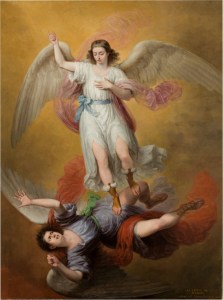 The Museo del Prado has restored three paintings considered to be among the most important religious compositions by the leading Spanish Romantic artist Antonio María Esquivel. Esquivel’s work as the creator of religious paintings is barely known despite being among his principal artistic concerns. Now visitors can see The Fall of Lucifer, Christ the Saviour and other works, including a Self-Portrait. The exhibition has been curated by Javier Barón, Prado Senior Curator Nineteenth-century Painting at the Prado.
 ARTES
ARTES 