International Conference: Border Subjects/Global Hispanisms

International Conference: Border Subjects/Global Hispanisms, Birkbeck University, London, Friday 24 & Saturday 25 November 2017

lf_window_l
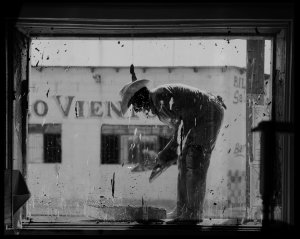
©Max Aguilera-Hellweg, El Trabajador, Ciudad Acuña, Mexico, The Border, July 1989.

This conference brings together scholars, curators, filmmakers, writers, and post-graduate students from Latin America and the Caribbean, the United States, Europe, and the UK. It stems from the ongoing collaboration between members of staff from the programmes of Spanish, Portuguese and Latin American Studies at Birkbeck, University of London, UK and the Department of Hispanic Languages and Literatures, at the University of Pittsburgh, USA.

The processes we associate with contemporary forms of ‘globalization’ have – be they economic, political or cultural –spawned a variety of re-worldings that, via a number of transdisciplinary formations, have reconfigured the humanities, including Hispanism and Latin-Americanism, Cultural Studies, Postmodernism, Post-colonialism and even Post-structuralism being the most well-known. After the financial crisis, new (and not so new) trans, de-, and/or non-national or regional objects, subjects and assemblages are coming to the fore, redrawing and digitalizing established frontiers and differences as well as re-defining the politics of culture and its study. Before our very eyes, the transversal routes of migration world-wide are breaking down established frontiers, both in the old metropoli and in the so-called peripheries, at whose sites new cultural and political subjects are emerging. In the light of this global expansion of neoliberalism and new forms of governmentality, as well as the histories globalization brings into view, what are the concerns that are or should define the research agenda of a newly globalized Hispanism? In this conference, we revisit Luso-Hispanic and Latin@-American geographies, and reconsider the subjectivities emerging out of the above mentioned processes, in their varying conditions and trajectories, and also by way of the items in the material culture that conspire in their fashioning.

This conference is generously supported by The Birkbeck Institute for the Humanities (BIH) and the Centre for Iberian and Latin American Visual Studies (CILAVS), both at Birkbeck, University of London. The Instituto Cervantes has also provided support for this event. In collaboration with Canning House and the Centre for Iberian and Latin American Visual Studies (CILAVS), a conversation between Ticio Escobar and John Kraniauskas will be hosted on Thursday 23 November 2017. Further information TBA.

Programme

Friday 24th November

Venue: Birkbeck, University of London Clore Management Lecture Theatre, Clore Management Centre, Torrington Square, London WC1E 7JL

9.30-9.45am            Welcome
Carmen Fracchia and Mari Paz Balibrea (CILAVS), Birkbeck, University of London

Session 1                  Black Nations in Imperial Spain
Chair, Carmen Fracchia, Birkbeck, University of London

9.45-11.15am          Elizabeth Wright, University of Georgia, ‘A Black Bard in the Court of Philip II’

Luis Méndez Rodríguez, University of Seville, ‘Another Way of Seeing Black Spain, Art, Society and Religion’

Helen Melling, Institute of Latin American Studies, University of London, ‘Envisioning Black Confraternities in Nineteenth-Century Peru’

11.15-11.30am        Tea/Coffee Break

Session 2                New Ecologies/ Post-Indigenism/ Museum Cultures in Latin America* Chair, Luciana Martins, Birkbeck, University of London

11.30-12.45pm        Sarah Radcliffe, University of Cambridge, ‘Border knowledges and socionatures: Sumak kawsay and de-/re-colonising food sovereignty in Ecuador’

Agata Lulkowska, PhD student, Birkbeck, University of London, ‘Transcending the borders of ‘indigenous’ filmmaking in Colombia’

Ticio Escobar, Museo de Arte Indígena Asunción, Lawyer, Author, Art Critic, and, former Minister of Culture of Paraguay, ‘Cultural critique as a positioning of the frontier, contemporaneity and difference’

*Please note that Ticio Escobar’s paper ‘La crítica cultural como posición de frontera, contemporaneidad y diferencia’ will be presented in Spanish.

12.45-2.30pm          Lunch

Session 3                  Transgressing Political Borders*
Chair, Luís Trindade, Birkbeck, University of London

2.30-4.00pm             Polly Savage, SOAS, University of London, ‘Transnational Art Education and International Solidarity with Independent Mozambique’

Christabelle Peters, University of Bristol, ‘Mana Africa, The Cultural Politics of Female Solidarity in Cuban-African Cooperation’

Inês Galvão, PhD student, University of Lisbon, ‘Crossing struggles through militant journalism: anti-apartheid, feminism and anti-colonialism in the trajectory of Stephanie Urdang’

*Please note this panel will continue at Birkbeck Cinema after the break. The Birkbeck Cinema is in 43 Gordon Square, London WC1H 0PD.

4.00-5.00pm             Tea/Coffee Break

6.00 – 9.00pm

Film Screening*:     Spell Reel, 2017. Germany/Portugal/France/Guinea-Bissau. Directed by Filipa César. In Portuguese, Fula, Guinea-Bissau Creole, English, French; English subtitles. 96 min.

*To be screened with the presence of filmmaker Filipa César.

Spell Reel is the result of a multifaceted research and digitisation project that she initiated in 2011 with Sana na N’Hada and Flora Gomes. Having studied film in Cuba, the two began using the camera to observe the fight for independence in Guinea-Bissau (1963–74). After the decaying visual and audio material was digitised in Berlin, the filmmakers travelled with a mobile cinema to the places where the footage had originally been shot and showed it to audiences for the first time, adding their own commentary. They then moved on, also returning to Berlin. Spell Reel watches an archive at work to produce the present.

Programme

Saturday 25th November

Venue, Birkbeck, University of London. Room B36, Malet Street Main Building, London WC1E 7HX. Torrington Square entrance

Session 4                  Deterrioralization-Reterriorilization
Chair, John Kraniauskas, Birkbeck, University of London

10-11.30am              Juan Duchesne-Winter, University of Pittsburgh, ‘Neoanimism, South-South deterritorializations’

Jerome Branche, University of Pittsburgh, ‘The Bones of San José: Of Memory, Museums, and the Necropolitics of Slavery’

Conrad James, University of Birmingham, ‘You Should Know the Score by Now’, Spanish Caribbean (Native) New Yorkers’

11.30-11.45am        Tea/Coffee Break

Session 5                  Spaces of Flow, Travel and Friction
Chair, Patricia Siqueiras Bras, Birkbeck, University of London

11.45-1.15pm          Rory O’Bryen, University of Cambridge, ’The Fetish of Flow, Circulating Capital and The Novel in Nineteenth-Century Colombia’

Toby Green, King’s College London, ‘Travelling Concepts in the Atlantic World, Decoding Origins, Rethinking Alternatives’

Juan Poblete, University of California-Santa Cruz, ‘Americanism/o, Latin/o American frictions inside the United States’

1.15-3.00pm             Lunch

Session 6                  Latin Americanism in its Transtemporal Globality
Chair, Emily Baker, Birkbeck, University of London

3.00-4.30pm             Gonzalo Lamana, University of Pittsburgh, ‘Unthinkable Indians, Race, Coloniality and Metanoia in Colonial Peru’

Daniel Balderston, University of Pittsburgh, ‘Piglia’s Diaries, Recovering the Gestation of Plata quemada’

Akemi Herraez Vossbrink, ‘Francisco de Zurbarán and the Viceroyalty of Peru’, 23 November 2017, Spanish Embassy, London

Microsoft Word - Francisco de Zurbaransfinal1024_1

ARTES Coll&Cortes travel scholarship report: Ana Dias, PhD Candidate at Durham University

Fig 1 Biblioteca Nacional de EspañaThe ARTES Coll&Cortes travel scholarship granted me the opportunity to travel to Spain to examine three illustrated copies of Beatus of Liébana’s Commentarium in Apocalypsin (generally known as Beatus) on which my doctoral thesis is grounded.

My research concerns the production, illumination and impact of the Beatus manuscripts, with particular focus on the analysis of the text and image relationship. In this investigation I consider five specimens – the Beatus of Morgan, Valcavado, Urgell, Facundus and Silos – that form a particular group known as ‘family IIa’, which present remarkable textual and iconographic affinities. Moreover, these specimens also stand amongst the most lavishly illuminated copies within this tradition, thereby offering us rich material for an enquiry into questions of artistic production.

The careful and objective analysis of their differences and similarities, set against the general panorama of illustrated Apocalypses in the early medieval west, will therefore provide new evidence not only about the conceptualisation of their imagery but also concerning scribal and artistic practices in medieval Iberia.

One of the main subjects under investigation is the use of colour in the Beatus IIa miniatures. Through this analysis I aim to shed new light on how illuminators responded to the literary sources they were illustrating – Revelation and, to a more limited extent, Beatus of Liébana’s own commentary – themselves rich in colour references. Given that most of my prior research had been conducted through the observation of facsimile editions and other surrogates, it was crucial to examine the manuscripts at first hand, as even the best editions do not reproduce the material and chromatic qualities of the original works accurately enough for a study of this nature. For this reason, and having already examined the Morgan and the Silos Beatus (New York, Pierpont Morgan Library, MS M.644; London, British Library, Add MS 11695, respectively), travelling to Spain to consult in situ the Beatus of Facundus (Madrid, Biblioteca Nacional, MS Vitrina 14-2), Valcavado (Valladolid, Biblioteca de la Universidad, MS 433) and Urgell (Museu Diocesá de La Seu d’Urgell, Num. Inv. 501) was essential.

I began my research trip at the Biblioteca Nacional de España, in Madrid, where I examined the Facundus copy: an exquisite specimen commissioned by Fernando I and his wife Sancha in 1047.My main aim was to check the exact nature of its palette and pigment application, the employment of metallic inks and other general aspects of production and use, such as make up, collation and marginalia. Following my examination of this manuscript, I dedicated some days to a further exploration of the bibliographical resources of the BNE, focusing on secondary material that cannot be found in libraries in the United Kingdom.

Fig 3 Biblioteca Histórica de Santa Cruz Valladolid

My next destination was the university city of Valladolid, where the Beatus of Valcavado is held at the Biblioteca Histórica de Santa Cruz, as part of the university’s collection of historic manuscripts. As stated in its colophon, this manuscript was produced by the scribe Obeco in 970; however, no information concerning its centre of production or the nature of its commission is offered. With the diligent assistance of the library staff, I conducted a similar examination of this manuscript. I was particularly struck by the differences in its colour scheme in relation to its counterparts as well as by some particular choices of pigments in relation to the iconography.

Fig2 Biblioteca Histórica de Santa Cruz Valladolid

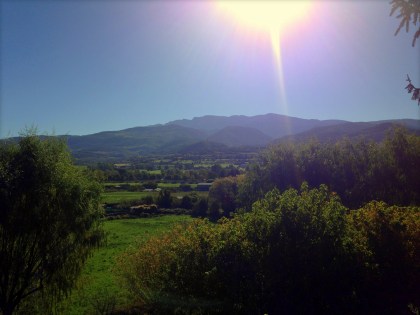
Fig 5 View from the Archivo Diocesano de Urgell to the natural parc del CadíIn order to examine the last manuscript in this group I had to travel to the Catalonian town of La Seu d’Urgell, located in the foothills of the Pyrenees. En route, I had the opportunity to visit the Cathedral treasury Museum of Girona where another Beatus copy is kept. While not being one of my primary sources (as it is part of another family within the tradition), seeing the Girona Beatus in exhibition was nevertheless very instructive as it enabled me to think more critically about colour use in early Iberian illumination more broadly.
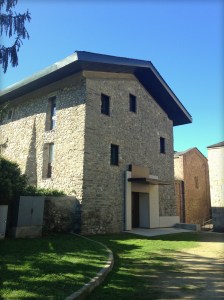
Subsequently, I concluded my research trip in the Archivo Diocesano de Urgell where I inspected the Urgell Beatus: a copy of uncertain origin but which has been dated to the end of the tenth century on palaeographical and artistic grounds. The examination of this manuscript was surprising: despite being generally considered as a more humble specimen, its palette is composed of rich and vibrant bright colours. As in the case of Valcavado, this manuscript too shows some telling individual responses to the use of colour in relation to the iconography.Fig4 Archivo Diocesano de La Seu d'Urgell

Thus, the first-hand examination of these three Beatus was essential in order to confirm and refine the research conducted to date, and it has given me a greater insight into the material and chromatic properties of these specimens. It has also enabled me to conclude that, despite their relatively distinctive colour schemes, they also share evident patterns of colour use – an aspect which raises more questions concerning not only the artistic tradition but also about the nature of these images.

From a more technical perspective, this research trip has also allowed me to learn about the conservation policies of different libraries and archives, which is invaluable knowledge for someone working in the field of manuscript studies.

I am most grateful to ARTES and Coll&Cortes for their continuing support to my research and for giving me the opportunity and the privilege to conduct this investigation.


CFP: Wider Worlds: Art and Audience Under the Spanish Crown, The Frick Collection, New York, April 5, 2018

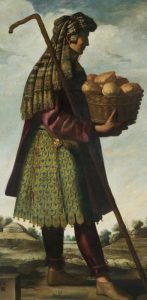
zurbaran_asher-343x700
Call for Papers: 
Wider Worlds: Art and Audience Under the Spanish Crown, The Frick Collection, New York, April 5, 2018
Deadline: Dec 12, 2017

Symposium
The Frick Collection, New York

The Frick Collection is pleased to invite submissions for “Wider Worlds: Art and Audience under the Spanish Crown,” a public symposium inspired by the special exhibition Zurbarán: Jacob and His Twelve Sons, Paintings from Auckland Castle (January 31 to April 22, 2018). Co-organized with the Meadows Museum, in Dallas, where the paintings are currently on view, this exhibition marks the first time that Francisco de Zurbarán’s set of thirteen monumental canvases depicting the family of the biblical prophet Jacob will be displayed in the Americas.

Zurbarán’s paintings were probably commissioned in the 1640s for a monastery in colonial Spanish Peru, where the popularity of this particular iconography drew on histories positing the indigenous inhabitants of the Americas as “lost descendants” of the twelve tribes of Israel. The works traveled to England and, in 1756, entered the collection of the bishop Richard Trevor, an advocate for the rights of Jewish people. This history, as well as the apocryphal story of the paintings’ seizure by pirates, prompts us to think seriously about the afterlives of objects, anticipated versus accidental receptions, and art’s capacity for generating multivalent, sometimes competing, interpretations. For Jacob and His Twelve Sons, those interpretations range from justifying the enterprises of one colonial empire to serving as symbols of religious tolerance in another.

We welcome proposals for twenty-minute papers on the status of the art object and the circulation of objects and ideas in the early modern Hispanic world. Please send a C.V. and 250-word abstract by Tuesday, December 12, 2017, to academic@frick.org. Submissions from emerging scholars, including early career university and museum professionals and advanced doctoral students, are particularly encouraged. Possible lines of inquiry include:

• How artists, patrons, and audiences dealt with anxieties around distance, delay, and the conveyance of meaning in the diverse and multilingual early modern Hispanic world;
• Re-signification and/or halted trajectories in the biographies of objects, especially in a global context;
• The imaging of origin myths and master narratives;
• How Iberia’s Jewish and Islamic pasts were interrogated and reinterpreted in Catholic image practices;
• The issue of workshops, masters, and authorship and their relationship to global markets;
• The global and material turns in art-historical scholarship.

“Wider Worlds: Art and Audience under the Spanish Crown” is convened by Caitlin Henningsen (The Frick Collection) and Adam Jasienski (Southern Methodist University). Susan Grace Galassi (Senior Curator, The Frick Collection) will preside.

Call for contributions: The idiosyncrasy of indigenism in Latin America. Plurality of sources and extra-Latin American appropriations

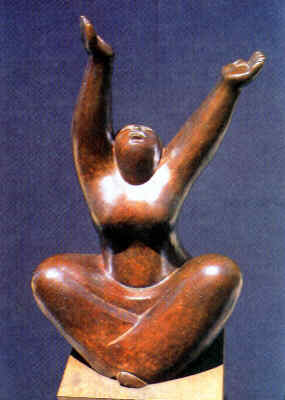
marina-nunez-del-prado-plegariaCall for contributions: Artelogie Journal, ‘The idiosyncrasy of indigenism in Latin America. Plurality of sources and extra-Latin American appropriations’
Deadline: March 30, 2018

Coordinated by Michele Greet (George Mason University), Anahi Luna (UNAM, Mexico), Fernanda Sarmento (Sao Paulo University), Elodie Vaudry (Paris Nanterre University)

In the mid-1920s, Peruvian intellectual José Carlos Mariátegui introduced the term “indigenism” and defined it as a Latin American avant-garde trend that manifested as a literary genre, a political ideology, and an artistic classification. Nevertheless, as Michele Greet demonstrates in Beyond National Identity: Pictorial Indigenism as a Modernist Strategy in Andean Art, 1920-1960, indigenism is also the result of a paradoxical dialectic between the national and the international spheres. This “negotiation” between the national and the international is at the heart of the problem to be addressed in the next issue of Artelogie, which invites investigations of this Latin American trend as a strategy of transculturation between Latin America and the rest of the world. Mainly studied as a centripetal movement in Latin America, we propose a consideration of indigenism as a centrifugal, plurisecular and cross-cultural phenomenon.
Indeed, it seems that in foreign cities such as Paris, indigenism was also constructed and deployed in a transnational way in response to political and cultural schema. In the 20th and 21th centuries, Europe and then the United States, among others regions, were the locations where indigenism found its intellectual, political and visual inspiration and/or the cites, where it could find its purpose. Consequently, in the post-war period, Ecuadorian Oswaldo Guayasamín (1919-1999) defends the Indian in paint via a re-reading of the works of Picasso and Bernard Buffet. Sculptors such as Marina Núñez del Prado (1910-1992), architects such as Pedro Ramírez Vásquez (1919-2013), musicians such as Theodore Valcárcel (1900-1942) also appropriate methods, techniques, and materials from outside Latin American to design buildings and compose melodies in support of the Native American cause. To these examples, we can add of course the appropriations of native traditions, in particular those from the Amazon, as well as multiple contemporary creations, both in the field of design and the visual arts.
By approaching Latin American and European art history within the framework of a simultaneously conflictive and collaborative modernity, rather than “opposing insular nationalism and alienating internationalism,” this cultural history project would reveal their common dynamics and highlight the diachronic and diasporic hybridization of contemporary visual culture. The purpose is thus to approach indigenism – or indigenisms – chronologically from the 20th to the 21st century. The aim is to analyze its construction as it has been elaborated outside of the borders of Latin America, in travel to and from foreign countries and nations with cultural indigenism and in connection with other contemporary movements addressing or related to identity politics.

Exploring the productive tensions surrounding indigenist art and considering different perceptions of this long cultural history will facilitate a rethinking of the fights for representation and self-representation undertaken by diverse cultures in Latin America. Moreover, we could correlate these analyses with other cultural phenomena dealing with identity formation, such as those in North America, Oceania and Africa.

The theme of this forthcoming issue of Artelogie deals with transfers between cultures, which are very different at different moments in history – – i.e. the pre-Colombian era- and in the space. Thus, a multidisciplinary approach seems essential, linking art history, the history of the ideas, and anthropology. In this study it is also necessary to consider the themes of political, diplomatic, and economic exchange between France and Latin American countries.

Suggested themes:

– How dialogue(s) between ” western culture ” and native groups took place
– Sources – models and counter-models – of indigenism outside Latin America
– Inversions: native portraits through the eyes of Westerners / Westerners portraits through the eyes of natives
– Indigenism and the artistic avant-garde, processes of appropriation and fracture
– Cites of the formation of indigenism outside Latin America
– How the diasporic processes of indigenism in the 19th and 20th centuries served the internal politics of Latin America
– Model and counter-model: indigenism as a reaction to and an appropriation of western models
– How the processes of hybridization interact with the concepts of heritage, tradition and innovation
– Native artistic expressions that reflect cultures founded on other values and beliefs, what are the ways to validate and interact with this diversity?

How to apply: 

-Deadline for official acceptance of original unpublished work: 30th of March 2018
– Total length of the text: characters (no more than 50000 characters or 35 pages), including title, authors’ bibliographic data and e-mails, summary, introduction, all other paragraphs considered appropriate, conclusion, acknowledgements (if necessary) and references.
– Please follow closely the style guide for authors of Artelogie: https://artelogie.revues.org/621
– Please send articles to: artelogie@gmail.com

Thinking Ibero-America: Modernity and Indigenism

juandowneyThinking Ibero-America: Modernity and Indigenism,’ Birkbeck, University of London,

Malet St, Bloomsbury, WC1E 7HX, 23/11/2017, 6:30 pm – 8:30 pm

Ticio Escobar in conversation with John Kraniauskas

Under the dominance of European and then Creole elites, the people of Latin America have historically looked to Europe and North America as referents for cultural modernity. Until recently, everything related to indigenous people and culture was associated with the idea of underdevelopment. However, with globalisation, contemporary cultural discourses have begun incorporating notions of diversity, difference, inclusion and cultural rights; this allows for the articulation of new critical visions such as that of Paraguayan Ticio Escobar.

A lawyer, curator, teacher, art critic and cultural promoter, Ticio Escobar was Minister of Culture of Paraguay (2008-2012). Prior to that, he was Director of Culture of the Municipality of Asuncion (1991-1996) and founder of the Museum of Indigenous Art. He is the author of the National Law of Culture of Paraguay and President of the Paraguayan Section of the International Association of Art Critics. He has published numerous books on Paraguayan and Latin American art. He currently directs the Centro de Artes Visuales/Museo del Barro in Asunción.

John Kraniauskas is Professor of Latin American Studies at Birkbeck (UL). Expert in literature and cultural studies, he is the author of numerous essays and translations. His latest book is Capitalism and its Discontents: Power and Accumulation in Latin American Culture (University of Wales Press, 2017). He met Ticio Escobar on a trip to Paraguay during the days of Stroessner, as a member of the Parliamentary Group on Human Rights.

The Thinking Ibero-America cycle is a cooperation between the Instituto Cervantes and Canning House, with the collaboration of the Center for Iberian and Latin American Visual Studies (CILAVS), Birkbeck, University of London, and Birkbeck Institute of the Humanities (BIH).

The event will be held in the Clore Lecture Theatre, Birkbeck, University of London (access through Torrington Square).

In Spanish and English.

The Maius Workshop’s first meeting: report

MaiusfirstmeetingThe first meeting of the Maius Workshop took place last Monday, 16 October, at the Warburg Institute. It was a well-attended event where we presented the aims of the research group, discussed our shared interests and needs and shared ideas about the most useful format for future sessions.

The Maius Workshop aims to bring together young researchers (MAs, PhDs and early career academics) working on Iberian and Latin American topics. It aims to create a collaborative network of researchers where shared problems and research obstacles can be discussed informally, and where personal encounters can foster interdisciplinary collaboration.

During our first meeting we decided that the network will:

  1. Share training resources and specific knowledge on e.g. archives, museum collections, languages, paleography…both in person during our meetings and online through our website.
  2. Offer an online platform for members to present themselves and their work on the web.
  3. Favour the creation of spin-off subject specific events to better cater to members’ very wid
    e interests.
  4. Run general meetings where members will have an opportunity to present problematic documents and objects from their current research in a friendly, collaborative and creative environment.

The first of these meetings, loosely titles ‘Sacred Encounters,’ will take place on 11 December (place TBC). Further information on this event will soon be published on our website. If you are interested in discussing your research at this event, please contact maiusworkshop@gmail.com.


Symposium: El Greco to Goya: Spanish Masterpieces from The Bowes Museum

20424015_10155128772606865_9178298814727747987_oBowes Symposium programme1024_1

Please click here to book a ticket

ARTES Event: Curator’s tour of ‘El Greco to Goya’ at the Wallace Collection, 21 November 2017, 10 am

20424015_10155128772606865_9178298814727747987_o

Isabelle Kent, Enriqueta Harris Frankfort curatorial assistant at the Wallace Collection,  will give ARTES members a tour of the exhibition on 21st November at 10:00.
Please RSVP to artesiberia@gmail.com by 15 November.
This event is open to ARTES members only.

Featured Exhibition: Sacred art in the age of contact: Chumash and Latin American traditions in Santa Barbara

smaller20abalone20virgin20mary_1Sacred art in the age of contact: Chumash and Latin American traditions in Santa Barbara, Art, Design & Architecture Museum, University of California, Santa Barbara, until 8 December, 2017.

Sacred Art in the Age of Contact  focuses on the relationship between art and religion in both historic Chumash and Spanish traditions in the early Mission period in the eighteenth and nineteenth centuries, highlighting themes of devotion, sacred space, language and materiality. The exhibition investigates the mutually transformative interaction among these traditions. Twentieth-century and contemporary Chumash visual production will be on view alongside sacred objects. This exhibition brings together, for the first time, a diverse array of approximately 100 objects, from local collections that include the Mission Santa Inés, Mission La Purísima Concepcíon, the Santa Barbara Mission Museum and Archive-Library, the Santa Barbara Museum of Natural History, and the Repository for Archaeological and Ethnographic Collections at UC Santa Barbara.