A symposium to accompany the National Gallery’s major exhibition “Sorolla: Spanish Master of Light” (18 March–7th July 2019) will take place on at the Lecture Theatre, Weston Library, on 1 July 2019. The programme will include guest speakers such as Gabriele Finaldi, Director of the National Gallery, Richard Ormond, former Deputy Director of the National Portrait Gallery, Blanca Pons-Sorolla, co-curator of the exhibition and Sorolla’s great grand-daughter, amongst others. The symposium will be followed by a musical soirée and the projection of the award-winning “Sorolla: Viajes de la luz” documentary at St Cross College and Pusey Chapel, Oxford.
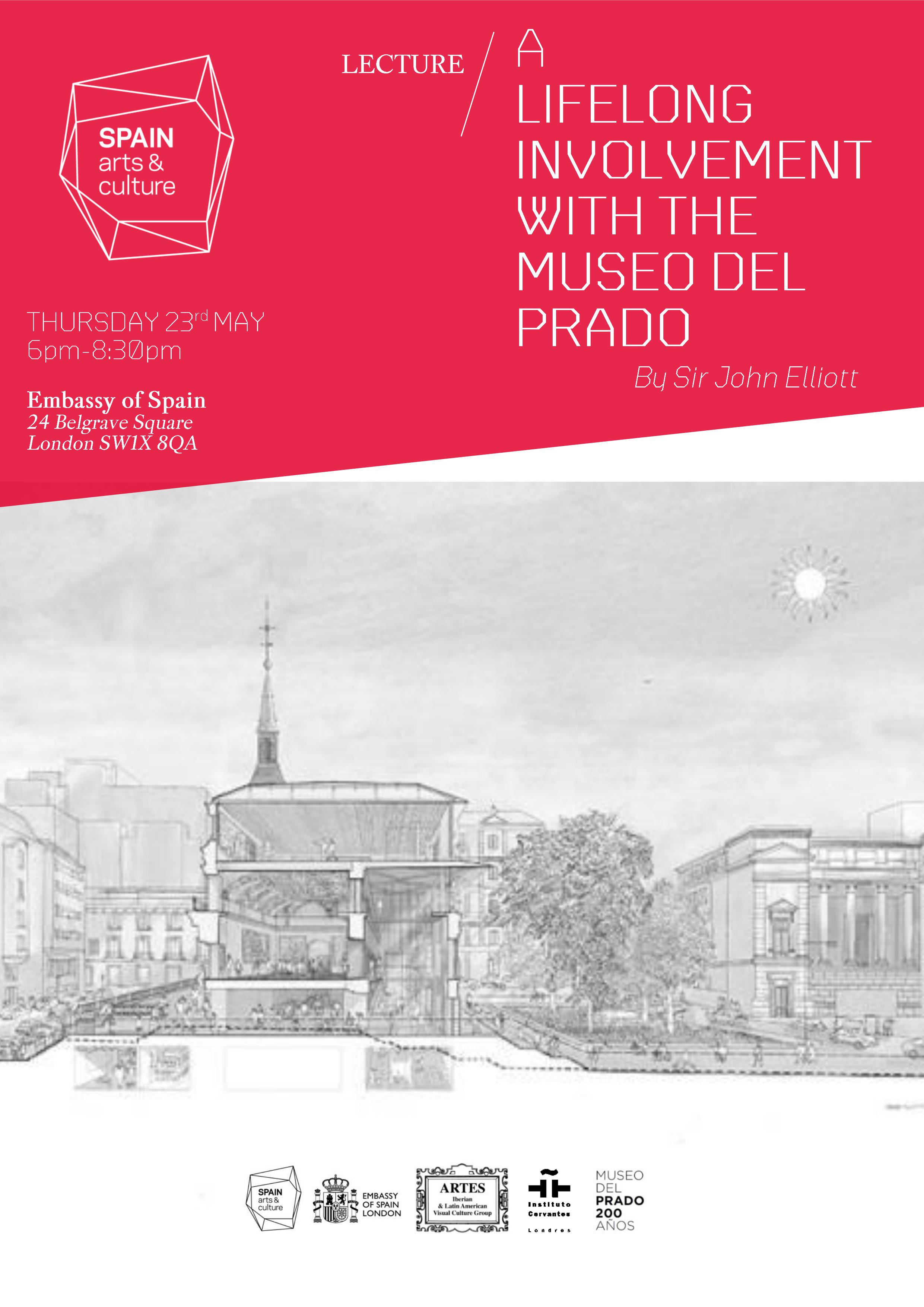
On 23 May 2019, 6pm–8.30pm, the Honorary President of ARTES, Sir John Elliott (Regius Professor Emeritus, University of Oxford), will deliver a lecture in celebration of the 200th anniversary of the Museo del Prado. The lecture will take place at the Embassy of Spain, 24 Belgrave Square, London SW1X 8QA. A limited number of tickets are available to ARTES members by emailing the Spanish Embassy (emb.londres.ofc@maec.es).
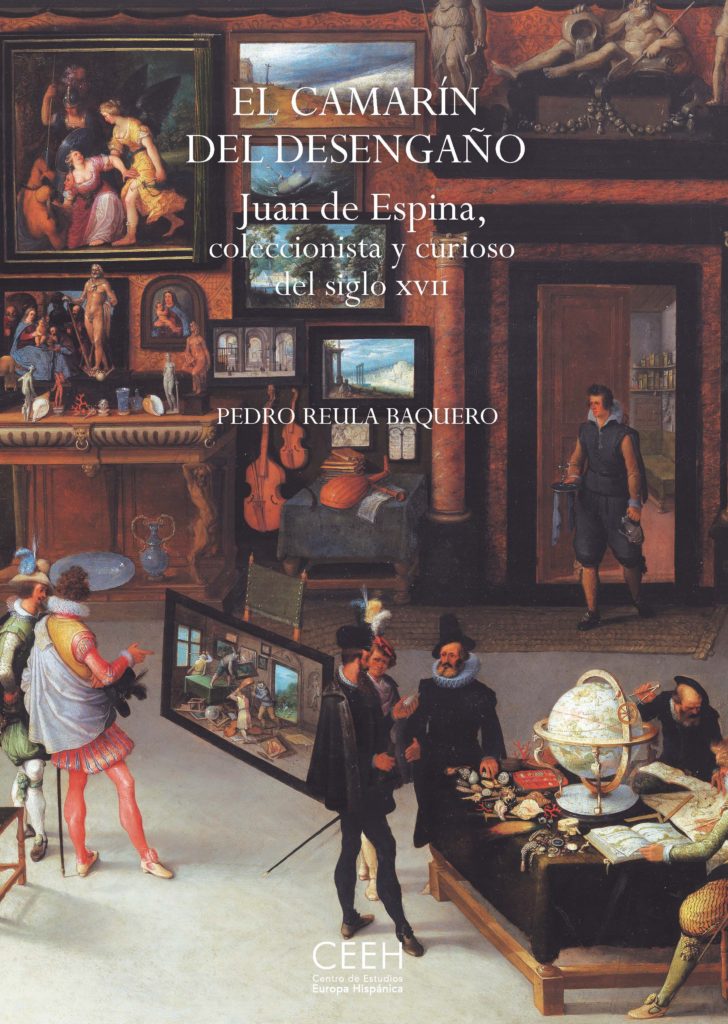
Juan de Espina Velasco (1583−1642), a nobleman of Madrid and cleric of minor orders, has gone down in history – initially as the unwitting protagonist of two eighteenth-century magical plays by the dramatist José de Cañizares and subsequently, in the twentieth century, as the enigmatic and jealous owner of the Leonoardo da Vinci manuscripts now in the Biblioteca Nacional de España. His early fame as a necromancer comes from rumours that circulated in his own day about the entertaining scientific activities he organised in his home in the form of natural magic shows, where, making use of a certain amount of technology, he put the audience’s credulity to the test. He also set out to bring back the lost genre of enharmonic music, which ordered the music scale perfectly and mathematically and with which the ancient musicians were said to work wonders on men’s nature and state of mind. In addition to the Leonardo codices, his home housed an exquisite collection of books, paintings, precious metalwork and ivory pieces – objects classified as naturalia and artificialia, which made up what we would now call a cabinet of curiosities, commonly known in Spain as a camarín.
Click here to save 10% on this book until April 15 (Pre-sale coupon code: ESPINA)
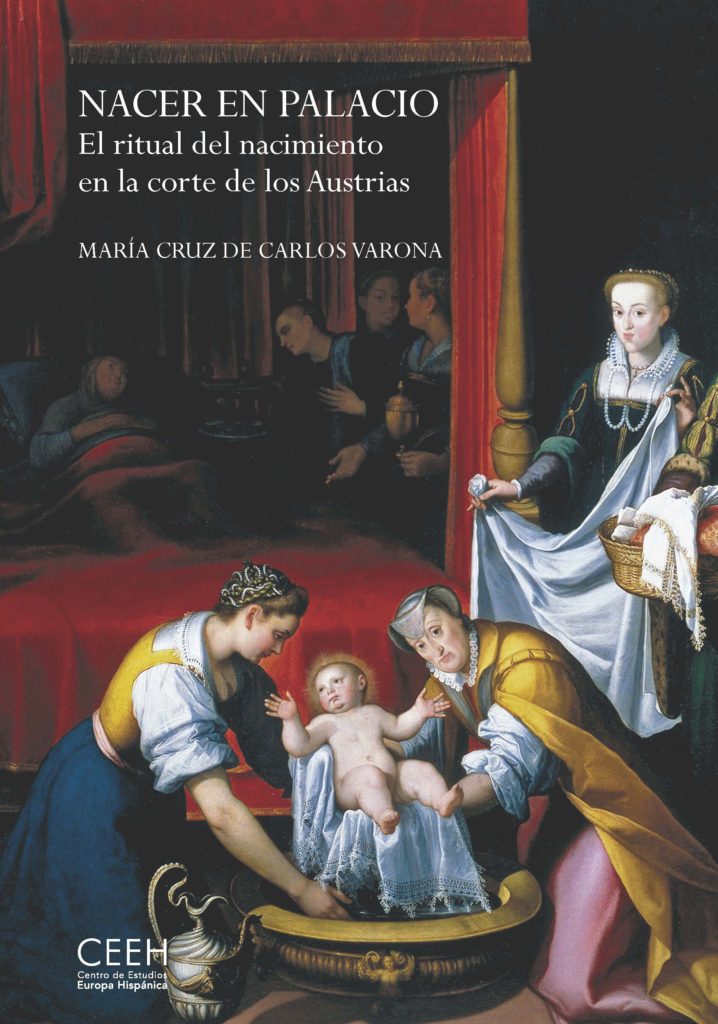
Motherhood, which stands at a disciplinary crossroads, has become a historiographic subject in its own right. It has gone from being viewed as an exclusively biological circumstance to being considered a key social factor in shaping the historical identity of the queens of Spain. This book analyses the ‘ritual’ surrounding the birth of royal offspring at the Spanish court between the sixteenth and seventeenth centuries and the role played by queens, ladies-in-waiting and midwives in a cultural system based on a series of rites performed before and after childbirth.
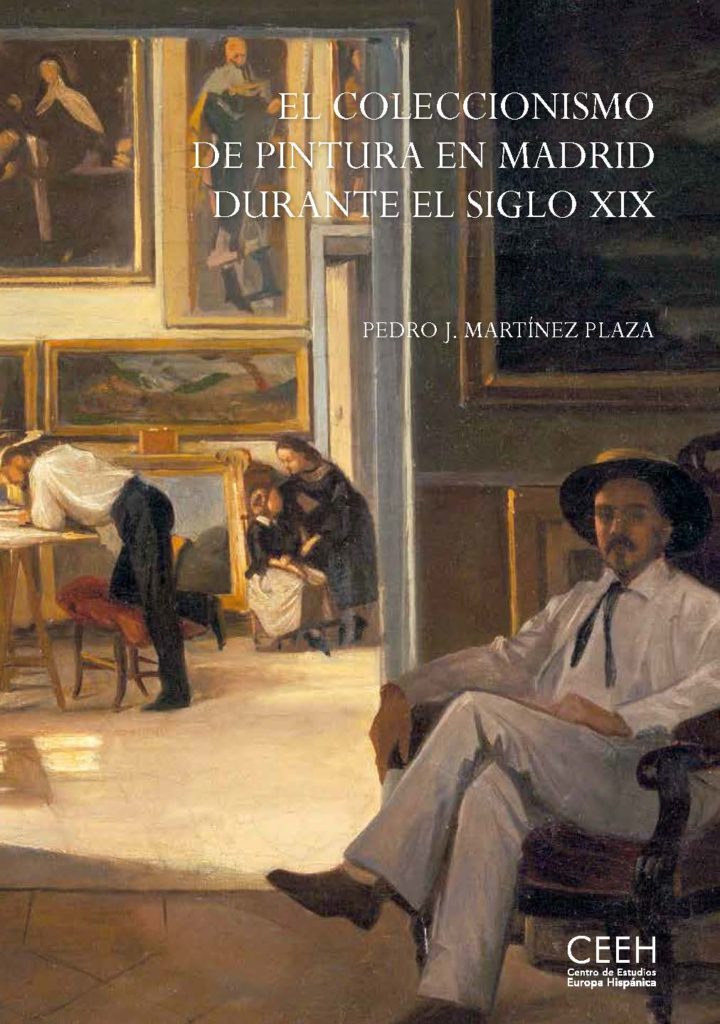
This book examines the private collecting of painting in Madrid during the nineteenth century and the mercantile structure that underpinned it. The author analyses more than 140 private collections and studies the presence, development and running of shops, fairs, markets, estate sales, antique dealers and art galleries, many of them hitherto unknown, as well as surveying the role of the foreign collectors and artists and restorers who acted as advisors, intermediaries, sellers, promoters and agents.
Less than a month remains to go on a one-hour guided tour of Antoni Gaudí’s Casa Battló in Barcelona, covering its history and the recent renovation of architectural features and interior fittings, such as lighting, windows and hangings. The visit also offers the opportunity to walk along the ‘Pasarela’ at 30 metres above ground level.
Click here for more information on the restoration and visit.
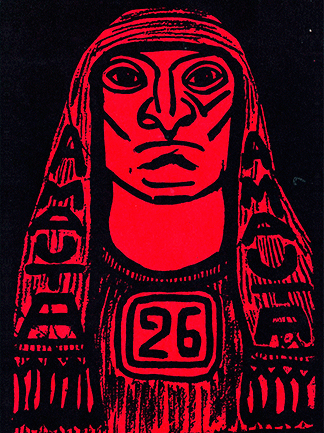
José Sabogal, Cover of the journal Amauta, n. 26 (September – October), 1929, Journal, Museo de Arte de Lima
Founded and directed by José Carlos Mariátegui, the Peruvian magazine Amauta was one of the most influential cultural and political periodicals of the early 20th century. The exhibition of more than 250 works follows Amauta’s development as a platform to explore the diversity of the avant-garde artistic production in Peru, Argentina, and Mexico and the debates that shaped the art of Latin America during the 1920s. This exhibition, organised by Beverly Adams, Curator of Latin American Art, Blanton Museum of Art, and Natalia Majluf, Director and Chief Curator, Museo de Arte de Lima, Peru addresses the avant-garde production of a vast network of artists and writers connected with Amauta. and includes works in a variety of forms ranging from paintings, drawings, sculptures and photographs through to popular ceramics, many by lesser known artists as well as pieces by Tina Modotti and Diego Rivera. A large network of correspondents in Latin America and Europe fed the magazine, which had a print run of 3-4,000, and gave Amauta an international impact.
Click here for more information on this exhibition.
The exhibition will travel from Madrid to the Museo de Arte de Lima (20 June – 22 September 2019); the Palacio de Bellas Artes, Mexico City (17 October 2019 – 12 January 2020); and finally to Blanton Museum of Art, University of Texas at Austin, Texas (February 16, 2020 – 17 May, 2020).
A carpet fragment with double-headed bird, probably made in Peru in the 17th century. Gifted to the DMA from the de Unger family
As reported by The Art Newspaper, the Dallas Museum of Art (DMA) is looking to enlarge its Latin American art collection. The museum has created a new endowed curatorial post, the Jorge Baldor Curator of Latin American Art, currently open for applications. It has also made significant new acquisitions of art from the region, from a 17th-century Peruvian carpet to artworks by Mexican artists Miguel Covarrubias, José Clemente Orozco and Diego Rivera, and Chilean artist Roberto Matta.
Marriages of Martín de Loyola to Beatriz Ñusta and Juan de Borja to Lorenza Ñusta de Loyola Anonymous artist from Cusco Oil on canvas, 175,2 x 168,3 cm 1718 Lima, Museo Pedro de Osma. Fundación Pedro y Angélica de Osma Gildemeister
The Prado’s ‘Invited Work’ is a large painting on canvas showing the double Marriages of Martin de Loyola to Beatriz Ñusta and Juan de Borja to Lorenza Ñusta de Loyola painted in 1718 by an anonymous artist from Cusco. On loan from the Museo Pedro de Osma in Lima, it will be on display in Madrid until 28 April 2019. The scene depicted brings together two weddings that actually occurred at different times and places with the purpose of showing the blood ties between the Inca dynasty and descendants of two of the founders of the Society of Jesus, Saint Ignatius Loyola and Saint Francis Borja. The symbolic aim being to represent the conquest of southern America as a harmonious union between Spanish vanquishers and the vanquished.
Click here for more information about this display.
The next meeting of the Maius Workshop will take place tomorrow,26 March, 4:30–5:30pm, in room Law G3 at QMUL (335 Mile End Rd, London E1 4FQ). Click here for a map of the Campus.
Jessica Barker, Lecturer in Medieval History at the Courtauld Institute of Art, will lead a seminar entitled Inscribing Colonialism in Fifteenth-Century Portugal. The session will consider inscriptions, readability and visibility in funerary monuments, and their intersections with early Portuguese explorations in West Africa.
Maius is a friendly platform for informal dialogue and collaborative research. Our sessions are open to all, and research in early stages of development is especially welcome. We look forward to seeing you at this event, and please feel free to email us with ideas and suggestions for future meetings.
Image: Detail of inscription on the north side of the monument to João I and Philippa of Lancaster, 1426–34. Founder’s Chapel, monastery of Santa Maria da Vitória, Batalha. Photo: Jessica Barker.






 ARTES
ARTES 