Tradition and Transition in the Spanish Avant-Garde. Conference, UMich, Ann Arbor, 10-11 April 2015

2015-04-UMichRLL

Tradition and Transition in the Spanish Avant-Garde
Conference, Department of Romance Languages and Literatures, University of Michigan, Ann Arbor, 10-11 April 2015.

Keynote:
Jordana Mendelson: “Up in Smoke: Paper, Publicity, and the Avant-Garde in Barcelona”
Angell Hall 3222, Friday, 10 April 2015, 6:00PM.

The conference is sponsored by the Department of Romance Languages and Literature, the Department of the History of Art, the Institute for the Humanities, the International Institute, the Museum Studies Program, the Dean’s Strategic Initiative Fund at the Rackham Graduate School, and the Spanish National Research Council (CSIC), with additional support from the Department of English and the University of Michigan Museum of Art.

For the full schedule, click here.

CFP: Revising the Hispanic Canon. Visibility and Cultural Capital at the Margins

2015-04-HispanicCanonCFP-wordle
CFP: Revising the Hispanic Canon. Visibility and Cultural Capital at the Margins

Deadline: 13 May 2015

In recent years, meta-critical studies such as Ideologies of Hispanism (2005), Spain Beyond Spain (2005), Reading Iberia (2007), Un hispanismo para el siglo XXI (2011) and Iberian Modalities (2013) have sought to uncover the ideological discourses underlying Hispanic Studies and trace its historical evolution in order to elucidate how the discipline might or ought to evolve, if it is to remain relevant in a context in which national, linguistic and disciplinary boundaries have become problematized. The present volume, co-edited by Stuart Davis and Maite Usoz de la Fuente, seeks to contribute to this ongoing debate by considering how the work of PhD students and early career researchers in Hispanic Studies reflects and contributes to the expansion and the blurring of disciplinary limits.
In a broad sense, the duty of every new generation of scholars in any arts and humanities discipline is to encourage a revision of the canon within that discipline and, in the process, to contribute to a redefinition of the discipline itself. This is an exciting enterprise, but it is not without its challenges and pitfalls. Amongst them is the question of how to attain visibility when working on a topic that is little known, or considered a niche area within one’s discipline, or how to position one’s work if undertaking inter- or multidisciplinary research that surpasses disciplinary boundaries. The aim of this book is to offer a useful overview of new research in Hispanic Studies by a selection of emerging scholars, and to reflect upon questions of canonicity, visibility and cultural capital, and the ways in which such notions span and contribute to shape our field of study.
Contributions to this volume are welcome from doctoral students and early career researchers (understood as those who have obtained their doctoral degree within the past seven years) whose work focuses on (but may not be limited to) the following areas:

  • Hispanism beyond Spain and Latin America: North Africa, the Philippines, and Guinea
  • Interdisciplinary crossroads: comparative and multidisciplinary approaches to Hispanic texts
  • The role of visual and popular culture within Hispanic Studies
  • Other languages and cultures (non-Castilian languages and cultures of Spain and Latin America)
  • Going against the grain: Paradigm-shifting revisions of the canon
  • New methodological approaches to canonical texts

If you want to contribute to this volume, please send an abstract of no more than 300 words to hispanic.canon@gmail.com by 13 May 2015, accompanied by a short biography including your name, institutional affiliation and areas of research (2-3 lines). Selected contributors will be contacted by 30 May 2015 and the deadline for submission of essays will be 31 December 2015.

Corpus of Romanesque Sculpture in Britain and Ireland: Annual Lecture, 2015 : Tessa Garton, 28 April 2015

2015-04-CrpusRsqeScGB-IrelandCorpus of Romanesque Sculpture in Britain and Ireland (CRSBI) Annual Lecture 2015
Tuesday 28 April 2015
17.30, Kenneth Clark Lecture Theatre, Courtauld Institute of Art
Tessa Garton (Professor Emerita, College of Charleston, South Carolina):
Evidence Set in Stone? Twelfth-century Sculptors and Workshop Practices in Northern Palencia, Spain
Open to all, free admission

The northern region of Palencia, close to the pilgrimage route to Santiago de Compostela, contains a remarkable number of well-preserved and richly carved Romanesque churches, concentrated in the region around Aguilar de Campoo, and close to quarries with excellent quality stone for sculpture. The repetition of similar designs at many different locations suggests a system of professional production by a workshop engaged on multiple commissions, and the mass-production of standard motifs. Signatures and inscriptions provide evidence of the increasingly professional status of sculptors; most remarkable is the portal at Revilla de Santullan, where Micaelis depicts himself next to the apostles and in the act of carving the tablecloth for the Last Supper. The discovery of marginal engravings on a group of sculptures recently removed from the church at Santa Maria de Piasca, in Cantabria, provides further insights into the working practices of the masons.

Tessa Garton studied History of Art at the University of East Anglia with Peter Lasko and Eric Fernie, and at The Courtauld Institute of Art with George Zarnecki, writing her PhD on Early Romanesque Sculpture in Apulia. She taught at the University of Aberdeen and at the College of Charleston, South Carolina, and has recently retired. Her major area of interest is Romanesque sculpture; she served as an investigator for the Corpus of Romanesque Sculpture in Ireland, and has studied Romanesque sculpture in Apulia, Scotland, Ireland, France and Spain. Her recent research has been focused on northern Spain, on the pilgrimage route to Santiago de Compostela and the region of northern Palencia.


Annual Nigel Glendinning Memorial Lecture, 18th March 2015

ceramicsNigel Glendinning Memorial Lecture 2015

Alfonso Pleguezuelo (Seville), ‘Clay: more than just earth and water. The symbolic values of Spanish Baroque ceramics’

A recording of the lecture (as a .wav file) is available here


Alfonso Pleguezuelo is Professor of  History of Art at the University of Seville.  His doctoral thesis was on the early baroque architecture of Seville. His publications include articles on Spanish Baroque sculpture, especially the work of  Luisa Roldán. He has also published widely on Spanish ceramics of the early modern period. He has curated a number of exhibitions in this field, the most recent of which took place in 2014 at the Museum of the Gulbenkian Foundation in Lisbon, and was entitled “The Splendour of Cities. The Route of the Tiles”.

CFP: Tragic(al) Realism: Contemporary afterlives of Magical (sur)Realism

2015-03-call-for-proposals-caa-2015
CFP:
Tragic(al) Realism: Contemporary afterlives of Magical (sur)Realism
College Art Association (CAA)
104th Annual Conference Washington, D.C.
3-6 February 2016
Deadline: 8 May 2015

Short call: This session investigates how the spectres of surrealism and Magical Realism haunt the production, circulation, and interpretation of contemporary art and visual culture from Latin America. Almost twenty years ago, Gerardo Mosquera’s “Beyond the Fantastic: Contemporary Art Criticism from Latin America” rejected the prevalent understanding of art and culture from Latin America as exotic, magical realist, fantastic and surreal. The edited volume critiqued these tropes as reductive and reflective of Western expectations of how art from Latin America should look like, which role should play in its immediate context, and the terms for its transnational circulation. However, after almost two decades of relative absence, in the last five years there has been a return of these two highly contested methodological frameworks. We invite papers that re-consider the continuities and ruptures between surrealism and Magical Realism in Latin America, while exploring how, and if, they inform contemporary artistic practices from the region.
Long call: Please click here.
Please send a preliminary abstract (1-2 double spaced, typed pages), a Letter of Interest, and current CV to: Dr Andrés David Montenegro Rosero, University College London: a.rosero@ucl.ac.uk amontene1@mac.com
Deadline: 8 May 2015


Exhibition & Symposium: Rogier van der Weyden: Museo del Prado, Madrid

2015-03-VanDerWeyden
Exhibition:
Rogier van der Weyden (c.1399-1464) , Prado Museum, 24 March – 28 June 2015.
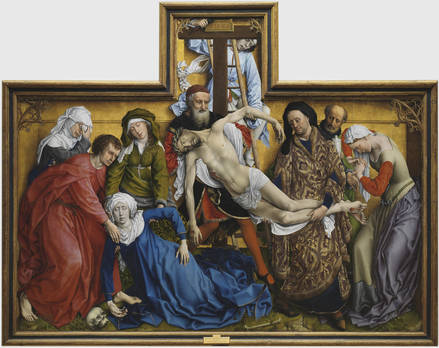
Exhibition devoted particularly to the important influence of the fifteenth-century Flemish artist’s work in Spain and inspired by the recent completion of the conservation of his Escorial Crucifixion, which has been at the royal monastic palace since 1574. The exhibition, curated by Lorne Campbell (formerly of the National Gallery, London), will bring together for the first time Van der Weyden’s Crucifixion with other masterpieces with a Spanish provenance including the Prado’s Descent from the Cross and The Miraflores Triptych, now in Berlin as well as his Antwerp Seven Sacraments Triptych and some 15 other works including large paintings, sculptures and tapestries.

A symposium, ‘Rogier van der Weyden and the Iberian Peninsula‘, will be held on 5-6 May and address issues such as the significance of the Escorial Crucifixion and the relationships between Rogier’s paintings and sculpture produced in the Low Countries and in Castile, the career of the Brussels sculptor Egas Cueman, who settled in Castile, and the impact of Rogier’s work on the artists of the Iberian kingdoms.
Registration fee: General 120€; Students 60€; Scholars professionals 75€.

Leonora Carrington, Tate Liverpool, 6 March – 31 May 2015

2015-03-leonoracarringtonthepompExhibition:
Leonora Carrington, Tate Liverpool, 6 March – 31 May 2015.
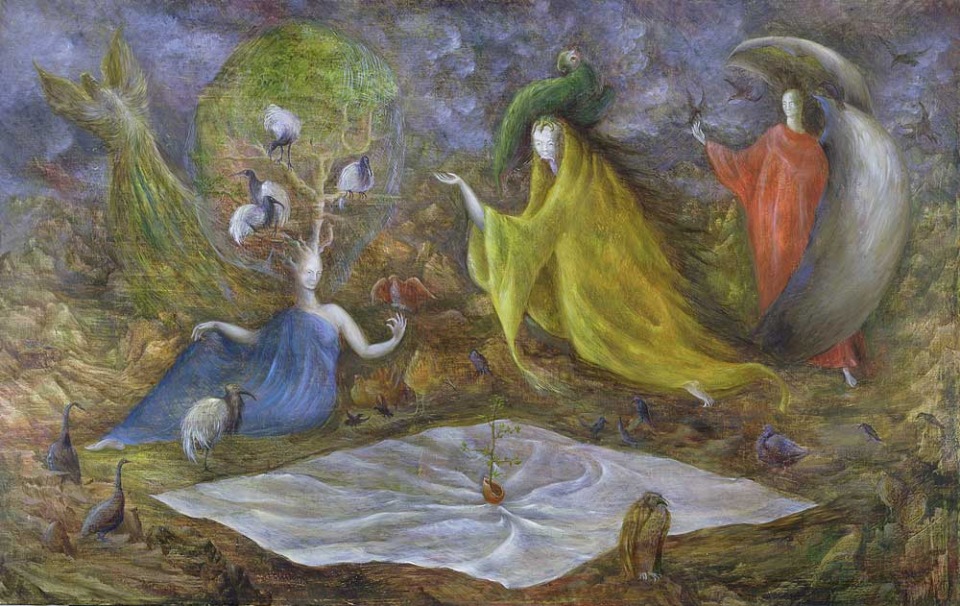
Exhibition put on as part of the 2015 Year of Mexico in Britain celebrations. Tate Liverpool has organised the first monographic exhibition in the UK devoted solely to the Lancashire-born but Mexican-based surrealist Leonora Carrington (1917-2011). A selection of key paintings made throughout her career explore how she devised her own distinctive take on surrealism whilst working alongside other artists such as Salvador Dalí. Also displayed alongside her paintings are examples of her poetry, sculpture, textiles and tapestries as well as designs for film and theatrical performances that she created after she had settled in Mexico in 1941. The exhibition is not, however, accompanied by a catalogue though there is a planned Study Day scheduled for Saturday 23 May, 10.30-16.30.

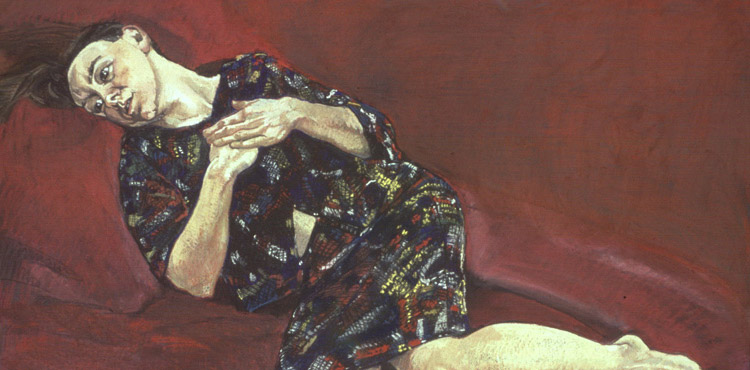
CFP: Paula Rego (Lisbon, 3-4 December 2015)

2015-03-PaulaRego
CALL FOR PAPERS
International Conference

Caught in the Act: The (Literary) Imagiconography of Paula Rego

3-4 December 2015

Venue: Faculty of Social Sciences and Humanities, New University of Lisbon, Portugal

On the occasion of Paula Rego’s 80th birthday, the Department of Languages, Cultures and Cultures, the Centre for English, Translation and Anglo-Portuguese Studies (CETAPS), of the Faculty of Social Sciences and Humanities, New University of Lisbon, the Casa das Histórias Paula Rego, and the Foundation D. Luís I organise the international conference in homage tothe Anglo-Portuguese artist.
Working languages: Portuguese, English, Spanish. No translation will be provided.
We will privilege comparative and transdisciplinary approaches.
Potential contributors are invited to submit a bionote and a 300 word abstract on themes related to any of the following conference tracks:
– The work/imagery of Paula Rego;
– The Work of Victor Willing
– Contemporary Anglo-Portuguese Artistic Relations (20th-21st centuries);
– British Art (late 20th century and 21st century);
– Portuguese Art (late 20th century and 21st century);
– Interarts Dialogue (Literature & Painting);
– History in Paula Rego’s Work;
– Literary Characters and Settings in Paintings;
– Ekphrastic poetry and fiction based on Paula Rego’s Work;
– Paula Rego’s Work and its intertextual dialogues with the work of other artists;
– Studying Rego’s Work;
– Exhibiting Rego’s Work (“Casa das Historias”);
– Studio Practice;
– Irony, Abjection and the Macabre;
– Cultural Collective Memory, National Traditions
– Female imagery in Rego’s work;
– Religion in Rego’s work;
– Politics in Rego’s work;
– Paula Rego’s work in the classroom and interculturality;
– Childhood and Growing up in Rego’s Work;
– Zoological Imaginary;
– Gender and/in art;
– Human and natural landscapes in Rego’s work;
– Politics/ideology;
– Domination/subalternization;
– Sarcasm, irony and social commentary in the visual arts;
– Representing the (post)colonial.

Papers and panels on the above themes are invited. However, papers/panels on other subjects related to the above topics will also be considered. Participants will be held to a twenty minute presentation limit. Please submit an abstract and a bio note, by 15 August 2015, to:
Rogerio Miguel Puga: paularegoconference@gmail.com and cetaps@fcsh.unl.pt

The conference is being jointly organised by CETAPS  and the D. Luis Foundation, which manages the Paula Rego museum (Casa das Histórias) in Lisbon.

For more information see the Conference website


CFP: El Retablo en el espacio Iberoamericano (Lisbon, 26-27 Nov 2015)

2015-03-RetabloLisbonCFP:
El Retablo en el espacio Iberoamericano
Lisbon, Portugal, November 26 – 27, 2015

Deadline: Apr 30, 2015

El Instituto de História da Arte de la Faculdade de Ciências Sociais e Humanas da Universidade Nova de Lisboa organiza el I Simpósio de Historia del Arte – El Retabulo en el espacio Iberoamericano: Forma, función e iconografía, que tendrá lugar en la Faculdade de Ciências Sociais e Humanas, el 26 y 27 de noviembre de 2015.
Se invita a todos los interessados a enviar sus propuestas sobre el retablo en el espacio Iberoamericano teniendo en cuenta los siguientes temas:
– El retablo Iberoamericano: identidades, transferencias y asimilaciones.
– El retablo y el espacio: diseño, arquitectura, pintura y escultura.
– El retablo y la iconografía: interpretación, significado y función.
– El patrimonio retablístico: conservación, restauración, defensa y valorización.
Más informaciones: https://retabuloiberoamericano.wordpress.com/

CFP: Religious Identities, Coexistence, Conflicts and Exchanges in the Mediterranean (7 & 8 May, Valencia)

2015-03-ReligiousIDs-CFPCFP: Religious Identities, Coexistence, Conflicts and Exchanges in the Mediterranean, 12thC – 18thC
Valencia, 7-8 May 2015

La cuestión de la “identidad” como tal, así como de la integración de las minorías quevivieron bajo un mismo marco legislativo, político y religioso es uno de los asuntos de mayor actualidad en la investigación internacional. En este congreso analizaremos, desde una perspectiva pluridisciplinar, la evolución de dicha realidad transcultural, focalizando nuestra atención en los mecanismos de integración y exclusión que sedieron durante los siglos XII al XVII en el Mediterráneo debido a la coexistencia de diversas confesiones.

Temas
• Análisis de la conformación de las identidades religiosas en el Mediterráneo.
• Espacios de convivencia.
• Inquisición, violencia y represión.
• La imagen del “otro”.
• Redes interconfesionales de solidaridad.

Ponentes invitados
Dr. Luis Bernabé Pons (Universidad de Alicante-Cátedra Unesco Islam, cultura y sociedad)
Dra. Giovanna Fiume (Università degli Studi di Palermo)
Dra. Beate Fricke (University of California, Berkeley)
Dr. Juan Carlos Ruiz Souza (Universidad Complutense de Madrid)
Dr. Maurizio Sangalli (Istituto Sangalli per la storia e le culture religiose, Florencia)
Dr. Amadeo Serra Desfilis (Universitat de València)
Dr. Antonio Urquízar Herrera. (Universidad Nacional a Distancia)

Comité científico
Dr. Joan Aliaga Morell (Universitat Politécnica de València)
Dr. Luis Arciniega García (Universitat de València)
Dr. Ximo Company Climent (Universitat de Lleida)
Dr. Simon Ditchfield (University of York)
Dra. Mercedes García Arenal (Consejo Superior de Investigaciones Científicas)
Dr. Vincenzo Lavenia (Università degli Studi di Macerata)
Dr. Enrique Soria Mesa (Universidad de Córdoba)
Dr. John Tolan (Universitè de Nantes)

Comité organizador
Organiza el grupo de investigación Identidades en conflicto: la expresión artística e identitaria de las minorías religiosas en el Reino de Valencia medieval y moderno. (ICEMM) GV/2014/048.
Miembros
Dr. Borja Franco (Universitat de València)
Dr. Felipe Jerez (Universitat de València)
Dr. Manuel Lomas (Universitat de València)
D. Bruno Pomara Saverino (Universitat de València)
Dra. Nuria Ramón (Universitat Politécnica de València)
Dña. Bárbara Ruiz-Bejarano (Universidad de Alicante)

Propuesta de comunicaciones
Se deberá presentar un texto de una extensión máxima de 400 palabras en español, inglés, italiano o francés, así como un breve resumen de la trayectoria investigadora con las principales publicaciones. El plazo máximo de entrega será 31 de marzo de 2015, siendo comunicada la aceptación el 7 de abril. Dichas propuestas se enviarán al siguiente e-mail: identidadesenconflicto@gmail.com. La extensión de la exposición oral de las comunicaciones será de 15 minutos aproximadamente. El resultado científico de las mismas será publicada en formato de libro con sistema de revisores por pares ciegos. Se podrán seguir las noticias del congreso a través de la página de Facebook: https://www.facebook.com/identidadesenconflicto

Inscripción
Estudiantes Universitarios que no presenten comunicación: 10 euros.
Profesorado o profesionales del ámbito de la cultura que no presenten comunicación: 20 euros.
En ambos casos se expedirá un certificado de asistencia si acude al 75% de las conferencias o sesiones.
Comunicante: Se fija una cuota de inscripción de 50 euros. La matrícula da derecho al libro resultante de las ponencias y comunicaciones del congreso.

Contact:
identidadesenconflicto@gmail.com
More info:
https://www.facebook.com/identidadesenconflicto
http://docciham.hypotheses.org/1283