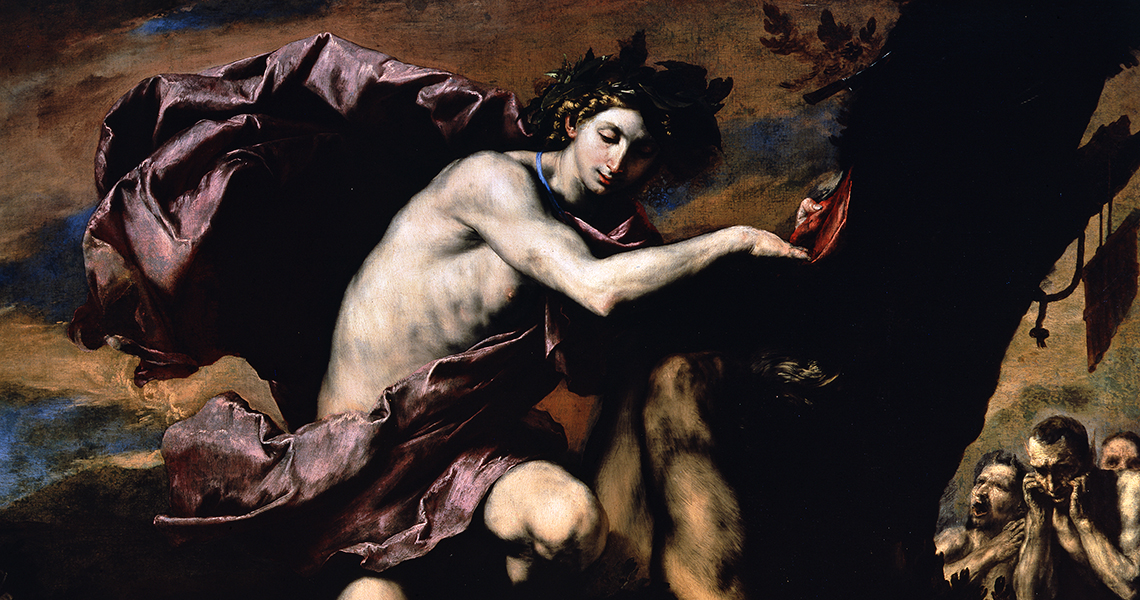
Panel discussion: Spanish Women Artists in the UK, Edmond J. Safra Lecture Theatre, King’s College London, 11/09/2018, 7–9 pm

Spanish Women Artists in the UK

Four Spanish women artists based in the UK discuss their experiences and achievements in the Performing and Visual Arts:  Tamara Rojo, Artistic Director of the English National Ballet;  Angela de la Cruz, visual artist;  Paula Paz, associate director of the Cervantes Theatre; and Isabel del Rio, poet and writer.  The discussion will focus on how their Spanish background informs their work, on the unique artistic perspectives of biculturalism and bilingualism, and on their contribution to British Art and London’s cultural scene.
Event hosted by Idil Sukan, artist and photographer.
Tamara Rojo was appointed Artistic Director of English National Ballet in 2012.  She combines this role with her dancing career, performing as Lead Principal with the Company.  In January 2016 Tamara Rojo became D.A. Magna Cum Laude, presenting her thesis ‘Psychological Profile of the Elite Dancer – Vocational Characteristics of the Professional Dancer’ at Rey Juan Carlos University, and was awarded a CBE for her services to ballet in the Queen’s 2016 New Year’s Honours.
Angela de la Cruz studied Philosophy at the University of Santiago de Compostela.  In the late 80s she moved to London where she studied at Chelsea College of Art and later at Goldsmiths College and Slade School of Art.  She has exhibited in galleries all over the world, including the show entitled “After”, her first solo exhibition in the UK at Camden Arts Centre in April 2010.  In May 2010 she was nominated for the Turner Prize.
Paula Paz is co-founder and Associate Director of the Cervantes Theatre and the Spanish Theatre Company.  She is a theatre director and former professional ballet dancer and holds an MA with distinction in theatre directing from Mountview Academy of Theatre Arts.  She has directed The Little Pony, The Swallow, Darwin’s Tortoise, Knives in Hens, Eigengrau, History of a Staircase and Hay que deshacer la Casa.
Organized by Instituto Cervantes in collaboration with Spanish, Portuguese and Latin American Studies (SPLAS) at King’s College London, The Spanish Women Network and the British Spanish Society.
For more information, click here. Free admission, RSVP.

Edilia and François-Auguste de Montêquin Fellowship, Society of Architectural Historians, deadline 30 September, 2018


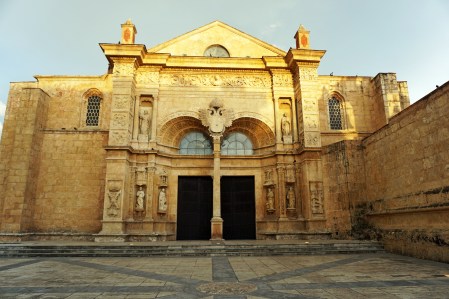
catedral_primada_sd_01_2018_7934
Cathedral of Santa María la Menor, Santo Domingo

This award provides support for travel related to research on Spanish, Portuguese, or Ibero-American architecture.

The awards consist of a $2,000 stipend for a junior scholar and a $6,000 award for a senior scholar. The awardees will be notified in December and will be recognized at the SAH 72nd Annual International Conference in Providence, Rhode Island (April 24–28, 2019). The awards will be announced in the May 2019 issue of the SAH Newsletter.

This fellowship is intended to support the research of junior scholars (usually scholars engaged in doctoral dissertation research) annually, and senior scholars (scholars who have completed their PhD or equivalent terminal degree) every other year in even-numbered years (2020, 2022, 2024, etc.). The research to be supported must focus on Spanish, Portuguese, or Ibero-American architecture, including colonial architecture produced by the Spaniards in the Philippines and what is today the United States. The applicant must be a current member of SAH.

Following completion of travel and research supported by the fellowship, each de Montêquin Fellowship awardee must submit a written report summarizing their research and explaining what travel was undertaken and how funds were spent. The report will be submitted to the SAH office no later than three months following the completion of work related to the fellowship. Awardees are required to upload images to SAHARA (a minimum of 50  for junior scholars and a minimum of 150 for senior scholars).

You will need two recommendations to apply for this fellowship, a description of the research project on Iberian or Ibero-American architecture to be funded (500 words maximum), a current curriculum vitae (5 pages max), and a statement of purpose.

Applications for the 2019 Edilia and François-Auguste de Montêquin Fellowship will open at 3 pm CDT on August 1, 2018, and close on September 30, 2018.

Click here for more information and to complete the application form.

Featured Exhibition: Gala Salvador Dalí: A Room of One’s Own in Púbol, Museu Nacional d’Art de Catalunya, Barcelona, until 14 October

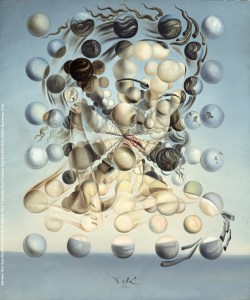
gala_placidia_esferes
Salvador Dalí. Gala Placidia. Galatea of the Spheres, 1952. Fundació Gala- Salvador Dalí, Figueres © Salvador Dalí, Fundació Gala-Salvador Dalí, VEGAP, Barcelona, 2018

Gala (7th September 1894 – 10th June 1982), born into a family of intellectuals from Kazan (Russia), spent her childhood in Moscow before moving to Switzerland and then Paris. There she befriended such prominent members of the surrealist movement as Max Ernst. In 1929 she travelled to Cadaqués, where she met Dalí. The two fell in love and started to live together, first during an eight-year exile in the United States and then in Portlligat, New York and Paris.

Gala, an enigmatic and intuitive lady famous as Salvador Dalí’s wife, muse and model, is the subject of this exhibition. Abandoning traditional stereotypes on the role of this figure, the show follows her transformation into a fully-fledged artist, exploring her artistic cooperation with Dalí and revealing the possible shared authorship of some works.

Click here for more information.

Call for Applications: Sculptural Workshops, Botín Foundation, Santander, 17–28 September 2018—deadline 10 August

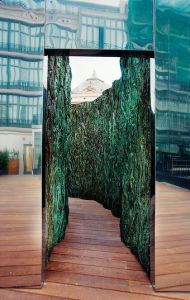
901c9487cb6fed6497d73096ee245fbd-cristina-iglesias-land-artSince 1994, the Sculptural Workshops of the Botín Foundation have brought together in Santander young artists from all over the world, to work alongside major figures from the art world. For its next edition, which will take place between September 17 and 28, 2018, the sculptor Cristina Iglesias (San Sebastián, 1958) proposes a research workshop based on her work process, from intimate reflection in the studio through to the implementation of the project in the public sphere. Cristina Iglesias (winner of Spain’s National Sculpture Prize in 1999) is one of the most internationally recognized Spanish artists. Famous for her sculptural works, with suspended pavilions, lattices, corridors and labyrinths, the artist combines industrial materials and elements of nature in her works to create unusual places and spaces of experience. For two weeks, 15 artists will live with Iglesias exchanging experiences and shared work while developing their own personal project, which can also be shared with the public in an open day. The participants in the workshop will propose a project on a topic involving drawings, texts, plans, models or video, and in a place chosen by them that they will develop during their stay. Participants will also visit the city of Santander and its surroundings to discover places or contexts that will help them to develop their project. In addition the artists will visit the foundry in Éibar where Iglesias works, and her installation on the island of Santa Clara de San Sebastián.

The installation of the exhibition CRISTINA IGLESIAS: ENTRƎSPACIOS / INTERSPACES at the Botín Center 6 October 2018 – 24 February 2019 will allow them to discover in a practical way how the artist’s work occupies the space. As a final point of the workshop, the artists will present and defend their project before a panel of professionals who will study and evaluate the projects. The deadline for submitting applications to the workshop is August 10, 2018.

For further information about the workshop and grants towards accommodation and maintenance click here.

A new Murillo at the Museu de Belles Arts, Valencia

Monja_Murillo_ColDelgado_dThe Fine Arts Museum in Valencia has received the outstanding loan of an unpublished painting by Murillo, Nun in Prayer (1665–70), part of the Delgado Collection. The painting will be located in the room dedicated to Spanish Baroque art, in the company of other works attributed to and influenced by Murillo, as well as works by Velázquez, Van der Hamen, Yepes, Ribalta, Ribera, etc.

Click here for more information about this work

CFP: Sacred Images in the Iberian Americas until 1700: Processes, Strategies and Agents, Renaissance Society of America Annual Meeting, Toronto, 17-19 March 2019

1024px-our_lady_of_guadalupeSACRED IMAGES IN THE IBERIAN AMERICAS UNTIL 1700: PROCESSES, STRATEGIES AND AGENTS

This panel proposes an approach to the phenomenon of sacred images through three main elements: processes, strategies and agents. The mark of the sacred and the miraculous was achieved by different procedures: hierophanies, thaumaturgy, paranormal phenomena (sweating, weeping, mobility). Definitely, the agency of the sculpture or the painting of religious images blossomed in the Iberian Americas, in need of tradition and sacralization.
Texts about the inventio, the hierophany and other manifestations of the image relate the processes of creation and the evolution of these images until marked by the sacred. In most cases, they follow patterns, repeated to the point of being able to establish a rhetoric of the sacred image. In many cases, these stories, regardless of their historical veracity, provide us valuable information about the strategies devised by the agents. Empowered by their sacred image, these agents (religious orders, patrons…) are in a position to get economic benefits (charity, exemptions), political ones (preferential treatment), and they can build an identity at various levels (territorial, ethnic, political…). The huge amount of textual and visual sources allows to deal with case studies in order to understand the crucial role of the image, through the sacred, in the Ibero-American space of this time.
We invite submissions of proposals for 20 minutes presentations that explore case-studies or some of the many aforementioned aspects of sacred images in the Iberian Americas (also Iberian Asia can be considered) between 16th and 17th century.
Please submit abstracts (200 words maximum), along with a title and a CV (300 word maximum including full name, current affiliation and email address) to Escardiel González (escardielge@gmail.com) and Daniel Expósito Sánchez (daniel.exposito@upr.edu) by August 10, 2018.

More information in: https://www.rsa.org/blogpost/1696697/Art-History-CfPs-for-RSA-2019-Toronto

CFP: Visualizing Scientific Thinking and Religion in the Early Modern Iberian World, CAA 107th Annual Conference, New York, February 13–16, 2019

img2
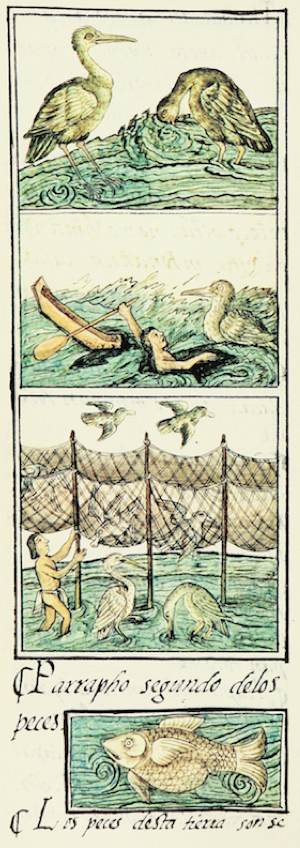
Fray Bernadino de Sahagún, The Florentine Codex, 1540–85

Chairs: Brendan C. McMahon (bcmcmaho@umich.edu), Emily Floyd (emilycfloyd@gmail.com)

In recent years, the consideration of visual and material sources has greatly enriched the study of a wide range of scientific practices in the early modern period. As scholars have moved away from characterizing “art” and “science” as discrete categories, they have increasingly turned to paintings, prints, and other forms of artistic production as a means to explore how early modern actors came to understand their experiences of the natural world. While the vast majority of these studies focus on the visual and material culture of Protestant Northern Europe, a small but growing number investigate similar trends in Spain and the Spanish Americas. Yet even as scholars have turned to instances where visual thinking formed a central component of scientific practices in this region, they have been more tentative to consider how religion, and particularly Catholicism, shaped such practices in this context.
This session seeks papers that consider the intersections of visual production, scientific thinking, and religion in the early modern Iberian world, investigating such themes as:
• Material culture, techne, and artisanal epistemologies
• The mobilization of indigenous American and creole systems of natural knowledge
• The Catholic Enlightenment
• Healing, disease, and visual production
• Visual and material culture, theology, and natural philosophical argument
• Epistemic images in the early modern Iberian world
To submit a proposal, please email a 250-word abstract, CV, and proposal form to bcmcmaho@umich.edu and emilycfloyd@gmail.com by Monday August 6, 2018.

Closing soon: Picasso 1932 – Love, Fame, Tragedy at Tate Modern until 9 September 2018


This ground-breaking exhibition features more than 100 paintings, sculptures and drawings by Spain’s best-known artist gives an almost day-by-day coverage of his artistic and social activities during 1932, the year of his first retrospective at the Galerie Georges Petit in Paris. Offering a new insight on Picasso’s ‘year of wonders,’ the show brings together rarely seen masterpieces such as three extraordinary paintings of his lover Marie-Thérèse Walter, created over a period of just five days in March 1932 but separated ever since. 

The exhibition has been curated by Achim Borchardt-Hume, Director of Exhibitions, and Nancy Ireson, Curator, International Art, with Laura Bruni and Juliette Rizzi, Assistant Curators, Tate Modern. It is organised by Tate Modern in collaboration with Musée national Picasso-Paris.

Click here for more information.


Job: Assistant Professor (Research): Pemberton Fellowship for the Study of Spanish Art, Zurbarán Centre for Spanish and Latin American Art, University of Durham, UK

NNP-DURHAM_CONGREGATION_48This post is full-time and fixed term (1 September 2018 – 31 August 2019).

The Zurbarán Centre for Spanish and Latin American Art seeks to appoint an outstanding candidate to a one-year fixed-term Research Fellowship in Spanish and/or Neapolitan Art of the early modern period (1550-1750). This posts offer an exciting opportunity to make a major contribution to the development of research at the Zurbarán Centre in relation to Durham Castle (University College) at Durham University. The successful candidates will be expected to undertake internationally excellent research. There will also be the opportunity to contribute to teaching in the School of Modern Languages and Cultures, with which the candidate will be administratively associated, to a maximum of 6 hours per week. The appointment is tenable from 1 September 2018 or as soon as possible thereafter.

We welcome applications from exceptional scholars with research interests Spanish art of the Golden Age and/or Italian art of the Classical and Baroque period, with a particular focus on major artistic centres such as Rome and Naples; in addition to painting, sculpture and architecture, we welcome applications centred also on decorative arts and garden history. The Pemberton Fellow will be associated with University College, located in Durham Castle, which houses a remarkable artistic collection which includes Spanish and Italian 17th-century art. The candidate will enjoy full board at Durham Castle (including meals and accommodation, subject to income tax and National Insurance deductions) as well as a contribution towards research related expenses.

Click here for more information