Featured exhibition: Kinesthesia: Latin American Kinetic Art, 1954–1969, Palm Springs Art Museum, until 15 January 2018

boto-dplacements-optico-hydrauliques-logan-sebastian-beck-2015
Martha Boto, Déplacements optico-hydrauliques, 1970, Collection of Gérard and Maria Rose Guilbert, Paris. Courtesy of Sicardi Gallery, Houston, © 2017 Artist Rights Society (ARS), New York / ADAGP, Paris, Photograph by Logan Sebastian Beck

Kinesthesia: Latin American Kinetic Art, 1954–1969, Palm Springs Art Museum, 26 August 2017 – 15 January, 2018.

This exhibition is the first in-depth examination of the pioneering role played by South American artists in the international Kinetic Art movement of the 1950s and 1960s. Grounded by scholarly research into experimental art movements of the late 1940s and early 1950s in Buenos Aires, Caracas, and Rio de Janeiro.  Kinesthesia  begins its survey with the layered “vibrational” works created by Jesús Rafael Soto for the historic Le Mouvement exhibition at Galerie Denise René in Paris (1955) and goes on to explore more than fifty examples by nine artists, including the works of internationally well-known figures, such as Carlos Cruz-Diez, Gyula Kosice, and Julio Le Parc, alongside the less well known Martha Boto, Horacio García-Rossi, Alejandro Otero, Abraham Palatnik, and Gregorio Vardánega. The exhibition like that at Santa Barbara is part of the Getty Foundation supported Pacific Standard Time: LA/LA, an exploration of Latin American and Latino art in dialogue with Los Angeles.


ARTES Travel Scholarship Report: Maria Teresa Chicote Pompanin

artesThanks to the generosity of ARTES and Coll y Cortés, I was awarded a Travel Scholarships which gave me the opportunity to carry out field research in Spain during the Spring and Summer Terms of the academic year 2016-2017. Even if I was based in Madrid, my research was often conducted outside the capital and I had the chance to visit several medieval monuments linked to the PhD thesis I am writing at the Warburg Institute (London).

The goal of my PhD research is to demonstrate that the first two Marquises of Villena, Juan Pacheco (1419-1474) and Diego López Pacheco (c.1445-1529), dedicated enormous efforts and energies in organising a complex cultural programme aimed at counteracting the negative image of their family that the Catholic Monarchs had created through a powerful political propaganda. My research includes the analysis of material and written sources, as their combined reading in historical terms is one of the best tools to understand how historical memory could be manipulated through acts of patronage at the dawn of the Early Modern Period.

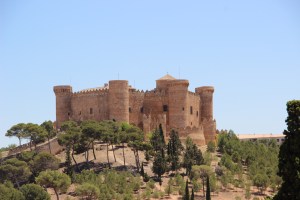
During my stay in Spain, I visited many cities and villages that belonged to the Marquises of Villena during the fifteenth and early sixteenth centuries. Some of the most impressive castles I visited were those of Villena, Almansa, Escalona, Garcimuñoz, Chinchilla and Belmonte. Among the religious buildings, the most relevant for my research were the monasteries of Santa María del Parral, Saint Cataline of Siena and St Francis in Belmonte. These trips helped me to answer three fundamental questions of my PhD research: How did the Pachecos insert these buildings in the pre-existent urban landscape? In which way were they used by the Pachecos? And finally, what was their meaning and how were they perceived according to the standards of the visual culture of their time?

Being in Spain not only allowed me to visit and study in situ many buildings and artworks promoted by the Marquises of Villena, it also gave me the opportunity to carry out documentary research in various archives. The majority of the documents linked to the Pacheco family are preserved in the Archive of the Nobility, today in the Tavera’s Hospital in Toledo, a perfect place for all those who are interested in studying the great noble families of the medieval and early modern periods. Nonetheless, I also found interesting documents in the National Archive, the National Library, the Biblioteca Francisco de Zabálburu and the Biblioteca of the Museo Lázaro Galdiano.

While I was in Spain, I also dedicated part of my time in Spain to the drafting of a paper I presented at the Kings and Queens Conference: In the Shadow of the Throne, organised by the Royal Studies Network, which analysed the links between Diego López Pacheco and the inheritors to the Crowns of the Iberian Kingdoms. At the same time, I also had the chance to assist to several lectures and seminars, activities that were a useful platform to interact with scholars who are developing their research in Spanish institutions such as the CSIC, the Universidad Complutense de Madrid, the Universidad Autónoma de Madrid, the Museo del Prado, etc.

Lecture: ” The Palace of Pedro I in Seville, ‘very much like the residence of the Muslim kings’?”, SOAS, 7pm, 11 October 2017

ISLAMIC ART CIRCLE at SOAS
Monthly Lecture

A 207
The Palace of Pedro I in Seville, ‘very much like the residence of the Muslim kings’?
Dr Tom Nickson
Wednesday, 11 October 2017
7.00 p.m., Khalili Lecture Theatre, Main Building, SOAS
Chaired by Professor Hugh Kennedy
Enquiries: rosalindhaddon@gmail.com

Introducing the Maius Workshop

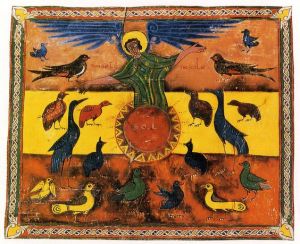
Morgan Beatus Angel Sun Rev 19The Maius Workshop is an interdisciplinary group that brings together graduate students and early career scholars dealing with Hispanic art (broadly considered to include literature, theatre, music, etc.) and history from the Middle Ages to the Early Modern Period. The aim of the Maius Workshop is to encourage dialogue among specialists in different stages of their academic life and to provide a forum for discussing methods of information gathering and research news. The group is kindly supported by ARTES.

The workshop is named after the tenth-century painter of the Morgan Beatus manuscript as it wishes to create an interdisciplinary space where scholars of art and history can interact. Through a series of reading group meetings, the Workshop aims to bring together young researchers tackling the study of Hispanic culture and history and to create a strong network of specialists of Medieval and Early Modern Iberia and Latin America.

Thanks to the new connections that the group will create, the meetings will develop current research rather than present finished projects. The group’s activities are directed to the diffusion of the interest in Iberian and Latin American cultural creations, with the long-term aim of establishing a permanent community open to all students of Hispanic art and history.

The Maius Workshop’s first meeting will take place on Monday 16 October at 6 pm at the Warburg Institute. This will be an informal meeting and an opportunity to meet postgraduate researchers with similar interests, to discuss how these interests can be drawn together in a reading group setting. The meeting is open to MA, PhD and early career researchers. Refreshments will be provided.

If you are interested in the activities of this research group or would like to attend the meeting, please fill in this form

Opens today: El Greco to Goya – Spanish Masterpieces from The Bowes Museum

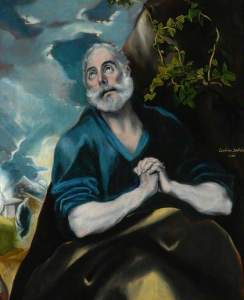
El Greco, 1541-1614; The Tears of St PeterEl Greco to Goya – Spanish Masterpieces from The Bowes Museum, 27 September 2017 – 7 January 2018, The Wallace Collection, London

In September 2017, the Wallace Collection presents El Greco to Goya – Spanish Masterpieces from The Bowes Museum: the first London exhibition of Spanish art from The Bowes Museum in County Durham, including works by Goya and El Greco.
This collaborative exhibition between the Wallace Collection and The Bowes Museum celebrates the partnership between these two great museums. Like the Wallace Collection, The Bowes Museum is the product of one family’s obsession with collecting great works of art. John Bowes and Richard Wallace – both illegitimate sons of aristocratic fathers – bequeathed collections of international significance to the nation.
The exhibition spans three centuries and explores one of the largest collections of Spanish art in Britain. The majority of these paintings were acquired by John and Joséphine Bowes between 1862 and 1863 from the collection of the Countess de Quinto in Paris, through the art dealer Benjamin Gogué. This collection was formed in Spain by the Conde de Quinto after the dissolution of the ecclesiastical institutions – known as Desamortización – carried out by the Government from 1835 to 1837.
On display are El Greco’s The Tears of Saint Peter, thought to be the artist’s earliest interpretation of this subject, Goya’s psychologically penetrating Portrait of Juan Antonio Meléndez Valdés and disturbing Interior of a Prison, plus perhaps less well known but outstanding works such as Antonio de Pereda’s Tobias Restoring his Father’s Sight. The works chosen explore a period of huge social, religious and political upheaval in Spain, providing a microcosm of the changes in style and subject matter during this period. The paintings complement works by Velázquez and Murillo on permanent display at the Wallace Collection.
The Wallace Collection’s Director, Dr Xavier Bray, says:
“El Greco to Goya is not only an unprecedented opportunity to see Spanish art of extraordinary power and significance in London, but also the beginning of an exciting relationship between the Wallace Collection and The Bowes Museum. Both institutions share a commitment to making great art accessible to wider audiences and we are looking forward to working closely together to develop a long term connection between London and the North East.”
The Bowes Museum’s Director, Adrian Jenkins, says:
“In 1892, when The Bowes Museum first opened its doors to the public, it had the largest public collection of Spanish paintings in the UK. As we mark 125 years since the creation of the museum, it is highly appropriate that the key works from this collection should be shared with London audiences, in keeping with John and Joséphine Bowes’ belief that great art should be made accessible to all. Neither John nor Joséphine Bowes survived to realise their vision, and they would be delighted to think that the best of their acquisitions would be shown at the Wallace Collection during this anniversary year, recognising that their gift to the people of County Durham is also a gift to the nation.”

The exhibition will be accompanied by a publication, El Greco to Goya: Spanish Masterpieces from The Bowes Museum, produced in collaboration with The Bowes Museum.

Postponed: Visit to Kingston Lacy, Dorset

Philip IV hunting Wild Boar (La Tela Real)
Diego Velázquez, 1599 – 1660 Philip IV hunting Wild Boar (La Tela Real) probably 1632-7 Oil on canvas, 182 x 302 cm Bought, 1846 NG197 https://www.nationalgallery.org.uk/paintings/NG197 – Currently on loan to Kingston Lacey


Please note that as very few members signed up for this trip (originally planned for November 9, 2017) the organisers have decided to postpone it until the new year.

Post-doc: 3 positions at the University of Louvain, ‘The origin and early development of philosophy in tenth-century al-Andalus: the impact of ill-defined materials and channels of transmission’

photoPost-doc: 3 position, 3-year contracts, ERC Advanced project 740618: The origin and early development of philosophy in tenth-century al-Andalus: the impact of ill-defined materials and channels of transmission (2017-2022), Université catholique de Louvain, Belgium
Deadline: 10 November 2017

PhilAnd is a five-year Advanced ERC project to start in October 2017 at the Université catholique de Louvain (UCL) under the supervision of Prof. Godefroid de Callataÿ. The objective of PhilAnd is to conduct a large-scale exploration of how, and under which form, philosophy appeared for the first time in al-Andalus. At the crossroads of several major lines of enquiries in modern scholarship and in line with recent discoveries having important chronological implications, PhilAnd focuses on the 10th century, a period usually disregarded by historians on the assumption that philosophy as such was not cultivated in the Iberian Peninsula before the 11th-12th centuries. Its originality is also to put emphasis on ‘ill-defined’ materials and channels of transmission, a field which remains largely unexplored. PhilAnd will be conducted in partnership with the Warburg Institute (University of London).
As part of this project, three post-doc positions of three years each (to start from 2 January 2018) are offered at the UCL in relation with the three following sub-projects (SP):
1) the Ikhwān al-afā’: This SP will aim at producing a comprehensive survey of all the elements which are likely to inform us about the chronology of redaction and – where applicable – of introduction into al-Andalus of the three works that have commonly been ascribed in sources to this most influential group of thinkers known as Ikhwān al-Ṣafā’ (‘The Brethren of Purity’), namely: a) the Rasā’il (‘the Epistles’); b) the Risāla Jāmi‘a (‘The Comprehensive Epistle’) and, c) the Risāla Jāmi‘at al-Jāmi‘a (‘The Super-Comprehensive Epistle’). This chronology is currently far from clear.
2) Ibn Washiyya and the Nabatean Corpus: This SP aims to evaluate the impact of the Filāḥa Nabaṭiyya (‘The Nabatean Agriculture’), a complex and enigmatic Arabic treatise on agriculture written in the Orient, on the development of both Islamic and Jewish Neoplatonism in al-Andalus from the 10th to the 12th century. The focus will be on the reception of the ‘philosophical’ and bāṭinī (rather than agronomical) aspects of the work, with the aim of understanding why this notoriously esoteric work remained so influential even to Jewish thinkers like Judah Halevi and Maimonides.
3) Ibn Masarra: This SP will lead to the first monograph entirely devoted to Ibn Masarra’s Kitāb khawāṣṣ al-ḥurūf (‘The Book of the Properties of Letters’), consisting of an extensively annotated translation of this mystical treatise, together with an in-depth exploration of its place in the history of ‘ilm al-ḥurūf, the Islamic science of letters – including its links with the Jewish Kabbala – up to the time of Ibn ‘Arabī. This will fill an important gap and provide a valuable resource for the study of Islamic mysticism in al-Andalus.

The qualifications required for any of these sub-projects are:

  1. a PhD in Islamic Studies, in Middle Eastern Studies, or related fields;
  2. an excellent command of Classical Arabic (the knowledge of additional languages such as ancient Greek, Latin and in particular Hebrew is considered an advantage);
  3. a first-rate track record and research experience;
  4. publications of articles in peer-reviewed international journals or monographs with recognized academic publishers;
  5. academic writing and presentation skills in English (the working language of the project);
  6. the ability to work both individually and as part of a team.

These three post-doc positions are full-time equivalent. They are offered for a period of 12 months, renewable twice (three years in total) upon good performance. The post-docs retained will be required to reside in Belgium for the whole period of their fellowship. They will be asked to contribute to the intellectual life of the ERC project and of the UCL.


How to apply?

Applications should be made via pdf files and contain the following:

(1) a cover letter setting out the candidate’s qualifications and motivation for applying for one of the three positions offered (maximum 2 pages);

(2) a curriculum vitae (maximum 3 pages);

(3) a list of publications;

(4) two samples of published work (articles, chapters) in pdf (preferably in English);

(5) a transcript of grades and/or copy of the PhD certificate;

(6) the name (with title, affiliation and email) of four people who have accepted to be contacted as potential referees.
Applications should be made electronically and sent to the following address:

godefroid.decallatay@uclouvain.be

The application deadline is 10 November 2017
Interviews will be arranged between 4 and 6 December 2017.

Candidates selected for the interviews will be contacted by mid-November 2017, and asked to write a short research design on a topic to be announced at that moment.

Employment should become effective from 2 January 2018.

Closing Soon: The challenge of white. Goya and Esteve, portraitists to the House of Osuna

d546d401-9747-4467-b080-19800ce5bc4d
Francisco de Goya, The Duke and Duchess of Osuna and their Children, 1787 – 1788. Oil on unlined canvas, 225 x 174 cm.

El desafío del blanco. Goya and Esteve, retratistas de la Casa de Osuna/portraitists to the House of Osuna, Museo Nacional del Prado, Madrid. Closes 1 October 2017

This displays presents for the first time in the Prado the portrait of Manuela Isidra Téllez-Girón, the future Duchess of Abrantes, which was painted in 1797 by Agustín Esteve y Marqués, and which was recently acquired with the help of funds from the donation by Óscar Alzaga Villaamil. The child’s portrait is considered one of the finest works by the Valencian-born Esteve, the most important court portraitist after Goya. The exhibition brings together for the first time all the portraits painted by Agustín Esteve of the children of the Duke and Duchess of Osuna, on loan from private collections such as the Fundación Casa Ducal de Medinaceli, the Colección Duque del Infantado, Colección Masaveu and Colección Martínez Lanzas-de las Heras. In addition the display is accompanied by portraits of the 9th Duke Osuna, Pedro de Alcántara Téllez-Girón (1755-1807) and his wife and cousin, María Josefa de la Soledad Alonso-Pimentel (1752-1834), and their five children by other court artists including Goya’s family portrait of 1787-88 and a miniature by Guillermo Ducker (fl. 1795-1830) of Joaquina Téllez-Girón, Marchioness of Santa Cruz. The exhibition’s title refers to Esteve’s and Goya’s ability to meet the challenge of representing the transparent and pristine white materials worn by their sitters.

This is the final purchase with the Alzaga funds and in October 2017 the Prado will display the other six paintings in the Alzaga donation, which range from the sixteenth-century to the middle of the nineteenth-century and include works by Sánchez Cotán, Herrera “el Viejo,” Antonio del Castillo, and Eugenio Lucas Velázquez. The display will be accompanied by a catalogue of the donation.

Concert: ‘Murillo Sacred and Secular in Spanish Art and Song’


da5c43ee-6513-40a9-ab0a-78880eb84af8
Murillo, Sagrada Familia del pajarito
 ©Museo Nacional del Prado

BSS Concert, VIII Edition: Murillo Sacred and Secular in Spanish Art and Song, Guildhall School of Music, London, Monday 23rd October, 6pm to 7pm followed by reception 

The concert will be a one-hour illustrated performance titled ‘Sacred and Secular in Spanish Art and Song.’ Curated by Ricardo Gosalbo and Professor Barry Ife, it will commemorate the 400th anniversary of the birth of Murillo. The programme features a rich and varied programme of songs and images celebrating four hundred years of the birth of the Spanish painter Bartolomé Esteban Murillo in 1617. Guildhall postgraduate singers perform settings of Spanish Golden-Age lyrics by Joaquín Turina, Eduard Toldrá, Joaquín Rodrigo, Joaquín Nin, Amadeo Vives, Fernando Obradors and Frederic Mompou against a vibrant backdrop of some of Murillo’s finest drawings and paintings.

Following the stunning performance, guests will have the opportunity to have a small wine reception with the performers.


Tickets: BSS members £15, non members: £25.

Tickets include a glass of wine.

55 tickets available. Book early to avoid disappointment.

Any benefits from ticket sales will go towards the BSS Grants which some of the Guildhall School of Music artists have won. This event is supported by the Guild Hall School of Music and the Embassy of Spain.