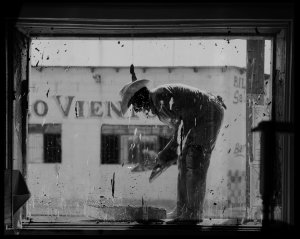
Leo Matiz (1917-1998) muralista de la lente, Antiguo Colegio de San Ildefonso, Mexico City. Closes 17 September 2017
Exhibition of 81 photographs by Colombian photographer and photojournalist Leo Matiz. Matiz established his reputation with his work in Mexico between 1941 and 1947, when he photographed artists and muralists such as Diego Rivera, Frieda Kahlo and David Siqueiros and became a close friends with José Clemente Orozco, as well as Latin American film stars and intellectuals and Spanish film directors such as Luís Buñuel. He subsequently mounted photographic campaigns in his native Colombia and in Venezuela in the 1950s, which were reproduced in periodicals such as Life and Paris Match. The exhibition also includes drawings, caricatures and Matiz’s notes to provide a context for his work.
This focused exhibition of paintings is inspired by a work in the Meadows Museum’s collection, Picasso’s Still Life in a Landscape (1915). In the early 20th century, Picasso and the Mexican artist Diego Rivera both lived and worked in Paris. Initially friends, in 1915 they fell out because Diego Rivera accused Picasso of plagiarising the foliage from one of his own paintings.
The source of Rivera’s ire was the perceived semblance between his 1915 Zapatista Landscape (The Guerrilla) and Picasso’s Seated Man (1915-16), which in its first iteration – as seen by Rivera in another visit to Picasso’s studio in August 1915 – was known as Man Seated in Shrubbery. Rivera noted acute similarities between his canvas and that of the early state of Picasso’s work; namely, both works featured a similarly structured still life set outdoors. The Mexican artist’s very specific complaint was his former mentor’s liberal borrowing of Rivera’s formulaic foliage – scumbled patches of green and white paint on a dark ground.
Picasso/Rivera: Still Life and the Precedence of Form takes as its point of departure another case study of the two artists’ works: Picasso’s Still Life in a Landscape (1915) at the Meadows, which will be displayed for the first time with Rivera’s Still Life with Gray Bowl (Lyndon Baines Johnson Presidential Library, Austin), painted in the same year. Exhibited in close proximity, these two paintings together encapsulate the two artists’ overlapping of themes and motif appropriation during that period.
Picasso/Rivera: Still Life and the Precedence of Form affords a closer look at the development of Picasso’s Still Life in a Landscape in the Meadows collection by presenting it together with its analogue from the Columbus Museum of Art as well as Rivera’s variation on the theme from Austin. The visual dialogue taking place in 1915 between these two giants of modern art will be further outlined through the display of Rivera’s 1915 Still Life with Bread Knife, a second generous loan from the Columbus Museum of Art. Beyond the rich anecdotes regarding the relationship of the two artists, this group of paintings provides an opportunity to find parallels as well as deviations between these canvases. In spite of limited wartime resources, 1914-15 proved to be a fecund era of creativity for both Picasso and Rivera.
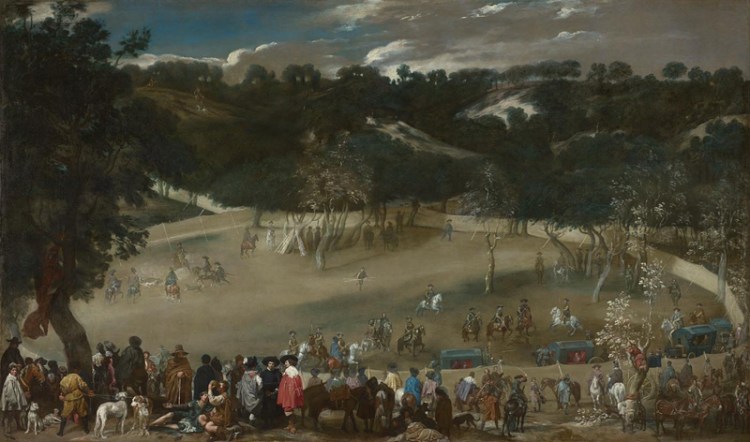
Diego Velázquez, 1599 – 1660 Philip IV hunting Wild Boar (La Tela Real) probably 1632-7 Oil on canvas, 182 x 302 cm Bought, 1846 NG197 https://www.nationalgallery.org.uk/paintings/NG197 – Currently on loan to Kingston Lacey
Tour of art collection and rooms. Kingston Lacy has works by Velasquez, Tintoretto, Rubens, Van Dyck and Breughel (Visits starts at 1030 approximately)
Lunch
Visit to grounds and kitchen garden, including Japanese gardens.
The visit cost per head is £14.50 for members and £20 for non-members.
National Trust Members will have free access but may be required to pay £2.50 for the tour with the curatorial team.
Provisional train times (to be confirmed in September):
-Train out at 0720 to arrive in Poole – taxi to Kingston Lacy for 1030;
-Return journey depart KL at 1600 for 1640 train from Poole to London arr 1906
To attend, please advise Susan Wilson (susanruddwilson@sky.com) by 20 September 2017. In your email, please specify if you are a National Trust member. Please make your own booking for the train & lunch if required.
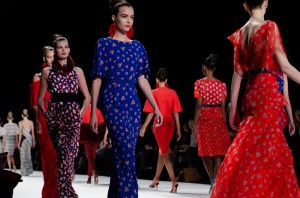
Revista Dobras, the Brasil’s most important academic journal dedicated to the history of fashion, is planning a special issue on fashion in Latin America for spring 2018. Contributions (articles, reviews and interviews) in Portuguese, English, French or Italian are sought until 15 October 2017.
Possible topic include:
– Fashion as heritage in latin America: collections, museums, exhibitions of regional or artistic costumes…
– Identity and representation in Latin America fashion: identity, exoticism, colonialism, neocolonialism in fashion
– Latin America in national and international media: the representation of Latin American fashion culture in magazines, newspapers, websites, blogs, TV series and films.
– Fashion education in Latin America
– The fashion worker in Latin America: the population’s participation in the clothing industry for multinational companies.
– Fashion and politics: relations between fashion and power, between industries and consumers.
– Fashion as a profession in latin America
– Popular fashion, artists’ designs and luxury
– Fashion as craft in Latin America
This conference brings together scholars, curators, filmmakers, writers, and post-graduate students from Latin America and the Caribbean, the United States, Europe, and the UK. It stems from the ongoing collaboration between members of staff from the programmes of Spanish, Portuguese and Latin American Studies at Birkbeck, University of London, UK and the Department of Hispanic Languages and Literatures, at the University of Pittsburgh, USA.
The processes we associate with contemporary forms of ‘globalization’ have – be they economic, political or cultural –spawned a variety of re-worldings that, via a number of transdisciplinary formations, have reconfigured the humanities, including Hispanism and Latin-Americanism, Cultural Studies, Postmodernism, Post-colonialism and even Post-structuralism being the most well-known. After the financial crisis, new (and not so new) trans, de-, and/or non-national or regional objects, subjects and assemblages are coming to the fore, redrawing and digitalizing established frontiers and differences as well as re-defining the politics of culture and its study. Before our very eyes, the transversal routes of migration world-wide are breaking down established frontiers, both in the old metropoli and in the so-called peripheries, at whose sites new cultural and political subjects are emerging. In the light of this global expansion of neoliberalism and new forms of governmentality, as well as the histories globalization brings into view, what are the concerns that are or should define the research agenda of a newly globalized Hispanism? In this conference, we revisit Luso-Hispanic and Latin@-American geographies, and reconsider the subjectivities emerging out of the above mentioned processes, in their varying conditions and trajectories, and also by way of the items in the material culture that conspire in their fashioning.
This conference is generously supported by The Birkbeck Institute for the Humanities (BIH) and the Centre for Iberian and Latin American Visual Studies (CILAVS), both at Birkbeck, University of London. The Instituto Cervantes has also provided support for this event. In collaboration with Canning House and the Centre for Iberian and Latin American Visual Studies (CILAVS), a conversation between Ticio Escobar and John Kraniauskas will be hosted on Thursday 23 November 2017. Further information TBA.
Programme
Friday 24th November
Venue: Birkbeck, University of London Clore Management Lecture Theatre, Clore Management Centre, Torrington Square, London WC1E 7JL
9.30-9.45am Welcome
Carmen Fracchia and Mari Paz Balibrea (CILAVS), Birkbeck, University of London
Session 1 Black Nations in Imperial Spain
Chair, Carmen Fracchia, Birkbeck, University of London
9.45-11.15am Elizabeth Wright, University of Georgia, ‘A Black Bard in the Court of Philip II’
Luis Méndez Rodríguez, University of Seville, ‘Another Way of Seeing Black Spain, Art, Society and Religion’
Helen Melling, Institute of Latin American Studies, University of London, ‘Envisioning Black Confraternities in Nineteenth-Century Peru’
11.15-11.30am Tea/Coffee Break
Session 2 New Ecologies/ Post-Indigenism/ Museum Cultures in Latin America* Chair, Luciana Martins, Birkbeck, University of London
11.30-12.45pm Sarah Radcliffe, University of Cambridge, ‘Border knowledges and socionatures: Sumak kawsay and de-/re-colonising food sovereignty in Ecuador’
Agata Lulkowska, PhD student, Birkbeck, University of London, ‘Transcending the borders of ‘indigenous’ filmmaking in Colombia’
Ticio Escobar, Museo de Arte Indígena Asunción, Lawyer, Author, Art Critic, and, former Minister of Culture of Paraguay, ‘Cultural critique as a positioning of the frontier, contemporaneity and difference’
*Please note that Ticio Escobar’s paper ‘La crítica cultural como posición de frontera, contemporaneidad y diferencia’ will be presented in Spanish.
12.45-2.30pm Lunch
Session 3 Transgressing Political Borders*
Chair, Luís Trindade, Birkbeck, University of London
2.30-4.00pm Polly Savage, SOAS, University of London, ‘Transnational Art Education and International Solidarity with Independent Mozambique’
Christabelle Peters, University of Bristol, ‘Mana Africa, The Cultural Politics of Female Solidarity in Cuban-African Cooperation’
Inês Galvão, PhD student, University of Lisbon, ‘Crossing struggles through militant journalism: anti-apartheid, feminism and anti-colonialism in the trajectory of Stephanie Urdang’
*Please note this panel will continue at Birkbeck Cinema after the break. The Birkbeck Cinema is in 43 Gordon Square, London WC1H 0PD.
4.00-5.00pm Tea/Coffee Break
6.00 – 9.00pm
Film Screening*: Spell Reel, 2017. Germany/Portugal/France/Guinea-Bissau. Directed by Filipa César. In Portuguese, Fula, Guinea-Bissau Creole, English, French; English subtitles. 96 min.
*To be screened with the presence of filmmaker Filipa César.
Spell Reel is the result of a multifaceted research and digitisation project that she initiated in 2011 with Sana na N’Hada and Flora Gomes. Having studied film in Cuba, the two began using the camera to observe the fight for independence in Guinea-Bissau (1963–74). After the decaying visual and audio material was digitised in Berlin, the filmmakers travelled with a mobile cinema to the places where the footage had originally been shot and showed it to audiences for the first time, adding their own commentary. They then moved on, also returning to Berlin. Spell Reel watches an archive at work to produce the present.
Programme
Saturday 25th November
Venue, Birkbeck, University of London. Room B36, Malet Street Main Building, London WC1E 7HX. Torrington Square entrance
Session 4 Deterrioralization-Reterriorilization
Chair, John Kraniauskas, Birkbeck, University of London
10-11.30am Juan Duchesne-Winter, University of Pittsburgh, ‘Neoanimism, South-South deterritorializations’
Jerome Branche, University of Pittsburgh, ‘The Bones of San José: Of Memory, Museums, and the Necropolitics of Slavery’
Conrad James, University of Birmingham, ‘You Should Know the Score by Now’, Spanish Caribbean (Native) New Yorkers’
11.30-11.45am Tea/Coffee Break
Session 5 Spaces of Flow, Travel and Friction
Chair, Patricia Siqueiras Bras, Birkbeck, University of London
11.45-1.15pm Rory O’Bryen, University of Cambridge, ’The Fetish of Flow, Circulating Capital and The Novel in Nineteenth-Century Colombia’
Toby Green, King’s College London, ‘Travelling Concepts in the Atlantic World, Decoding Origins, Rethinking Alternatives’
Juan Poblete, University of California-Santa Cruz, ‘Americanism/o, Latin/o American frictions inside the United States’
1.15-3.00pm Lunch
Session 6 Latin Americanism in its Transtemporal Globality
Chair, Emily Baker, Birkbeck, University of London
3.00-4.30pm Gonzalo Lamana, University of Pittsburgh, ‘Unthinkable Indians, Race, Coloniality and Metanoia in Colonial Peru’
Daniel Balderston, University of Pittsburgh, ‘Piglia’s Diaries, Recovering the Gestation of Plata quemada’
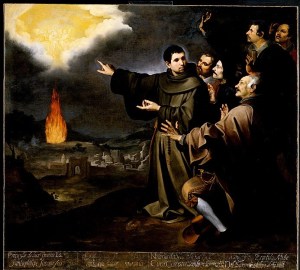
Bartolomé Esteban Murillo, Fray Julián of Alcalá’s Vision of the Ascension of the Soul of King Philip II of Spain, 1645-46, Clark Art Institute
The Clark Art Institute’s Research and Academic Programme recently received a $150,000 grant from the Center for Spain in America that provides funds to host a series of fellowships over the next three to six years to encourage the study of Spanish art. The first fellowship, available for the 2018–19 academic year, is open to candidates from all nations.
The Center for Spain in America (CSA) promotes advanced study and public awareness of Spanish art and visual culture in the United States, also focusing on the history of Spanish presence and the influence of Spanish art and culture on North America. CSA cooperates with universities, libraries, archives, museums, and other educational or cultural institutions fostering academic excellence in the field of Spanish studies in the United States and supporting activities such as symposia, lecture series, exhibitions, and publications.
The CSA Fellowship at the Clark will focus on the study of all aspects of Spanish art from the early medieval period to the beginning of the twentieth century, and on the worldwide impact of Spanish art and artists. The programme is open to scholars or museum professionals researching individual Spanish artists or specific works of art; pursuing projects that include particular periods, geographic regions, subjects, or themes in Spanish art; studying the collecting and connoisseurship of Spanish art, particularly in the Americas; and examining the influence and importance of Spanish art and its reception throughout the world. It is anticipated that CSA Fellows may undertake publishing projects and/or exhibition research activities during their tenure at the Clark.
The Center for Spain in America is affiliated with the Madrid-based Centro de Estudios Europa Hispánica. José Luis Colomer, a noted scholar of Spanish art, directs both organizations and has worked closely with Olivier Meslay, Felda and Dena Hardymon Director of the Clark, to establish the new programme.
The CSA Fellowship underscores the Clark’s international initiatives. Over the last decade, the Research and Academic Programme has hosted a number of leading Spanish scholars as fellows, including several curators from the Museo del Prado, Madrid. The Clark and the Prado have also forged a strong collaborative curatorial relationship. In 2010, the Clark lent its entire collection of works by Pierre-Auguste Renoir to the Prado for the highly successful exhibition Pasión por Renoir. In 2016, the Prado reciprocated by lending many of its finest works to the Clark for the exhibition Splendor, Myth, and Vision: Nudes from the Prado.
ARTES will post more information on the fellowship as it becomes available.
Diego Velázquez, 1599 – 1660 Philip IV hunting Wild Boar (La Tela Real) probably 1632-7 Oil on canvas, 182 x 302 cm Bought, 1846 NG197 https://www.nationalgallery.org.uk/paintings/NG197 – Currently on loan to Kingston Lacey
Tour of art collection and rooms. Kingston Lacy has works by Velasquez, Tintoretto, Rubens, Van Dyck and Breughel (Visits starts at 1030 approximately)
Lunch
Visit to grounds and kitchen garden, including Japanese gardens.
The visit cost per head is £14.50 for members and £20 for non-members.
National Trust Members will have free access but may be required to pay £2.50 for the tour with the curatorial team.
Provisional train times (to be confirmed in September):
-Train out at 0720 to arrive in Poole – taxi to Kingston Lacy for 1030;
-Return journey depart KL at 1600 for 1640 train from Poole to London arr 1906
To attend, please advise Susan Wilson (susanruddwilson@sky.com) by 20 September 2017. In your email, please specify if you are a National Trust member. Please make your own booking for the train & lunch if required.
Intended to celebrate the Museum’s 150th anniversary, this display focuses on the most important Roman monument in the city, whose architectural and sculptural fragments have formed part of the Museum’s collections since its early history. The exhibition also includes archival documents, sketches, plans and notes made by the mid-nineteenth century excavators of the Roman temple.
In September 2017, the Wallace Collection presents El Greco to Goya – Spanish Masterpieces from The Bowes Museum: the first London exhibition of Spanish art from The Bowes Museum in County Durham, including works by Goya and El Greco.
This collaborative exhibition between the Wallace Collection and The Bowes Museum celebrates the partnership between these two great museums. Like the Wallace Collection, The Bowes Museum is the product of one family’s obsession with collecting great works of art. John Bowes and Richard Wallace – both illegitimate sons of aristocratic fathers – bequeathed collections of international significance to the nation.
The exhibition spans three centuries and explores one of the largest collections of Spanish art in Britain. The majority of these paintings were acquired by John and Joséphine Bowes between 1862 and 1863 from the collection of the Countess de Quinto in Paris, through the art dealer Benjamin Gogué. This collection was formed in Spain by the Conde de Quinto after the dissolution of the ecclesiastical institutions – known as Desamortización – carried out by the Government from 1835 to 1837.
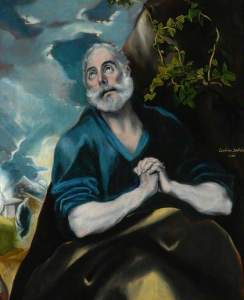
On display are El Greco’s The Tears of Saint Peter, thought to be the artist’s earliest interpretation of this subject, Goya’s psychologically penetrating Portrait of Juan Antonio Meléndez Valdés and disturbing Interior of a Prison, plus perhaps less well known but outstanding works such as Antonio de Pereda’s Tobias Restoring his Father’s Sight. The works chosen explore a period of huge social, religious and political upheaval in Spain, providing a microcosm of the changes in style and subject matter during this period. The paintings complement works by Velázquez and Murillo on permanent display at the Wallace Collection.
The Wallace Collection’s Director, Dr Xavier Bray, says:
“El Greco to Goya is not only an unprecedented opportunity to see Spanish art of extraordinary power and significance in London, but also the beginning of an exciting relationship between the Wallace Collection and The Bowes Museum. Both institutions share a commitment to making great art accessible to wider audiences and we are looking forward to working closely together to develop a long term connection between London and the North East.”
The Bowes Museum’s Director, Adrian Jenkins, says:
“In 1892, when The Bowes Museum first opened its doors to the public, it had the largest public collection of Spanish paintings in the UK. As we mark 125 years since the creation of the museum, it is highly appropriate that the key works from this collection should be shared with London audiences, in keeping with John and Joséphine Bowes’ belief that great art should be made accessible to all. Neither John nor Joséphine Bowes survived to realise their vision, and they would be delighted to think that the best of their acquisitions would be shown at the Wallace Collection during this anniversary year, recognising that their gift to the people of County Durham is also a gift to the nation.”
The exhibition will be accompanied by a publication, El Greco to Goya: Spanish Masterpieces from The Bowes Museum, produced in collaboration with The Bowes Museum.

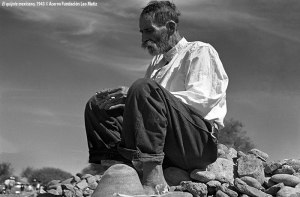 Leo Matiz (1917-1998) muralista de la lente, Antiguo Colegio de San Ildefonso, Mexico City. Closes 17 September 2017


 El Greco to Goya – Spanish Masterpieces from The Bowes Museum
 ARTES
ARTES 