Doctoral Studentship for Spanish Architecture at the University of Warwick

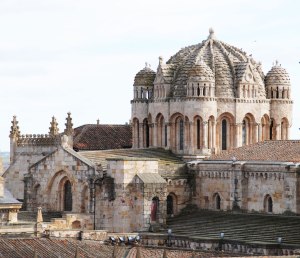
zamora_15825The university of Warwick is offering a Doctoral Studentship to a UK/EU candidate, focusing on ‘Petrifying Wealth: Religious buildings in Zamora, 11th-13th Centuries: building processes, forms and functions’

Outline of the project 

The construction of churches or church buildings is obviously as old as the dominance of Christianity in Western societies. The petrification of ecclesiastical wealth, however, implied a more recognisable and enduring presence for this institution throughout the medieval landscape, both urban and rural. The building of churches, and to a lesser extent monasteries, was also promoted by the laity. These were initiatives and investments that were partly religious in origin, in so far as they were ways to ensure the eternal salvation of the founders or of the community involved. The proliferation of masonry-built churches may also raise the question of other objectives of the secular world. Sometimes the laity invested in churches to provide a new, or at least a stronger, more formalised and more recognizable community identity.

Aims and Objectives
The aims and objectives therefore constitute four research strands:

• Contribution to the analysis of the material evidence both on a macro scale and regionally. Census and systematization through a database of churches in the regions selected through a Geographic Information System (GIS).

• Census and chronology of the foundations of family churches, paying particular attention to those endowed by women.

• Estimation of construction costs. Evaluation of aspects related to the production and transport of the materials used, the distance from the quarries of origin, the use of new stone and the reuse of old materials.

• Testing of the hypotheses concerning the functionality and use of the elements of the churches.

Methodology
Fieldwork in Zamora will identify the buildings that will form the focus of the study and these will then be examined archaeologically to determine the materials and the means of construction. Particular attention will focus on the precise recording of masons’ marks and on the compilation of a database of these marks and their locations for each building. These databases will be integrated into the larger database of the whole Petrifying Wealth project.

Outcome
The research will make a substantial contribution to the overall project and will form a discrete section of the database of material relating both to Spain and to the wider context of the project. It will inform further debate on the construction of stone buildings in medieval Europe and the means and methods of construction.

Studentship
The PhD studentship will be based at the CSIC in Madrid, and at the University of Warwick and will be supervised by Dr Therese Martin (CSIC) and Dr Jenny Alexander.

The student will be based in Madrid, have the status of a pre-doctoral fellow at the CSIC and will be expected to participate in CSIC activities. Although English is widely used at the CSIC, working knowledge of Spanish will be needed. Supervisions, by Skype and in person, will be at Warwick.

Applications are welcome from Students from the UK and the EU.

The studentship will cover home/EU fees (full time) and a stipend for UK students or EU students of 22,350 euros, rising to 27,000 euros per annum for three years.

Candidates ideally should have a First Class Honours degree in History of Art or a related discipline and a distinction-level Masters degree in History of Art or a related discipline.

Applications should include a statement of not more than 1,000 words indicating what skills and experience they will bring to the project, a current CV, a transcript of qualifications to date (and anticipated results if you are still studying for your MA), two letters of recommendation plus a writing sample (either a full essay or MA dissertation).

The deadline for applications is March 31st 2018 with interviews to be held in April 2018.

Applications should be made via the University of Warwick online application form.

Please make clear in your online application that you are applying for the Petrifying Wealth studentship.

If you wish to discuss the project in more details please email jennifer.alexander@warwick.ac.uk

Training and Support
Training needs will be assessed immediately after appointment as the level and type of training required will depend on the focus of the research proposal and the skills that the student brings to the discipline.

The student will also be able to participate in workshops offered by Warwick’s Centre for Advanced Doctoral Research Excellence (CADRE) and courses in information technology provided by Warwick’s IT services.

At the beginning of year 2 and 3 a review of training needs will be undertaken by the supervisors, and the regular supervision meetings will monitor this and identify any additional requirements.

Dissemination Plans
The research findings will be disseminated via a 80,000 word doctoral thesis, conference papers, and future publications such as articles, to be submitted beyond the completion date of the project. The results will be incorporated in the Petrifying Wealth database as part of a continuing research resource.

Closing Soon: The Auckland Project at Sotheby’s: Paintings from the Spanish Gallery, Sotheby’s New York

Open until 11 February
1334 York Avenue, New York, NY 10021

auckland_2
Juan Bautista Maíno, The Penitent Magdalene The Auckland Project/Zurbarán Trust

This exhibition features a selection of outstanding Spanish Old Master paintings by such artists as Juan de Juanes, Juan Bautista Maíno, Juan van der Hamen, Francisco Bayeu and others. Acquired by The Auckland Project through Sotheby’s, these works will feature in the collection of the Spanish Gallery in Bishop Auckland, North East England, due to open in 2019. The Gallery forms part of an inspiring initiative to create a world-class visitor destination and revitalise this former industrial town through employment, training and educational opportunities.

The exhibition catalogue is available online at this link.

Lecture: Barbaro Martinez-Ruiz, The Impossible Reflection: A New Approach to African Themes in Wifredo Lam’s Art (Cuba, 1902-1982), Oxford, 8 February 2018

Wifredo Lam, The Jungle, 1943, MOMA, New York
Thursday 08 February 2018, 5 pm, University of Oxford, Latin American Centre Seminar Room, 1 Church Walk, Oxford

Bárbaro Martínez-Ruiz (B.A the University of Havana, Ph.D. Yale University, 2004), is an Art Historian with expertise in African and Caribbean artistic, visual and religious practices, whose work challenges traditional disciplinary boundaries and examines the varied understandings of – and engagement with – ‘art’ and ‘visual culture’. Following professorships at Havana’s High Institute of Art from 1993-1997, the Rhode Island School of Design from 2002-2004 and Stanford University from 2004-2013, Martinez-Ruiz joined the University of Cape Town, where he has served as the head of the Art History and Discourse of Art Department since 2013. He is the 2017-2018 recipient of the Leverhulme Visiting Professorship, hosted by Oxford’s School of Interdisciplinary Area Studies, and a Senior Fellow at St Antony’s College. His books include Kongo Graphic Writing and Other Narratives of the Sign, Temple University Press, 2013 (English) and El Colegio de México, 2012 (Spanish); Faisal Abdu’Allah: On the Art of Dislocation, Atlantic Center of Modern Art Press, 2012 and Art and Emancipation in Jamaica: Isaac Mendes Belisario and his Worlds, Yale University Press, 2007, for which he received the College Art Association Alfred H. Barr Award. Other recent publications include Ma kisi Nsi: L’art de habitants de region de Mbanza Kongo, in Angola figures de pouvoir. (Paris: Dapper Museum Press, 2010); Writing Bodies in the Bakongo Atlantic Experience, in Performances: Challenges for Art and Anthropology. (Quai Branly Museum Press, 2010); Funerary Pots of the Kongo in Central Africa, in African Terra Cotta: A Millenary Heritage. (Geneva: Musee Barbier Mueller Press, 2008), The Impossible Reflection: A New Approach to African Themes in Wifredo Lam’s Art, in Wifredo Lam. (Miami: Perez Art Museum Press, 2008). In addition to his research and teaching, Martinez-Ruiz is an active curator, whose shows have explored issues of visual communication, dislocation and hybridity in the work of contemporary artists across the African diaspora. He also serves as an editor for the Cuban Studies Magazine and Harvard’s Transition Magazine and was a researcher for Pacific Standard Time AL at the Getty Foundation and the Museum of Latin American Art, Los Angeles California from 2014-16.

Convened by Eduardo Posada-Carbo

Featured Exhibition: Drawings by Rosario Weiss

litoBiblioteca Nacional de España, Madrid, until 22 April 2018
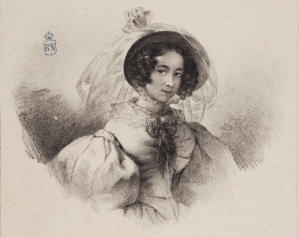
This exhibition features more than a hundred drawings by Rosario Weiss (Madrid, 1814‒1843) as well as a few prints and paintings. It sets out to show the work of an outstanding draughtswoman who is better known for her relationship with Francisco de Goya (1746‒1828) than for her artistic career.

Weiss was one of the few women to join the San Fernando Royal Academy of Fine Arts—as an academician of merit for History Painting—and she achieved her highest distinction in 1842 when she was appointed as drawing instructor to Isabella II and her sister, the Infanta Luisa Fernanda. She held this post for a very short time, as she died of cholera the following year.

Curated by Carlos Sánchez Díez, the display brings together works from the Biblioteca Nacional, the Museo Lázaro Galdiano, the Bibliothèque municipale de Bordeaux, the Museo del Prado, the Museo del Romanticismo and private collections, as well as pieces from other museums and Spanish public institutions.

This exhibition has been organised by the Biblioteca Nacional de España, Museo Lázaro Galdiano and Centro de Estudios Europa Hispánica.

Click here for more information.

The exhibition catalogue, About the exhibition catalogue, authored by Carlos Sánchez Díez, can be purchased on the CEEH’s website with 10% discount on online orders until 15 February.

Opens Today: Zurbarán’s Jacob and His Twelve Sons: Paintings from Auckland Castle at The Frick Collection, New York

From January 31, 2018 to April 22, 2018

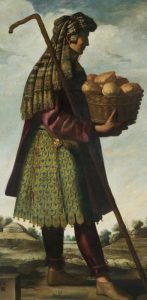
zurbaran_asher-343x700In collaboration with the Meadows Museum, Dallas, Texas, and The Auckland Project, County Durham, England, The Frick Collection is organising an exhibition of Jacob and His Twelve Sons, an ambitious series of thirteen paintings that depict life-size figures from the Old Testament. On loan from Auckland Castle, the works by the Spanish Golden Age master Francisco de Zurbarán (1598–1664) have never before traveled to the United States. Now on view in Dallas through January 7, 2018, Jacob and His Twelve Sons will be shown at The Frick Collection from January 31 through April 22, 2018. In preparation for this unprecedented American tour, these important seventeenth-century Spanish paintings, dating from the 1640s, have undergone a year-long in-depth technical analysis in the conservation department at the Kimbell Art Museum, Fort Worth, the most extensive study of the series to date. For its New York showing in 2018, the exhibition will be coordinated by The Frick Collection’s Senior Curator, Susan Grace Galassi.

Click here for more information.

Featured Exhibition: The Auckland Project at Sotheby’s: Paintings from the Spanish Gallery, Sotheby’s New York

Open until 11 February
1334 York Avenue, New York, NY 10021

auckland_2
Juan Bautista Maíno, The Penitent Magdalene The Auckland Project/Zurbarán Trust

This exhibition features a selection of outstanding Spanish Old Master paintings by such artists as Juan de Juanes, Juan Bautista Maíno, Juan van der Hamen, Francisco Bayeu and others. Acquired by The Auckland Project through Sotheby’s, these works will feature in the collection of the Spanish Gallery in Bishop Auckland, North East England, due to open in 2019. The Gallery forms part of an inspiring initiative to create a world-class visitor destination and revitalise this former industrial town through employment, training and educational opportunities.

The exhibition catalogue is available online at this link.

Job: Lecturer/senior lecturer in art history c. 1400-1800

1280px-the_courtauld_institute_of_art_logo-svg

Salary:  Competitive salary
Closing Date:  Wednesday 21 February 2018
Interview Date:  See advert
Reference:  189

The Courtauld Institute of Art is the UK’s leading institution for teaching and research in Art History and the conservation of paintings; it is also home to one of the finest small art museums in the world. The Art History department has an outstanding research and teaching record from Late Antiquity to the Contemporary with an increasingly global outlook, and embraces its diversity of theoretical approaches and methodologies.

The Courtauld wishes to appoint a full-time Lecturer/Senior Lecturer in Art History, to begin on 1 September 2018. The successful candidate will complement the existing teaching strengths of the Department and will have a research focus in any region or period from c.1400-1800. We seek an art historian who situates their research in a wider, global context, and who shares a ‘decentred’ approach that avoids focus on only a single part of the world. An ideal candidate would be able to teach across at least one other field in a way directed by concepts of exchange and interaction, and to build bridges with other areas of art historical investigation. The candidate is expected to be able to situate their work in the theoretical and historiographical debates in their specialised research area and also engage with current issues in global Art History.

The appointee will research and publish to the highest quality and will actively pursue and apply for appropriate research grants; will provide inspiring teaching at both undergraduate and postgraduate levels; and will play an active role in the life and administration of The Courtauld.

PAY: Grade 6 (£36,644 to £41,958) or Grade 7 (£43,117 to £49,461), depending on experience

DEADLINE FOR APPLICATIONS: 21 February 2018, 23:59 GMT

INTERVIEW DATE: Interviews will be held in the week of 19 March 2018

Art historian, philanthropist and ARTES member William Jordan has died at 77

The Dallas News reports that internationally recognised art historian William B. Jordan died Monday in Dallas after a short illness.

After obtaining a Ph.D. from the Institute of Fine Arts in New York, he helped Mr. Algur Meadows form a new collection of Spanish paintings for Southern Methodist University. Later on, he was curator at the Dallas Museum of Art, Kimbell Art Museum and, eventually, a trustee of the Nasher Sculpture Center and the DMA.

In 1986, Dianne Goode and Dr. Bill Jordan are seen in this Fete Set photo.(Joe Laird /Staff Photographer)
In 1986, Dianne Goode and Dr. Bill Jordan are seen in this Fete Set photo.
(Joe Laird /Staff Photographer)

Jordan was known for his unerring eye and outstanding ability to identify potential acquisitions and new masterpieces. Perhaps his crowning achievement was the discovery and subsequent personal gift to the Prado Museum in Madrid of the Portrait of Philip III by the greatest Spanish painter of the Golden Age, Diego Velázquez. Jordan donated the work (estimated at $6 million) to the Prado on Dec. 17, 2016 and was consequently made a trustee of the most significant museum of Spanish art in the world.

Lecture: Felipe Pereda, ‘Images’ Oblivious Memory: Funerary Laments from Ancient Greece to El Greco’. Courtauld Institute of Art, London, 4pm, Thursday 25th January, 2018

Pereda

Felipe Pereda (Harvard), will give the inaugural lecture for the 2018-19 Coll & Cortes Medieval Spain Seminar Series at 4pm on Thursday 25th January in the Kenneth Clark Lecture Theatre of the Courtauld Institute of Art, London.

An old narrative tradition going back to Ancient Egypt but documented across the Mediterranean – from the Middle East to Greece — shows women attending funerals performing theatrical, but also highly ritualized gestures that express unbearable pain. This visual trope corresponds to a practice that was surveyed and prosecuted in this part of the world well before the arrival of Christianity. The practice continued in Iberia throughout the Middle Ages, producing from the 12th century onwards an extraordinary tradition of painting and monumental sculpture. This lecture will explore the persistence, survival and repression of this practice and discuss the contribution of the visual arts to the production of cultural memory.


Felipe Pereda is Fernando Zóbel de Ayala Professor of Spanish Art at Harvard University. Born in Madrid, he studied at the Universidad Complutense, and the Autónoma University where he received his PhD (1995) and taught until 2011. In more recent years, he has also taught at the Instituto de Investigaciones Estéticas (Universidad Autónoma de México), and Johns Hopkins University (2011-15). He has worked on Spanish late medieval and early modern art, art theory, image theory and history of architecture.

His books include, La arquitectura elocuente (1999), El atlas del Rey Planeta (3rd. ed. 2003), and Images of Discord. Poetics and Politics of the Sacred Image in 15th century Spain (Spanish ed. 2007; English translation, Harvey Miller, forthcoming). He has recently published on artists such as Luis de Morales, Ribera, or Zurbarán.