New Publication: Santa Teresa o la llama permanente. Estudios históricos, artísticos y literario (Madrid, 2017)

santa_teresa_portada-1-300x439Esther Borrego Gutiérrez and Jaime Olmedo Ramos eds., Santa Teresa o la llama permanente. Estudios históricos, artísticos y literarios (Madrid: Centro de Estudios Europa Hispánica, 2017).
424 pp, 56 illus. colour and b&w.
Paperback € 33,66 (without IVA).
ISBN 9788415245711
Twenty essays from the proceedings of the International Congress on Saint Teresa of Avila, held in 2015 at the Universidad Complutense in Madrid. Essays include ones relating to artists associated with the saint and to the vision of women in Teresian literature, and a bibliographical appendix of all the principal works on Teresian literature from her own to the present day.

ARTES Coll y Cortés 2017 post-doctoral scholarship report: Dr Francisco de Asís García García, Universidad Complutense de Madrid


Fig. 2. Woven silk fragments. Victoria and Albert Museum, 275 and 275A-1894
Woven silk fragments. Victoria and Albert Museum inv. 275 and 275A-1894

I have carried out a three-month fellowship in London from March 1st to May 31st, 2017, conducting research in several museums, libraries and academic institutions of the city. My main goal was to study a selection of textiles from the Furniture, Textiles and Fashion (FTF) Department of the Victoria & Albert Museum. I have undertaken this work as an Erasmus + Visiting Fellow at the V&A’s Research Department in collaboration with the Marie S.-Curie project Interwoven (no. 703711) led by Dr Ana Cabrera Lafuente. Dr Cabrera acted as my fellowship’s supervisor and this granted me the opportunity of working closely to a specialist. Thanks to this, I have acquired new knowledge and methodological skills in the field of textiles.

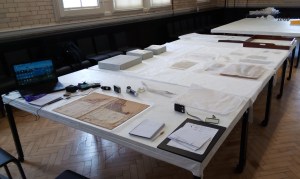
Fig. 1. Working session at V&A Clothworkers' Centre
Working session at the V&A’s Clothworker’s Centre

I based my study on the examination of raw materials, weaving techniques, decorative patterns and iconography of textile fragments and ecclesiastical vestments related to Medieval and Early-modern Iberia. These pieces were selected in accordance with the interests of the Interwoven project and my own. The research also paid attention to the dispersion of connected fragments and pieces among different institutions and collections, identifying them through a comparison of their catalogues and online databases. The reading of records and files held at the V&A’s Archive related to acquisitions from Spain in the early decades of the Museum helped me to complete the biographical information of certain pieces. The physical examination of the textiles was carried out with Dr Cabrera at the Clothworkers’ Centre for the Study and Conservation of Textiles and Fashion, while the bibliographical and writing work took place at the V&A’s FTF Department. This research will allow the Museum to update their textile collections’ data and widen the scope of information accessible on the Museum’s own database and its online version ‘Search the Collections’.

Fig. 3. The Warburg Institute Library. 1st floor
The Warburg Library, first floor

Beyond my work at V&A, I was able to devote a few daily hours to library research at the Warburg Institute, SOAS, and the British Library. During these sessions, I dedicated my time to the gathering of bibliographical material for an ongoing study on the role of textiles in the fashioning of clerical dignity and the valuation of the ecclesiastical space during the central Middle Ages in Iberia. I presented the preliminary results of this research during the ‘Work in Progress Seminars’ held in the V&A’s Research Department with a talk entitled ‘Ecclesiastical textiles and vestments from Medieval Iberia: promoting the clergy and shaping sacred space in a reforming church’ (May 2nd, 2017). Moreover, the access to the bibliographical resources held at these institutions enabled me to update and enrich the contents and critical apparatus of the forthcoming publication of my PhD dissertation, focused on the Romanesque sculpture of the Cathedral of Jaca.

During my stay in London I was pleased to attend conferences on Medieval Iberian art and Islamic studies, particularly the symposium ‘Gothic Architecture in Spain: Invention and Imitation’ (The Courtauld Institute of Art, March 16th, 2017) and the workshop ‘Researching the Islamic State: New Challenges and Opportunities’ (UCL, March 28-29th, 2017), as well as lectures and seminars on Medieval sculpture, Late Gothic fashion and Arabic palaeography –among other topics– at The Courtauld and SOAS. I was also able to exchange ideas with scholars specialising in textiles and in Spanish Medieval Art as Drs Lesley Miller, Tom Nickson, Rose Walker, Kirstin Kennedy and Nicola Jennings, and benefit from their advice and research experience.

By Dr Francisco de Asís García García, Universidad Complutense de Madrid

VIA Arts Prize, 2017 Edition

image003VIA Arts Prize: deadline 16th October 2017
The Embassies of Latin American countries, Spain and Portugal, in collaboration with Itaú Unibanco and supported by People’s Palace Projects (Queen Mary University of London), are delighted to launch the 2017 edition of the VIA Arts Prize.
In an unparalleled exchange between the UK and Latin cultures, this dedicated visual arts competition invites all UK-based artists to enter into a creative dialogue with Ibero-American art and artists. Following the pre-selection process conducted by the curatorial committee, up to 30 artworks will then go on display for three weeks at the Embassy of Brazil. A special jury will judge the final selection.
Please find full information at the contest website. Submissions for the competition, which may include paintings, drawings, sculpture, photography and prints, are now invited from artists living and working in the UK. Participants must be aged 16 or over.
We encourage you to participate in this contest and there are several ways in which you can get involved:
·         Applying if you have an artistic vein;
·         Sharing this opportunity;
·         Attending the finalists’ exhibition in November to vote for your favourite.
The prizes are: 1st Prize £5,000 and a solo exhibition at the Embassy of Brazil; 2nd Prize £2,000.
The exhibition will be at the Embassy of Brazil in London from the 3rd – 23rd November 2017.
For further information please contact:
Andrzej Stuart-Thompson (English)
Ana Elizabeth González (Spanish)

Marcio Junji Sono (Portuguese)


CFP: International Perspectives on the History of Latin American Art, LASA 2018 (Barcelona, 23-26 May 2018)

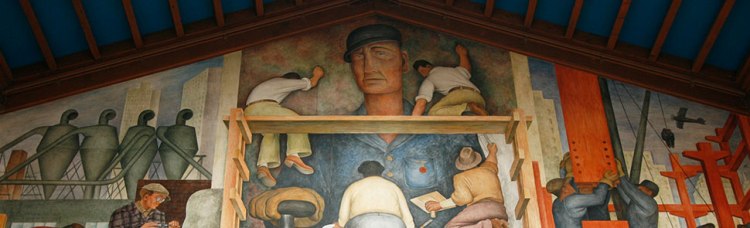
01_diego_rivera_mural_01
Diego Rivera, The Making of a Fresco Showing the Building of a City, 1931, SFAI, San Francisco

CFP: International Perspectives on the History of Latin American Art, LASA 2018 (Barcelona, 23-26 May 18)

Deadline: 7 August 2017

The Art History of Latin America has been written, for the most part,  in the 20th and 21st century.  As a discipline it is the product of two distinct points of view: the individual countries’ national art histories and visions generated from other regions, which privilege supra-national conceptions of geography and identity. Be they the Hispanic art histories of the 1930s, the North American passion for Mexican muralism of the 1930s, the European interests in alternative forms of Baroque in the post Second World War period, or the high modernist interpretations of modern art in Latin America during the post-War period, the discipline of art history has been shaped by scholarship generated outside the region, as much as from the scholarship generated within it. In this panel we invite scholars to study the effects of a globalized perspective on Latin American Art History, specifically by analyzing the contributions of other regions to the understanding of the concept of Latin American art.  We welcome papers studying any of the topics above, as well as the recent histories that stress critical notions such as race, gender and class to create new readings of Latin American Art History.

To submit a paper proposal, please send a 100-200 word abstract and a c.v. to Michele Greet (mgreet@gmu.edu) and Mercedes Trelles (MERCEDESTRELLES@AOL.COM) by August 7, 2017. Submissions for session proposals are due to LASA by Sept. 7. We will inform you of your acceptance prior to that date so that papers that cannot be included in the panel may be submitted individually.

Featured Exhibition: Leo Matiz (1917-1998) muralista de la lente

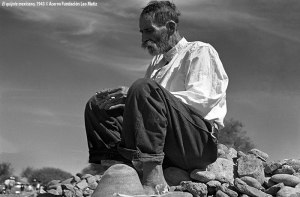
quijote-leomatizLeo Matiz (1917-1998) muralista de la lente, Antiguo Colegio de San Ildefonso, Mexico City. Closes 17 September 2017

Exhibition of 81 photographs by Colombian photographer and photojournalist Leo Matiz. Matiz established his reputation with his work in Mexico between 1941 and 1947, when he photographed artists and muralists such as Diego Rivera, Frieda Kahlo and David Siqueiros and became a close friends with José Clemente Orozco, as well as Latin American film stars and intellectuals and Spanish film directors such as Luís Buñuel. He subsequently mounted photographic campaigns in his native Colombia and in Venezuela in the 1950s, which were reproduced in periodicals such as Life and Paris Match. The exhibition also includes drawings, caricatures and Matiz’s notes to provide a context for his work.

For more information see the exhibition’s website

ARTES EVENT: Visit to Kingston Lacy, Dorset, November 2019, 2017 – RSVP by September 20

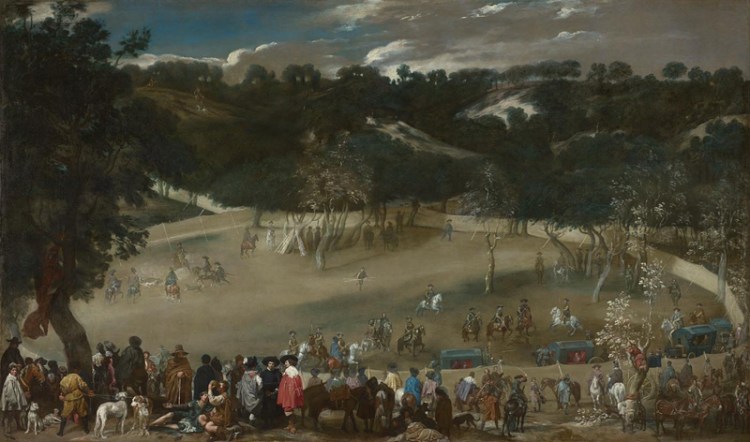
Philip IV hunting Wild Boar (La Tela Real)
Diego Velázquez, 1599 – 1660 Philip IV hunting Wild Boar (La Tela Real) probably 1632-7 Oil on canvas, 182 x 302 cm Bought, 1846 NG197 https://www.nationalgallery.org.uk/paintings/NG197 – Currently on loan to Kingston Lacey

Tour of art collection and rooms. Kingston Lacy has works by Velasquez, Tintoretto, Rubens, Van Dyck and Breughel (Visits starts at 1030 approximately)

Lunch

Visit to grounds and kitchen garden, including Japanese gardens.

Visit ends at 1600.

Those requiring lunch are requested to make a booking with the kitchen at Kingston Lacy (philip.anderson@nationaltrust.org.uk)

The visit cost per head is £14.50 for members and £20 for non-members.

National Trust Members  will have free access but may be required to pay £2.50 for the tour with the curatorial team.

Provisional train times (to be confirmed in September):

-Train out at 0720 to arrive in Poole – taxi to Kingston Lacy for 1030;
-Return journey depart KL at 1600 for 1640 train from Poole to London arr 1906

To attend, please advise Susan Wilson (susanruddwilson@sky.com) by 20 September 2017. In your email, please specify if you are a National Trust member. Please make your own booking for the train & lunch if required. 

CFP: Through, From, To Latin America: Networks, circulations and artistic transits from the 1960s to the present

1923933798International Conference: Through, From, To Latin America: Networks, circulations and artistic transits from the 1960s to the present, Faculdade de Ciências Sociais e Humanas da Universidade NOVA de Lisboa, Lisbon, Portugal, 27 and 28 November 2017
Deadline for paper proposals: 15 July

The project “Through, From, To Latin America: Networks, circulations
and artistic transits from the 1960s to the present” emerges from the
collaboration of three research groups engaged in the development of
transnational perspectives in contemporary art history and curating and
in the study of relations between artistic production and migratory
processes – with a particular focus on Latin America and Southern
Europe. More specifically, the organization of this project involves:
the group “Transnational Perspectives on Contemporary Art” associated
to the research line Contemporary Art Studies at IHA/FCSH-UNL, the
group “Art in a Global Perspective” at CIEBA / FBAUL and the research
project “Decentralized Modernities: art, politics and counterculture in
the transatlantic axis during the Cold War/ MoDe(s)” (HAR2014-53834-P),
at the University of Barcelona.

Through, From, To Latin America: Networks, circulations and artistic
transits from the 1960s to the present – inscribed in the program of
Lisbon 2017 Ibero-American Capital of Culture – aims at opening a
critical space of debate by engaging art historians, curators and
artists of different generations and nationalities to discuss the role
of different forms of dislocation – such as artistic migrations,
exiles, networking, circulations of ideas and theoretical
articulations, artworks and exhibitions – in the shaping of
contemporary art in and beyond Latin America. In this sense, the very
diverse and heterogeneous set of geographical and cultural areas
incorporated by the term “Latin America” are envisioned here as
specific and at the same time as territories strongly connected with
other locations through a complex network of itineraries, circulations,
appropriations and translations. In this network, different historical,
political and economic processes – among them, colonization and
decolonization – play significant roles. This project seeks to explore
the tensions and interrelations between local inscription and
connectivity, habitation and circulation, present enunciation and
revisiting the past.

Two different actions articulate the project Through, From, To Latin
America: Networks, circulations and artistic transits from the 1960s to
the present: an international conference and a set of workshops in the
field of curating, artistic practice and art history. In fact, it aims
to offer different possibilities and forms of engagement to the
participants.

Call for papers
The group “Transnational Perspectives on Contemporary Art”
(Contemporary Art Studies – IHA/FCSH-UNL), the group “Arte numa
perspectiva global/Art in a global perspective” (CIEBA/FBAUL) and the
project “Decentralized Modernities: art, politics and counterculture in
the transatlantic axis during the Cold War/ MoDe(s)” (HAR2014-53834-P)
(University of Barcelona), together with the Program of Lisbon 2017
Ibero-American Capital of Culture, welcome communication proposals from
art historians, curators, art critics and artists for the international
conference Through, From, To Latin America: Networks, circulations and
artistic transits from the 1960s to the present (Lisbon, Auditorium of
Faculdade de Ciências Sociais e Humanas da Universidade Nova de Lisboa,
27 and 28 November 2017).
Proposals for communications can address, but are not limited to, the
following topics:
– The role of different forms of dislocation in the shaping of
contemporary art in and beyond Latin America;
– Interrelations between local inscription and connectivity, habitation
and circulation, present enunciation and revisiting the past;
– Analysis of artistic and curatorial projects that relate to the
questions proposed;
– Exploration of South-South transits and circulations between Latin
America, Southern Europe, Africa and Asia;
– Interconnections between artistic networks and social and political
movements since the Cold War;
– Analysis of how artistic and cultural networks interfered with (or
participated in) the geopolitics of Cold War and globalization.

Submissions
This two-days conference invites proposals of up to 400 words for
communications of 20 minutes. Please also include a brief biographical
note (150 words), institutional affiliation (or independent) and your
contact information. All documents sent should be in word or pdf format.
We can only accept one proposal for each applicant.

Proposals should be emailed by the 15th of July 2017 to the following
e-mail address:
americalatinaconferencia2017@gmail.com
The languages of the conference are Spanish, Portuguese and English.

Applicants will be notified of the results of the selection by late
July / early August 2017.

An edited volume with selected papers presented at the conference will
be proposed for publication.

For more in formation please check the website:
http://americalatinaconferenciainternacional2017.weebly.com

Conference: Visual culture and women’s political identity in the early modern Iberian world II

0506vela
Diego Velázquez, Queen Isabel of Bourbon, 1634-35, Oil on canvas, 301 x 314 cm, Museo del Prado, Madrid. Source: Web Gallery of Art

Conference: Visual culture and women’s political identity in the early modern Iberian world II, Department of Spanish, Portuguese and Latin American Studies at the University of Nottingham, 21-22 September 2017


Following the opening conference devoted to this theme, held at CHAM, in November 2016, this second conference brings together an international group of researchers from a range of scholarly perspectives to explore, discuss and debate a series of case studies on the visual construction and projection of women’s political identity in medieval and early modern Spain and Portugal. The papers explore a number of critical perspectives that range from the portrayal of Queens and their household to the discourse on female piety and spirituality, both in the court and beyond to lower social strata. The role of women’s agency within the structures of patriarchal society and discourse that underscored much of visual culture is addressed in a number of insightful ways. Furthermore, the range of papers engages with prescient methodological issues facing the study of the visual dimensions of female political identity.

In addition this conference is pleased to announce a plenary lecture by Juliet Perkins, King’s College London.

Programme
Thursday 21st September

9:15 Welcome
9:30-11:00 Session 1) Iconographies of authority 
Chair: Jean Andrews
María Morrás, Departament d’Humanitats, Universitat Pompeu Fabra
La iconografía mariana en la Corona de Aragón y la orden de la Jarra

Inmaculada Rodríguez Moya, Universitat Jaume I
Reinas Fuertes: Poder, Religión Y Familia En La Representación De Las Mujeres Habsburgo

11:00-11:30 Coffee

11:30 – 1:00 Session 2) Religious identity in word and image
Chair: Jeremy Roe

Jean Andrews, University of Nottingham
Josefa in Óbidos: painting under the sign of Luisa de Guzmán 

Joana Serrado, University of Oxford
Six characters in search of a Canon: Saintliness as Feminist Subjectivity in the Early Modern Portuguese Empire

Lunch 1:00-2:00

2:00 – 4:00 Session 3) Iberian Queens and their courts
Chair: Carla Alferes Pinto, Universidade Nova de Lisboa

Laura Oliván, Universidad de Granada
Dresses, Portraits and Spaces: Female Identities at the Alcázar (1621-1665)

Mercedes Llorente, Universidade Nova de Lisboa
The portrayal of two Iberian Queens: Luisa Gusmão and Mariana of Austria

Susana Varela Flor, Universidade Nova de Lisboa
Catherine of Braganza: the iconographic strategies of a Catholic Queen in a Protestant Kingdom (1662-1693)

4:00-4:30 Tea

4:30 Plenary Lecture

Juliet Perkins, King’s College London
Guilherme Debrie’s engravings for Theatro Comico Portuguez

Friday 22nd September

9:30-11:00 Session 4) The Queen’s household
Chair: Jeremy Lawrance

Vanessa de Cruz Medina, Universitat Pompeu Fabra
Objects and Agency: Visual Culture and the Political Identity of Ladies-in-Waiting to the Habsburg Courts

Jeremy Roe, Universidade Nova de Lisboa
Luisa de Gusmão and the staging of political identity 

11:00- 11:30 Coffee

11:30-1:00 Session 5) Discussion
Concluding address: Jeremy Lawrance, University of Nottingham
Roundtable discussion

For enquiries please contact Jeremy Roe, jeremy.roe@fcsh.unl.pt

Velázquez at Kingston Lacy: Lecture by Dr Gabriele Finaldi, 21 July

Philip IV hunting Wild Boar (La Tela Real)
Diego Velázquez, Philip IV hunting Wild Boar (La Tela Real), probably 1632-7, oil on canvas, 182 x 302 cm. The National Gallery, London, inventory no. NG197

A unique landscape by artist Diego Velázquez, painted for King Philip IV of Spain, is on loan from the National Gallery in London for the first time, and is exhibited at the National Trust’s Kingston Lacy in Dorset.
La Tela Real takes pride of place in the dining room, while Kingston Lacy’s The Judgement of Solomon by Sebastiano del Piombo is on loan to the National Gallery, where it joined a major exhibition charting Sebastiano’s extraordinary friendship with Michelangelo, master of the Italian High Renaissance.

La Tela Real is a landscape scene depicting a type of boar hunt, staged by the Spanish kings on feast days and to honour special guests. The quarry was hunted within a canvas (tela) enclosure (so giving the name La Tela Real, i.e. ‘The Royal Enclosure’). Owing to the tremendous expense and labour involved, only the king could afford such a spectacle.
Identifiable figures include Philip IV, in the right mid-ground, meeting the charge of the boar. Immediately to his left is the powerful Count-Duke of Olivares (first minister to the king) and beyond him most likely the Infante Don Carlos, Philip’s brother. The king’s first wife, Isabella of Bourbon, watches the events from the comfort and safety of one of the carriages inside the enclosure.

La Tela Real is exceptional amongst Velázquez’s body of work. An extremely rare and individual landscape, it was designed around 1636-8 for The Torre de la Parada, Philip IV’s hunting lodge near Madrid. At Kingston Lacey it will be possible to enjoy an intimate encounter with this artwork, similar to that enjoyed by the king and his court in its original private, royal setting.

Moreover, it will be possible to enjoy the painting together with Kingston Lacy’s remarkable collection of Spanish paintings, assembled by William John Bankes and proudly displayed in his opulent ‘Spanish Room’. The finest works include Velázquez’s portrait of Cardinal Camillo Massimi, and a near-contemporary copy of the artist’s Las Meninas, one of the most enigmatic and famous images in the history of Western art.

To reveal the story of La Tela Real and the fascinating associations with Kingston Lacy’s own outstanding collections, Dr Gabriele Finaldi, Director of the National Gallery,  will give a lecture  looking at Velázquez as an artist along with the history surrounding Philip IV of Spain and the art of boar hunting.

The lecture will take place on 21 July. Tickets are £12 per person, with a welcome drink from 6.30pm, time to explore the state rooms at Kingston Lacy, before the lectures start at 7pm.

Tickets must be booked in advance on 0344 249 1895 or online.
Visitors can see La Tela Real on display until September. The house at Kingston Lacy opens via a timed ticket system. Tickets can be booked online.

Conference: III International Seminar on Sacred Heritage, São Paulo, Brasil, 26-29 July 2017

5 wikimedia pic church from left accross the lakeIII International Seminar on Sacred Heritage, Monastery of São Bento de São Paulo, Brasil, 26-29 July 2017

This Seminar, the third organised by the Grupo de Pesquisas Barroco
Memória Viva do Instituto de Artes of the UNESP and coordinated by Prof. Dr. Percival Tirapeli in collaboration with the Faculdade São Bento, discusses relevant aspects of 20th century sacred architecture until 1970.

Programme:

26 July
Teatro do Colégio de São Bento

14h – Recepção, credenciamento e inscrições

Abertura de Exposição
Escultura Sacra Moderna, Murilo Sá Toledo, Santana do Parnaíba
Curadoria de Rafael Schunk (IA-UNESP)

14h30 – Conferência
Os espaços litúrgicos e o Concílio Vaticano II
Prof. Dr. Gabriel Frade

15h30 – Lançamento dos livros
II Seminário Internacional da América Latina
Grupo de Pesquisa Barroco Memória Viva, IA-UNESP/CNPq

Quatro ensaios sobre Niemeyer
Rodrigo Queiroz e Hugo Segawa, FAU-USP; Ingrid Quintana Guerreiro,
Universidad de Los Andes, Bogotá

16h – Conferência
Atuação da Igreja no século XX
Abade Dom Matthias Tolentino Braga, OSB

17h – Visita técnica
Basílica Abacial de Nossa Senhora da Assunção,
Mosteiro de São    Bento
Dom Carlos Eduardo Uchôa, OSB

18h – Vésperas
Basílica Abacial de Nossa Senhora da Assunção,
Mosteiro de São Bento
________________________________________________

27 July
Teatro do Mosteiro de São Bento

9h às 11h30 – Conferências
Arquitetura neocolonial em São Paulo
Profa Dra. Maria Lucia Bressan Pinheiro, FAU-USP

Arquitetura sacra moderna em Buenos Aires
Profa Drª Graciela Viñuales Gutierrez, CEDODAL, Buenos Aires

Aspectos da arquitetura sacra na América
Profa Drª Ingrid Quintana Guerreiro, Universidad de Los Andes, Bogotá

11h30 às 12h – Intervalo

12h às 13h30 – Mesa-redonda: Arquitetura e América Latina
Arquitetura do período Entre guerras: igrejas de São Raphael na  Moóca
e Nsa. Sra. da Paz no Glicério
Pesquisadora Drª Milene Chiovatto, Pinacoteca do Estado de São Paulo

Da Pampulha à Catedral de Brasília: a projeção da arquitetura  moderna
brasileira no cenário internacional
Prof. Dr. Rodrigo Queiroz, FAU-USP

Arte contemporânea na América Latina e suas raízes sacras
Dra Cláudia Fazzolari. Prolam/ABCA

13h30 – Almoço

14h30 às 16h – Mesa-redonda: Imaginária Sacra
Marino Del Favero – Estabelecimento de Esculptura e Entalho
Profª Ms. Cristiana Cavaterra

Modernidade e tradição: a indústria e a imaginária religiosa no início
do século XX
Profª Drª Maria José Spiteri T. Passos, Universidade Cruzeiro do Sul

O apogeu da escultura em bronze em São Paulo
Prof. Dr. Mozart Bonazzi da Costa, PUC-SP

16h – Intervalo

16h30 às 18h – Palestras
Aspectos da arte sacra popular
Prof. Dr. Oscar D´Ambrosio, UNESP

Mário de Andrade e o Modernismo: tombamentos da arte sacra pelo IPHAN
Victor Hugo Mori, IPHAN/CONDEPHAAT
________________________________________________

28 July
Teatro do Mosteiro de São Bento

9h – Conferência
Panorama da arquitetura eclética em São Paulo
Prof. Dr. Percival Tirapeli, IA-UNESP

10h – Palestra
O traço moderno na arquitetura religiosa paulista
Prof. Ms. Márcio Antonio Lima Junior, FAU-USP

10h30 – Intervalo

11h às 13h – Mesa-redonda: Ações de Restauro
Aspectos executivos da conservação e restauro e o papel das entidades
da área
Francisco Zorzete, presidente da Associação de Empresas de Restauro
(ASSEER)

Restauro e Arte Sacra: Igreja do Cristo Operário
Paula Tabañez, Julio Moraes Conservação e Restauro

Restauro dos afrescos e Capela da Casa Portinari
JM Conservação e Restauro

13h – Almoço
14h – Conferência
Música sacra moderna
Prof. Dr. Acchile Picchi/Alfredo Zaine

15h às 16h – Mesa-redonda: Formação e importância de coleções públicas
Dom Duarte Leopoldo e Silva e a formação do Museu de Arte Sacra de São
Paulo – importância na preservação da arte sacra no século XX
Museu de Arte Sacra de São Paulo (MAS)

Obra sacra nos acervos dos Palácios do Governo e a capela de São Pedro
em Campos de Jordão
Pesquisadora DraAna Cristina de Carvalho, diretora do Acervo Histórico
Artístico dos Palácios do Governo de São Paulo

16h – Intervalo

16h30 às 18h – Mesa-redonda: Pintura sacra
A obra sacra de Candido Portinari
Profa Dra Elza Ajzenberg, USP, Pós-Graduação Interunidades

Pintura sacra no Grupo Santa Helena
Profa Dra Lisbeth Rebolo Gonçalves, USP/ABCA

Pinturas Murais de Emeric Marcier na capela da Santa Casa de Mauá
Profª Me. Rosângela Aparecida da Conceição (UNIP)
Ms. Rafael Schunk (IA-UNESP)

18h – Encerramento do III Seminário sobre o Patrimônio Sacro na América
Latina, Prof. Dr. Percival Tirapeli
________________________________________________

29 July
9h às 12h – Visitas técnicas
Visita opcional ao Mosteiro das Beneditinas, acompanhado por Abade Dom
Matthias Tolentino Braga, OSB e pelo Prof. Márcio Antonio Lima Junior.

Visita à exposição Santos devocionais: o barro como fé, com esculturas
de Stella Kehde, curadoria de Percival Tirapeli, Museu de Arte Sacra,
Sala do Metrô Tiradentes.