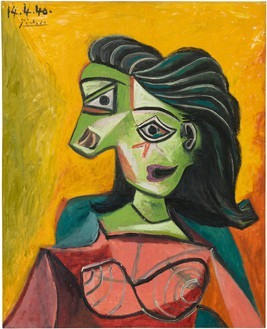
Di Donna Galleriesin New York announced its exhibition Surrealism in Mexico, on view until 28 June, 2019, which explores the creative moment that emerged between 1940 and 1955 as an international community of artists fled World War II in Europe and settled in Mexico. The exhibition features paintings, sculptures, drawings, photographs, and collages by artists including Lola Álvarez Bravo, Leonora Carrington, Esteban Francés, Gunther Gerzso, Kati Horna, Frida Kahlo, Agustín Lazo, Matta, Gordon Onslow Ford, Wolfgang Paalen, Alice Rahon, Bridget Bate Tichenor, and Remedios Varo, with loans from distinguished private collections, corporate collections, and non-profit foundations in Mexico, the United States, and Europe.
ARTES’s AGM will take place at the V&A at 12:30 on 13 June 2019. It will be followed by a group visit to look at objects from the Iberian world in the 16th Century.
Meet at the V&A, Exhibition Road Reception, at 11:50. Sandwich lunch (GBP 5) and AGM from 12–2, followed by a group visit to look at objects from the Iberian world in the 16th and early 17th centuries.
***Attendees are asked to arrive punctually, as late arrivals may be difficult to accommodate***
Please contact artesiberia@gmail.com to book a place.
This is the most comprehensive exhibition dedicated to the work of Brazilian artist Tarsila do Amaral (1886–1973), a pioneering figure in early 20th century Latin American art and who is currently being reassessed in the context of global modernisms. After studying with Fernand Léger (1881–1955) and André Lhote (1885–1962) in Paris, Tarsila, as she is widely known in Brazil, cannibalized modern European references to create a unique style of her own, true to her origins both in form and content, through the use of caipira [Brazilian countryside] colours, found in architecture and decorative arts: “pure blue, violaceous rose, bright yellow, singing green,” in her own words; as well as representations of typical and local characters, scenes, and narratives. Much of her work was made in dialogue with two leading modernist intellectuals of her time: Mário de Andrade (1893–1945) and Oswald de Andrade (1890–1954). Tarsila’s work parallels the development of Oswald de Andrade’s antropofagia, a key concept in 20th-century Latin American thought. Antropofagia could be understood as a poetic program through which intellectuals in the tropics would ‘cannibalize’ European cultural references in order to produce something singular and hybrid of their own, bringing indigenous, Afro-Atlantic, and local elements into their work. The controversial painting A Negra [The Black Woman] has received special attention from the authors and is a central work in the exhibition. The exhibition aims at widening the perspectives from which we may access not only the artist’s work but also the larger narratives on global modernism, taking into account questions of race, class and colonialism.
Tarsila do Amaral: Cannibalizing Modernism is curated by Adriano Pedrosa and Fernando Oliva and is contextualized in a full year dedicated to women artists at MASP in 2019 under the heading Women’s Histories, Feminist Histories. The accompanying publication is the most comprehensive exhibition catalogue on Tarsila to date. With separate editions in Portuguese and in English, 360 pages each, it reproduces 113 of her works, as well as documents and photographs. The book features newly commissioned essays by Adriano Pedrosa, Amanda Carneiro, Fernando Oliva, Irene V. Small, Mari Rodríguez Binnie, Maria Bernardete Ramos Flores, Maria Castro, Michele Greet, Michele Bete Petry and Renata Bittencourt, historical texts by Paulo Herkenhoff and Sergio Miceli, and commentaries on Tarsila’s works by Artur Santoro, Carlos Eduardo Riccioppo, Guilherme Giufrida, and Matheus de Andrade.
The Peruvian government announced on Friday 10 May a two-week restriction to three important areas at Machu Picchu to prevent greater degradation to the iconic Inca citadel, whose name means “old mountain” in the Quechua language indigenous to the area. The mountain-top citadel lies around 100 kilometres (60 miles) from the Andean city of Cusco, the old Inca capital in south-eastern Peru, and was built during the reign of the Inca emperor Pachacuti (1438-1471). It was rediscovered in 1911 by the American explorer Hiram Bingham and declared a World Heritage Site by UNESCO in 1983.
From May 15 to 28 2019, access to the Temple of the Sun, the Temple of the Condor and the Intihuatana Stone will be strictly controlled, the Peruvian government said. “These measures are necessary to conserve Machu Picchu, given the evidence of deterioration” on stone surfaces caused by visitors to the three areas, the culture ministry said. Almost 6,000 visitors a day are permitted onto the 15th-century site in two waves. The new plan will give tourists just three hours to visit the three emblematic areas. The authorities will evaluate the impact of the measures before applying new permanent rules from June 1.
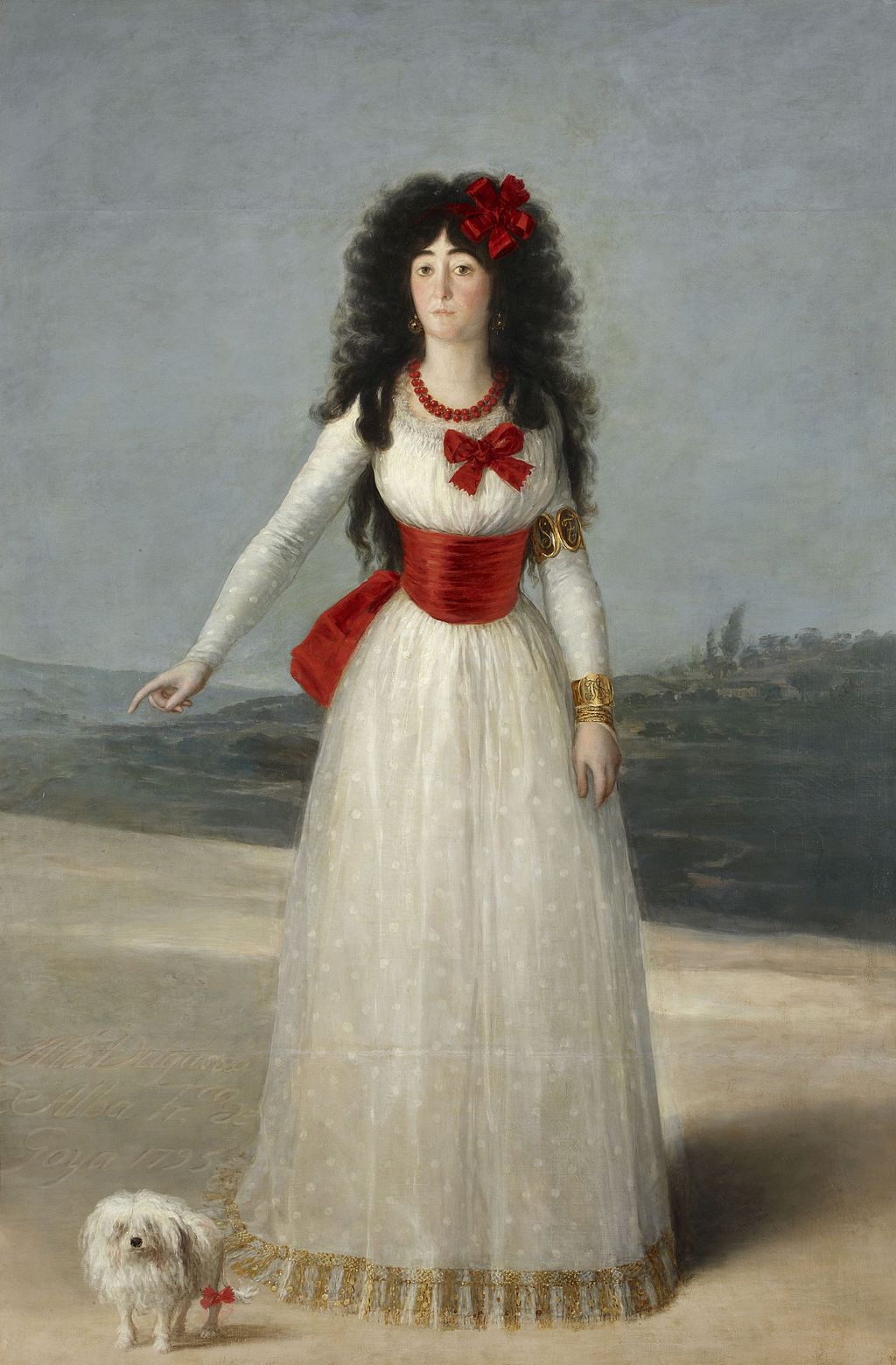
Francisco de Goya y Lucientes (Spanish, 1746-1828), The Duchess of Alba in White, 1795. Oil on canvas. Colección Duques de Alba
As reported by El País and other Spanish newspapers, the Liria Palace, residence of the Dukes of Alba and home to Spain’s most important private collection, is being transformed into a museum and will soon open to the public every day of the week.
Unlike such nearby collections as the Cerralbo o Lázaro Galdiano, the palace will continue to function as a residence. Works will be displayed according to the wishes of the last duchess of Alba, Cayetana Fitz-James Stuart y de Silva (1926–2014), who oversaw the partial opening of the palace to the public in 1975.
The museum’s opening date has not yet been announced.
A symposium to accompany the National Gallery’s major exhibition “Sorolla: Spanish Master of Light” (18 March–7th July 2019) will take place on at the Lecture Theatre, Weston Library, on 1 July 2019. The programme will include guest speakers such as Gabriele Finaldi, Director of the National Gallery, Richard Ormond, former Deputy Director of the National Portrait Gallery, Blanca Pons-Sorolla, co-curator of the exhibition and Sorolla’s great grand-daughter, amongst others. The symposium will be followed by a musical soirée and the projection of the award-winning “Sorolla: Viajes de la luz” documentary at St Cross College and Pusey Chapel, Oxford.
On 23 May 2019, 6pm–8.30pm, the Honorary President of ARTES, Sir John Elliott (Regius Professor Emeritus, University of Oxford), will deliver a lecture in celebration of the 200th anniversary of the Museo del Prado. The lecture will take place at the Embassy of Spain, 24 Belgrave Square, London SW1X 8QA. A limited number of tickets are available to ARTES members by emailing the Spanish Embassy (emb.londres.ofc@maec.es).
Juan de Espina Velasco (1583−1642), a nobleman of Madrid and cleric of minor orders, has gone down in history – initially as the unwitting protagonist of two eighteenth-century magical plays by the dramatist José de Cañizares and subsequently, in the twentieth century, as the enigmatic and jealous owner of the Leonoardo da Vinci manuscripts now in the Biblioteca Nacional de España. His early fame as a necromancer comes from rumours that circulated in his own day about the entertaining scientific activities he organised in his home in the form of natural magic shows, where, making use of a certain amount of technology, he put the audience’s credulity to the test. He also set out to bring back the lost genre of enharmonic music, which ordered the music scale perfectly and mathematically and with which the ancient musicians were said to work wonders on men’s nature and state of mind. In addition to the Leonardo codices, his home housed an exquisite collection of books, paintings, precious metalwork and ivory pieces – objects classified as naturalia and artificialia, which made up what we would now call a cabinet of curiosities, commonly known in Spain as a camarín.
Click here to save 10% on this book until April 15 (Pre-sale coupon code: ESPINA)
Motherhood, which stands at a disciplinary crossroads, has become a historiographic subject in its own right. It has gone from being viewed as an exclusively biological circumstance to being considered a key social factor in shaping the historical identity of the queens of Spain. This book analyses the ‘ritual’ surrounding the birth of royal offspring at the Spanish court between the sixteenth and seventeenth centuries and the role played by queens, ladies-in-waiting and midwives in a cultural system based on a series of rites performed before and after childbirth.
This book examines the private collecting of painting in Madrid during the nineteenth century and the mercantile structure that underpinned it. The author analyses more than 140 private collections and studies the presence, development and running of shops, fairs, markets, estate sales, antique dealers and art galleries, many of them hitherto unknown, as well as surveying the role of the foreign collectors and artists and restorers who acted as advisors, intermediaries, sellers, promoters and agents.