Retratos. Colecciones Fundación MAPFRE de fotografía, Sala Fundación MAPFRE Recoletos (Paseo de Recoletos 23, 28004 Madrid)
The exhibition ‘Retratos’ is on at the MAPFRE Foundation until 3 September 2017. Focusing on portraits in the twentieth century, the exhibition features photographs by Spanish and Latin American photographers such as Alberto García-Alix, Cristina García Rodero, Graciela Iturbide, Anna Malagrida, Fernando Maquieira. It is divided in four themes, ‘Cities,’ ‘Communities’ and ‘Artists and Models’ which attempt to embrace and reveal the complexity of contemporary portraiture.
As part of Dulwich Picture Gallery ‘Private made Public’ series of single picture in focused displays, this masterpiece of seventeenth-century Spanish still life has been brought to Dulwich Picture Gallery from the private apartments at Penrhyn Castle (National Trust, Gwynedd, Wales). A contemporary of Velázquez, Pereda is one of the finest still life painters of the Spanish Golden Age and his painting is filled with exquisite details. It was once in the collection of the County Durham-born but Seville-based collector of Spanish art, Frank Hall Standish (1s799-1840), most of whose collection of paintings and many of his drawings, including a large number of works by Murillo, were bequeathed to the French King Louis-Philippe.
Also at Dulwich Picture Gallery in the large exhibition of 80 Watercolours by Singer Sargent 21 June – 8 October 2017 there are several of Spanish gardens at the Generalife in Granada and La Granja outside Segovia as well as a figure composition of Spanish Convalescent Soldiers painted in 1903.
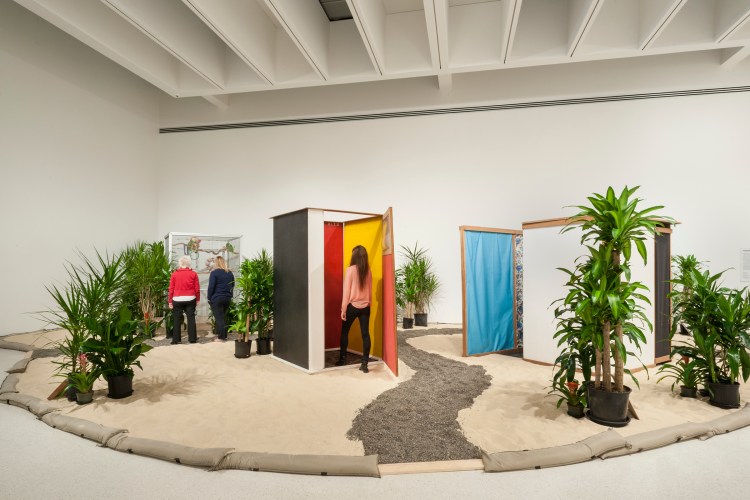
Final venue of a tour around America for this exhibition, considered to be the first comprehensive retrospective in the USA of the Brazilian artist (1937-1980). Ranging from geometric paintings to immersive interactive environments and wearable works of art, the exhibition is also the first to explore in depth his New York years (1971-78) and his return to Rio (1978-80). It includes a restaging of his installation Eden, which was first revealed at the Whitechapel Art Gallery, London, in 1969, and which included a pool of water, a sand-box in which visitors were encouraged to sit and a tent where the audience could listen to music and read magazines. Eden was an expression of Oiticica’s view that in order to encourage creativity one needed time to relax and think. The installation is reconstructed with help from the artist’s nephew César Oiticica Filho, the curator of the Project Hélio Oiticica in Brazil. A fully illustrated catalogue covering the artist’s entire career with essays by authors from the USA and Latin America accompanies the exhibition.
Francisco de Goya, I am still learning. Album G, 54 Ca. 1826. Black chalk, Lithographic crayon on grey laid paper, 192 x 145 mm.
Ligereza y atrevimiento. Dibujos de Goya, Centro Botín, Santander. Closes 24 September 2017.
One of the first exhibitions in the recently opened Renzo Piano designed Centro Botín, this show is curated by the Prado’s Head of Drawings and Prints, José Manuel Matilla, and the Chief Curator of the Goya and 18th-century Art Department, Manuela Mena. The exhibition includes 80 drawings, from the Prado’s holdings of some 520, selected as representative of the different periods of Goya’s artistic activity from 1796 to his death in 1828. Also shown are preparatory drawings for a selection of prints from his series, Sueños, Caprichos, Desastres de la guerra, Tauromaquia and Disparates. This exhibition is the result of an ambitious research and cataloguing project based on the drawings of Francisco de Goya, thanks to the collaboration agreement entered into by the Fundación Botín and Prado Museum in 2014. The first volume of the catalogue raisonné is due to appear later in 2017 and a larger exhibition is provisionally scheduled at the Prado in 2019.
Many things happened last week in the world of Spanish and Latin American visual culture.
The Prado’s Jeronimos Wing. Photo by Luis García on Wikimedia Commons, CC BY-SA 3.0.
London’s Sir John Soane Museum announced a new series of annual lectures and prizes intended to raise the profile of architects, artists and writers who broadened society’s understanding of architecture and the built environment. The inaugural lecture, scheduled for November 1 at the Royal Institution in London, will be delivered by Rafael Moneo, designer of the Prado’s Jeronimos Extension, which opened in 2007. As reported by The Art Newspaper, Moneo will be awarded the Soane Medal, a copy of the medal presented in 1835 to Sir John Soane by “the Architects of England”, in recognition of his “essential services to architecture”.
On 21 July The Art Newspaper reported that Spanish Police recovered three paintings by Francis Bacon stolen from the private collection of Bacon’s acquaintance José Capelo in Madrid in 2015. A tip-off from the Art Loss Register enabled the recovery, which follows the arrest of ten people associated with the robbery in the past two years. Bacon portrayed Capelo in a work of 1987 now owned by the Swiss Galerie Gmurzynska and in one of his last paintings, the 1991 Triptych now at the MOMA.
Lygia Pape, installation shot of Ttéia I, C, 2002, at the 53rd Biennal of Venice. Jean-Pierre Dalbéra on Flickr.
A less positive news comes from US District Court for the Southern District of New York. The daughter of Brazilian artist Lygia Pape, whose monographic exhibition A Multitude of Forms closed yesterday at Met Breuer, has sued LG Electronics, several retailers and Getty Images Korea for copyright infringement. According to the complainants, LG Electronics approached the Pape estate (Projeto Lygia Pape) to license her work Ttéia (2003), which they wished to use as default wallpaper and packaging for their new phone K20 V. Pape’s estate refused LG’s request, citing the artist’s life-long resistance to the commercialisation of her work. Nevertheless, LG persevered in their use of the image, using a too-close unauthorized derivation of the work on the phone’s wallpaper and packaging. As a result, Pape’s daughter has asked the Court to recall the packaging, advertising, and other materials that contain the infringing image, including the phone itself if necessary. As noted by the plantiffs’ lawyer John Cahill, ‘This is an extreme, perhaps unique, case in which a multinational corporation—fully aware that it was doing wrong—abused a work of fine art in the service of the profit motive.’ A positive resolution of the case may ensure better protection for artists’ rights in the future.
Salvador Dalí in 1965. Roger Higgins, Library of Congress, New York World-Telegram & Sun Collection. Wikimedia Commons.
To end on a lighter note, Dalí’s famously exuberant mustache is still in perfect shape, almost 30 years after the artist’s passing. The information was reported by Narcís Bardalet, the embalmer who took care of the Surrealist’s body after his death in 1989, following the exhumation of Dalí’s corpse last week. Ordered by a Spanish Court, the exhumation will enable a DNA examination to determine whether María Pilar Abel Martínez is an illegitimate daughter of the artist, as she claims since 2007.
Francisco de Goya, The Duke and Duchess of Osuna and their Children, 1787 – 1788. Oil on unlined canvas, 225 x 174 cm.
El desafío del blanco. Goya and Esteve, retratistas de la Casa de Osuna/portraitists to the House of Osuna, Museo Nacional del Prado, Madrid. Closes 1 October 2017
This displays presents for the first time in the Prado the portrait of Manuela Isidra Téllez-Girón, the future Duchess of Abrantes, which was painted in 1797 by Agustín Esteve y Marqués, and which was recently acquired with the help of funds from the donation by Óscar Alzaga Villaamil. The child’s portrait is considered one of the finest works by the Valencian-born Esteve, the most important court portraitist after Goya. The exhibition brings together for the first time all the portraits painted by Agustín Esteve of the children of the Duke and Duchess of Osuna, on loan from private collections such as the Fundación Casa Ducal de Medinaceli, the Colección Duque del Infantado, Colección Masaveu and Colección Martínez Lanzas-de las Heras. In addition the display is accompanied by portraits of the 9th Duke Osuna, Pedro de Alcántara Téllez-Girón (1755-1807) and his wife and cousin, María Josefa de la Soledad Alonso-Pimentel (1752-1834), and their five children by other court artists including Goya’s family portrait of 1787-88 and a miniature by Guillermo Ducker (fl. 1795-1830) of Joaquina Téllez-Girón, Marchioness of Santa Cruz. The exhibition’s title refers to Esteve’s and Goya’s ability to meet the challenge of representing the transparent and pristine white materials worn by their sitters.
This is the final purchase with the Alzaga funds and in October 2017 the Prado will display the other six paintings in the Alzaga donation, which range from the sixteenth-century to the middle of the nineteenth-century and include works by Sánchez Cotán, Herrera “el Viejo,” Antonio del Castillo, and Eugenio Lucas Velázquez. The display will be accompanied by a catalogue of the donation.
Esther Borrego Gutiérrez and Jaime Olmedo Ramos eds., Santa Teresa o la llama permanente. Estudios históricos, artísticos y literarios (Madrid: Centro de Estudios Europa Hispánica, 2017).
424 pp, 56 illus. colour and b&w.
Paperback € 33,66 (without IVA).
ISBN 9788415245711
Twenty essays from the proceedings of the International Congress on Saint Teresa of Avila, held in 2015 at the Universidad Complutense in Madrid. Essays include ones relating to artists associated with the saint and to the vision of women in Teresian literature, and a bibliographical appendix of all the principal works on Teresian literature from her own to the present day.
Woven silk fragments. Victoria and Albert Museum inv. 275 and 275A-1894
I have carried out a three-month fellowship in London from March 1st to May 31st, 2017, conducting research in several museums, libraries and academic institutions of the city. My main goal was to study a selection of textiles from the Furniture, Textiles and Fashion (FTF) Department of the Victoria & Albert Museum. I have undertaken this work as an Erasmus + Visiting Fellow at the V&A’s Research Department in collaboration with the Marie S.-Curie project Interwoven (no. 703711) led by Dr Ana Cabrera Lafuente. Dr Cabrera acted as my fellowship’s supervisor and this granted me the opportunity of working closely to a specialist. Thanks to this, I have acquired new knowledge and methodological skills in the field of textiles.
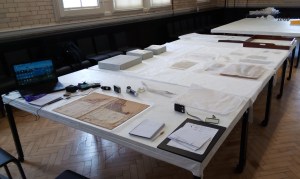
Working session at the V&A’s Clothworker’s Centre
I based my study on the examination of raw materials, weaving techniques, decorative patterns and iconography of textile fragments and ecclesiastical vestments related to Medieval and Early-modern Iberia. These pieces were selected in accordance with the interests of the Interwoven project and my own. The research also paid attention to the dispersion of connected fragments and pieces among different institutions and collections, identifying them through a comparison of their catalogues and online databases. The reading of records and files held at the V&A’s Archive related to acquisitions from Spain in the early decades of the Museum helped me to complete the biographical information of certain pieces. The physical examination of the textiles was carried out with Dr Cabrera at the Clothworkers’ Centre for the Study and Conservation of Textiles and Fashion, while the bibliographical and writing work took place at the V&A’s FTF Department. This research will allow the Museum to update their textile collections’ data and widen the scope of information accessible on the Museum’s own database and its online version ‘Search the Collections’.
The Warburg Library, first floor
Beyond my work at V&A, I was able to devote a few daily hours to library research at the Warburg Institute, SOAS, and the British Library. During these sessions, I dedicated my time to the gathering of bibliographical material for an ongoing study on the role of textiles in the fashioning of clerical dignity and the valuation of the ecclesiastical space during the central Middle Ages in Iberia. I presented the preliminary results of this research during the ‘Work in Progress Seminars’ held in the V&A’s Research Department with a talk entitled ‘Ecclesiastical textiles and vestments from Medieval Iberia: promoting the clergy and shaping sacred space in a reforming church’ (May 2nd, 2017). Moreover, the access to the bibliographical resources held at these institutions enabled me to update and enrich the contents and critical apparatus of the forthcoming publication of my PhD dissertation, focused on the Romanesque sculpture of the Cathedral of Jaca.
During my stay in London I was pleased to attend conferences on Medieval Iberian art and Islamic studies, particularly the symposium ‘Gothic Architecture in Spain: Invention and Imitation’ (The Courtauld Institute of Art, March 16th, 2017) and the workshop ‘Researching the Islamic State: New Challenges and Opportunities’ (UCL, March 28-29th, 2017), as well as lectures and seminars on Medieval sculpture, Late Gothic fashion and Arabic palaeography –among other topics– at The Courtauld and SOAS. I was also able to exchange ideas with scholars specialising in textiles and in Spanish Medieval Art as Drs Lesley Miller, Tom Nickson, Rose Walker, Kirstin Kennedy and Nicola Jennings, and benefit from their advice and research experience.
The Embassies of Latin American countries, Spain and Portugal, in collaboration with Itaú Unibanco and supported by People’s Palace Projects (Queen Mary University of London), are delighted to launch the 2017 edition of theVIA Arts Prize.
In an unparalleled exchange between the UK and Latin cultures, this dedicated visual arts competition invites all UK-based artists to enter into a creative dialogue with Ibero-American art and artists. Following the pre-selection process conducted by the curatorial committee, up to 30 artworks will then go on display for three weeks at the Embassy of Brazil. A special jury will judge the final selection.
Please find full information at the contestwebsite.Submissions for the competition, which may include paintings, drawings, sculpture, photography and prints, are now invited from artists living and working in the UK. Participants must be aged 16 or over.
We encourage you to participate inthis contest and there are several ways in which you can get involved:
·Applying if you have an artistic vein;
·Sharing this opportunity;
·Attending the finalists’ exhibition in November to vote for your favourite.
The prizes are:1st Prize £5,000 and a solo exhibition at the Embassy of Brazil; 2nd Prize £2,000.
The exhibition will be at the Embassy of Brazil in London fromthe 3rd– 23rdNovember 2017.
For further information please contact:
Andrzej Stuart-Thompson (English)
Ana Elizabeth González (Spanish)
Marcio Junji Sono (Portuguese)
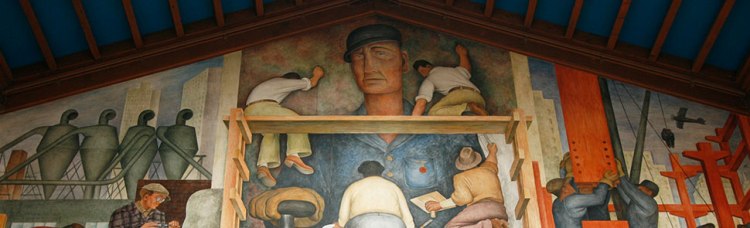
Diego Rivera, The Making of a Fresco Showing the Building of a City, 1931, SFAI, San Francisco
CFP: International Perspectives on the History of Latin American Art, LASA 2018 (Barcelona, 23-26 May 18)
Deadline: 7 August 2017
The Art History of Latin America has been written, for the most part, in the 20th and 21st century. As a discipline it is the product of two distinct points of view: the individual countries’ national art histories and visions generated from other regions, which privilege supra-national conceptions of geography and identity. Be they the Hispanic art histories of the 1930s, the North American passion for Mexican muralism of the 1930s, the European interests in alternative forms of Baroque in the post Second World War period, or the high modernist interpretations of modern art in Latin America during the post-War period, the discipline of art history has been shaped by scholarship generated outside the region, as much as from the scholarship generated within it. In this panel we invite scholars to study the effects of a globalized perspective on Latin American Art History, specifically by analyzing the contributions of other regions to the understanding of the concept of Latin American art. We welcome papers studying any of the topics above, as well as the recent histories that stress critical notions such as race, gender and class to create new readings of Latin American Art History.
To submit a paper proposal, please send a 100-200 word abstract and a c.v. to Michele Greet (mgreet@gmu.edu) and Mercedes Trelles (MERCEDESTRELLES@AOL.COM) by August 7, 2017. Submissions for session proposals are due to LASA by Sept. 7. We will inform you of your acceptance prior to that date so that papers that cannot be included in the panel may be submitted individually.

 Retratos. Colecciones Fundación MAPFRE de fotografía, Sala Fundación MAPFRE Recoletos (Paseo de Recoletos 23, 28004 Madrid)


 Esther Borrego Gutiérrez and Jaime Olmedo Ramos eds.,


 ARTES
ARTES 