Conference: III International Seminar on Sacred Heritage, São Paulo, Brasil, 26-29 July 2017

5 wikimedia pic church from left accross the lakeIII International Seminar on Sacred Heritage, Monastery of São Bento de São Paulo, Brasil, 26-29 July 2017

This Seminar, the third organised by the Grupo de Pesquisas Barroco
Memória Viva do Instituto de Artes of the UNESP and coordinated by Prof. Dr. Percival Tirapeli in collaboration with the Faculdade São Bento, discusses relevant aspects of 20th century sacred architecture until 1970.

Programme:

26 July
Teatro do Colégio de São Bento

14h – Recepção, credenciamento e inscrições

Abertura de Exposição
Escultura Sacra Moderna, Murilo Sá Toledo, Santana do Parnaíba
Curadoria de Rafael Schunk (IA-UNESP)

14h30 – Conferência
Os espaços litúrgicos e o Concílio Vaticano II
Prof. Dr. Gabriel Frade

15h30 – Lançamento dos livros
II Seminário Internacional da América Latina
Grupo de Pesquisa Barroco Memória Viva, IA-UNESP/CNPq

Quatro ensaios sobre Niemeyer
Rodrigo Queiroz e Hugo Segawa, FAU-USP; Ingrid Quintana Guerreiro,
Universidad de Los Andes, Bogotá

16h – Conferência
Atuação da Igreja no século XX
Abade Dom Matthias Tolentino Braga, OSB

17h – Visita técnica
Basílica Abacial de Nossa Senhora da Assunção,
Mosteiro de São    Bento
Dom Carlos Eduardo Uchôa, OSB

18h – Vésperas
Basílica Abacial de Nossa Senhora da Assunção,
Mosteiro de São Bento
________________________________________________

27 July
Teatro do Mosteiro de São Bento

9h às 11h30 – Conferências
Arquitetura neocolonial em São Paulo
Profa Dra. Maria Lucia Bressan Pinheiro, FAU-USP

Arquitetura sacra moderna em Buenos Aires
Profa Drª Graciela Viñuales Gutierrez, CEDODAL, Buenos Aires

Aspectos da arquitetura sacra na América
Profa Drª Ingrid Quintana Guerreiro, Universidad de Los Andes, Bogotá

11h30 às 12h – Intervalo

12h às 13h30 – Mesa-redonda: Arquitetura e América Latina
Arquitetura do período Entre guerras: igrejas de São Raphael na  Moóca
e Nsa. Sra. da Paz no Glicério
Pesquisadora Drª Milene Chiovatto, Pinacoteca do Estado de São Paulo

Da Pampulha à Catedral de Brasília: a projeção da arquitetura  moderna
brasileira no cenário internacional
Prof. Dr. Rodrigo Queiroz, FAU-USP

Arte contemporânea na América Latina e suas raízes sacras
Dra Cláudia Fazzolari. Prolam/ABCA

13h30 – Almoço

14h30 às 16h – Mesa-redonda: Imaginária Sacra
Marino Del Favero – Estabelecimento de Esculptura e Entalho
Profª Ms. Cristiana Cavaterra

Modernidade e tradição: a indústria e a imaginária religiosa no início
do século XX
Profª Drª Maria José Spiteri T. Passos, Universidade Cruzeiro do Sul

O apogeu da escultura em bronze em São Paulo
Prof. Dr. Mozart Bonazzi da Costa, PUC-SP

16h – Intervalo

16h30 às 18h – Palestras
Aspectos da arte sacra popular
Prof. Dr. Oscar D´Ambrosio, UNESP

Mário de Andrade e o Modernismo: tombamentos da arte sacra pelo IPHAN
Victor Hugo Mori, IPHAN/CONDEPHAAT
________________________________________________

28 July
Teatro do Mosteiro de São Bento

9h – Conferência
Panorama da arquitetura eclética em São Paulo
Prof. Dr. Percival Tirapeli, IA-UNESP

10h – Palestra
O traço moderno na arquitetura religiosa paulista
Prof. Ms. Márcio Antonio Lima Junior, FAU-USP

10h30 – Intervalo

11h às 13h – Mesa-redonda: Ações de Restauro
Aspectos executivos da conservação e restauro e o papel das entidades
da área
Francisco Zorzete, presidente da Associação de Empresas de Restauro
(ASSEER)

Restauro e Arte Sacra: Igreja do Cristo Operário
Paula Tabañez, Julio Moraes Conservação e Restauro

Restauro dos afrescos e Capela da Casa Portinari
JM Conservação e Restauro

13h – Almoço
14h – Conferência
Música sacra moderna
Prof. Dr. Acchile Picchi/Alfredo Zaine

15h às 16h – Mesa-redonda: Formação e importância de coleções públicas
Dom Duarte Leopoldo e Silva e a formação do Museu de Arte Sacra de São
Paulo – importância na preservação da arte sacra no século XX
Museu de Arte Sacra de São Paulo (MAS)

Obra sacra nos acervos dos Palácios do Governo e a capela de São Pedro
em Campos de Jordão
Pesquisadora DraAna Cristina de Carvalho, diretora do Acervo Histórico
Artístico dos Palácios do Governo de São Paulo

16h – Intervalo

16h30 às 18h – Mesa-redonda: Pintura sacra
A obra sacra de Candido Portinari
Profa Dra Elza Ajzenberg, USP, Pós-Graduação Interunidades

Pintura sacra no Grupo Santa Helena
Profa Dra Lisbeth Rebolo Gonçalves, USP/ABCA

Pinturas Murais de Emeric Marcier na capela da Santa Casa de Mauá
Profª Me. Rosângela Aparecida da Conceição (UNIP)
Ms. Rafael Schunk (IA-UNESP)

18h – Encerramento do III Seminário sobre o Patrimônio Sacro na América
Latina, Prof. Dr. Percival Tirapeli
________________________________________________

29 July
9h às 12h – Visitas técnicas
Visita opcional ao Mosteiro das Beneditinas, acompanhado por Abade Dom
Matthias Tolentino Braga, OSB e pelo Prof. Márcio Antonio Lima Junior.

Visita à exposição Santos devocionais: o barro como fé, com esculturas
de Stella Kehde, curadoria de Percival Tirapeli, Museu de Arte Sacra,
Sala do Metrô Tiradentes.

Exhibition: Picasso and the Mediterranean, @ Fundación Canal, Madrid

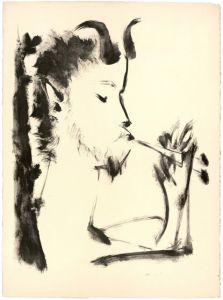
_CACHE_20-FPCN-1858-PAN-R-BAJA_415x0Picasso and the Mediterranean
Fundación Canal, Calle Mateo Inurria, Madrid
1 June – 15 August 2017

Free exhibition of 91 works, mainly ceramics and prints, selected from the Picasso Museo Casa Natal in Málaga. About half the exhibition is devoted to the inspiration Picasso drew from bull-fighting and its rituals and includes his series of Toro lithographs from 1945-1946, which encompass naturalistic, cubist and surreal representations of the animal. Two other sections focus on the influence of Greco-Roman antiquity on Picasso’s nudes and mythological figures and the final section includes works showing the influence of ancient cultures including that of the Arab world.

For more information, click here: Picasso and the Mediterranean

Image: © Sucesión Pablo Picasso, VEGAP, Madrid, 2017. Source: Fundación Canal

Closing Soon: Lygia Pape: A Multitude of Forms @ Met Breuer, New York, 21 March – 23 July 2017

The first monographic exhibition in the United States devoted to Brazilian artist Lygia Pape (1927–2004). A critical figure in the development of Brazilian modern art, and a pioneer of the Neo-Concrete movement. Pape combined geometric abstraction with notions of body, time, and space in unique ways that radically transformed the nature of the art object in the late 1950s and early 1960s. Covering a prolific career that spanned five decades, this exhibition examines Pape’s rich oeuvre as manifest across varied media—from sculpture, prints, and painting to installation, photography, performance, and film.

For more information visit: Lygia Pape: A Multitude of Forms

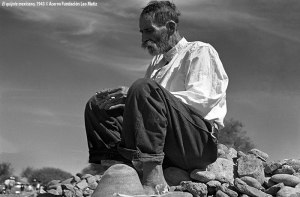
Image Caption: Lygia Pape (Brazilian, 1927–2004). Divisor (Divider), 1968. Performance at Museu de Arte Moderna, Rio de Janeiro, 1990. Photo by Paula Pape. © Projeto Lygia Pape. Source: Metropolitan Museum.

Prize-Giving Ceremony at the Wallace Collection, 29 June 2017

IMG_6839
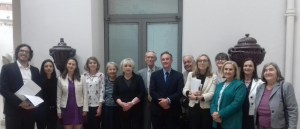
Some of the Prize Winners pose with the ARTES committee and members at the prize-giving ceremony

On Thursday 29 June ARTES celebrated the winners of its annual scholarships and of the Juan Facundo Riaño Essay Prize with a ceremony held at the Wallace Collection in London. The Collection’s director Xavier Bray and Carmen Brieva Rodriguez from the Cultural Office of the Spanish Embassy joined the celebration.

ARTES started offering travel and PhD scholarships three years ago, with the aim to support and nurture young scholars in the field of Iberian and Latin American studies. The prizes are sponsored by Coll y Cortés and were awarded to the following researchers:

Travel Scholarships:

  • Ana Dias, a PhD candidate at the University of Durham, working on ‘The Apocalypse in early medieval Iberia: the function and impact of the illuminated ‘Beatus’ manuscripts.’ Ana will use her prize to conduct crucial fieldwork in three libraries in Spain, where she will examine three manuscripts of Beatus’ work to analyse at first hand their codicology, illumination and palette.
  • Maria Teresa Chicote Pompanin, a PhD candidate at the Warburg Institute, who will make three trips to Spain to examine archives, buildings and objects in connection with her research project, titled ‘Patronage, Fame and Memory in Late-Medieval Castile: Juan and Diego Pacheco, Marquises of Villena (1445 – 1529).’

PhD Scholarship for PhD students at working on Hispanic visual culture before 1800 at a UK University:

  •  Maeve O’Donnell, for her PhD at the Courtauld Institute of Art: ‘The Castilian Altar in the Thirteenth and Fourteenth Centuries: A social and material history.’ Maeve’s thesis approaches the medieval altar as an assemblage of artworks with individual and cumulative religious, social and material significance. By donating or producing the different furnishings of the altar, craftsmen, merchants, bishops, and monarchs established personal links to this sacred space. In addition, objects displayed on the altar in medieval Castile functioned as barometers of political and economic shifts in this dynamic kingdom. Her analysis of Castilian altarpieces, frontals, figurative sculptures, liturgical objects, reliquaries and textiles unearths works of art that have not been studied before while offering an innovative approach to the medieval altar.

Scholarship for PhD students or post-doctoral researchers based in Spain, Portugal or Latin America who wish to conduct research in the UK:

  • Ignacio J. López Hernández, who is working on a dissertation about Architecture and Military Buildings in the Spanish Caribbean under the supervision of Dr Alfredo Morales at the University of Seville.

This year the Scholarship Committee was able to make two additional awards:

  • Francisco de Asís García García, for his travel to the UK to study reports and files held at the V&A’s Archive related to Medieval and Early Modern textile acquisitions from Spain (or of possible Spanish origin) and the iconographical analysis of selected pieces. This work is a joint collaborative study with the Marie S.-Curie project “Interwoven” (no. 703711) led by Dr Ana Cabrera Lafuente at the V&A.
  • Sylvia Alvares-Correa, a PhD candidate at Oxford, whose research considers the Flemish artworks associated with Rainha Dona Leonor of Portugal (1458-1525), including Quentin Metsys’s The Seven Sorrows of the Virgin; Goswyn van der Weyden’s Presentation at the Temple; a number of manuscripts, and the anonymous Passion of Christ in Jerusalem panorama, amongst others. By investigating the historiography, materiality, and iconography of these works and their place within the ambit of Dona Leonor’s piety and patronage, this project will contribute to the broader understanding of patterns of patronage in early modern Europe, artistic exchange between Flanders and Iberia, and the devotional climate of Renaissance Portugal.

The winner of the 2017 Juan Facundo Riaño Essay Prize was also announced. This prize was set up 5 years ago with the generous support of the Office for Scientific and Cultural Affairs of the Embassy of Spain in London, and includes a cash prize and a specially designed bronze medal. Like the scholarships, the essay prize is intended to encourage promising scholars in the study of Spanish visual culture (from any period) and is open to students at UK universities at any level of study.

This year’s winner was David Cambronero, a MA student at the Courtauld Institute of Art, who gave a short presentation based on his essay on lighting in the Great Mosque of Córdoba in the caliphal period.

Save

Closing soon: México 1900–1950 (Dallas)


México 1900–1950
Diego Rivera, Frida Kahlo, José Clemente Orozco, and the Avant-Garde

Dallas Museum of Art

12 March  – 16 July, 2017

Major exhibition exploring 50 years of Mexican modern art. Following its showing at the Grand Palais, Paris, this is the exhibition’s only US venue. The result of a combined cultural endeavour between Mexico and France, the exhibition features circa 200 paintings, sculptures, photographs, drawings and films documenting Mexico’s artistic Renaissance during the first half of the 20th century. Works by the titans of Mexican Modernism are shown alongside those by lesser-known pioneers, including a number of rarely seen works by female artists. Diego Rivera, Frida Kahlo, José Clemente Orozco, Ángel Zárraga, Tina Modotti, and David Alfaro Siqueiros, among others, are on display.

Closing soon: Picasso and Naples: Parade

Picasso and Naples: Parade
Museo di Capodimonte, Naples,
and the Antiquarium, Pompeii
8 April-10 July 2017

Exhibition across two venues celebrating the centennial of Picasso’s trip to Italy in 1917. The artist arrived in Rome on February 18, 1917, in the company of Jean Cocteau, with whom he was working on the designs for Parade, a ballet for Diaghilev’s Ballets Russes (with music by Eric Satie).Spending a little over two months in Italy, Picasso visited Naples twice, in March and April 2017. The displays include examples of Picasso’s stage and costume designs not only for Parade but also for Petrushka.

Catalogue

Click here for Joffrey Ballet’s revival of Parade

Closing soon: Picasso Primitif (Paris)


Picasso Primitif

Musée de Quai Branly, Paris

28 March – 23 July 2017

As evidenced by the exhibition’s documents, letters, objects and photographs, Picasso’s personal collection of the arts of Africa, Oceania, the Americas and Asia accompanied him in his moves from one studio to the next. The aim is not to show any eventual influences of primitive art on Picasso, but rather to show the attraction that the arts of Africa, Oceania, the Americas and Asia held for him.

The second, more conceptual part of the exhibition offers a comparative view of the artist’s works with those of non-Western artists. The resulting juxtapositions reveal the similar issues these artists addressed (for example: nudity, sexuality, impulses and loss) through parallel 3-dimensional solutions such as deforming or deconstructing bodies, for example).

Leonora Carrington at Edge Hill University (Ormskirk)


LEONORA CARRINGTON CENTENARY SYMPOSIUM

30 JUNE 2017
EDGE HILL UNIVERSITY (Ormskirk)

Considered a ‘national treasure’ in her adopted country of Mexico, Leonora, whose background was strongly Irish, was originally from Clayton Le Woods, Chorley, Lancashire. Symposium speakers, artists, film makers, writers, curators and academics at the symposium will celebrate her in her home setting.

Guest Speaker, Joanna Moorhead, cousin of Leonora, will discuss her new book, ‘The Surreal Life of Leonora Carrington’ (Little, Brown, 2017).

The Symposium Programme is available to download. (Schedule is subject to change).

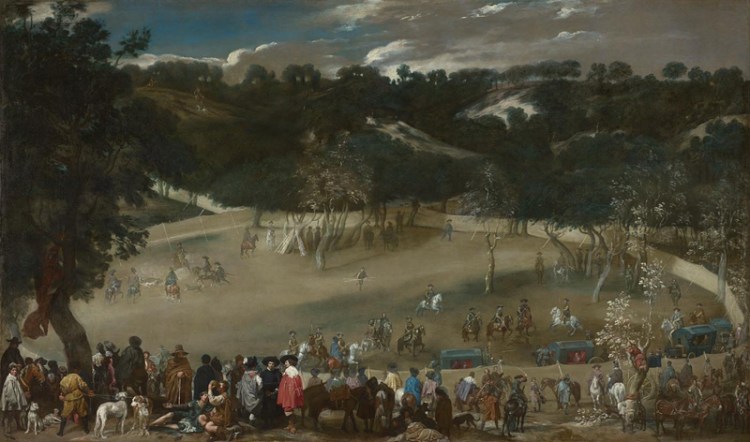
Velázquez Portrait of Philip III (Prado)

Velázquez: Portrait of Philip III

Museo Nacional del Prado, Room 24
Villanueva Building, Room 24

6 June – 29 October 2017

On display for the first time in the Museum’s galleries is the Portrait of Philip III by Velázquez, a work donated by William B. Jordan to the American Friends of the Prado Museum, which has ceded it to the Museum as a long-term deposit.

Velázquez’s painting is displayed alongside the Prado’s Philip II offering the Infante don Fernando to Victory by Titian, which has very recently been restored (with the support of Fundación Iberdrola España). In the 17th century Titian’s painting hung in the same room (the Salón Nuevo in the Alcázar in Madrid) as The Expulsion of the Moriscos by Velázquez, a painting directly connected with the newly acquired portrait of Philip III, which was executed as a study for it.

This donation and long-term deposit with the Prado will assist in completing the Museum’s presentation of Velázquez as a court portraitist. A work previously unknown to scholars, it casts new light on one of the key paintings produced by the artist during his early years at court: The Expulsion of the Moriscos.

Also on temporary display are Philip III by Pedro Vidal; and Philip IV in Armour and The Infante don Carlos, both by Velázquez, thus creating a context for understanding the Philip III portrait and the reasons for its attribution to Velázquez (stylistic analysis, technical characteristics, and its relationship to The Expulsion of the Moriscos).

The Portrait of Philip III is a previously unpublished work with stylistic features and technical characteristics that allow it to be attributed to Velázquez and to be associated with The Expulsion of the Moriscos, a work painted in 1627 in competition with Vicente Carducho, Eugenio Cajés and Angelo Nardi. It was lost in the Royal Alcázar (Madrid) fire of 1734, but descriptions of it survive confirming that the principal figure depicted in it was Philip III, shown standing next to an allegory of Spain and pointing towards the Moriscos as they were being expelled. Velázquez never met Philip III, who died in 1621, and he based his work on portraits of the monarch by other artists. This canvas is a preliminary study that he used to establish an image of the King, thus explaining its sketchy nature as a working tool rather than an independent, finished work.

The recent restoration of Titian’s Philip II offering the Infante don Ferdinand to Victory, has recovered the qualities of Titian’s original, but has also made Carducho’s enlargements more visible. This is particularly evident in the architectural elements; and in the inferior quality blue pigments that Carducho used, resulting in a different aging process and making his modifications visible. Following the current display, the canvas will be shown with Carducho’s additions concealed.

Job: Assistant Curator, Spanish Gallery, Auckland Castle, UK

Spanish galleryAuckland Castle Trust is seeking an Assistant Curator to support the Senior Curator: Spanish Art in the delivery of the Spanish Gallery project.

Salary: £19,500 to £21,500

Click here to see the full job description
Please send a CV and covering letter of no more than 2 sides to recruitment@aucklandcastle.org by July 5 2017