Two important Spanish paintings will be on view at Sotheby’s in the days preceding the Old Masters Evening Sale on 3 July.
The sale will feature a portrait of Donna Olimpia Maidalchini Pamphilj (1591–1657) likely painted by Velázquez during his second roman period. Donna Olimpia was an enormously influential figure at the court of pope Innocent X, sometimes referred to in sources as the ‘Papessa’ (lady pope). In the collection of Cardinal Pompeo Aldrovandi by 1724, the painting was later misattributed to the Dutch school and remained unseen for several years. Unusually for a work of this date, the painting’s commission is recorded in great detail in a letter written by Francesco Gualenghi, a resident of Modena living in Rome, to Francesco I d’Este, Duke of Modena (1610–1658) on 13 July 1650: ‘On Monday Sra Donna Olimpia was occupied all day with various ladies…in fact I mean that after lunch on Monday she allowed for her portrait to be painted by a very talented Spanish painter, who is said to be chamberlain to the King of Spain.’
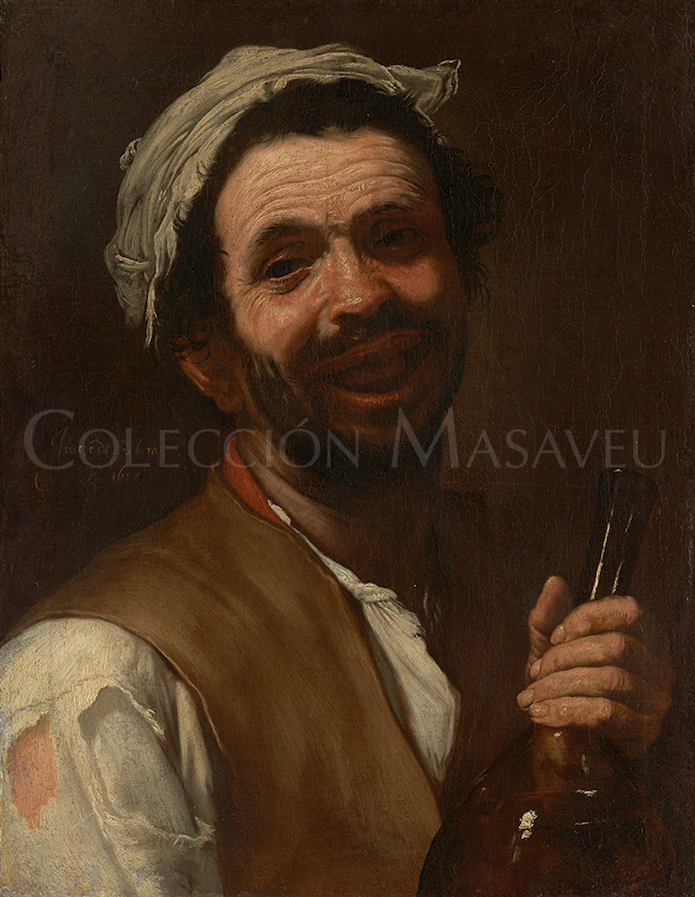
Ribera’s celebrated painting A Girl with a Tambourine will also be offered in the sale. The work is thought to be a personification of the sense of hearing, and to have formed part of a lost series dedicated to the five senses. It is likely a pendant to Laughing drinker with a bottle, once in the Spanish royal collection. While Ribera painted several personifications of the sense of hearing, this is his only signed representation of the subject. The artist’s allegories of the senses are novel in their composition, as he focused on ragged peasants and vivid, everyday figures rather than idealised beauty. This painting is a particularly striking example of Ribera’s ability to capture expression with empathy and skill.
In the summer of 2019 the museum is presenting an exhibition that connects the work of Cristóbal Balenciaga, the most admired and influential fashion designer of all time, with the tradition of 16th– to 20th-century Spanish painting.
References to Spanish art and culture are a recurring presence in Balenciaga’s work. The simple, minimalist lines of religious habits or the architectural volume of their cloth are to be found in many of his designs. The billowing train of a flamenco dancer’s dress echoed in the flounces on some dresses, the glinting reflections on a bullfighter’s suit, brilliantly conveyed in the sequin embroidery on a bolero jacket, and the aesthetic of Habsburg court dress echoed in black velvets embellished with jet trim in some creations are just a few examples. Balenciaga constantly studied the history of art and made use of these influences, expressed through his own powerful and unique style, throughout his career, including his most avant-garde period, reviving historic garments and reinterpreting them in a strikingly modern manner.
The exhibition, curated by Eloy Martínez de la Pera, will include a carefully-selected group of paintings loaned from private Spanish collections and public museums, including the Museo Nacional del Prado and the museums of Fine Arts of Seville, Valencia and Bilbao. They will be accompanied by a group of important creations by Balenciaga, some of them never previously exhibited, loaned from national and international museums including the Museo Balenciaga in Guetaria, the Museo del Traje in Madrid and other international institutions and private collections.
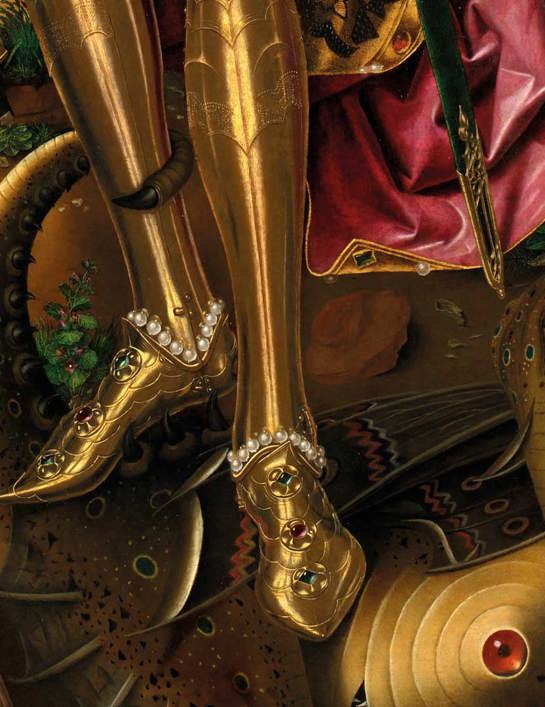
What is conveyed by the armour in Bermejo’s Saint Michael Triumphs over the Devil?
In this talk, Tobias Capwell reveals how Renaissance artists used the rich imagery of arms and armour to communicate messages about power and faith.
Tobias Capwell is Curator of Arms and Armour at the Wallace Collection in London, Fellow of the Society of Antiquaries, and an internationally acknowledged expert on Medieval and Renaissance weapons.
Paula Rego, Angel, 1998. Ostrich Arts Limited. Copyright Paula Rego, Courtesy Marlborough Fine Art.
Obedience and Defiance focuses on political and feminist themes and includes previously unseen paintings and works on paper from the artist’s family and close friends, which reflect Rego’s perspective as a woman immersed in urgent social issues and current affairs. The selection of works focuses on the moral challenges to humanity, particularly in the face of violence, gender discrimination and political tyranny. There are paintings and etchings related to children sold into slavery in North Africa (1996–98), abortion (1998–2000) and female genital mutilation (from 2009). Many of the images begin with the artist’s Portuguese roots and childhood experiences or respond to current affairs. This will be the first ever exhibition in Britain to present the paintings Rego made in the 1960s during the regime of the dictator Salazar.
Curated by the former director of London’s Whitechapel Gallery, Catherine Lampert, and organised by MK Gallery (Milton Keynes), the exhibition includes over 80 works. A major new publication will accompany the exhibition with texts by curator Catherine Lampert and the American writer and novelist Kate Zambreno, published by ART/BOOKS. Touring to Edinburgh and Dublin, the exhibition will be the first ever retrospective of Rego’s work in Scotland and Ireland.
Click here for more information on the exhibition in its current location.
Since 2016, MoMA and the Guggenheim Museum have worked on digitising exhibition catalogues and other material related to their displays and collections.
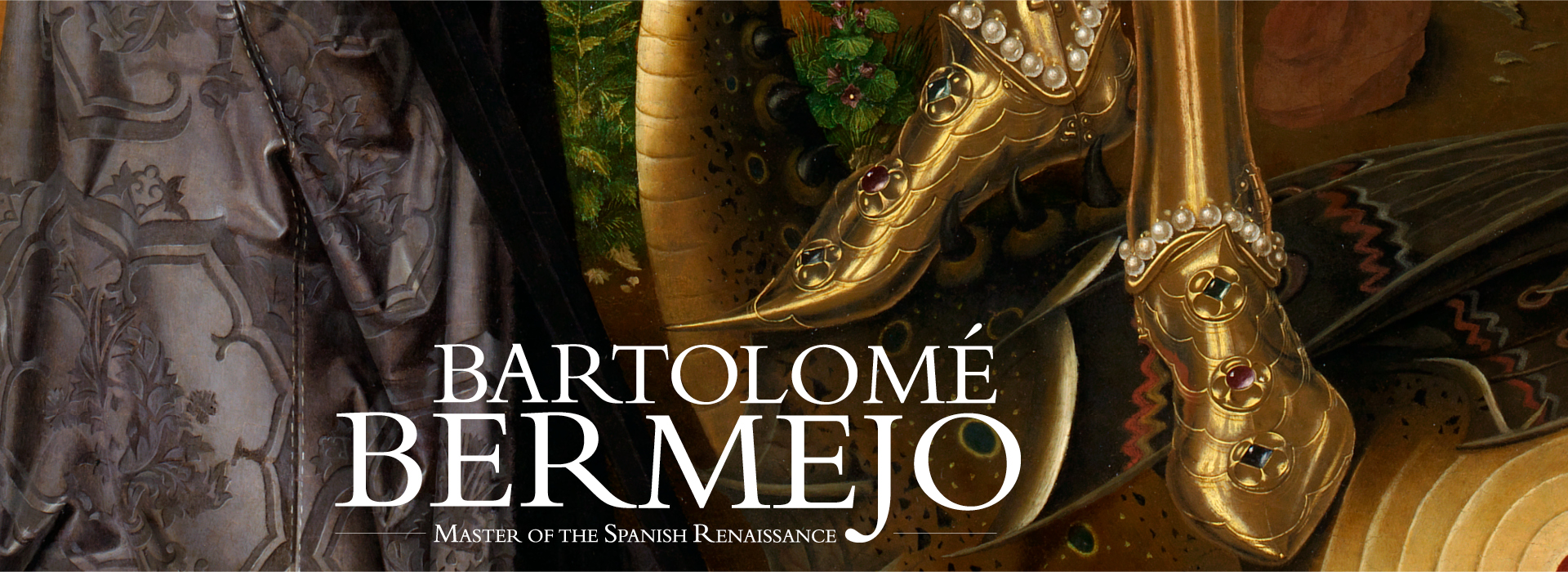
Bermejo is one of the greatest Spanish artists of the second half of the 15th century.
This exhibition, in the National Gallery’s Room 1, brings two of his masterpieces: the triptych of the ‘Madonna of Montserrat’ from the cathedral at Acqui Terme, Alessandria (Italy) and the ‘Piedad Desplà’ from Barcelona Cathedral, to the UK for the first time.
In addition, The National Gallery’s own painting by Bermejo, the magnificent ‘Saint Michael Triumphs over the Devil‘, returns on display following its recent conservation, revealing the painting’s exquisite details and the extent of Bermejo’s artistry.
Click here for more information, andclick here for ARTES’ Study Morning in the exhibiton (27 June 2019).
ARTES’s AGM will take place at the V&A at 12:30 on 13 June 2019. It will be followed by a group visit to look at objects from the Iberian world in the 16th Century.
Meet at the V&A, Exhibition Road Reception, at 11:50. Sandwich lunch (GBP 5) and AGM from 12–2, followed by a group visit to look at objects from the Iberian world in the 16th and early 17th centuries.
***Attendees are asked to arrive punctually, as late arrivals may be difficult to accommodate***
Please contact artesiberia@gmail.com to book a place.
The visual arts in Spain have long been haunted by the spectres of six giants: El Greco, Ribera, Velázquez, Murillo, Goya and Picasso. Still today, these canonical figures tower over all others and continue to shape the story of Spanish art, which has been traditionally told in monographic form. Although the strength of the Spanish canon has informed different disciplines (literature, aesthetics, performing arts), given the recent ‘material turn’, the prosopographical dimension of the visual arts in Spain poses a disciplinary challenge. Similarly, following the ‘global turn’, the visual arts of Iberia pose a geographical challenge, intersecting with the Mediterranean, Arabic, Latin American, British and continental European worlds. The notions of ‘Spain’ and ‘Spanish art’, therefore, are necessarily nebulous and problematic, raising a host of questions: To what extent does Spanish art exist before the establishment of Spain as a nation state? To what extent is the art of the Habsburg and Bourbon empires a Spanish art outside Spain? What is the role of Spain in the wider canon of European art? Who has exploited the visual arts of the Hispanic world, geographically, politically and intellectually? These questions ultimately point to a tension between canons and repertoires; between centres and peripheries; and between consolidating the ‘core’ and expanding the ‘remit’ of the so-called Spanish school.
This conference will explode the disciplinary, material and geographical limits of Spanish art, inaugurating the Zurbarán Centre as a critical and innovative research institution for the study of Spanish and Latin American art in the twenty-first century. Papers will challenge the canonical construction of Spanish art, which can be traced back to writings from Palomino’s Lives of the Eminent Spanish Painters and Sculptors (1724) to Stirling Maxwell’s Annals of the Artists of Spain (1848), to more recent publications by scholars in the field. Papers will also probe the chronological, geographical and material boundaries of the ‘El Greco to Goya’ survey, interrogating the ways in which academics, curators, scholars and teachers narrate this material through various platforms, including publications, museum displays, exhibitions, lectures, gallery talks and academic courses. Speakers will address the various ‘terrains’ of Spanish art, from geographical constructions of Iberia as Europe’s frontier or edge, to exchange with all that lies beyond the Pillars of Hercules.
Nigel Glendinning and the Hispanic Research Journal: A Unique Voice in Spanish Cultural History Sarah Symmons (University of Essex)
11.05 – 11.20
Discussion
11.20 – 11.50
Tea & Coffee
11.50 – 12.50
Keynote Lecture: Passion and Prejudice:Attitudes to Spanish Sculpture in Nineteenth-Century Britain Holly Trusted (Victoria & Albert Museum, London)
13.00 – 14.00
Lunch
14.00 – 15.15
Session 2: Geographies Chair: Edward Payne (Durham University)
14.00 – 14.20
Beyond El Greco:The Travelling Artist between Italy and Spain—Artistic Translation and the Sixteenth-Century Hispanic Canon Piers Baker-Bates (The Open University)
14.20 – 14.40
Maestros españoles en Chile: Espacios y repertorios Marcela Drien (Universidad Adolfo Ibáñez, Santiago de Chile)
14.40 – 15.00
Geographic Limits and the History of the Spanish Avant-Garde Maite Barragán (Albright College, Reading PA)
15.00 – 15.15
Discussion
15.15 – 16.30
Session 3: Strategies Chair: Tom Stammers (Durham University)
15.15 – 15.35
Genaro Pérez Villaamil: Navigating Stereotypes Claudia Hopkins (University of Edinburgh)
15.35 – 15.55
Imaginary Architecture as Imagined Community: ‘The Market’ by Jenaro Pérez Villaamil Matilde Mateo (Syracuse University)
15.55 – 16.15
Hieroglyphs of Providence: Pelegrín Clavé and Isabella I of Castile Stefano Cracolici (Durham University)
16.15 – 16.30
Discussion
16.30 – 17.00
Tea & Coffee
17.00 – 18.00
Keynote Lecture Canons and Repertoires in Hispanic Art: What does StirlingMaxwell have to do with them? Hilary Macartney (University of Glasgow)
Friday 21 June 2019
9.30 – 10.00
Tea & Coffee
10.00 – 11.15
Session 4: Identities Chair: Giovanna Capitelli (Università Roma Tre)
10.00 – 10.20
El arte español más allá de la península ibérica:¿Qué significa ser un ‘artista español en la Nueva España’? Luis Javier Cuesta Hernández (Universidad Iberoamericana, Ciudad de México)
10.20 – 10.40
Constructing the Monuments of the Nation:Victor Balaguer and the Struggle to Shape Monasteries as Spanishness Josep-Maria Garcia-Fuentes (Newcastle University)
10.40 – 11.00
Thinking Spain from Barcelona:The Iconographic Repertoire of Spanish Art (1918–1922) Lucila Mallart (Universitat Pompeu Fabra, Barcelona)
The Maius Workshop’s next event will take place at 4:30–5:30 pm on 3 June 2019 at QMUL (Arts Two, room 2.18).
We are delighted to welcome Emily Floyd, Lecturer in Visual Culture
and Art before 1700 at UCL, for a conversation on her forthcoming
article, ‘The Word as Object in Colonial South America’. A draft of the article will be pre-circulated, and Emily looks forward to the group’s comments and questions.
Please email maiusworkshop@gmail.com to sign up to this free event.
***How to find Arts Two, room 2.18: the Arts Two building is number 35 on the campus map at this link.
The campus is best accessed through the East Gate entrance. Please note
that the Arts Two building does not have an entrance on Mile End Road.
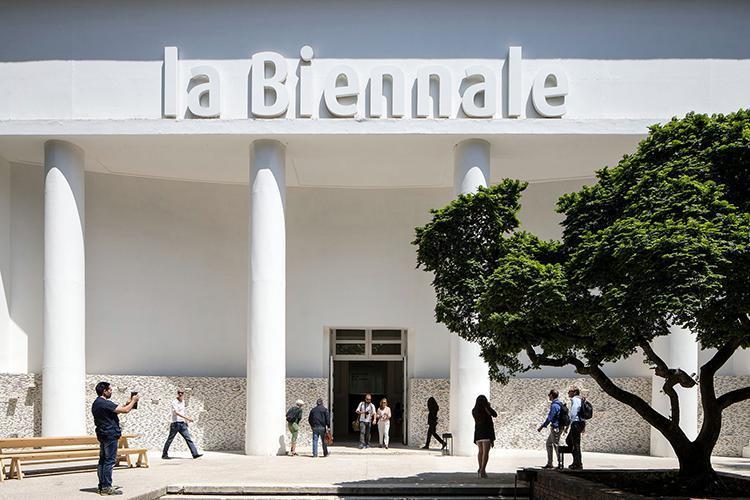
The 58th Biennale of Venice opened on 11 May. Here is a
(non-comprehensive) list of Iberian and Latin American artists represented at
the exhibition, which runs until 24 November 2019, and at accompanying events.
Mexican artist Teresa Margolles was awarded a Special
Mention at the event’s opening ceremony. By shifting existing structures from
the real world into the Exhibition halls, Margolles creates sharp and poignant
works that deal with the plight of women grossly affected by the narcotics
trade in her native country. Her work Muro
Ciudad Juárez. 2010 can be found in the Biennale’s central pavilion at the
Giardini, entitled May You Live in Interesting Times and curated by Ralph
Rugoff.
Other Latin American artists invited to participate in the Biennale’s international exhibition (split between the Giardini and Arsenale) are Jill Mulleady (born in 1980 in Uruguay), Gabriel Rico (born in 1980 in Mexico) and Tomás Saraceno (born in 1973 in Argentina).
The international exhibition is accompanied by 89 national participations. Spain’s pavilion, located at the entrance of the Giardini, showcases Perforated, a collaboration between Itziar Okariz and Sergio Prego. Through performance, video, and sound, Okariz explores the displacements between the subject, the language, and its physical presence. Prego’s sculptural works relate to architecture, calling materiality into question through the use of lightweight, flexible materials that allow the form to only exist in a specific state or as a result of a continuous action on the constituent material. Both artists reiterate the alternative functions of the body in our technified society.
Brazil’s pavilion, Swinguerra, takes its title from a combination of swingueira, a popular dance movement in the north-east of Brazil, and guerra, war. Wagner & de Burca’s work focuses on the powerful expressions of popular culture in contemporary Brazil, and their complex relationship with international and local traditions.
In Uruguay’s
exhibition, La casa empática, paintings, drawings, photographs, and
mural works by Yamandú Canosa are arranged as a ‘landscape-territory’ of the
world, an inclusive and empathic ‘total landscape’. The total landscape is
completed by the intervention on the facade and by the starry sky installed in
the ceiling of the pavilion.
Metáfora
de las tres ventanas. Venezuela: Identidad en tiempo y espaciois the pavilion of Venezuela.
Three metaphorical windows— thresholds for light, air, and the gaze—symbolise
the long construction of collective history and an all-encompassing narrative filled
with challenges and rebellion. Venezuela aims to promote its libertarian
identity, woven over the centuries, and share it in a clear gesture of
invitation to the complicity of others.
Other national pavilions are located in the Arsenale. Argentina’s
exhibition, El nombre de un país/The Name of a Country is a punk,
Frankensteinish bestiary that flaunts a high-fashion collection attitude. Mariana
Telleria traces a highway with an infinite number of linguistic lanes,
activating confusion—mixing things together, building monsters—and sustaining
viewers’ awareness in a continual state of transit.
In Chile’s
Pavilion, Altered Views, Voluspa Jarpa offers a proposal for
decolonisation through a review of European history. Altered Views
comprises three reversed cultural spaces/models: the Hegemony Museum,
the Subaltern Portrait Gallery, and the Emancipating Opera. The
project collects concepts that defined colony: race and cross-breeding,
subordinate male subjects, cannibalism, gender, civilisation and barbarism,
monarchy and republic, appealing to a critical view from a transtemporal
journey.
Mexicois represented by Actos de dios/Acts of God by Pablo
Vargas Lugo. This exhibition which speculates on the life of Christ to generate
a non-linear narrative that raises new questions. What would happen if the man
who was chosen to redeem humanity had set out to fulfil all the predictions
made by the prophets about his life without being certain that he could
accomplish them?
“Indios antropófagos”. A butterfly
Garden in the (Urban) Jungle, the exhibition of Peru,
is a paradox: a post-conceptual exploration of the fiery sensory impact of
Amazon culture on certain (neo)Baroque horizons in Peruvian art, namely in Christian
Bendayán’s work, where it is energised by a critical reconsideration of the
Amazon as a constructed image.
Other national exhibitions are dotted around Venice. In Cannaregio, the Dominican Republic presents Naturaleza y biodiversidad en la República Dominicana. This is the country’s first independent national pavilion at the Biennale. It offers a reflection on ecological threats affecting the luxuriant local nature, the Earth and humankind.
Next to the Dominican Republic is Guatemala’s
Interesting State. The term
‘interesting state’ evokes a woman who is pregnant. Acts of violence against
women constitute the denial of existence. Guatemala is an ‘interesting State’ because
of the persistence of this devastating phenomenon. Art therefore becomes an
ethical instrument, in which the seductive aesthetic nature of the works is
there to serve an indispensable social denunciation and an essential
opportunity for redemption.
Portugal’s pavilion, a seam, a surface, a hinge or a knot, features artist Leonor Antunes reflecting on the functions of everyday objects and contemplating their potential to be materialised as abstract sculptures. The artist is interested in how craftsmanship traditions from various cultures intersected in the work of Venetians such as Carlo Scarpa, Savina Masieri and Egle Trincanato. Elements of the exhibition are fabricated with Falegnameria Augusto Capovilla, one of the still-active Venetian carpentries that worked closely with Scarpa.
The Cubanpavilion, located on the island of San Servolo and entitled A cautionary environment/Entorno aleccionador brings together installations, paintings, and interdisciplinary works on allegorical themes of the times in which we live. The invited artists, Alejandro Campins, Ariamna Contino, Alex Hernández and Eugenio Tibaldi, discuss the relationship between man and the environment.
The Biennale’s programme is accompanied by a series of collateral events. Catalonia
in Venice’s To Lose
Your Head (Idols) documents the complex life of statues, which some
artists today recreate and reflect upon. This multi-authored exhibition
explores the theory of art reception and documents the complex life of public
statues in our time. In a world of images, iconoclasm and iconodulia, it questions
the fetishism of images as living entities and encourages conversations as a
way to foster human happiness, awareness and freedom.
The latest works by the
contemporary Portuguese sculptor Joana
Vasconcelos (born 1971) are being displayed under the title What
are you hiding? May you find what you are looking for at the
Venice Biennale on the island of San Clemente across the Palazzo Kempinsky
gardens and in the church of San Clemente itself, supported by the film
production company MGM. In the church the exhibition shows her large-scale
floor sculpture Madragoa (2015–2019),
inspired by Lisbon’s buildings and façades, which explores the intersections of
sculpture, architecture and painting. This piece has new elements specially
created for it since it was first shown in Macau in 2015. In the gardens
Vasconcelos is displaying I’ll be Your
Mirror #1 (2019), a giant Venetian carnival mask made of mirrors, which the
sculptor recently showed at the Guggenheim, Bilbao in a solo show. Also on show
in the gardens is Betty Boop PA
(2019), a high-heeled shoe crafted out of saucepans, which proposes a revision
of the “feminine” in today’s world by bringing together two tropes of a woman’s
private and public image.




 Bermejo is one of the greatest Spanish artists of the second half of the 15th century.


 ARTES
ARTES