Job: Curator for Latin American, Iberian, and Latino Studies, New York Public Library

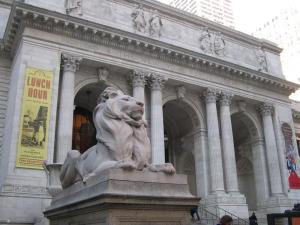
new-york-public-library-nyplThe New York Public Library is seeking to appoint a Curator for Latin American, Iberian, and Latino Studies. Click here for more information and how to apply.

With a collection that exceeds 46 million items, and a mission to advance knowledge and inspire lifelong learning, the New York Public Library stands as one of the world’s great public research libraries. Its four research centers provide opportunities for engagement with in-depth and unique collections, inspirational reading rooms, exhibitions, programs, and a range of research services.

NYPL’s collections on Latin America, Iberia, and the Hispanic experience in the United States constitute an international resource of considerable importance, measured by the depth and variety of the research materials held, and the large numbers of unique and scarce materials in the collections. The Latin American collections span the history of the region from the earliest rarities to present-day publications and are rich in primary source documents, literary texts, ephemera, and many other resources that serve both the scholar and student. Collections on Spain and Portugal are equally extensive, with particular strengths in literature and history, including manuscripts and rare books from the Golden Age through the Age of Discovery and the Spanish and Portuguese colonial period in the Americas. Building on these historic strengths, the Library has continued to document the history and literature of Latinos in the United States, particularly in New York City. The broad scope of NYPL’s collecting over the years has resulted in a collection that provides extraordinary opportunities for interdisciplinary research across the full range of humanities and social science topics, and, consequently, within each of its four research centers.

The Curator for Latin American, Iberian, and Latino Studies provides essential leadership in the development, management, and promotion of the Library’s research collections in these areas. Based within the Collections and Research Services department, which is responsible for establishing a unified strategic vision for NYPL’s Research Collections, the Curator works collaboratively with staff across the Research Libraries to coordinate the development of the collection and the delivery of research services that help position the Library as a vital resource to support learning, creativity, scholarship, and enterprise.


The Curator will provide strong and effective subject expertise and leadership in developing and promoting the Library’s collections documenting Latin American, Iberian, and Latino culture, serving as the primary spokesperson for the collection, and undertaking activities that advance expanded use and other strategic goals.

 In support of teaching, learning, and scholarship, the Curator will contextualize the collections in a variety of ways, including through exhibitions and publications, and will facilitate digital humanities and other scholarly projects, and collaborate on the development of public programming and educational resources.  The Curator is responsible for raising awareness of the collections and cultivating new communities of users, including a supportive donor base. The Curator will actively engage in fundraising activities to support the needs of the collection, fellowships for researchers, and new initiatives.

 Drawing on an understanding of the collection’s historical strengths, its use, and scholarly trends, the Curator will plan for, communicate, and implement strategies to build and shape the collections, and will investigate and make specific recommendations for special collections acquisitions across the Library, including the cultivation and pursuit of major new archival acquisitions.

The Curator will maintain and strengthen existing institutional partnerships and identify and initiate opportunities to collaborate on new approaches to building collections and promoting their use to both a national and international audience.

  • Promotes scholarly, educational, and general use of the collections in collaboration with divisions across the Research Libraries, in particular, the Manuscripts, Archives and Rare Books Division, the Wallach Division of Art, Prints and Photographs, the Schomburg Center for Research in Black Culture, and the Library for the Performing Arts
  • Participates in the ongoing evaluation and assessment of the collections to identify and build on collection strengths
  • Identifies and makes recommendations for the acquisition of special collections. Explores new areas for further development of the collection and cultivates potential donors of materials; manages an acquisitions budget; coordinates a collaborative team approach for ongoing development of the general research collections
  • Actively engages with researchers by providing consultative services; cultivates and builds strong relationships with the academic community through classes, outreach, and strategic partnerships
  • Works closely with the Development staff on fundraising activities by identifying new opportunities, cultivating donor relationships, and preparing grant proposals, and other reports
  • Identifies, evaluates, and prioritizes materials for digitization initiatives and helps facilitate the use of digital collections
  • Collaborates with the Exhibition staff on the preparation of exhibitions that highlight the collections; develops thematic narratives, selects materials, prepares interpretive materials, and supporting publications
  • Keeps abreast of the changing needs of researchers in the field, as well as emerging trends in research libraries, higher education, and humanities and social science scholarship in general
  • Establishes a record of participation in and contributions to the profession by serving on committees and representing the Library at professional organizations, conferences, and various public meetings
 Managerial/ Supervisory Responsibilities
  • Evaluates and makes selections of collection materials in languages other than English, in particular, special collections, including archives, rare books, and other formats.
  • Engages in fundraising and donor relations.
  • Develops concept and content for exhibitions.
  • Prepares scholarly articles and other interpretive materials for publication; prepares donor reports and grant applications.
  • Analyzes and prioritizes opportunities for collaboration in outreach and digitization projects.

Key Competencies

  • Accountability and Professionalism – Demonstrates enthusiasm for and commitment to the position and accepts responsibility for personal actions.
  • Customer Service – Commits to meeting the expectations of internal and external customers.Listens and responds effectively to customer questions; resolves customer problems to the customer’s satisfaction; respects all internal and external customers.
  • Collaboration and Teamwork – Supports a positive team environment in which members participate, respect and cooperate with each other to receive desired results.
  • Job-Specific Knowledge and Skills – Plans, prioritizes, and organizes work effectively to produce measurable results; keeps current with and effectively applies new work methods, skills and technologies to complete work.
 Minimum Qualifications
  • Ph.D. in topic related to Latin American history or Hispanic literary studies, or an MLS from an ALA-accredited program and advanced relevant subject degree.
  • Minimum of five years of relevant professional experience in an academic or research library, or cultural organization setting or equivalent combination of education and experience.
  •  

    Excellent oral, written, and interpersonal skills, including the ability to speak and write effectively in both English and Spanish.

  • Fluency in English and Spanish.
  • Demonstrated knowledge of current practices and emerging trends in humanities and social sciences scholarship and research libraries in general.
  • Successfully demonstrated experience in public speaking, as well as teaching and instruction that promotes the use of primary source documents.
  • Successfully demonstrated ability to work effectively in a collaborative team environment.
  • Demonstrated knowledge of special collections, including archival research.
  • Record of professional engagement and contribution, such as research, publication, and involvement in pertinent professional and scholarly organizations.
  • Successfully demonstrated analytical skills and familiarity with various assessment methodologies.

Preferred Qualifications

  • Working knowledge of Portuguese and at least one other Western European language.
  • Familiarity with library preservation practices.
  • Experience with the preparation and curation of exhibitions.


El Greco on Sale at Christie’s

296_am_ab_el_greco
According to The Art Newspaper, El Greco’s Saint Francis and Leo (around 1600) is one of the highlights of the upcoming London sales. With an estimated sale price of £5m-£7m, the work is one of 51 from the collection of the late Stanford Rothschild consigned for sale to Christie’s. The sale will take place on 7 December. Click here for more information about this painting.

The Maius Workshop’s Second Meeting: Sacred Encounters, 11 December 2017 6-7:30pm, The Courtauld Institute of Art

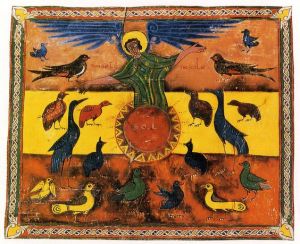
Morgan Beatus Angel Sun Rev 19The Maius Workshop is an interdisciplinary group that brings together graduate students and early-career scholars dealing with Hispanic art (broadly considered to include literature, theatre, music, etc.) and history from the Middle Ages to the Early Modern Period. The Maius Workshop is kindly supported by ARTES.
The first meeting of the Maius Workshop took place in October at the Warburg Institute. The Maius Workshop’s second meeting will take place on Monday 11 December 2017 from 6.00 to 7.30 pm at the Research Forum Seminar Room of the Courtauld Institute.

We hope attendees will share documents, images and problems from their research related to this topic. While some members have already volunteered to present their research, there are still a few spaces left for informal presentations of 5 to 10 minutes. If you would like to present material from your research, please get in touch with us by Friday 8 December. 

If you are interested in presenting your evidence, please drop us an email by Friday 8 December. You can present your evidence in Powerpoint or handout format. If you would like us to print out your evidence to share with the group, please email it to us by Saturday 9. Secondary readings for discussion are also very welcome.

Otherwise, please come along for a lively discussion!

If you are planning to attend this event, please register on Eventbrite at https://www.eventbrite.co.uk/e/the-maius-workshop-2nd-meeting-11-december-2017-tickets-39407191972

If you wish to contact us please use our email address, maiusworkshop@gmail.com

For more info visit: https://maiusworkshop.wordpress.com/ or https://www.facebook.com/groups/120148888676292/

Book Launch: A new edition of Goya and his Critics by Nigel Glendinning, Instituto Cervantes, London, 7-8.30pm, 12 December 2017

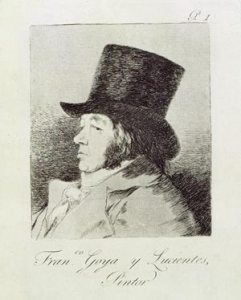
10355_i_imagen20autorretratoWe celebrate with ARTES (Iberian and Latin American Visual Culture Group) the publication of a new edition of Nigel Glendinning’s Goya and his Critics by Dr Sarah Symmons and Dr Jesusa Vega.
Nigel Glendinning’s Goya and His Critics was first published in English in 1977 and appeared in Spanish some five years later. This was the first great synthesis of the reception of Goya as an artist and this new edition assesses the importance of Glendinning’s research not only for Goya studies but for Hispanic art and culture in general. This study includes essays by Jesusa Vega and Sarah Symmons, a foreword by Valeriano Bozal and analyses Glendinning’s mission to reveal the mysterious and evocative art of Goya to a culture which found the artist’s originality disturbing as well as inspiring.

Sarah Symmons-Goubert has won numerous awards for her academic work. She has published five books on art history, including Art & Ideas, Goya (Phaidon Press, 1998) and Goya, a life in letters (Pimlico, Random House, 2004).

In English

Free admission. RSVP http://bit.ly/goyacritics

New Publication: El Greco comes to America: the Discovery of a Modern Old Master (CEEH, Center for Spain in America and Frick Collection, 2017)

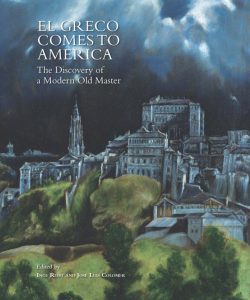
greco-666x800El Greco comes to America: The Discovery of a Modern Old Master, directed by Inge Reist and José Luis Colomer
Este libro es un homenaje a los soberbios ejemplos de la obra del Greco
conservados en Estados Unidos. El estilo tan personal del artista tenía
un aire de modernidad que atraía a los coleccionistas de aquel país,
gracias a lo cual los museos americanos poseen muchos de los mejores
Grecos que hay fuera de España. Once especialistas abordan el estudio
de coleccionistas particulares como Arabella Huntington, Louisine
Havemeyer, Henry Clay Frick, Peter Widener y Duncan Phillips, pero
analizan también el impacto de las exposiciones en las que pudieron
verse obras del cretense y el papel que desempeñaron artistas-asesores
como Mary Cassatt, John Singer Sargent y Roger Fry.

Partiendo de una rica documentación de archivo, en gran parte inédita
hasta ahora, los autores de este volumen demuestran el denuedo con el
que los coleccionistas americanos compitieron por las obras del Greco y
el lugar tan destacado que concedieron en sus casas a los cuadros del
cretense, que a menudo colgaron junto a otros de pintores más modernos
como Degas o Manet. Al hacerlo, y al fomentar la compra de cuadros del
Greco por parte de las instituciones públicas que financiaban, forjaron
la reputación internacional de este artista entre el público
contemporáneo, garantizando un aprecio por su estilo único que se
mantiene todavía.

SOBRE LOS DIRECTORES [10]

INGE REIST, doctora por la Universidad de Columbia, donde dio clase
durante unos años, es directora del Center for the History of
Collecting de la Frick Art Reference Library. Dirigió también el
Archivo Fotográfico de la Frick Collection y fue presidenta de la
Association of Research Institutes in Art History. Es experta en
historia del coleccionismo, tema sobre el que ha publicado trabajos y
dado conferencias en numerosos museos y congresos. Ha coeditado con Gail
Feigenbaum _Provenance: An Alternative Art History_ (2012), aunque sigue
interesándose por otras cuestiones, como prueba su «_All the World’s a
Stage: The Theater Conceit in Early Modern Italy_» para el Blackwell
Companion to Renaissance and Baroque Art (2012).

JOSÉ LUIS COLOMER es doctor en Literatura Comparada por la Universidad
de Bolonia y licenciado en Historia del Arte por la Sorbona. Actualmente
dirige el Centro de Estudios Europa Hispánica y el Center for Spain in
America. Sus investigaciones abordan las relaciones culturales entre
España e Italia en el siglo XVII a través de agentes diplomáticos y
del intercambio de regalos artísticos entre las cortes europeas y los
reyes de España, así como el segundo viaje a Roma de Velázquez y sus
vínculos con personajes italianos en la corte de Madrid. En 2012
codirigió con Inge Reist el libro Collecting Spanish Art: Spain’s
Golden Age and America’s Gilded Age.

264 páginas; 156 ilustraciones
ISBN: 978-84-15245-73-5
50 €
Until 15 December, 10% online discount, http://www.ceeh.es

Opening soon: Intacta María. Política y religiosidad en la España barroca, 30 November 2017 – 8 April 2018, Museo de Bellas Artes de Valencia

alegorc3ada_de_la_virgen_inmaculada2c_atribuida_a_juan_de_roelas_28museo_nacional_de_escultura_de_valladolid29The exhibition Intacta María. Política y religiosidad en la España barroca, opening on 30 November  2017, analyses the process through which devotion to the Immaculate conception was created and popularised in early modern Spain. While the Immaculate Conception only became dogma in 1854, as early as 1616 the Spanish Monarchy became a staunch supporter of the theory, turning its defence into a national priority. In the following years, the Immaculate Conception became Spain’s most heartfelt devotion and a sign of national identity. Art played an important role in this process, amounting to what we may describe as a marketing campaign. This will be the focus of the Museo de Bellas Artes’ forthcoming exhibition, featuring more than 50 paintings, sculptures, prints and books borrowed from notable Spanish museums and churches such as the Museo Nacional de Escultura de Valladolid, the Cathedral of Seville, the Biblioteca Nacional de España, and many others.


Please click here for more information on the exhibition.

Deadline 15 November: The Courtauld Institute of Art’s 23rd Annual Medieval Postgraduate Colloquium: Collecting (in) the Middle Ages (6th-16th century), 16 February 2018

HolyofHoliesReliquaryCall for papers: The Courtauld Institute of Art’s 23rd Annual Medieval Postgraduate Colloquium: Collecting (in) the Middle Ages, The Courtauld Institute of Art, 16 February 2017
Deadline: 15 November 2017

The Courtauld Institute of Art’s 23rd Annual Medieval Postgraduate Colloquium invites speakers to consider the nature of medieval collections, the context of their creation and fruition, and their legacy — or disappearance — in the present.

Inspired by objects such as a cedar box chest once kept in the Holy of Holies of the Lateran, this colloquium seeks to explore a diverse set of topics surrounding medieval practices of collecting. This wooden box may seem simple, but once opened it reveals a priceless collection: fragments of rock and wood from the Holy Land, each labelled with its precise place of origin by a sixth-century hand. Here and there, stones have fallen out, leaving imprints in the soil. The wooden relic chest is an object of small size and almost no material value, but has nevertheless been treasured for centuries by one of the largest and most powerful institutions of the medieval world.

The study of medieval collecting raises a variety of questions. How and why were objects collected, practically and conceptually? What was their expected time-span and what enabled their survival? How have medieval collections impacted modern scholarship, and how do modern collecting and display practices influence our interpretation of the past?

Applicants to the colloquium are encouraged to explore these issues from a diverse range of methodologies, analysing objects from the 6th to the 16th century and from a wide-ranging geographical span. Possible areas of discussion might include:

  • Collecting through time: How do we define the medieval collection/collector? How did medieval objects take on new meanings in medieval collections, ie. in the case of spolia? How has scholarship on medieval art been influenced by varying collecting practices and curatorial strategies across time?
  • Collecting in space: can the idea of the ‘collection’ be expanded to include objects, places and spaces spread across different geographical locales? Could objects or spaces communicate their commonality across a distance? How did pilgrimage routes, travel narratives and travel guides conceptualize their surroundings and weave a thread through geographical and historical difference?
  • Collectors, intermediaries, and craftsmen: how did institutions and single collectors acquire and expand their collections? For example, did they rely on a merchant network to acquire foreign objects or new relics? Did they collect newly commissioned objects, and display them in purpose-built spaces?
  • Collections and Legacies: how did inheritance impact the notion of collecting, looking forwards as well backwards? How did the meaning of objects change as they were passed down through families and dynasties? What happened to collections when familial lines ended? How did individuals link themselves to courts or dynasties through collections?
  • Accessibility: When, how and why were collections visible? Were there different levels of accessibility and interaction and who was allowed to ‘access all areas’? How were restricted collections advertised and open collections protected? And did objects themselves interact with each other, for example in specific displays or assemblages?
  • Organising Collections: What were the systems for assembling a collection, and for how they were curated? How did purpose-built spaces impact the growth of collections, and vice-versa? What were the roles of documents in collections, and how have medieval recording practices influenced modern views of the medieval collection?

The Medieval Postgraduate Colloquium offers an opportunity for research students at all levels from universities across the UK and abroad to present, discuss and promote their research. To apply, please send a proposal of up to 250 words for a 20 minute paper, together with a CV, to costanza.beltrami@courtauld.ac.uk and maggie.crosland@courtauld.ac.uk no later than 15 November 2017.

courtauldlogo

Research Seminar: Aparencia y razón en el reinado de Felipe III. Las artes y la arquitectura al servicio de un nuevo gusto, 29 November-1 December 2017, Madrid

vista20jardines20casa20de20campo20con20la20estatua20de20felipe20iii201Los últimos veinticinco años han conocido una notable renovación y ampliación de las investigaciones centradas en aspectos diversos del reinado de Felipe III (1598-1621), especialmente, en lo que respecta al estudio del valimiento de Lerma y su influencia cortesana, política y cultural. Se han revisado, además, múltiples cuestiones de la política exterior de la Monarquía en este periodo conocido como la Pax Hispanica. Ahora, en 2017, nos hallamos en Madrid inmersos en la celebración de la construcción de uno de los espacios más emblemáticos de la capital: su Plaza Mayor. Parece este un momento excelente para reflexionar sobre cuáles son los rasgos propios de este periodo, que tantas veces queda ensombrecido por la proyección desmesurada de los longevos reinados que le preceden y que le suceden.

Este seminario nace con el objetivo de debatir en torno a los rasgos específicos y los procesos que definen el nuevo gusto que se aprecia en el reinado de Felipe III, prestando particular atención a los cambios que experimentan las artes y la arquitectura en la corte y en otros espacios cortesanos de su monarquía. Uno de los ejes vertebradores lo constituye el análisis del gusto por la apariencia, tanto en la configuración de los espacios como en las formas de auto-representación a través de ceremonias, usos y fiestas. La grandeza de la monarquía y del poder se refleja de manera mesurada y armónica a través de su arquitectura. El deleite de los sentidos y del ingenio se pone de manifiesto en el diseño funcional de palacios de recreo con galerías, huertas, jardines, parques y bosques. La materialidad terrenal basada en un lujo suntuario se combina con el retiro de la clausura y el rigor de las prácticas devocionales en la concepción misma de los conjuntos palaciegos. Se verifica, además, una verdadera proliferación de fundaciones religiosas y benéficas que transforman el tejido urbano.

Miércoles 29 de noviembre de 2017

Inauguración – Presentación institucional a las 16.00 horas.
Introducción al seminario (Alfonso Rodríguez G. de Ceballos y Bernardo García García)
I. Idea y configuración de la corte
16.00-20.00 / Salón de Actos – Fundación Universitaria Española (calle Alcalá 93)
Arquitectura e imagen en la corte de Valladolid
Jesús Urrea Fernández (Universidad de Valladolid)
El valido-arquitecto. La construcción de la grandeza de los Sandovales
Bernardo J. García García (Universidad Complutense de Madrid y Fundación Carlos de Amberes)
Discusión
Pausa
Tras la estela de Antonio Moro. La construcción de la imagen regia durante el reinado de Felipe III
Álvaro Pascual Chenel (Universidad de Valladolid)
«No había Pintor eminente en España, de quien haya tantas Pinturas en público, como de Vicencio Carducho». La decoración de los espacios de la corte.
Ángel Rodríguez Rebollo (Fundación Universitaria Española)
Discusión
Jueves 30 de noviembre de 2017
II. El arte de representar. Imagen, fiesta y Ritual
9.30-13.30 / Salón de Actos – Fundación Universitaria Española (calle Alcalá 93)
La correspondencia de Annibale Iberti: sobre viajes, pinturas, fiestas y un carrozzino en los espacios cortesanos de Valladolid
Alicia Cámara Muñoz (Universidad Nacional de Educación a Distancia)
Francisco de Mora, arquitecto de la Corte y la Villa de Madrid
Beatriz Blasco Esquivias (Universidad Complutense de Madrid)
Discusión
Pausa
«Por escalones de vidrio… subido a la alta esfera». El mecenazgo del primer marqués de Siete Iglesias: un modelo efímero de construcción de la identidad nobiliaria (1599-1621)
Santiago Martínez Hernández (Universidad Complutense de Madrid)
La carrera de un dramaturgo cortesano durante el reinado de Felipe III: el caso de Luis Vélez de Guevara
George Peale (California State University, Fullerton)
Discusión
Jueves 30 de noviembre de 2017
III. Mujeres y redes de familia
16.00-20.00 / Salón de Actos – Fundación Universitaria Española (calle Alcalá 93)
Fundaciones religiosas en la corte. La familia de Lerma y Margarita de Austria según confesores y predicadores
Alfonso Rodríguez G. de Ceballos (Fundación Universitaria Española)
La emperatriz María en el cuarto real de las Descalzas y el duque de Lerma
María Ángeles Toajas (Universidad Complutense de Madrid)
Discusión
Pausa
El Monasterio de la Encarnación de Madrid: red de mujeres, y mujeres en red
Leticia Sánchez Hernández (Patrimonio Nacional)
«En tierra ajena, lexos de mi Rey». Giovanna d’Austria, entre la corte de Felipe III y la de los virreyes de Nápoles y Sicilia
Ida Mauro (Universitat de Barcelona)
Discusión
Viernes 1 de diciembrede 2017
10.30-13.30 – Visita de estudio
[Reservada a organizadores y ponentes hasta 25 personas]
IV. La Monarquía Hispánica y la proyección del poder real
16.00-20.00 / Auditorio de la Fundación Carlos de Amberes (calle Claudio Coello, 99)
Mecenazgo y coleccionismo en tiempos de guerra: los marqueses de la Hinojosa y Villafranca en el gobierno de Milán (1612-1618)
Francisco Javier Álvarez García (Universidad Complutense de Madrid) y Odette D’Albo (Università Cattolica del Sacro Cuore y CREDEM)
Nápoles y Sicilia. La iniciativa cultural de los virreyes en el tránsito de Felipe II a Felipe III. Una perspectiva comparada
Joan Lluís Palos (Universitat de Barcelona)
Discusión
Pausa
Architectural exchanges between the Low Countries and Spain during the reign of the Archdukes: the impact of the high nobility
Sanne Maekelberg (KU Leuven)
Las exequias reales, la proyección del poder real, y la creación de un tiempo imperial en la Monarquía Hispánica de Felipe III
Alejandra B. Osorio (Wellesley College)
Discusión final
Clausura

ARTES Event: Curator’s tour of ‘El Greco to Goya’ at the Wallace Collection, 21 November 2017, 10 am

20424015_10155128772606865_9178298814727747987_o

Isabelle Kent, Enriqueta Harris Frankfort curatorial assistant at the Wallace Collection,  will give ARTES members a tour of the exhibition on 21st November at 10:00.
Please RSVP to artesiberia@gmail.com by 15 November.
This event is open to ARTES members only.

Akemi Herraez Vossbrink, ‘Francisco de Zurbarán and the Viceroyalty of Peru’, 23 November 2017, Spanish Embassy, London

Microsoft Word - Francisco de Zurbaransfinal1024_1